端侧智能

Search documents
晶晨股份(688099):端侧业务快速发展,产品矩阵日趋完善
EBSCN· 2026-04-01 05:39
Investment Rating - The report maintains a "Buy" rating for the company [3][5] Core Insights - The company achieved a revenue of 6.793 billion yuan in 2025, representing a year-on-year growth of 14.63%, and a net profit attributable to shareholders of 873 million yuan, up 6.21% year-on-year [1] - The company’s chip sales exceeded 174 million units in 2025, marking an increase of over 31 million units year-on-year, with both revenue and net profit reaching historical highs [1] - The comprehensive gross margin for 2025 was 37.97%, an increase of 1.42 percentage points year-on-year [1] - The company expects a revenue growth of 10%-20% in Q1 2026 and an annual growth of 25%-45% for the entire year [1] - The rapid development of edge-side business is highlighted, with over 20 chip products launched that align with edge-side technology, and shipments of self-developed edge-side intelligent computing units exceeding 20 million units, a year-on-year increase of nearly 160% [1] - The company has established partnerships with nearly 270 operators globally in the B2B sector and launched multiple new products with renowned consumer electronics clients in the B2C sector [2] Financial Summary - Revenue and net profit forecasts for 2026-2028 are set at 8.926 billion yuan, 11.326 billion yuan, and 13.975 billion yuan, respectively, with net profits of 1.4 billion yuan, 1.84 billion yuan, and 2.37 billion yuan [3][4] - The company’s EPS is projected to grow from 2.07 yuan in 2025 to 5.63 yuan in 2028 [4] - The company’s P/E ratio is expected to decrease from 38 in 2025 to 14 in 2028, indicating a potential increase in valuation attractiveness [4][12]

从终端到太空,芯际穿越撑起追觅未来版图
阿尔法工场研究院· 2026-03-12 11:34
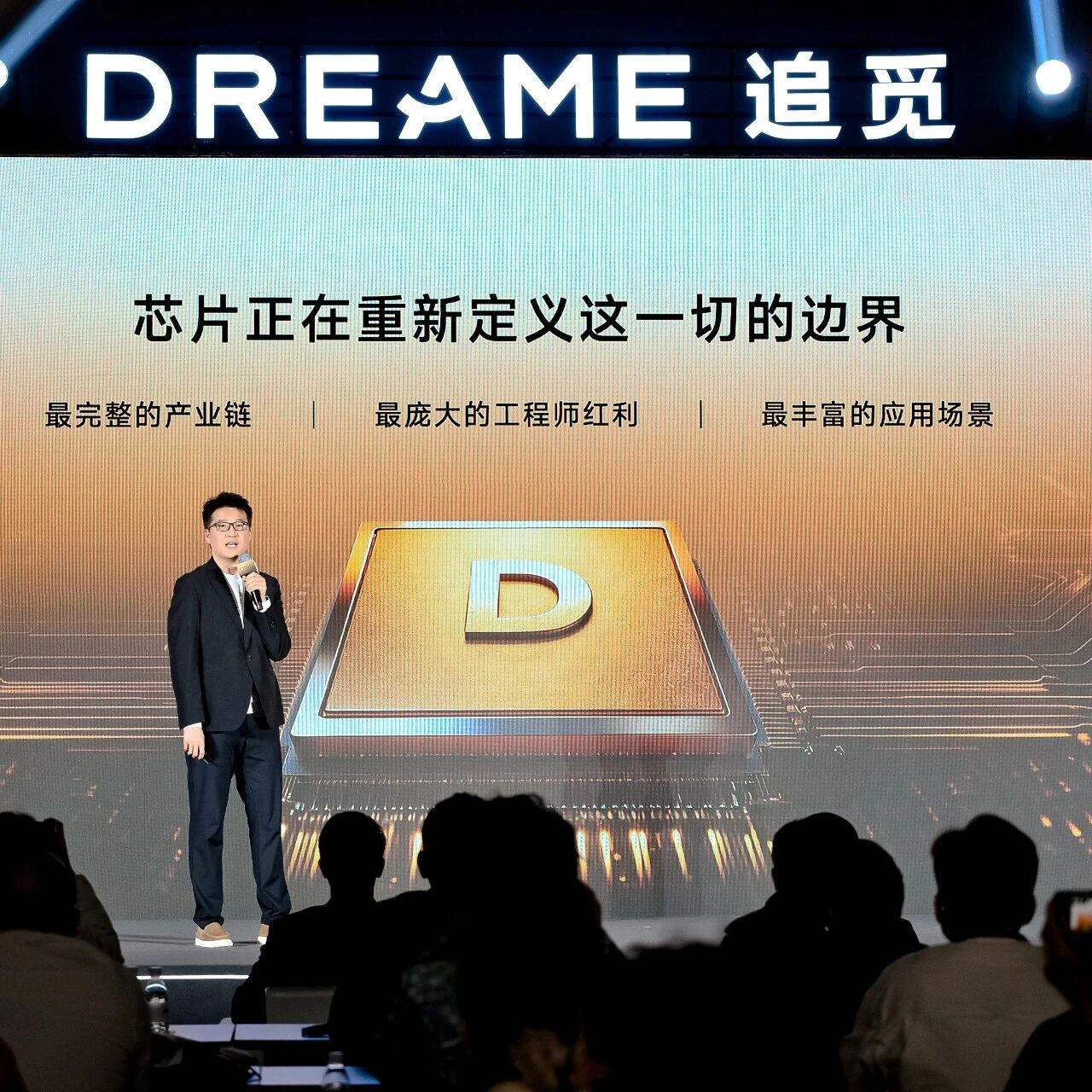
Core Viewpoint - The article highlights the emergence of "芯际穿越" (Chip Crossing) as a strategic initiative by追觅科技 (Dreametech) to establish a competitive edge in the global AI computing industry through innovative chip technology and a robust ecosystem [5][21]. Group 1: Industry Context - The Chinese technology industry is depicted as striving to break through in various sectors, with companies like NVIDIA and Qualcomm dominating data centers and mobile devices, respectively, but struggling in areas like robotics and automotive integration [3][4]. - The competition for "computing sovereignty" reveals gaps that companies like芯际穿越 aim to exploit [4]. Group 2: Strategic Focus of 芯际穿越 - 芯际穿越 is positioned to develop a world-class intelligent computing chip ecosystem, focusing on core chip technology and innovation [5][9]. - The initiative will operate as an independent brand, aiming to maintain the integrity of the追觅 ecosystem while competing in the global AI market [6]. Group 3: Product Development and Advantages - 芯际穿越 plans to create intelligent terminal products across multiple fields, including general robotics SoCs, mobile processors, and autonomous driving chips [10]. - The company leverages追觅's established expertise in smart hardware and vast real-world data resources to integrate technology, algorithms, and chips effectively [11][13]. - The "天穹" series chips for general robotics and other high-performance chips are highlighted for their advanced integration and computing power [11]. Group 4: Technological Synergy and Market Potential - 芯际穿越's technology allows for shared core capabilities across different applications, enhancing efficiency and reducing redundancy in development [14]. - The company aims to capitalize on the growing demand for specialized chips in fields like autonomous driving and robotics, as well as the shift towards distributed computing [20]. Group 5: Strategic Vision and Future Outlook - 芯际穿越's approach aligns with national strategies to encourage innovation and strengthen AI capabilities, positioning itself favorably in the competitive landscape [21]. - The article discusses the potential of space computing, with plans for a satellite-based computing center that could provide unprecedented computational power [25][26]. - The strategic focus on both chip design and AI computing capabilities aims to ensure that the company remains at the forefront of the evolving technology landscape [20][27].

两会现场,机器人产业迎来"端侧觉醒"时刻
IPO早知道· 2026-03-09 01:20
Core Viewpoint - The article emphasizes the importance of developing and commercializing "embodied intelligence" in humanoid robots, highlighting the need for breakthroughs in local AI deployment to bridge the gap between demos and mass production [3][4]. Group 1: Current State of Humanoid Robots - Currently, most humanoid robots rely on cloud-based models for remote control, which leads to latency issues and operational failures in environments with poor connectivity [5]. - The shift to local deployment of AI, or "local brain," is essential to create a complete perception-decision-action loop within the robot, addressing the challenges of network dependency and latency [6]. Group 2: Technological Advancements - Local deployment enhances the applicability of robots across various industries, allowing them to operate in complex environments without real-time internet access, thus improving safety and data security [6][8]. - The development of a "general embodied brain" by companies like Xingyuan Intelligent Robotics aims to connect digital intelligence with the physical world, enabling robots to understand physical laws and predict environmental changes [8][11]. Group 3: Industry Innovations and Collaborations - Xingyuan Intelligent Robotics has developed a layered architecture for local deployment, combining a "cognitive brain" for reasoning and planning with a "motor cortex" for rapid response, all functioning locally [9][11]. - The company has achieved significant commercial progress, including partnerships with major players like Zhiyuan Robotics and Zhongli Group, indicating a rapid deployment of their local AI solutions [11][12]. Group 4: Investment and Future Outlook - Xingyuan Intelligent Robotics has secured substantial funding from notable investors, positioning itself for a potential explosion in the market for local embodied intelligence by 2026 [12]. - The transition of local intelligence from a technical challenge to a national strategy suggests that the robot revolution driven by local brains will be a key component of new productivity in the era of physical AI [12].

小米撕掉互联网标签:雷军豪掷2000亿决战芯片与操作系统
Sou Hu Cai Jing· 2026-02-24 08:11
Group 1 - The core strategy of Xiaomi is shifting towards becoming a "hardcore technology company" with a focus on foundational technologies, moving away from its previous identity as an internet company [1] - Xiaomi is investing 200 billion in research and development, indicating a significant commitment to advancing its technological capabilities [1] - The launch of the first 3nm chip, the玄戒O1, represents a milestone in Xiaomi's ambition, featuring 190 billion transistors and surpassing the performance of Qualcomm's Snapdragon 8 Gen4 [3] Group 2 - The 澎湃OS is undergoing a major overhaul, with 37% of its legacy code being replaced by self-developed modules, aiming for complete autonomy by 2026 [5] - Xiaomi's AI strategy, exemplified by the MiLM-7B model, focuses on practical applications with a compressed model size of 1.8GB for efficient local inference on the玄戒 chip [7] - The development of a comprehensive chip ecosystem, including the C1 imaging chip and V1 vehicle chip, aims to achieve 100% self-developed chip scheduling and local AI computation in upcoming products [9] Group 3 - Xiaomi's transformation aligns with the broader trend of Chinese manufacturing moving up the value chain, emphasizing the importance of foundational technologies for innovation [9] - The company's strategic pivot is not just a temporary trend but a calculated move to redefine its market presence and technological leadership [9]

晶晨半导体(上海)股份有限公司2025年度业绩快报公告
Xin Lang Cai Jing· 2026-02-11 19:49
Core Viewpoint - The company, Amlogic, reported strong financial performance for the year 2025, achieving record highs in revenue, net profit, and chip sales, driven by the successful launch of new products and improved operational efficiency [3][4]. Financial Performance - In 2025, the company achieved a total revenue of 6.793 billion RMB, an increase of 867 million RMB year-on-year [3]. - The net profit attributable to the parent company was 871 million RMB, up by 49 million RMB compared to the previous year [3]. - Chip sales exceeded 174 million units, marking an increase of over 31 million units year-on-year [3]. Operational Efficiency - The company’s overall gross margin for 2025 was 37.97%, an increase of 1.42 percentage points from 2024 [4]. - The company implemented ongoing operational efficiency initiatives, which contributed to the improvement in gross margin throughout the year [4]. Product Development and Market Expansion - The company launched over 20 new chip products that incorporate self-developed edge AI computing units, with shipments exceeding 20 million units, a year-on-year growth of nearly 160% [4]. - The company’s 1.6nm chips achieved sales of nearly 9 million units in 2025, with expectations to exceed 30 million units in 2026 [5]. - Wi-Fi 6 chip sales surpassed 7 million units, representing over 37% of the W series, compared to nearly 11% in the previous year [6]. Strategic Partnerships and Market Position - The company has established partnerships with nearly 270 operators globally and launched multiple new products with renowned consumer electronics clients [6]. - The company’s diverse product lines and global market expansion strategies are beginning to yield significant results [6]. Research and Development - The company maintained a high level of R&D investment, with total R&D expenses of approximately 1.552 billion RMB in 2025, an increase of 199 million RMB from 2024 [7]. - The company is focusing on developing next-generation high-performance chips for various applications, including smart vehicles and edge AI [8]. Future Outlook - The company anticipates a revenue growth of 10% to 20% year-on-year in Q1 2026, and a full-year growth of 25% to 45% [8].
OpenAI第一款硬件要来了,但可能“没那么AI”?
美股研究社· 2026-02-10 11:10
Core Viewpoint - OpenAI is facing challenges in launching its first consumer hardware device, the "Dime," due to rising BOM costs from the global storage chip crisis, leading to a downgrade from an independent device to a basic cloud-dependent headset [7][9]. Group 1: Product Development and Specifications - OpenAI's first consumer hardware, internally codenamed "Sweetpea" and named "Dime," was initially designed to feature a Samsung 2nm Exynos chip for advanced AI processing capabilities [8]. - Due to high costs of storage components, OpenAI is forced to downgrade the Dime to a simpler headset, which will primarily serve as a conduit for cloud-based AI models rather than a standalone AI computing device [8][9]. Group 2: Market Strategy and Production Plans - Despite the product's specification compromises, OpenAI is aggressively pursuing its hardware strategy, with executives prioritizing hardware projects [11]. - The company plans to officially launch the Dime in September 2026, with production likely handled by Foxconn in Vietnam, aiming for sales of 40 to 50 million units in the first year [11]. Group 3: Additional Consumer Devices - OpenAI is also developing a second consumer device, codenamed "Gumdrop," which will have a pen-like shape and no screen, focusing on environmental awareness and interaction [13]. - Key features of the Gumdrop include situational awareness through cameras and microphones, local AI model execution with cloud support, and the ability to convert handwritten notes to text for ChatGPT [15].

让AI更“接地气”:芯片巨头这样应对端侧智能突围战
21世纪经济报道· 2026-02-09 00:08
Core Viewpoint - The year 2026 is anticipated to be a pivotal year for the large-scale deployment of AI-native applications, with both startups and traditional tech giants actively pursuing opportunities in new hardware forms and enhancing software and ecosystem integration [1] Group 1: Embedded Processing Chips - Embedded processing chips are facing new development opportunities due to the emergence of large-scale edge AI hardware, including smart cars, embodied intelligence, and AI smartphones [1][3] - Texas Instruments (TI) is strategically addressing the edge AI wave through continuous innovation, product scalability, and capacity assurance to support global customers in the AI era [1][7] - TI's product offerings cover various aspects of edge AI, including sensing, control, and processing, making it a key player in the commercialization of large AI models [3][7] Group 2: Product Scalability and Innovation - TI emphasizes the importance of scalability in its product design, allowing customers to find suitable products based on diverse application needs, with processing power requirements ranging from 1 TOPS to several thousand TOPS [4][7] - The company has launched the scalable TDA5 high-performance SoC series, providing edge AI computing power from 10 TOPS to 1200 TOPS, meeting the requirements for L3 autonomous driving [5][10] - TI's approach includes simplifying design complexity and reducing costs by integrating multiple systems, such as ADAS and in-car entertainment, into a single SoC [5][11] Group 3: Software Ecosystem and Market Strategy - TI is committed to providing a comprehensive software ecosystem to accelerate the deployment of end products, offering tools for data collection, cloud model training, and chip deployment [9] - The company views China as a crucial strategic market, leveraging its experience in edge AI to meet the differentiated demands of the local market [10][12] - TI's focus on innovation and rapid iteration aligns with the fast-paced nature of the Chinese market, where customer feedback is actively sought to enhance product development [12][13] Group 4: Future Directions and Applications - The rise of embodied intelligence is seen as a key area for growth, particularly in industrial automation and service sectors, with TI developing customized solutions for various types of robots [12] - TI's strategy includes understanding specific application needs to develop targeted solutions, offering both AI-accelerated and non-AI products to provide customers with choices [13] - The evolution of edge AI is not solely about increasing computing power but achieving the best balance of efficiency, cost, and reliability in specific scenarios [13]


OpenAI第一款硬件要来了,但可能“没那么AI”?
硬AI· 2026-02-08 06:18
Core Viewpoint - OpenAI's first consumer device, originally intended to be a standalone smart headset, is likely to be downgraded to a cloud-dependent "basic headset" due to soaring BOM costs driven by the global storage chip crisis [2][3]. Group 1: Product Development and Specifications - OpenAI's first hardware, internally codenamed "Sweetpea" and named "Dime" for consumers, was initially designed to feature a Samsung 2nm Exynos chip, providing smartphone-like computing capabilities for complex edge AI processing [5][6]. - Due to high prices of storage components, OpenAI is forced to adjust its strategy, potentially stripping the device of its high-performance attributes and reverting to a simpler headset form [6]. Group 2: Market Strategy and Production Plans - Despite the product's compromised definition, OpenAI is aggressively pursuing its hardware agenda, with executives prioritizing it as a top project [8]. - The product is expected to launch in September 2026, likely manufactured by Foxconn in Vietnam, with a sales target of 40 to 50 million units in the first year [8]. Group 3: Future Product Development - In addition to the headset, OpenAI is developing a second consumer device codenamed "Gumdrop," which resembles a pen or an Apple iPod Shuffle, featuring a no-screen design focused on environmental awareness and interaction [10]. - Key functionalities of "Gumdrop" include real-time conversion of handwritten notes to text for ChatGPT, situational awareness through camera and microphone, and the ability to run local AI models supported by cloud computing [10].

OpenAI第一款硬件要来了,但可能“没那么AI”?
Hua Er Jie Jian Wen· 2026-02-08 03:30
Group 1 - OpenAI is attempting to extend its influence in the hardware sector after establishing dominance in the generative AI software field, but its first consumer device is facing a "spec downgrade" due to rising BOM costs from a global storage chip crisis [1][2] - The first hardware, internally codenamed "Sweetpea" and named "Dime" for consumers, was originally designed to feature a Samsung 2nm Exynos chip for independent computing capabilities, but this plan is being compromised due to supply chain cost issues [2] - OpenAI is now expected to release a simpler version of the Dime, which will likely serve as a cloud-based "basic headset" rather than a portable AI computing center [2] Group 2 - Despite the product definition challenges, OpenAI is aggressively pursuing its hardware initiatives, with executives prioritizing hardware as a top project [3] - The Dime is projected to be officially launched in September 2026, potentially manufactured by Foxconn in Vietnam, with a sales target of 40 to 50 million units in the first year [3] - OpenAI is also developing a second consumer device codenamed "Gumdrop," which will feature a pen-like design without a screen, focusing on environmental awareness and interaction [4] Group 3 - The core functionalities of the Gumdrop include context awareness through cameras and microphones, running local AI models with cloud support, converting handwritten notes to text for ChatGPT, and enabling device-to-device communication similar to smartphones [5]
告别“对讲机”时代:面壁智能给 AI 装上了“神经末梢”
AI科技大本营· 2026-02-05 04:08
Core Insights - The article discusses the rising interest in local AI agents, particularly the OpenClaw project, which has led to a surge in demand for devices like the Mac Mini as they become essential for running these AI applications [1][2] - It highlights the limitations of cloud-based AI solutions, such as privacy concerns and latency issues, prompting a shift towards local processing capabilities [2][21] - The emergence of MiniCPM-o 4.5, a 9 billion parameter model, represents a significant advancement in AI technology, focusing on local processing to enhance user experience and privacy [3][19] Group 1: AI Agent Development - The article notes a growing consensus among developers for the need for AI agents that can manage tasks locally rather than relying on cloud services [1] - It emphasizes the drawbacks of current AI interactions, which are often limited by latency and privacy issues, making local processing a more appealing option [2][21] - The concept of "full-duplex" communication in AI is introduced, allowing for simultaneous listening and speaking, which enhances user interaction [6][11] Group 2: MiniCPM-o 4.5 and Its Implications - MiniCPM-o 4.5 is positioned as a breakthrough in AI, capable of performing various tasks with a relatively small model size, challenging the trend of larger models [19][20] - The article explains the "Densing Law," which suggests that increasing knowledge density is more important than simply scaling model size [15][16] - The model's capabilities include multimodal understanding and real-time decision-making, making it suitable for deployment in various devices [19][20] Group 3: Hardware Development and Integration - The introduction of the Pinea Pi hardware development board aims to provide a comprehensive solution for running AI models locally, integrating necessary components for ease of use [22][25] - The article discusses the challenges faced in reducing latency for AI applications, highlighting the importance of hardware architecture in achieving efficient processing [28][30] - Pinea Pi serves as a reference design to guide the industry in creating hardware that supports advanced AI functionalities [31] Group 4: Future of AI and Market Dynamics - The article suggests that the future of AI lies in local processing capabilities, which can address privacy and latency concerns while providing real-time responses [21][37] - It identifies a fragmented market for edge AI solutions, where different applications require tailored approaches rather than a one-size-fits-all model [38] - The company aims to establish itself as a foundational player in the edge AI ecosystem, focusing on optimizing hardware and software integration for various applications [40]