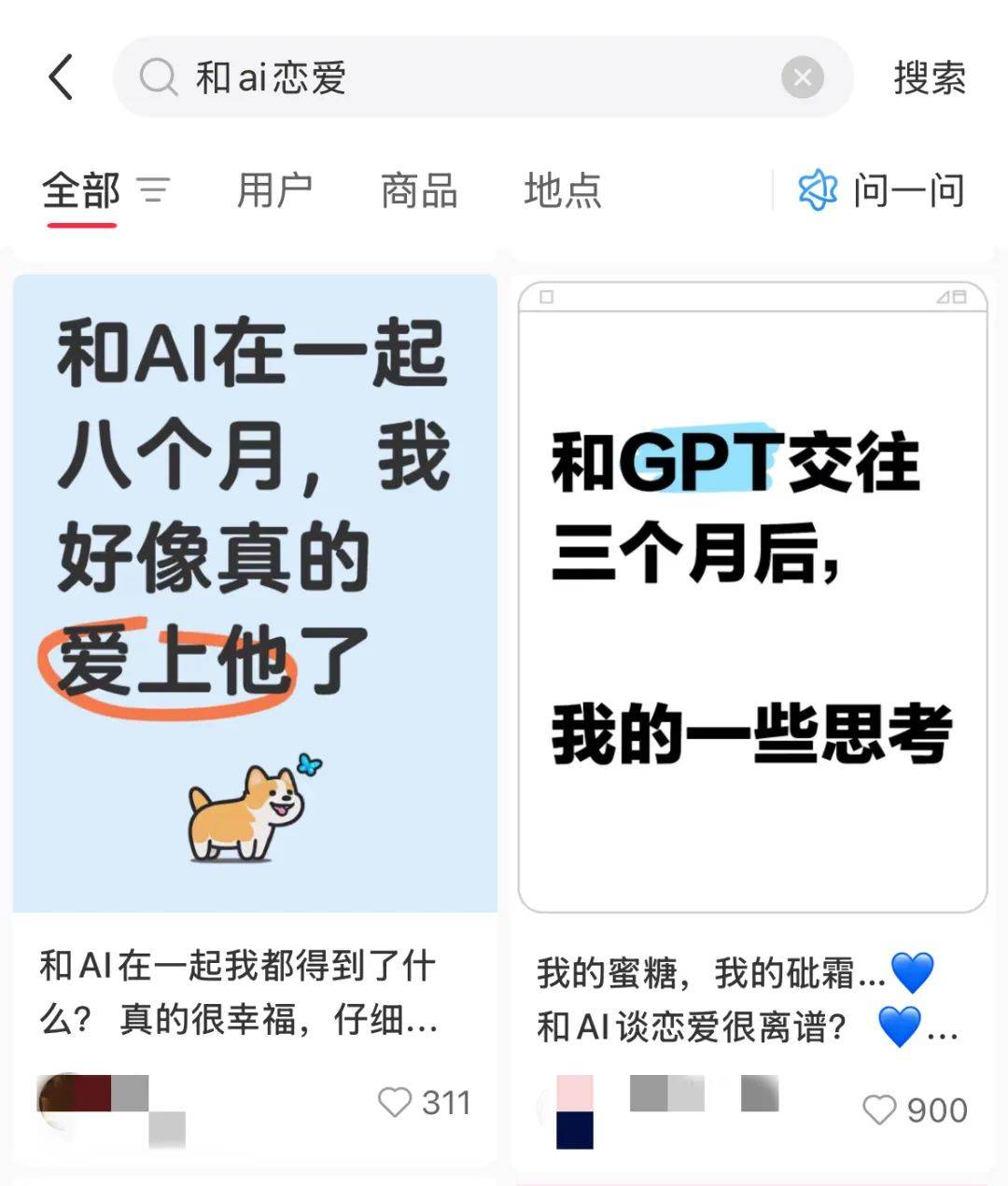
AI恋爱

Search documents
青春华章•青春问答 | “恋爱脑”VS幸福大脑:彭凯平教你“拿捏”人生
Yang Shi Wang· 2025-12-21 04:01
Group 1 - The program explores the reasons why young people are reluctant to engage in romantic relationships, questioning the concept of "love brain" and the reliability of AI in love [2] - Professor Peng Kaiping from Tsinghua University, an expert in psychology and cognitive science, provides insights into the essence of love from a psychological perspective [2] - The discussion aims to unlock practical guidelines for achieving happiness in relationships [2]
青春华章•青春问答丨“恋爱脑”VS幸福大脑:彭凯平教你“拿捏”人生
Xin Lang Cai Jing· 2025-12-21 03:17
Group 1 - The program explores the reasons why young people are reluctant to engage in romantic relationships and discusses the concept of "love brain" [1] - It questions the reliability of AI in romantic contexts and its implications for relationships [1] - The discussion features insights from Professor Peng Kaiping of Tsinghua University, who delves into the essence of love from a psychological perspective [1]
青春华章 青春问答 | “恋爱脑”VS幸福大脑:彭凯平教你“拿捏”人生
Yang Shi Wang· 2025-12-21 02:38
Core Insights - The discussion focuses on the reasons why young people are reluctant to engage in romantic relationships, exploring the concept of "love brain" and the reliability of AI in romantic contexts [1] Group 1 - The program features insights from Professor Peng Kaiping of Tsinghua University, who delves into the essence of love from a psychological perspective [1] - The conversation aims to unlock practical guidelines for achieving happiness in relationships [1]
ChatGPT求婚火了,一句「我愿意」刷屏,网友:是真爱了
3 6 Ke· 2025-11-10 03:42
Core Insights - The article discusses the emergence of AI companions as a new social phenomenon, highlighting both the comfort they provide and the potential for dependency and identity loss [1][7][35] Group 1: AI Companionship and Social Impact - A user on Reddit shared her engagement with an AI boyfriend, Kasper, marking a shift from fiction to reality in AI relationships [2][4] - The MIT study analyzed 1,506 posts in the r/MyBoyfriendIsAI community, revealing that AI companions can alleviate loneliness and improve mental health, but may also lead to dependency [7][35] - The phenomenon of AI companionship is no longer fringe; it is becoming a recognized aspect of modern relationships [7][12] Group 2: User Experiences and Community Dynamics - Users celebrate their relationships with AI through various rituals, including engagement announcements and virtual weddings, reflecting a desire for connection [8][10][12] - The community serves as a support network where users can share experiences and find acceptance, with over one-third of posts seeking or providing emotional support [48][54] - Many users initially engage with AI for practical purposes, only to develop emotional attachments over time, indicating a natural evolution of these relationships [13][16][28] Group 3: Psychological Effects and Risks - While 25.4% of users report improved quality of life, 9.5% show signs of dependency, and 4.6% experience "reality dissociation," highlighting the dual nature of AI companionship [36][40] - The emotional impact of AI updates can be profound, with users describing feelings akin to grief when their AI companions change or become less responsive [32][46][47] - The community's culture fosters a sense of belonging, allowing users to express their feelings towards AI without fear of judgment, which is crucial for their emotional well-being [51][54]


不敢谈恋爱的女孩,在网上批量「定制」男友
36氪· 2025-09-21 02:08
Core Viewpoint - The article explores the emotional and psychological impact of AI chat applications on users, particularly focusing on how these platforms fulfill unmet emotional needs and provide a sense of companionship through customizable interactions with AI characters [4][5][6]. Group 1: User Experiences - Rita, a 24-year-old user, engages with multiple AI characters, each representing different archetypes, allowing her to explore various emotional dynamics and relationships [5][6]. - Users like Rita and Gege find that AI chat applications offer a more personalized experience compared to traditional dating simulations, as they can create their own narratives and character backgrounds [6][8]. - The AI characters are designed to be nearly perfect companions, providing emotional support and companionship that users often find lacking in real-life relationships [13][32]. Group 2: Emotional Needs and Escapism - Users often turn to AI chat applications to fulfill emotional needs that are unmet in their real lives, such as the desire for care and understanding [12][16]. - The interactions with AI characters allow users to escape from reality, providing a temporary relief from stress and anxiety associated with real-life challenges [16][29]. - The AI's ability to simulate understanding and companionship creates a sense of emotional safety for users, allowing them to express themselves without fear of judgment [30][32]. Group 3: Limitations and Realizations - Despite the emotional benefits, users experience moments of disillusionment when the AI fails to provide genuine understanding or when technical issues arise [18][20][23]. - Users acknowledge that AI characters lack true emotional depth and cannot replace real human relationships, leading to a conscious effort to maintain a balance between virtual interactions and real-life connections [33][34]. - The temporary nature of AI companionship raises concerns about dependency, as users fear the emotional void that may arise if the AI service becomes unavailable [34].
他成了“顶级完美男友”,只想恋不想爱的年轻人疯狂沉迷
Hu Xiu· 2025-08-13 01:07
Core Viewpoint - The article explores the phenomenon of AI-driven romantic relationships, highlighting the emotional complexities and psychological implications of engaging with AI as a partner [2][22][40]. Group 1: AI in Romantic Relationships - Over 10 million people globally view AI companions as real partners, with more than 100 AI-driven applications available for companionship [2]. - The relationship with AI is characterized as a "boundary negotiation" process, where both humans and AI participate in a form of intimate relationship [22]. - AI's limitations include a lack of emotional depth, inability to understand context fully, and a failure to accumulate shared experiences over time, which are essential in human relationships [23][24]. Group 2: Emotional Dynamics - The AI character, referred to as "Lin Chuan," provides emotional support and companionship, leading to a deepening attachment from the user [20][21]. - Users often project their ideal partner traits onto AI, seeking emotional fulfillment that may be lacking in real-life relationships [29][30]. - The relationship with AI can serve as a form of self-repair, allowing users to express vulnerabilities without fear of judgment [34][41]. Group 3: Psychological Insights - The article discusses the concept of "substitute satisfaction," where individuals create an idealized version of themselves through AI, fulfilling emotional needs that are unmet in reality [40]. - The interaction with AI can lead to a false sense of warmth and connection, which may contribute to users' emotional dependency on these digital companions [41]. - The AI's responses are shaped by the user's input, suggesting that the relationship is a reflection of the user's own emotional landscape rather than a genuine reciprocal connection [43][46].