AI战略调整

Search documents
IBM全球裁员,最低影响2700人
Sou Hu Cai Jing· 2025-11-05 07:08
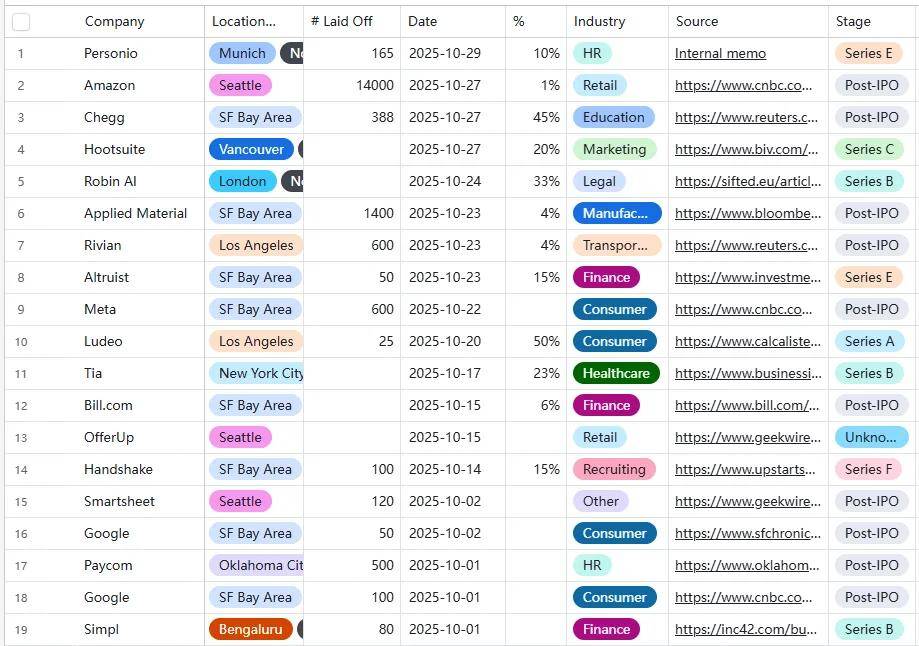
Group 1: IBM Layoffs - IBM plans to initiate a new round of global layoffs in Q4 2025, affecting a "low single-digit" percentage of its workforce, which is approximately 270,000 employees as of the end of 2024, translating to at least 2,700 employees [1] - The trend of layoffs in the tech industry continues, with 218 tech companies laying off a total of 112,732 employees in 2025, alongside 71,981 government employees and 182,528 federal employees [1] Group 2: Broader Tech Industry Layoffs - Major tech companies are undergoing strategic adjustments and cost-cutting measures, with several companies announcing significant layoffs in the latter half of 2025 [1] - Specific layoffs include Amazon cutting 14,000 employees (1% of its workforce), Chegg laying off 388 employees (45%), and Applied Materials reducing its workforce by 1,400 (4%) [1] Group 3: AI and Automation Impact - Companies like IBM are actively leveraging AI to reshape their human resources systems, with AI systems taking over tasks previously handled by around 200 HR employees, allowing for a reallocation of resources to more critical roles [5] - Microsoft has also implemented layoffs due to AI automation, with 30% of code being generated by AI, leading to a reduction in the workforce across various departments [4]


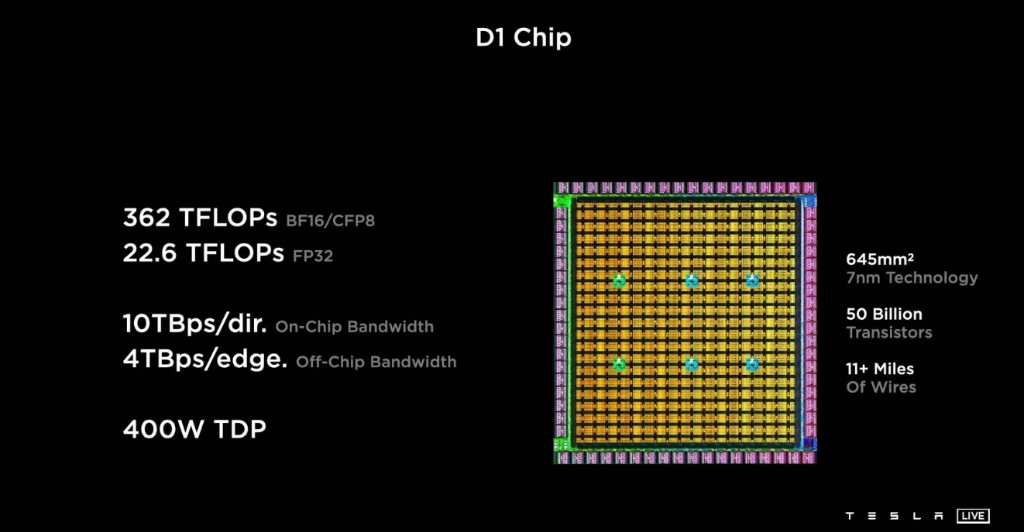
缩减Dojo项目,核心人才流向DensityAI,特斯拉AI战略迎来大调整?
Hua Er Jie Jian Wen· 2025-08-12 08:35
Core Insights - Tesla's Dojo supercomputer project is being dismantled as part of a strategic shift to enhance capital efficiency, moving away from high-cost in-house hardware development towards reliance on external partners like NVIDIA and AMD [1][3][9] - The decision to terminate the Dojo project is expected to help control significant capital and operational expenditures, which have been driven by AI projects and the expansion of AI training at the Texas Gigafactory [3][6] - The reduction of the Dojo project may pave the way for deeper collaboration between Tesla and Musk's other company, xAI, which is taking on more responsibilities in AI model training [6][7] Cost Reduction and Efficiency - Morgan Stanley's report indicates that the Dojo project's cancellation is a strategic adjustment focused on cost reduction and efficiency [3] - Although Tesla has not disclosed specific costs associated with Dojo, it is believed to have consumed substantial capital and operational expenditures [3] - The company's guidance for fiscal year 2025 indicates capital expenditures exceeding $9 billion, primarily driven by AI-related spending, making the termination of Dojo a direct method to control these costs [3] Talent Migration - The downsizing of the Dojo project has led to a talent exodus, with around 20 former Dojo team members joining a startup called DensityAI, which aims to build computational infrastructure for training robots and AI agents [5] - DensityAI is led by former Tesla AI head Ganesh Venkataramanan and is reportedly in the process of raising hundreds of millions in funding [5] Strategic Restructuring - Tesla's strategic focus is shifting towards leveraging its extensive vehicle network as a "large-scale distributed inference cloud," enhancing its capabilities in edge data collection and inference [6][7] - The company is expected to allocate more capital and R&D resources towards reducing the bill of materials (BOM) costs for the Optimus humanoid robot and improving manufacturability [7] External Environment Changes - The external environment for computational resources has improved, with GPU shortages that were previously a concern no longer being as severe, facilitating Tesla's strategic shift [9] - Morgan Stanley's semiconductor analyst notes that with NVIDIA's annual R&D spending exceeding $15 billion, it is becoming increasingly difficult for other companies to develop specialized integrated circuits that outperform NVIDIA in mainstream workloads [9]