AI推理芯片

Search documents
英伟达GTC前瞻:芯片架构路线图、CPO和推理产品成关注焦点
第一财经· 2026-03-16 01:00
Core Viewpoint - Nvidia's GTC conference is set to showcase significant advancements in AI and semiconductor technology, with a focus on the upcoming Rubin architecture and its implications for the future of AI development [6][7]. Group 1: Chip Architecture and Product Roadmap - Nvidia has announced its chip architecture roadmap, highlighting the Rubin architecture set to launch in the second half of this year, followed by Rubin Ultra in 2027 and Feynman in 2028 [6]. - Bank of America predicts that the GTC will clarify Nvidia's product line from Rubin to Feynman, providing visibility across three generations of products, which will strengthen Nvidia's competitive edge [6][7]. Group 2: Networking and Optical Technologies - Nvidia is expanding its focus beyond GPUs, showcasing six Rubin chips at CES, including various networking components, indicating a broader strategy in networking and storage [7]. - The concurrent timing of GTC and the OFC conference suggests Nvidia may reveal more about its co-packaged optics (CPO) technology, with a focus on the Quantum-X and Spectrum-X network architecture [8]. Group 3: Collaboration and New Technologies - Nvidia's recent partnership with AI chip startup Groq may lead to the integration of Groq's technology into Nvidia's offerings, particularly in AI inference chips [9]. - Market speculation suggests that OpenAI may adopt Nvidia's inference chips based on Groq technology, although this remains unconfirmed [9]. Group 4: Autonomous Driving and AI Applications - Ahead of GTC, Nvidia released a video demonstrating its full-stack autonomous driving software, DRIVE AV, showcasing its capabilities in real-world scenarios without human intervention [10]. - The developments in Nvidia's automotive and robotics sectors are expected to be key highlights at GTC, reflecting the company's ongoing commitment to physical AI applications [10].



英伟达扩张AI版图,Groq三星AI芯片订单或增长70%至1.5万片
Hua Er Jie Jian Wen· 2026-03-10 09:59
Group 1 - The demand for AI inference chips is rapidly increasing, reshaping the order landscape for Samsung's foundry services [1][2] - AI startup Groq has requested Samsung to increase its AI chip production from approximately 9,000 wafers to 15,000 wafers, a rise of about 70% [1] - Groq is expected to enter large-scale commercialization this year, moving from sample production to mass production with Samsung [2] Group 2 - Tesla has delayed multiple project wafer production plans, impacting the timeline for Korean AI chip company DeepX's next-generation NPU [3] - DeepX's second-generation NPU chip, DX-M2, was originally scheduled to start production in April but has been postponed by about six months due to Tesla's delays [3] - Tesla's adjustments in production schedules for autonomous vehicles and supercomputing investments are believed to be contributing factors to the delays [3] Group 3 - Tesla is negotiating with Samsung to significantly increase the production of its 2nm AI6 chip, potentially raising the monthly output from 16,000 wafers to about 40,000 wafers, more than doubling the original agreement [4][5] - This potential expansion indicates Tesla's deepening reliance on Samsung's 2nm process, which may lead to tighter scheduling pressures for Samsung's foundry capacity [5] - Coordinating capacity allocation among multiple clients, including Tesla and DeepX, will be a key operational challenge for Samsung [5]

新一代AI推理芯片
2026-03-06 02:02
Summary of Conference Call Records Industry Overview - The discussion revolves around the advancements in AI inference chips, specifically focusing on the roles of GPU, LPU, TPU, and NPU in the evolving landscape of AI processing and data centers [1][2][3]. Key Points and Arguments GPU and LPU Collaboration - GPUs are transitioning from being a replacement to a complementary role with LPUs, where GPUs excel in the prefill stage of large-scale parallel processing, while LPUs provide low-latency advantages in the decode stage, significantly improving P95/P99 tail latency [1][2]. - NVIDIA is expected to launch a rack-level integrated solution that combines 64 clusters of LPU and GPU, aiming to deliver high throughput and extremely low interaction latency [1][3]. LPU Technology and Limitations - The core technology supporting LPU is 3D stacking packaging, which vertically stacks on-chip SRAM/DRAM with computing cores to shorten access links, resulting in low access latency despite a capacity of only hundreds of megabytes [1][7]. - LPUs cannot replace Tensor Cores as they focus on language text processing and lack the parallel computing and graphics rendering capabilities necessary for training trillion-parameter models [1][4][5]. Heterogeneous Integration - Heterogeneous integration is becoming essential due to yield limitations at advanced process nodes like 2nm. Chiplets allow the integration of different CPUs, GPUs, and NPUs, effectively reducing TCO and enhancing system efficiency [1][3][9]. Power Consumption and Cooling Solutions - The power consumption of single chips is approaching 2000W, necessitating a shift in data centers from air cooling to cold plate or immersion cooling, along with upgrades to server power supply systems to match dynamic power scheduling [2][15][16]. LPU's Role in Inference - The inference process is divided into two stages: prefill and decode. The GPU handles the prefill stage, while the LPU takes over during the decode stage, which is sensitive to latency, thus improving user experience [6][11][12]. 3D Stacking and Packaging - 3D stacking enhances on-chip storage capabilities, allowing for lower latency and improved performance. This technology is already being applied in various sectors, including AI chips and consumer-grade chips [7][8][10]. Cost and Efficiency Optimization - Reducing inference costs involves replacing some general-purpose computing with dedicated computing, allowing for more efficient task allocation among different processing units [18]. Multi-modal Inference - There is currently no definitive chip that excels in multi-modal inference. Future developments may involve a combination of general-purpose and specialized chips to enhance efficiency in multi-modal tasks [19][20]. Other Important Insights - The integration of LPU into NVIDIA's product line could lead to significant advancements in AI processing, but the exact mechanisms and collaborative frameworks are still under development [17]. - The industry is witnessing a shift towards specialized chips like LPU due to the rising demand for dedicated processing power driven by the popularity of large language models [17]. This summary encapsulates the critical insights and developments discussed in the conference call, highlighting the evolving dynamics of AI chip technology and its implications for the industry.
云天励飞:正推进下一代高性能NPU研发,将更适合AI推理应用
Zhong Guo Ji Jin Bao· 2026-02-22 06:54
Group 1 - The company focuses on the research, design, and commercialization of AI inference chips, being one of the first globally to propose and commercialize NPU-driven AI inference chips [2] - The company has completed the development of its fourth-generation NPU and is advancing the next generation of high-performance NPUs suitable for AI inference applications [2] - The Deep Edge10 chip series supports various mainstream models, including Transformer, BEV, CV large models, and LLM large models, and has been commercialized in fields such as robotics, edge gateways, and servers [2] Group 2 - The company's product strategy centers on self-developed chips and algorithms, providing a full-stack solution to meet edge-cloud inference demands [3] - The company plans to strengthen partnerships with smart device manufacturers to integrate its AI inference chips into their products [3] - The company is continuously developing AI inference chips, with ongoing products including DeepVerse and DeepXBot, aimed at enhancing model training and computational efficiency for enterprise clients [3]

宁波百亿“芯”巨头抢滩港股 “中国边缘AI芯片第一股”来了
Mei Ri Shang Bao· 2026-01-27 22:18
Core Insights - Aixin YuanZhi Semiconductor Co., Ltd. is set to become the first Chinese edge AI chip company to go public, having passed the hearing on January 25, with plans to list on the Hong Kong Stock Exchange after the Lunar New Year [1] - The company is recognized as the world's largest provider of mid-to-high-end visual edge AI inference chips and the third largest in China for edge AI inference chips, with significant growth in smart automotive chip shipments [1][2] - Aixin YuanZhi has achieved a valuation exceeding 10 billion yuan within six years of its establishment, attracting investments from notable firms including Tencent and Meituan [2] Company Performance - Revenue growth has been substantial, with projected revenues of 0.5 billion yuan in 2022, 2.3 billion yuan in 2023, and 4.73 billion yuan in 2024, reflecting a compound annual growth rate of 206.8% [3] - Despite revenue growth, the company remains in a loss-making position, with net losses increasing from 6.12 billion yuan in 2022 to an expected 8.56 billion yuan in 2024 [3] - Research and development expenditures have been consistently high, with investments of 4.46 billion yuan in 2022, 5.15 billion yuan in 2023, and 5.89 billion yuan in 2024, indicating a commitment to innovation [3][4] Market Position - Aixin YuanZhi's market share in the automotive sector has grown from 0.1% in 2022 to 6.4% currently, with successful commercialization of three automotive SoC products [4] - The global AI inference chip market is projected to reach approximately 606.7 billion yuan in 2024, with edge and endpoint segments rapidly expanding to over 50% of the market share [4]
又一国产AI芯片IPO来了!芯片首富虞仁荣参投,估值百亿
Sou Hu Cai Jing· 2026-01-26 05:01
Core Viewpoint - Aixin Yuanzhi, an AI chip unicorn based in Ningbo, Zhejiang, is preparing for its IPO on the Hong Kong Stock Exchange, showcasing its significant growth in the AI chip market and its strategic focus on high-performance AI inference systems for edge computing and terminal devices [2][4]. Company Overview - Aixin Yuanzhi was founded in May 2019 by former CTO of Unisoc, Qiu Xiaoxin, and specializes in AI inference system chips (SoC) [4][17]. - The company has developed five generations of SoCs by September 30, 2025, with over 165 million units delivered, focusing on applications in visual terminal computing, smart vehicles, and edge AI inference [4][30]. Market Position - Aixin Yuanzhi is the largest provider of mid-to-high-end visual edge AI inference chips globally, with a market share of 24.1% in 2024, and ranks fifth in overall visual edge AI inference chips with a 6.8% market share [5][6]. - The company is the second-largest domestic supplier of smart driving SoCs in China, having sold over 518,000 units, and ranks third in edge AI inference chips with a 12.2% market share [5][7]. Financial Performance - Revenue figures for Aixin Yuanzhi from 2022 to the first nine months of 2025 are as follows: 0.50 billion, 2.30 billion, 4.73 billion, and 2.69 billion RMB, respectively. Net profits during the same period were -6.12 billion, -7.43 billion, -9.04 billion, and -8.56 billion RMB [7][10]. - The adjusted net profits were -4.44 billion, -5.42 billion, -6.28 billion, and -4.62 billion RMB, totaling -20.76 billion RMB [10]. Research and Development - Aixin Yuanzhi invests heavily in R&D, with expenses of 4.46 billion, 5.15 billion, and 6.28 billion RMB in 2022, 2023, and 2024, respectively [7][12]. - As of September 30, 2025, the company employed 499 R&D personnel, accounting for approximately 80% of its total workforce, with over half holding master's degrees or higher [38][39]. Product Development - The company has launched several SoC series, including the AX520, AX620, AX630, AX650, and M55H, with applications in smart vehicles and edge AI inference [31][34]. - Aixin Yuanzhi's core technology includes the Axera Neutron NPU and Axera Proton AI-ISP, which enhance AI inference performance and image processing capabilities [35][37]. Sales and Distribution - The majority of Aixin Yuanzhi's revenue comes from direct sales and distribution, with significant contributions from major clients, accounting for 91.5% of total revenue in 2022 [40][41]. - The company anticipates continued growth in its smart vehicle and edge computing SoC sales, with substantial year-on-year increases projected [27][34].
浙江AI芯片独角兽冲刺港交所,5年干到“全球第一”
3 6 Ke· 2026-01-26 01:15
Core Insights - Aixin Yuanzhi, founded in May 2019, specializes in AI inference system chips (SoC) for edge computing and terminal devices, achieving significant commercial success with over 165 million SoCs delivered by September 2025 [2][30]. Group 1: Company Overview - Aixin Yuanzhi is recognized as the largest global provider of mid-to-high-end visual edge AI inference chips, holding a market share of 24.1% in 2024 [4][5]. - The company has developed five generations of SoCs, with significant applications in visual terminal computing, smart vehicles, and edge AI inference, achieving large-scale production [2][30]. - The CEO, Sun Weifeng, has a background in semiconductor technology, previously working at HiSilicon [2][17]. Group 2: Financial Performance - Aixin Yuanzhi's revenue has shown substantial growth, with figures of 0.50 billion RMB in 2022, 2.30 billion RMB in 2023, and projected 4.73 billion RMB in 2024, despite ongoing net losses [7][11]. - The company reported a net loss of 9.04 billion RMB in 2024, with R&D expenses increasing to 5.89 billion RMB [7][14]. - The gross profit margin has decreased from 25.9% in 2022 to 21.0% in 2024, indicating challenges in maintaining profitability amid rising costs [14][29]. Group 3: Market Position and Competition - Aixin Yuanzhi ranks as the second-largest domestic supplier of smart driving SoCs in China, with over 518,000 units sold [4][6]. - The company is positioned to benefit from the growing demand for AI chips, particularly in the automotive sector, where its smart vehicle products have seen a revenue increase of over 251% [20][30]. - The global market for mid-to-high-end visual edge AI inference chips is expected to grow significantly, with Aixin Yuanzhi leading in this segment [28][20]. Group 4: Research and Development - Approximately 80% of Aixin Yuanzhi's workforce is dedicated to R&D, with a strong emphasis on innovation and patent development, holding 631 patents as of September 2025 [37][38]. - The company has developed proprietary technologies such as the Axera Neutron NPU and Axera Proton AI-ISP, enhancing its product offerings in AI inference and image processing [35][34]. - Aixin Yuanzhi's R&D strategy focuses on creating high-performance, scalable AI solutions to meet increasing market demands [34][33].
集齐产业、PE/VC与央企国资!曦望披露近30亿元新融资细节
2 1 Shi Ji Jing Ji Bao Dao· 2026-01-22 15:05
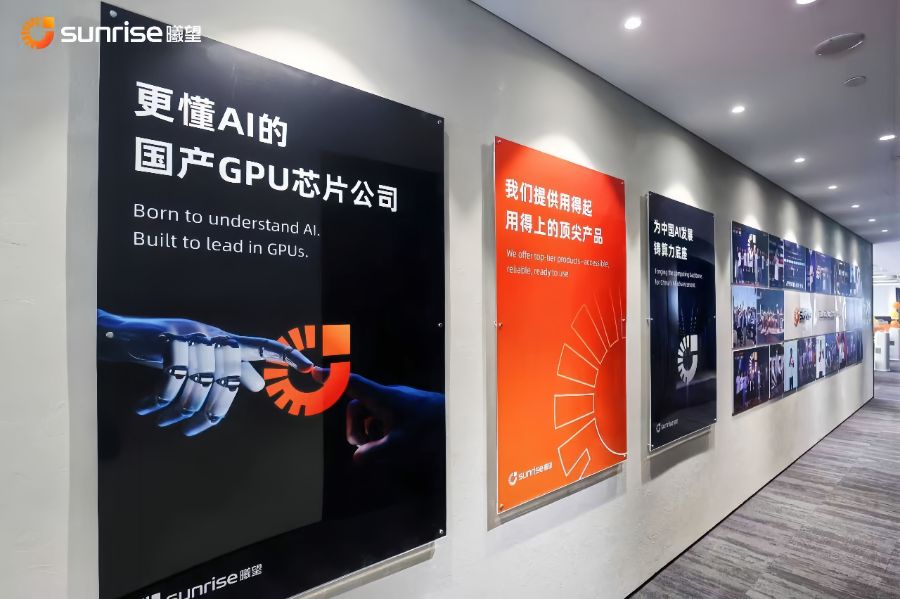
Core Insights - The GPU chip company Sunrise has completed nearly 3 billion yuan in financing within a year, with investments from various industry players and well-known VC/PE institutions [1][3] - Sunrise focuses on high-performance GPU and multi-modal scene inference chip development and commercialization, aiming to enhance its next-generation inference GPU capabilities [3][4] Financing and Investment - The recent financing round includes investments from SANY Group's Huaxu Fund, Paradigm Intelligence, Hangzhou Data Group, and several other industry investors, as well as notable VC/PE firms like IDG Capital and CICC Capital [1][3] - The company had previously disclosed a financing round of nearly 1 billion yuan in July, indicating strong investor interest and confidence in its growth potential [3] Company Background and Leadership - Founded in 2020, Sunrise originated from the chip division of SenseTime and has a team of approximately 300 members, many of whom come from leading companies like NVIDIA and AMD [3][4] - The co-CEOs, Wang Yong and Wang Zhan, bring significant experience from AMD and Baidu, respectively, focusing on product commercialization and chip development [3] Technical Focus and Product Development - Sunrise is concentrating on inference chips rather than participating in the competitive training chip market, optimizing GPU architecture for inference scenarios to reduce costs [3][4] - The company has developed a complete product matrix for inference GPUs, with the S1 cloud-edge visual inference chip already in mass production and over 20,000 units shipped [4] - The upcoming S3 product, targeting multi-modal large model inference, aims for mass production by 2026, with a goal to reduce inference computing costs by 90% [4] Strategic Vision - The company's strategy emphasizes the importance of low energy consumption, high concurrency, and low latency for inference chips, which are crucial for AI deployment [4] - The goal is to make computing power more accessible and affordable, thereby unlocking the full potential of AGI [4]
分析师质疑英伟达与Groq的交易规避监管,交易细节待披露
Ge Long Hui A P P· 2025-12-26 23:13
Core Viewpoint - Nvidia and Groq have announced a $20 billion non-exclusive licensing agreement, which analysts suggest is a strategic move to navigate antitrust scrutiny while maintaining a competitive facade in the AI market [1] Group 1: Strategic Implications - The non-exclusive licensing agreement is seen as a common strategy among tech giants to avoid regulatory challenges, particularly antitrust risks [1] - Analysts from Bernstein highlight that structuring the deal as a non-exclusive license helps to maintain the appearance of competition in the market [1] - Cantor analysts describe the agreement as both an offensive and defensive strategy, aiding Nvidia in expanding its complete system technology stack and solidifying its leadership in the AI market [1] Group 2: Market Significance - Bank of America characterizes the deal as "surprising, expensive but strategically significant," emphasizing Nvidia's focus on the future growth of AI inference chips [1]
英伟达200亿美元“吞掉”Groq,中国对标公司借壳上市,市值飙至229亿
Sou Hu Cai Jing· 2025-12-26 09:23
Core Viewpoint - Nvidia has made its largest acquisition to date, entering a $20 billion technology collaboration agreement with AI chip startup Groq, which includes the integration of Groq's core team into Nvidia [2][11]. Group 1: Acquisition Details - The agreement is a non-exclusive licensing deal allowing Nvidia to utilize Groq's inference technology, while Groq will continue to operate as an independent entity under CEO Simon Edwards [4][11]. - This acquisition model, termed "Acqui-hire 2.0," focuses on technology asset transfer and talent acquisition without equity purchase, thereby avoiding antitrust scrutiny [4][11]. - Nvidia's CEO Jensen Huang stated that this agreement will enhance Nvidia's capabilities, particularly in AI inference and real-time workloads [11]. Group 2: Groq's Technology and Market Position - Groq's LPU chip, designed specifically for large language models, boasts inference performance improvements of 10 to 100 times compared to conventional GPUs and TPUs, positioning it as a significant competitor to Nvidia's GPU dominance [5][12]. - The global AI inference chip market is projected to reach three times the size of the training market by 2025, indicating a shift in focus within the AI industry [12]. Group 3: Competitive Landscape - Nvidia currently holds a 90% market share in AI training chips but faces increasing competition in the inference space from companies like Google, Meta, and various startups [12]. - Other tech giants are also pursuing similar acquisition strategies, with companies like Meta and AMD acquiring AI chip startups to bolster their capabilities [13]. Group 4: Financial and Investment Context - Groq has attracted significant investment since its inception, including a recent $750 million round led by firms such as Sequoia Capital and BlackRock, valuing the company at $6.9 billion [6][7]. - Nvidia's cash reserves of $60.6 billion provide a strong financial foundation for such strategic acquisitions, allowing it to eliminate potential competitors while enhancing its technological edge [11].