AI识别系统

Search documents
从智利果园到中国果盘 详细揭秘车厘子如何“超长保鲜”
Yang Shi Xin Wen Ke Hu Duan· 2026-01-27 13:12
Core Insights - The article discusses the logistics and technology behind the transportation of cherries from Chile to China, highlighting the efficiency of the cold chain system that ensures the fruit remains fresh during its journey [1][3][23]. Group 1: Transportation and Logistics - Cherries travel approximately 20,000 kilometers from San Antonio, Chile, to Tianjin, China, with a shipping time reduced to about 30-35 days, thanks to a direct maritime route [1]. - Upon arrival at Tianjin Port, customs and border inspection processes are streamlined, allowing for quick unloading and transfer of the cherries [3]. - The entire cold chain logistics process maintains a temperature between -1°C and 1°C, ensuring the cherries remain fresh throughout their journey [9][21]. Group 2: Preservation Techniques - The cherries undergo a series of preservation steps, including rapid cooling, washing, and quality inspection, all within 24 hours of harvesting [15]. - Advanced packaging technology, such as modified atmosphere packaging, is employed to maintain optimal gas composition, significantly extending the shelf life of the cherries [19][21]. - The cherries can remain fresh for up to 60 days under ideal storage conditions, utilizing both low-temperature storage and gas composition control [21]. Group 3: Market Dynamics - The expected import volume for the current season is around 40,000 tons of cherries, facilitated by mutual recognition of inspection standards between China and Chile [23]. - The area dedicated to cherry cultivation in Chile is projected to reach approximately 1.2 million acres by 2024, a significant increase from 2000, indicating a growing industry [23].


江苏公安机关出台16条举措助力提振消费新车上牌、出入境办证更便利了
Xin Hua Ri Bao· 2025-09-23 23:42
Group 1: Core Initiatives - Jiangsu Public Security Department launched "Sixteen Measures" to support economic development and boost consumption, focusing on stimulating consumption dynamics, ensuring consumption scenarios, maintaining consumption environment, and providing convenient consumption services [1] - The measures include establishing vehicle registration service stations in key areas to facilitate new car registration and used car transfers, and implementing online processing for vehicle mortgage releases [1][3] - The province aims to enhance the efficiency of large event approvals by reducing review time from 7 days to 5 days and allowing for a one-time application for multiple events at the same venue [2] Group 2: Traffic and Travel Enhancements - To address parking difficulties in tourism, 4,000 temporary night parking zones will be established, and measures will be taken to allow limited parking on non-main roads [3] - Special services for urgent outbound travel will be introduced, including extended hours for processing exit and entry documents for specific groups like students and business personnel [3] - The use of AI-equipped drones for low-altitude security patrols and traffic violation capture will be implemented to ensure safety in low-altitude economic activities [3] Group 3: Administrative Efficiency - The province will promote integrated public security services, optimizing processes and simplifying required documents for various administrative tasks [4] - A dedicated section for public security services will be established on the "Su Fu Ban" platform to facilitate online processing of frequently needed services [4] - Efforts will be made to enhance intellectual property protection and conduct special actions against illegal business practices to safeguard legitimate rights of enterprises [4]
【前沿科技】全球首款防核辐射机器人卫士:解密守护核设施的黑科技
机器人圈· 2025-05-28 10:37
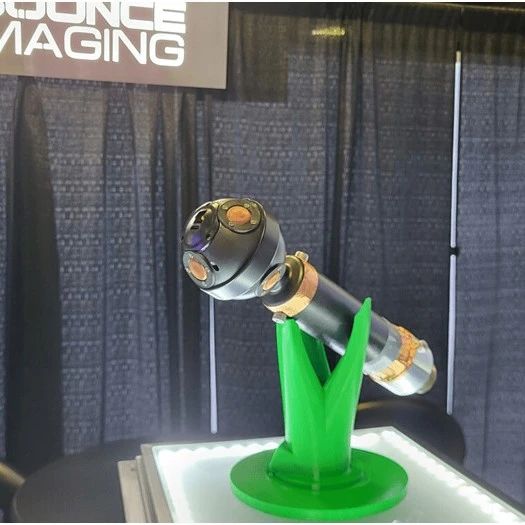
Core Viewpoint - The article discusses the launch of the world's first nuclear-resistant surveillance robot, Recce360, by Bounce Imaging, designed specifically for nuclear facilities to enhance security and monitoring capabilities [3][4]. Group 1: Technology and Features - Recce360 has passed the "Dash 12" environmental testing standard, ensuring its reliability in electromagnetic environments [3]. - The robot employs advanced anti-nuclear radiation technology, maintaining functionality even after a nuclear explosion, which ensures continuous monitoring in extreme conditions [7]. - It features a deep detection camera with secure armored fiber optic cables, eliminating radio frequency transmission risks and providing real-time visual intelligence without electromagnetic radiation [7]. Group 2: Security Needs and Vulnerabilities - Nuclear facilities face dual vulnerabilities: physical intrusion and electronic signal leakage, necessitating specialized robotic solutions [4]. - A 2022 confidential assessment report identified 217 electromagnetic vulnerabilities in existing protective systems at a nuclear base, highlighting the urgent need for improved security measures [4]. Group 3: Applications and Future Developments - Recce360 is primarily aimed at protecting critical infrastructure such as nuclear storage facilities, but its versatility allows for use in government confidential facilities and industrial monitoring [8][9]. - The company plans to integrate AI recognition systems in the next generation of products, expected to be mass-produced by 2025, enhancing the robot's ability to analyze equipment anomalies [10].