
AI财富管理

Search documents
信任的堡垒:怎样的AI才配执掌财富未来丨清华经管说
Xin Lang Cai Jing· 2026-02-05 12:18
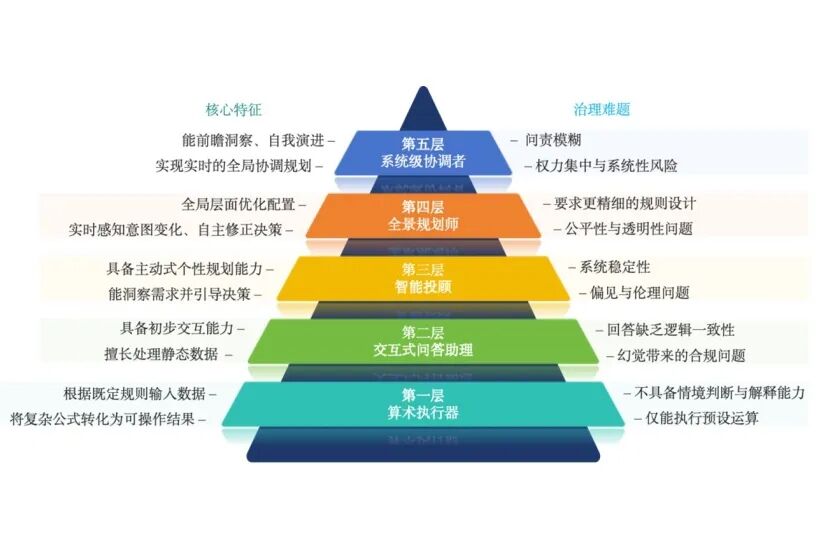
Core Insights - The essence of mature AI wealth management lies not in computational power or feature stacking, but in the quality of judgment and interpretability during critical decision-making moments [1][27] - The evolution of AI in wealth management is marked by a shift from simple arithmetic tools to complex systems capable of dynamic planning and decision-making [19][49] Group 1: AI Wealth Management Evolution - The five-layer capability evolution of AI wealth management includes: 1. Arithmetic Executor: Basic digital tools for executing predefined calculations [45] 2. Interactive Q&A Assistant: Systems that respond to user inquiries but lack logical consistency [46] 3. Intelligent Investment Advisor: Current mainstream form that generates asset allocations based on standardized risk questionnaires [47] 4. Holistic Planner: Integrates various financial aspects into a dynamic planning framework [48] 5. System-Level Coordinator: Aims for a balance between individual financial optimization and overall financial stability [49] Group 2: Trust and Governance Principles - Five foundational principles for trustworthy AI wealth management are proposed: 1. Client-Centric Focus: The system must prioritize user lifecycle goals and separate commercial incentives from advice logic [38] 2. Adaptive Personalization: The system should continuously observe and adjust to changes in user circumstances [39] 3. Technical Robustness and System Resilience: Reliable systems must maintain consistency and accuracy even under extreme conditions [40] 4. Ethical Calibration and Fairness: Mechanisms should be in place to identify and correct biases in algorithms [41] 5. Traceability and Accountability: Systems must retain comprehensive records for auditing and compliance [42] Group 3: Challenges and Considerations - The transition to AI wealth management faces challenges such as: - The potential for "gamification" to undermine investment quality and trust [35] - The risk of "socialization" leading to concentrated investments without transparency [36] - The fundamental question remains whether algorithms serve user goals or platform goals, which could impact financial health [36] Group 4: Implementation and User Engagement - Financial institutions should embed decision rationale visualization and conflict of interest transparency into their systems [50] - Users are encouraged to adopt a questioning habit regarding recommendations, alternative paths, and worst-case scenarios [50]

AI“选基”热度渐起 驯服AI成为自己的“理财助理” 还收益“赛马”?
Xin Lang Cai Jing· 2025-12-16 23:09
Core Viewpoint - The younger generation of investors is increasingly utilizing AI as a "financial assistant" to navigate the complex market environment and the vast array of public fund products available, with discussions on social media platforms gaining significant attention [1][6]. Group 1: AI in Investment Decision-Making - AI tools are being integrated into daily life, with many young users treating them as search engines or advisors, particularly in data-intensive fields like investment [7][8]. - There are currently over 13,000 public fund products in the market, leading investors to seek AI's data processing capabilities to help select suitable funds [7][8]. - Discussions on social media about AI-assisted investment strategies, such as "how to let AI recommend fund instructions," are generating high engagement [2][6]. Group 2: AI Fund Selection Process - A complete set of AI input instructions has been developed, covering aspects like background setting, market outlook, and decision-making, reflecting a comprehensive investment thought process [2][8]. - AI-generated fund combinations exhibit a diversified investment strategy, including sectors like technology growth, consumer goods, dividends, gold, broad-based funds, QDII, and bond funds [2][8]. Group 3: Limitations of AI Tools - Despite the advantages of AI in quickly integrating vast amounts of information, there are significant limitations, including reliance on historical data and challenges in predicting unknown risks or responding to sudden events [4][10]. - An evaluation of an AI tool's fund selection revealed that its recommendations were primarily based on publicly available marketing materials from fund companies, indicating a potential delay in information [10]. - The AI tool demonstrated a level of compliance by clarifying that its product recommendations were based on public information and did not constitute investment advice [10]. Group 4: Current State and Future of AI Wealth Management - Research indicates that AI wealth management penetration among individual investors is still in its early stages, with common uses including finding and comparing financial products, learning about finance, and obtaining market information [11]. - The main barriers to broader acceptance of AI tools include their practicality, neutrality, and empathy, with investors hoping for AI to evolve into a comprehensive "financial officer" role [11]. - Future developments in AI wealth management are expected to focus on deeper integration, enhanced professional capabilities, and more human-like experiences [11].
驯服AI炒基,还收益“赛马”?记者试了试……
Zhong Guo Zheng Quan Bao· 2025-12-16 17:06
Group 1 - The core idea is that young investors are increasingly using AI tools as financial assistants to navigate the complex market environment and a vast array of mutual fund products [1][2][5] - There are currently over 13,000 mutual fund products in the market, leading to challenges for investors in selecting suitable funds [2][4] - AI tools are gaining popularity among young users who view them as search engines or advisors, particularly in data-intensive fields like investment [2][3] Group 2 - A complete set of AI input instructions has been developed to guide users in selecting funds, covering aspects such as market outlook and decision-making [3] - AI-generated fund combinations reflect a diversified investment strategy, including sectors like technology, consumption, dividends, gold, and bonds [3][4] - AI tools are being tested for their practical utility in fund selection, with suggestions based on current policies and market trends [4][5] Group 3 - Despite the advantages of AI tools in processing vast amounts of information, there are significant limitations, including reliance on historical data and challenges in predicting unforeseen risks [5][6] - The penetration of AI wealth management among individual investors is still in its early stages, with common uses being product comparison, learning, and market information [6] - Future developments in AI wealth management are expected to focus on deeper integration, enhanced professional capabilities, and more human-like experiences [6]
AI财富管理服务现状调研分析|道口研究
清华金融评论· 2025-12-14 09:38
Core Viewpoint - The article discusses the transformative impact of artificial intelligence (AI) in the wealth management sector, evolving from a tool for efficiency enhancement to an intelligent partner capable of understanding client needs and providing personalized advice, thereby reshaping service models and customer experiences [3][5]. Research Background - The rapid development of AI technologies, particularly generative AI, is driving a paradigm shift in the global financial industry, with wealth management at its core. The Chinese government's policy support and unique digital ecosystem are facilitating the swift advancement of AI in wealth management [5]. Research Design - A joint online survey conducted by Tsinghua University's Wudaokou School of Finance and Ant Group aimed to analyze the real-world application of AI wealth management tools in China. The survey collected 1,627 valid responses, including 1,514 from individual investors and 113 from institutional research users, ensuring a representative sample [8]. Individual Investors: Market Potential and Experience Pain Points - The survey revealed a significant gap between the recognition and actual use of AI wealth management tools among individual investors. Over half of the respondents had never used such tools, and only 14.8% were deep users, indicating that market penetration is still in its early stages [9]. - Despite low usage rates, users have a strong understanding of AI's core value, with 24.14% appreciating the service's availability, 23.31% valuing the reduction of professional barriers, and 20.69% recognizing the importance of personalized investment advice [11]. - Key application areas for AI tools include investment decision-making, with users primarily utilizing them for product comparison (22.39%), learning financial knowledge (21.48%), and obtaining market insights (21.4%) [11]. - Major experience pain points include overly theoretical responses (23.72%), concerns about product neutrality (20.97%), and insufficient emotional interaction (12.83%), highlighting challenges in transitioning from generalized suggestions to actionable plans [11]. - Individual investors envision AI as a comprehensive financial advisor, desiring roles such as market analyst (26.76%), financial planner (22%), investment behavior coach (19%), knowledge mentor (18.48%), and emotional support partner (11.59%) [11]. Institutional Research Users: Shallow Application and Need for Automation - In contrast to individual investors, institutional users exhibit different application characteristics. While over 70% have encountered AI tools, 63.7% only use them occasionally for reference, with deep reliance at a mere 7.1%, indicating that AI has not yet integrated into core workflows [15].
京东金融京小贝全新升级:大模型重塑财富管理,打造可信赖的AI财富管家
Zheng Quan Shi Bao Wang· 2025-09-25 11:45
Core Insights - JD Finance announced the upgrade of its AI wealth management product "Jing Xiaobei," evolving from a smart tool to a professional, personalized, and trustworthy "smart financial partner" [1] Group 1: User Understanding and Interaction - Jing Xiaobei addresses traditional smart advisory issues such as generalized strategies and lack of continuous learning by utilizing JD's large model and user memory system to create dynamic user profiles [2] - The system provides personalized insights and human-like interactions, offering tailored analysis and decision-making suggestions while avoiding information overload [2] - A closed-loop mechanism of "output-evaluation-optimization" allows Jing Xiaobei to continuously improve service strategies and adapt to real-time market conditions [2] Group 2: Digital Twin Functionality - The upgrade features the "Digital Twin" capability, allowing users to interact with a digital version of a well-known financial influencer, providing consistent professional responses and strategy suggestions [2] - This functionality expands service coverage and explores new paths for digital reuse of financial IP, establishing a model for intelligent services driven by professional knowledge and personality traits [2] Group 3: Technical Architecture and Strategy - Jing Xiaobei leverages JD's self-developed financial RAG 2.0 engine and multi-agent collaboration to enhance its wealth management capabilities [3] - The system integrates market data, macro policies, and user behavior characteristics to enable real-time reasoning and dynamic strategy optimization, offering personalized solutions [3] - The platform connects the entire "information-analysis-transaction" chain, allowing users to seamlessly access product analysis and purchasing options [3] Group 4: Future Outlook - JD Finance emphasizes that Jing Xiaobei is designed to enhance, not replace, human wealth management capabilities, aiming to democratize professional services through AI technology [3] - The company plans to continue expanding service capabilities and ecosystem connections, deepening the "AI + finance" strategic layout [3]
