AI赋能工业

Search documents
博时市场点评1月8日:沪深两市调整,成交小幅回落
Xin Lang Cai Jing· 2026-01-08 08:38
Market Overview - The Shanghai Composite Index ended its fourteen-day rally, with the index closing at 4082.98 points, down 0.07% [10] - The Shenzhen Component Index closed at 13959.48 points, down 0.51%, and the ChiNext Index closed at 3302.31 points, down 0.82% [10] - The total market turnover decreased to 28.27 trillion yuan, indicating a slight drop in trading activity [12] Economic Data - The U.S. manufacturing PMI for December was reported at 47.9%, below expectations, indicating a "strong supply, weak demand" scenario [1] - The non-manufacturing PMI for December was significantly higher at 54.4%, marking a one-year high, influenced by holiday factors [1] - The ADP employment data for December showed job additions below expectations, reflecting weak labor demand [1] Foreign Exchange and Gold Reserves - As of December 2025, China's foreign exchange reserves reached $33,579 billion, an increase of $115 billion, marking a 0.34% rise and a ten-year high [8] - China's gold reserves increased to 7.415 million ounces, with a month-on-month increase of 30,000 ounces, continuing a 14-month trend of gold accumulation by the central bank [8] Monetary Policy Actions - The People's Bank of China announced a 1.1 trillion yuan reverse repo operation to maintain liquidity ahead of the Spring Festival, indicating a proactive approach to manage potential funding fluctuations [9] - This operation aligns with the central bank's "moderate easing" stance, aimed at stabilizing bond market expectations and indirectly lowering financing costs for the real economy [9] Policy Initiatives - The Ministry of Industry and Information Technology, along with eight other departments, released an implementation plan for "AI + Manufacturing," aiming for significant advancements in AI technology and its application in manufacturing by 2027 [9] - The plan includes the development of 3-5 general large models for deep application in manufacturing, the creation of 100 high-quality industrial data sets, and the promotion of 500 typical application scenarios [9]
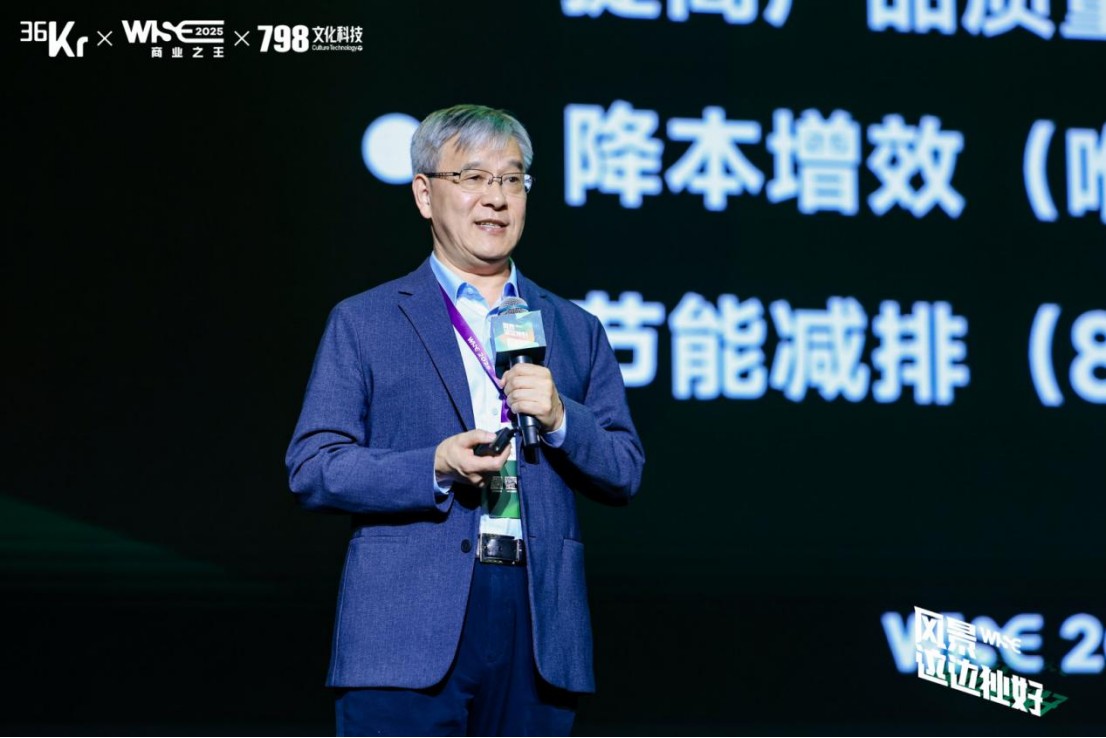
中控创始人、宁波工业互联网研究院创始人兼院长禇健:AI赋能流程工业的巨大空间,提升3%效益撬动万亿利润
36氪· 2025-12-03 11:08
Core Viewpoint - The article emphasizes the transformative potential of AI in reshaping industrial production, particularly in the context of China's manufacturing sector facing challenges like overcapacity and energy efficiency [5][9]. Group 1: Industry Challenges and Opportunities - The current state of the process industry is characterized by a reliance on human experience, leading to inconsistencies in quality and energy consumption, which is referred to as the "chef dilemma" [6]. - The process industry, which includes sectors like petrochemicals and steel, accounts for approximately 80% of China's carbon emissions, highlighting the urgent need for efficiency and sustainability [9][10]. - The industry faces significant challenges such as ensuring production safety, improving product quality, and reducing costs, especially in light of overcapacity issues [10][11]. Group 2: AI Integration in Industrial Processes - The integration of AI into industrial processes is seen as a pathway to optimize operations by merging industrial data, scientific principles, and AI models, moving from mere automation to autonomous intelligence [6][12]. - The Time-series Pre-trained Transformer (TPT) model developed by the company is designed to analyze production data and recommend optimization strategies, thus enhancing operational efficiency [12][13]. - Successful case studies demonstrate that AI can significantly improve production outcomes, with examples showing annual benefits exceeding 20 million yuan through optimized operations [13]. Group 3: Economic Impact and Future Prospects - The potential economic impact of AI in the process industry is substantial, with a mere 3% improvement in efficiency translating to a profit increase of 2 trillion yuan, and a 1% reduction in emissions equating to a decrease of 10 million tons of carbon [13][14]. - The market for AI applications in industrial settings is vast, with the process industry alone generating over 60 trillion yuan in revenue, indicating significant opportunities for growth and innovation [13][14]. - The future of AI in industry is collaborative, requiring collective efforts from various stakeholders to fully realize its potential and address the challenges faced by the sector [14].


中控创始人、宁波工业互联网研究院创始人兼院长禇健:AI赋能流程工业的巨大空间,提升3%效益撬动万亿利润
3 6 Ke· 2025-12-03 06:46
Core Insights - The WISE 2025 conference in Beijing focuses on the intersection of technology and business, emphasizing immersive experiences rather than traditional industry summits [1] - The conference aims to explore the future of business in 2025, highlighting trends and insights derived from practical commercial experiences [2] Industry Challenges and Opportunities - The Chinese manufacturing sector faces dual pressures of overcapacity and energy conservation, particularly in high-energy, high-risk process industries [3] - The founder of Zhongkong, Chu Jian, suggests that AI can fundamentally transform industrial production by addressing the "chef's dilemma" of reliance on human experience versus system optimization [4] Key Points from Chu Jian's Presentation - The fundamental contradiction in process industries is the reliance on experience, leading to instability in quality and energy consumption [4] - To overcome this, there is a need to integrate industrial data, scientific principles, and AI models to move from "perception" to "optimization" [4] - AI must create measurable benefits for industries, with a potential profit space of trillions; a mere 3% efficiency improvement could yield 2 trillion yuan in profits, while a 1% reduction in emissions could decrease carbon output by 100 million tons [4][11] Industrial Context - China's total industrial revenue is approximately 20 trillion USD, with process industries accounting for about 60 trillion yuan [6] - Process industries, while comprising only about 9% of the 50,000 large manufacturing enterprises, have a high output value and significant carbon emissions, contributing to 80% of national emissions [6] - The automation level in process industries is high due to their inherent safety risks and operational characteristics [6][8] AI Implementation in Process Industries - Zhongkong has developed a time-series model, TPT (Time-series Pre-trained Transformer), which processes interconnected time-series data to optimize industrial operations [10] - The model has successfully addressed various operational challenges, such as improving ethylene yield in a major ethylene production facility, resulting in annual benefits exceeding 20 million yuan [10] Future Outlook - The integration of AI in process industries presents vast opportunities for enhancing industrial competitiveness and addressing core issues like safety, quality, and cost reduction [8][11] - The market potential is enormous, with the possibility of creating significant value through AI applications in industrial settings [11]