AI赋能职业教育

Search documents
构建数字智慧教育新生态
Xin Hua Ri Bao· 2026-01-29 21:40
Core Insights - The traditional vocational education sector faces systemic challenges in integrating industry and education, flexible teaching methods, and precise talent evaluation due to the urgent need for industrial intelligence upgrades. The integration of artificial intelligence (AI) offers a transformative solution aimed at constructing a new digital smart education ecosystem [1] Group 1: Digital Infrastructure Transformation - The transition from "connection" to "empowerment" in digital infrastructure is essential, requiring the construction of a perceptive, intelligent, and integrated digital foundation. This foundation will enable seamless data collection, integration, and intelligent analysis across teaching, management, and training scenarios [2] - The digital foundation consists of three key layers: a ubiquitous sensing layer, an intelligent computing layer, and a data hub layer, which collectively aim to make data the core element driving educational activities [2] Group 2: Teaching Paradigm and Stakeholder Relationships - The core of the new ecosystem lies in the transformation of teaching paradigms and the systemic restructuring of relationships among teaching, learning, evaluation, and production. AI facilitates a shift from a teacher-centered to a student-centered and scenario-driven approach [3] - The evaluation method transitions from focusing on final results to formative assessments based on comprehensive data, evaluating competencies such as skill proficiency and problem-solving strategies [3] - The traditional "teacher-student" binary structure evolves into a multi-faceted collaborative ecosystem involving teachers, AI, students, and enterprises, enhancing the connection between education and industry dynamics [3] Group 3: Governance and Sustainability Mechanisms - A healthy and sustainable digital smart education ecosystem requires a modern governance mechanism that is data-driven, agile, and open to co-governance. This includes transitioning from hierarchical management to precise governance based on data insights [4] - Establishing a risk prevention system that encompasses data security, ethical review, and algorithm accountability is crucial, particularly concerning student privacy and algorithm fairness [4] - Designing open collaborative incentive mechanisms, such as credit banks and micro-certifications, is essential to attract continuous participation from industry and research institutions, fostering a cycle of co-construction and optimization [4] Group 4: Balancing Technology and Educational Essence - Building a digital smart vocational education ecosystem is a long-term and systematic endeavor that requires balancing technological adoption with respect for educational principles. The application of technology must promote holistic human development and ensure educational equity [5] - It is important to avoid the "technological determinism" trap, which could narrow educational goals and impact interpersonal interactions. Humanistic care and ethical considerations should be integrated into technology system design [5] Group 5: Collaborative Progress for Ecosystem Maturity - The maturation of this ecosystem necessitates the collaboration of policy guidance, practical exploration, and academic research, enabling vocational education to empower students' lifelong development and support high-quality growth in the real economy [6]
华图山鼎(300492):首次覆盖:公考龙头的跃迁:基地下沉、AI赋能
Haitong Securities International· 2026-01-06 09:12
Investment Rating - The report assigns an "Outperform" rating to the company, with a target price of 89.2 yuan based on a 40x PE valuation for 2026 [4][7]. Core Insights - The company is leveraging AI technology and a strategic focus on local markets to enhance its market share in the public examination sector, supported by a partnership with Fenbi [1][4]. - The projected net profits for the company are expected to be 312 million yuan, 438 million yuan, and 543 million yuan for the years 2025 to 2027, respectively, with corresponding EPS of 1.58 yuan, 2.23 yuan, and 2.76 yuan [4][7]. - The non-degree training business is anticipated to be the main revenue driver, with significant growth expected in the coming years [4][45]. Financial Summary - Total revenue is projected to grow from 247 million yuan in 2023 to 5,159 million yuan in 2027, reflecting a compound annual growth rate (CAGR) of approximately 131.3% in 2024 [3][4]. - The net profit attributable to the parent company is expected to turn from a loss of 92 million yuan in 2023 to a profit of 543 million yuan by 2027 [3][4]. - The gross margin is expected to improve from 53.48% in 2024 to 57.16% in 2027, driven by enhanced operational efficiency and brand strength [12][9]. Company Development - The company transitioned from a traditional architectural design firm to a player in the vocational education sector, leveraging resources from its controlling shareholder, Huatu Hongyang [15][16]. - The establishment of Huatu Education Technology Co., Ltd. in 2023 marks a significant step in the company's focus on examination training and vocational skills [16][15]. Industry Analysis - The number of college graduates in China is projected to exceed 12 million by 2025, creating a sustained demand for public examination training [25][40]. - The public examination training market is expected to reach approximately 151 billion yuan in 2025, with a potential growth to 237 billion yuan by 2030 [40][43]. - The overall vocational education training market is forecasted to grow from 781 billion yuan in 2021 to 1,102 billion yuan by 2026, indicating a robust industry outlook [40][43]. Operational Analysis - The non-degree training segment accounted for 99% of the company's revenue in the first half of 2025, highlighting its dominance in the business model [45][56]. - The company has established a comprehensive network across 31 provinces, covering over 1,000 locations, which enhances its market presence and operational efficiency [57][45].

粉笔与华图展开战略合作 职业教育市场格局有望重塑
Zheng Quan Ri Bao Wang· 2025-12-15 08:04
Core Insights - The strategic partnership between Fenbi and Huatu aims to integrate resources in service depth, cost structure, and business expansion, potentially reshaping the competitive landscape in the vocational education sector [1] - The collaboration is expected to enhance the overall market concentration, moving from a fragmented structure to a more consolidated one dominated by leading players [4] Group 1: Company Collaboration - Fenbi, with over 70 million registered users, excels in online education products, while Huatu has a robust offline presence with over 1,000 delivery bases, creating significant scale advantages [2] - Both companies have developed unique AI product systems for key teaching segments, and their collaboration will focus on product innovation and market potential through AI integration [2][3] - The partnership will also involve equity cooperation, including strategic investments and joint ventures, with mutual board member appointments to facilitate ongoing communication [1] Group 2: Market Impact - The collaboration is anticipated to guide the industry away from vicious competition, improving overall gross margins and reducing anxiety among students regarding training costs [4] - The vocational education market is shifting towards refined operations and comprehensive service offerings, emphasizing the long-term career development of students rather than just teaching products [4][6] - The partnership aims to create a healthier industry environment by ensuring transparency, fair service agreements, and resisting false advertising, thereby enhancing the overall development of the sector [5]
从“对垒”到“同盟”:华图与粉笔战略携手,共破职教内卷困局
2 1 Shi Ji Jing Ji Bao Dao· 2025-12-15 03:40
Core Viewpoint - The vocational education industry is undergoing a structural change with the strategic merger of Huatu Education and Fenbi Public Examination, two leading companies in the civil service exam training sector, aiming for comprehensive resource integration and strategic collaboration [1][4]. Group 1: Strategic Collaboration - Huatu and Fenbi have announced a deep strategic cooperation that includes equity collaboration, such as strategic investments, cross-shareholding, and the establishment of joint ventures [1]. - The collaboration aims to integrate their respective channels and leverage their strengths to optimize the entire training and employment process, enhancing job quality and stability [1][5]. - Both companies will also share AI technology to reduce R&D costs and improve delivery efficiency, which is expected to positively impact their financial reports [1][6]. Group 2: Industry Impact - The merger is seen as a move to avoid vicious competition in the industry and improve overall gross profit levels, while also reducing student anxiety caused by aggressive marketing tactics from regional institutions [5]. - The partnership is expected to shift the focus of competition from scale expansion to teaching quality and user experience, leading the industry towards a new phase of standardized and high-quality development [4][5]. - The collaboration is viewed as a significant event marking the maturity of the industry, as it combines the strengths of both companies to create a more robust market presence [7][8]. Group 3: AI Integration and Educational Innovation - Huatu and Fenbi have developed unique AI product systems for key teaching areas, and their collaboration will enhance product innovation and market potential through the integration of their respective strengths [6]. - The companies plan to create a comprehensive educational ecosystem that covers the entire learning cycle, utilizing Huatu's extensive offline network and Fenbi's online capabilities [6][7]. - The partnership aims to establish a sustainable vocational development ecosystem that supports high-quality employment and talent cultivation [8].


职业教育市场格局生变!两大巨头达成深度战略合作
Zhong Guo Zheng Quan Bao· 2025-12-14 14:06
Core Insights - Huatu Shanding and Fenbi have established a deep strategic partnership aimed at comprehensive resource integration and strategic collaboration through both capital and business ties [1] - This collaboration is expected to transform the competitive landscape of the vocational education industry, moving away from the "tripod" market structure dominated by Fenbi, Huatu Shanding, and Zhonggong Education [1] Group 1: Strategic Collaboration - The partnership will involve equity cooperation, including strategic investments, mutual shareholding, and the establishment of joint ventures, along with the appointment of directors to facilitate ongoing communication [1] - The collaboration emphasizes the complementary core strengths of both companies, marking a significant turning point in the vocational education sector [1][5] Group 2: AI Integration and Service Optimization - The partnership will leverage AI technology and channel integration to enhance service offerings, including talent cultivation, employment guidance, and job placement [2] - Both companies aim to optimize resource allocation between talent development and market demand through AI applications, providing a comprehensive support system for job seekers [2][3] Group 3: Market Impact and Future Outlook - The collaboration is anticipated to accelerate market concentration in the vocational education sector, shifting from a multi-strong competition to a head-led market [5] - The partnership is expected to enhance the overall development environment of the industry by promoting transparency, fair service agreements, and resisting false advertising [6] - The long-term vision includes creating a sustainable vocational development ecosystem that supports high-quality employment and talent cultivation [7]
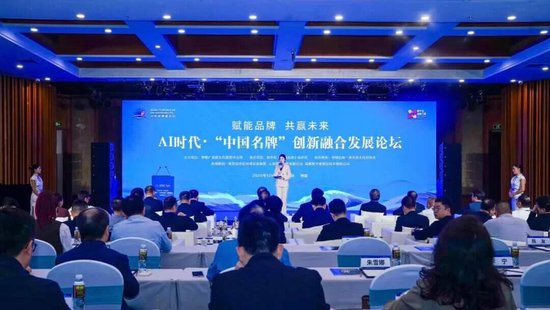
2025企业家博鳌论坛顺利举行,中国东方教育描绘人才培养新范式
Xin Lang Cai Jing· 2025-12-09 02:40
Core Viewpoint - The forum highlighted the transformative role of AI in reshaping brand logic and driving industrial advancement, with a focus on vocational education as a cornerstone for talent supply in the digital economy [1][9]. Group 1: Challenges in Vocational Education - The rapid development of the digital economy has led to three core challenges in vocational education: outdated curriculum, difficulties in practical training implementation, and insufficient collaboration between schools and enterprises [3][11]. - AI technology is seen as a key pathway to address these structural challenges, supported by the upcoming policies such as the "Guidelines for the Construction of a Comprehensive Standardization System for the AI Industry" and the "Education Strong Nation Construction Plan (2024-2035)" [3][11]. Group 2: Curriculum Development - China Oriental Education has developed a dynamic "job capability profile" based on extensive job demand data, allowing for monthly updates to course content [3][11]. - In 2024, new modules on cutting-edge technologies like HarmonyOS development and AI visual recognition were added, resulting in a 45% increase in alignment with industry needs and a 25% improvement in student skill qualification rates compared to traditional models [3][11]. Group 3: Practical Training Innovations - The institution employs a dual-track model of "virtual simulation + practical projects," utilizing AI and VR/AR technologies to create a highly realistic "digital twin factory" that simulates complex operational environments [5][13]. - This approach has led to a 45% reduction in training costs per specialty, a 60% increase in resource utilization, and a 30% decrease in the adaptation period for graduates entering the workforce [5][13]. Group 4: Industry Collaboration and Future Plans - To bridge the gap between talent cultivation and employment, China Oriental Education has established a deep school-enterprise integration mechanism, exemplified by partnerships with companies like Beijing Prophet Technology to create AI talent training bases [6][13]. - The company aims to achieve nationwide coverage of AI training rooms in three years, train 1,000 "AI + specialty" composite backbone teachers, and build 20 high-level AI talent training bases, emphasizing a model that is "job-oriented, technology-driven, and integrated with industry education" [8][15].