AI Memory

Search documents
Micron Drops 4% Despite Strong Earnings: Is This a Buying Opportunity?
247Wallst· 2026-03-23 16:35
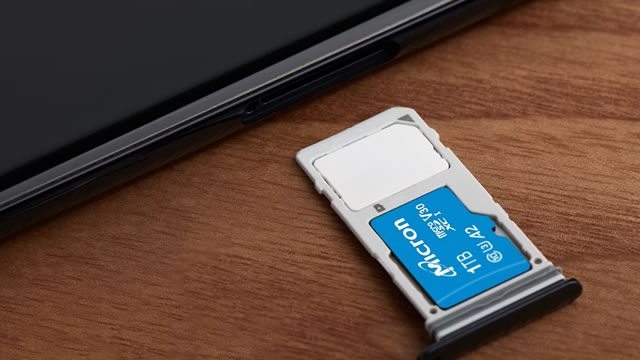
Micron Technology (MU) reported Q1 revenue of $13.64B (up 57% year over year) and non-GAAP EPS of $4.78 beating estimates by 21%. Looking ahead, Micron set Q2 guidance at $18.70B revenue and $8.42 EPS, driven by sold-out HBM products commanding premium pricing and 68% non-GAAP gross margins. Micron Drops 4% Despite Strong Earnings: Is This a Buying Opportunity? - 24/7 Wall St. S&P 5006,587.10 +0.64% Dow Jones46,246.60 +0.88% Nasdaq 10024,170.00 +0.61% Russell 20002,493.43 +1.74% FTSE 1009,906.60 +0.62% Nikk ...


LLM 的记忆问题「很快」就不再是问题了?
机器之心· 2026-02-15 01:30
本文来自PRO会员通讯内容,文末关注「机器之心PRO会员」,查看更多专题解读。 当前,智能体正经历范式转变,从高效的单任务执行模式,逐步向动态环境下的持续自适应、能力演化与经验积累模式转型。在此背景下,AI Memory 作为核心基石,赋能智 能体保持行为一致性、做出理性决策并实现高效协作。在长期探索中,AI Memory 已经分化为「Agent Memory」与「LLM Memory」两条截然不同的演进路径。 目录 01. OpenClaw 的「长效记忆」为何不代表「AI 拥有持久记忆」? OpenClaw的记忆力表现属于哪种突破?LLM Memory 与 Agent Memory 有何区别?... 02 . AI Memory 的研究视角在如何变化? 2025与2026的综述都在用什么视角解析AI Memory?如何理解 AI Memory 的「4W」分类?... 03 . 近期工作在如何探索 LLM Memory 和 Agent Memory? 2026年的 LLM Memory 与 Agent Memory 研究都在解决哪些问题?... OpenClaw 的「长效记忆」为何不代表「AI 拥有持久记忆」 ...

Nvidia CEO Jensen Huang Says AI Memory Needs Are Rising During Taiwan Trip, Backs TSMC's Global Expansion, Dismisses China H200 Rumors - NVIDIA (NASDAQ:NVDA)
Benzinga· 2026-01-30 02:24
Core Insights - Nvidia's CEO Jensen Huang emphasized that the increasing demand for AI is driving a significant rise in the need for advanced memory solutions [1][2] Group 1: AI Demand and Memory Needs - The future of AI will be influenced by memory requirements as much as by computing power, with modern AI models necessitating high-speed processing and increased memory capacity [2] - Nvidia is heavily reliant on partnerships with major HBM suppliers to meet the soaring demand for memory this year [3] Group 2: Semiconductor Manufacturing and Capacity - Huang refuted claims that the U.S. has taken 40% of Taiwan's semiconductor manufacturing capacity, stating that global chip production is expanding with new capacities being added in the U.S., Europe, and Japan, while Taiwan remains a crucial manufacturing hub [4] - TSMC is identified as Nvidia's irreplaceable foundry partner, with expectations for significant capacity scaling over the next decade, primarily in Taiwan alongside international expansion [5] Group 3: Regulatory and Market Dynamics - Huang dismissed rumors regarding the approval of Nvidia's H200 AI chips in China, clarifying that no orders have been placed and final clearance is still pending [6] - The H200 chip has become a focal point in U.S.-China tech tensions, with reports indicating that while U.S. shipments are approved, China has not fully cleared imports, leading to a gray market where servers with H200 GPUs are sold at a premium [7] - Chinese technology firms reportedly placed orders for over 2 million H200 chips last month, significantly exceeding Nvidia's available supply [8] Group 4: Stock Performance - Nvidia shares closed up 0.52% at $192.51 on Thursday, followed by a 0.71% decline in after-hours trading to $191.15, reflecting a favorable price trend across various time horizons [8]

X @Avi Chawla
Avi Chawla· 2026-01-27 19:33
RT Avi Chawla (@_avichawla)RAG was never the end goal.Memory in AI agents is where everything is heading. Let me break down this evolution in the simplest way possible.RAG (2020-2023):- Retrieve info once, generate response- No decision-making, just fetch and answer- Problem: Often retrieves irrelevant contextAgentic RAG:- Agent decides if retrieval is needed- Agent picks which source to query- Agent validates if results are useful- Problem: Still read-only, can't learn from interactionsAI Memory:- Read AND ...
Agent 真正的护城河,正在从工具转向记忆资产
Founder Park· 2026-01-27 09:36
Core Insights - The article discusses the emergence of independent memory layers in AI systems as a necessary evolution for enhancing user experience and operational efficiency in AI applications [5][21][23] - It emphasizes that traditional methods like increasing context length and using Retrieval-Augmented Generation (RAG) are insufficient for addressing the complexities of memory management in AI [4][11][12] Group 1: Importance of Independent Memory Layer - The need for an independent memory layer arises from the limitations of existing AI models in maintaining continuity and context across interactions, which is crucial for effective collaboration and task management [9][10][20] - Memory is identified as a key factor influencing AI agents, with a focus on user profile maintenance, cross-dialogue memory, and a deeper understanding of user needs [3][21][22] Group 2: Challenges with Current Approaches - Current approaches like extending context length and RAG are seen as inadequate, as they do not address the dynamic nature of real-world data and user interactions [12][14][15] - RAG is criticized for being a passive method that does not support long-term collaboration or memory evolution, leading to inefficiencies in user experience [16][17][18] Group 3: Requirements for Effective Memory Systems - A robust memory system must manage different types of memories, ensuring they are accessible, editable, and auditable, akin to how the human brain organizes information [24][27][28] - The architecture of memory systems should balance cost and efficiency, addressing storage and computational demands while ensuring seamless integration into AI applications [25][26][30] Group 4: Future of Memory Management in AI - The article predicts that memory management will evolve into a critical infrastructure for AI, enabling models to become more than just tools, but partners in user interactions [22][23][49] - The concept of memory as an asset layer is highlighted, suggesting that memory systems should be transferable, reusable, and governable across different AI models and applications [40][41][48]

X @Avi Chawla
Avi Chawla· 2026-01-27 06:39
RAG was never the end goal.Memory in AI agents is where everything is heading. Let me break down this evolution in the simplest way possible.RAG (2020-2023):- Retrieve info once, generate response- No decision-making, just fetch and answer- Problem: Often retrieves irrelevant contextAgentic RAG:- Agent decides if retrieval is needed- Agent picks which source to query- Agent validates if results are useful- Problem: Still read-only, can't learn from interactionsAI Memory:- Read AND write to external knowledg ...
全球存储科技-上调海力士、三星、南亚科技预期;目标价升至新高-Global Memory Tech-More optimistic on Hynix, Samsung and Nanya Tech; lift POs to new highs
2026-01-06 02:23
Summary of Key Points from the Conference Call Industry Overview - The global memory industry is experiencing a positive outlook with expectations of a DRAM super-cycle in 2026-27 driven by several factors including increased demand from AI applications and supply constraints [2][10] - Key players in the memory market include SK Hynix, Samsung Electronics, and Nanya Tech, all of which are expected to benefit from rising prices and demand for memory products [3][4][5] Core Insights and Arguments DRAM Market Dynamics - Stronger DRAM contract prices are anticipated, with Tier-1 OEMs agreeing on price increases of over 30% for 4Q25 and 15% for 1Q26 [1] - Global DRAM sales are forecasted to reach $210 billion in 2026, representing a 61% year-over-year increase, following a 48% increase in 2025 [2][12] - The ASP (Average Selling Price) for DRAM is expected to rise significantly, with a projected increase of 40% in 2026 [12] Company-Specific Insights SK Hynix - Hynix is positioned as the top pick in the memory sector, with revised operating profit forecasts of W16.5 trillion for 4Q25 and W19.6 trillion for 1Q26, and an annual total of W86.2 trillion for 2026 [3][23] - The company is expected to maintain its leadership in HBM (High Bandwidth Memory) and improve margins in conventional DRAM and NAND [3][22] Samsung Electronics - Samsung has raised its DRAM prices aggressively, leading to a revised EPS forecast of +12% due to a 7% increase in DRAM ASP [4][25] - The new price objective for Samsung is set at W170,000, reflecting a target P/B ratio of 2.4x [4][25] Nanya Tech - Nanya Tech is focusing on legacy DRAM production, which is in short supply from major competitors, leading to a revised EPS forecast of +15% [5][26] - The new price objective for Nanya Tech is NT$235, based on a P/B ratio of 3.5x [5][26] Additional Important Insights - The memory industry is expected to become less cyclical due to the increasing demand for AI-related memory products, which will stabilize pricing and margins [14] - Supply constraints are anticipated due to limited clean room space for wafer capacity expansion and longer manufacturing cycles for new memory technologies [2][17] - The geopolitical landscape is expected to be more stable in 2026, reducing risks associated with US-China relations, which could positively impact memory chip sales [20] Conclusion - The global memory market is poised for significant growth, with key players like SK Hynix, Samsung, and Nanya Tech expected to capitalize on rising prices and demand driven by AI and other technological advancements. The outlook for 2026 and beyond appears robust, with strong earnings momentum anticipated across the sector [2][3][4][5][12][20]
SK 海力士_传统存储周期上行强劲且 HBM 销量提升推动盈利大幅增长;上调至买入评级,目标价 70 万韩元
2025-10-30 02:01
Summary of SK Hynix Inc. (000660.KS) Conference Call Company Overview - **Company**: SK Hynix Inc. (000660.KS) - **Market Cap**: W393.9 trillion / $274.1 billion - **Enterprise Value**: W399.0 trillion / $277.7 billion - **Current Price**: W558,000 - **Target Price**: W700,000 - **Upside Potential**: 25.4% [1][2][5] Key Industry Insights Memory Market Dynamics - **Memory Upcycle**: Anticipated to be one of the strongest upcycles through 2026, driven by increased AI spending from hyperscalers [1][20] - **Demand vs. Supply**: Memory demand from servers (including server DRAM, SOCAMM, HBM, and eSSD) is expected to significantly outpace supply, with server-related DRAM demand projected to grow 34% year-over-year [1][33] - **Conventional DRAM Pricing**: Pricing for conventional DRAM is expected to rise sharply, with a forecasted increase of 47% year-over-year in 2026 [49] Specific Demand Drivers - **SOCAMM Demand**: Expected to reach 20 billion Gb (+300% year-over-year) in 2026, representing approximately 5% of global DRAM demand [26][28] - **Server DRAM Demand**: U.S. hyperscalers are driving demand for server DRAM, with some customers requesting nearly double the volume year-over-year [21][33] - **HBM Demand**: HBM demand is projected to grow significantly, with total HBM demand expected to reach 4,328,691 GB by 2026, a 60%+ year-over-year increase [80] Financial Projections Revenue and Profitability - **2026E Revenue**: Expected to reach W140.9 trillion, up from W94.3 trillion in 2025E [5][16] - **Operating Profit**: Projected to more than double for conventional DRAM to $36 billion in 2026E, contributing to a company-wide operating profit estimate that is ~20% higher than consensus [2] - **Free Cash Flow**: Anticipated to exceed W60 trillion over the next three years, supported by the strong memory upcycle [2] Valuation Metrics - **P/B Ratio**: Target P/B multiple increased to 2.8X from 1.8X, reflecting the expected strong memory upcycle [3] - **ROE**: Expected to exceed 30% in 2024 and expand to over 40% in 2025E/2026E [3][11] Risks and Considerations - **Supply Constraints**: Limited capacity additions in conventional DRAM are expected throughout 2026, with major suppliers focusing on high-value segments [44] - **Pricing Pressure**: While HBM pricing is expected to decline, stronger demand is anticipated to offset this decline [81] Conclusion - **Investment Recommendation**: Upgrade to Buy with a target price of W700,000, indicating a strong potential upside based on robust demand forecasts and limited supply growth in the memory market [1][2][3]
Micron: The Underpriced AI Memory King Facing A Quiet Supply Shock
Seeking Alpha· 2025-08-15 23:47
Group 1 - Micron Technology has surpassed the critical resistance level of $102.50 and is trading above the 2024 top price zone, indicating a significant structural change in the market [1] - The market has not yet fully grasped the scale of this structural change, suggesting potential for further growth or volatility in Micron's stock [1] Group 2 - The author of the analysis has a strong background in investment management and technical analysis, focusing on equities, fintech, and macro trends [1] - The author has achieved notable success in stock market tournaments, with verified returns exceeding 190% in traditional markets within a month [1]