AI Robotics

Search documents
NetworkNews Audio Announces Audio Press Release (APR) Discussing AI Robotics Companies Scaling Beyond Prototype Phase into Commercialization
Globenewswire· 2026-02-27 13:30
Core Insights - The article emphasizes the transition of robotics from prototype to revenue deployment, highlighting the importance of commercial readiness in the AI service robotics market [1][2] Group 1: Industry Trends - The shift towards commercialization readiness in robotics is characterized by clear ownership of intellectual property, engineering leadership tied to revenue performance, and validation through major technology showcases [1] - Companies that can transition from prototype demonstration to scalable deployment are positioned to define early Robotics-as-a-Service (RaaS) infrastructure, allowing businesses to adopt automation without significant upfront investments [1] Group 2: Company Focus - Nightfood Holdings Inc. and its subsidiary TechForce Robotics are navigating the transition by deploying AI-driven automation tailored to hospitality workflows, focusing on real-world deployment rather than remaining in pilot phases [2] - Nightfood Holdings is revolutionizing the hospitality industry by combining AI-powered robotics with strategic hotel acquisitions, aiming to improve hotel efficiency and reduce operating costs [3] Group 3: Market Position - Nightfood Holdings is strategically positioned to capitalize on the global service robotics market, which is expected to exceed $170 billion by 2030, through its dual focus on owning hotel properties and offering RaaS [4]


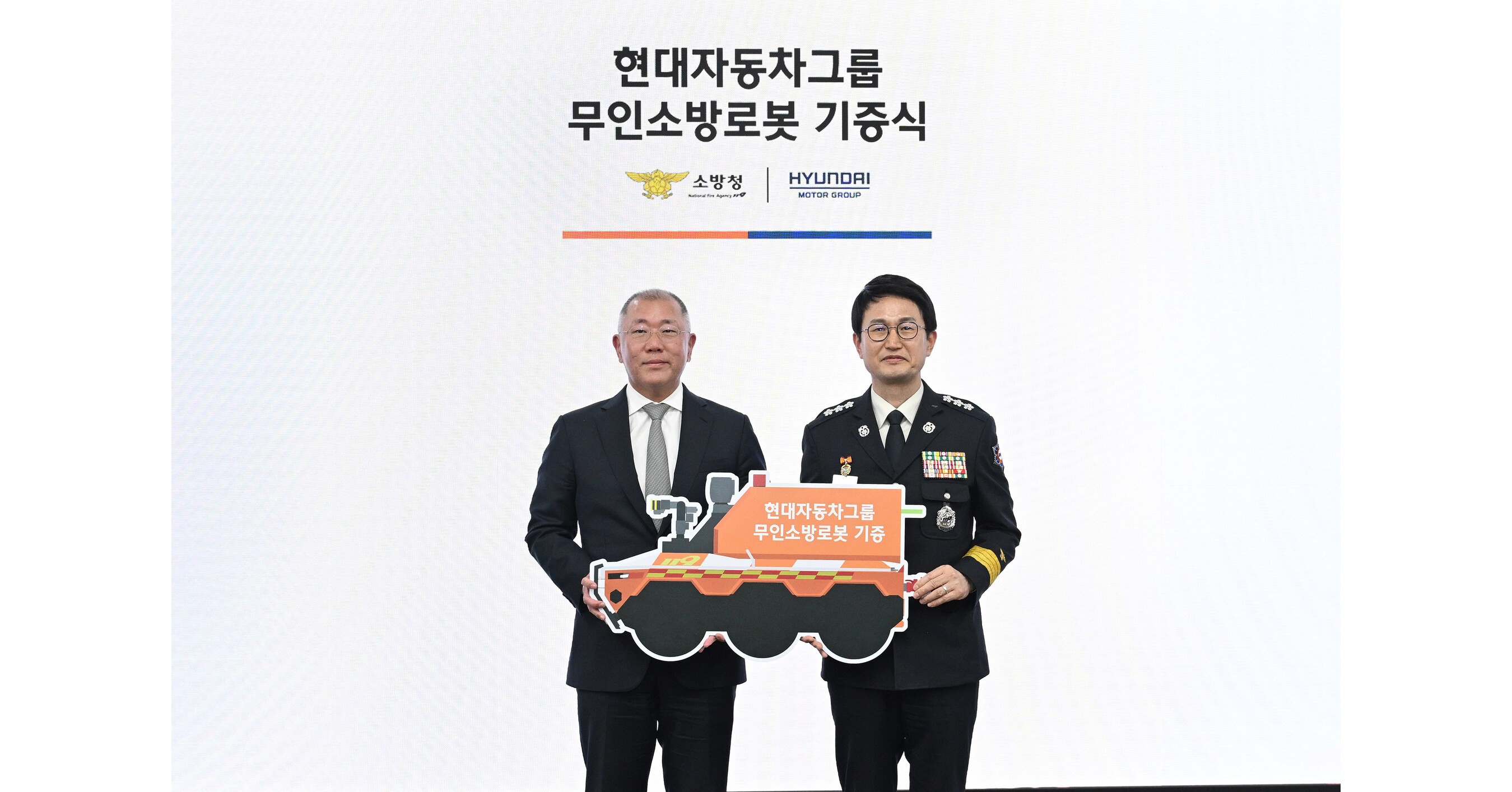
Hyundai Motor Group Donates Unmanned Firefighting Robots to Korea National Fire Agency for Safeguarding Firefighters
Prnewswire· 2026-02-25 07:00
today unveiled its transformative AI Robotics Strategy at the Consumer Electronics Show 2026 (CES 2026), presenting a ...]### Hyundai Motor Group Executive Chair Chung Presents 2026 Vision: Customer-Focused Transformation and AI-Driven Ecosystem Collaboration[Hyundai Motor Group (The Group) today shared its 2026 strategic vision with global employees, with Executive Chair Euisun Chung presenting priorities ...][More Releases From This Source]## Explore[Automotive][Transportation, Trucking & Railroad][Comput ...
I Bought Tesla Stock at $17 in 2010 — Here’s How Much I’m Worth Now
Yahoo Finance· 2026-02-21 19:58
Group 1 - Tesla's IPO was priced at $17 per share, raising $226 million, marking the first U.S. automaker IPO in decades [2] - An investment of $10,000 at the IPO price would be worth nearly $3 million today, reflecting a return of over 38,000% due to stock splits and company performance [2][4] - The engineering culture at Tesla is compared to that of SpaceX, indicating a strong focus on innovation and sustainability in the automotive sector [4] Group 2 - The company has expanded its offerings beyond electric vehicles to include solar energy solutions and home energy systems, showcasing a commitment to sustainable energy [5] - Tesla's Full Self Driving feature has evolved significantly, indicating advancements in autonomous vehicle technology [6] - The Cybertruck, which began deliveries in November 2023, represents Tesla's latest innovation in the electric vehicle market, despite initial design controversies [6]

Serve Robotics vs. NVIDIA: Which AI Robotics Stock Is a Better Buy?
ZACKS· 2026-02-19 14:56
Core Insights - The article discusses the contrasting investment opportunities in the AI-robotics sector, focusing on Serve Robotics Inc. (SERV) as a niche player in autonomous delivery and NVIDIA Corporation (NVDA) as a dominant AI infrastructure provider [1][2]. Group 1: Serve Robotics (SERV) - Serve Robotics is experiencing significant growth, having deployed over 1,000 robots, marking a transition from experimentation to operational execution [2]. - The company is expanding its partner ecosystem, supporting deliveries for thousands of restaurants and increasing its addressable market through partnerships with major delivery platforms [3]. - Serve Robotics is leveraging technology to build a proprietary urban data set that enhances its AI capabilities, with the acquisition of Vayu Robotics expected to accelerate data conversion into improved AI models [4]. - Despite operational progress, Serve Robotics is still in an investment phase, incurring substantial operating losses and facing execution risks that could delay financial improvements [5]. Group 2: NVIDIA Corporation (NVDA) - NVIDIA dominates the AI infrastructure market, reporting record revenue growth driven by high demand for data center computing and networking, with GPU utilization at full capacity [6]. - The company is expected to see strong growth in fiscal 2027, with a projected year-over-year sales increase of 46.8% and earnings per share growth of 57% [12]. - NVIDIA's product development is advancing rapidly, with the Blackwell platform and upcoming Rubin architecture expected to significantly enhance performance [8]. - The company's full-stack ecosystem positions it uniquely in the AI market, benefiting from widespread adoption across cloud platforms and robotics applications [9]. Group 3: Investment Comparison - NVIDIA is viewed as a more stable investment option due to its scale, profitability, and lower execution risk compared to Serve Robotics, which is still in a heavy investment phase [20]. - SERV stock has declined by 28.3% over the past year, while NVDA shares have increased by 34.1% during the same period [13]. - The forward price-to-sales ratio for SERV is 23.54X, below its historical median, while NVDA's ratio is 14.47X, above its median, indicating differing valuations [16].



Amazon pulls the plug on 'Blue Jay' warehouse robot after only a few months
Business Insider· 2026-02-17 20:10
Core Insights - Amazon has discontinued its Blue Jay warehouse robot just a few months after its launch, indicating challenges in developing effective and cost-efficient AI robotics technology [1][2][9] - The core technology of Blue Jay will be integrated into other initiatives within Amazon's warehouse network, as the company continues to explore various robotics projects [3][10] Robotics Development Challenges - The development of AI robotics technology faces significant hurdles in the physical realm, particularly in acquiring useful training data and managing real-world operational challenges [2] - Blue Jay was developed rapidly in just over a year, leveraging AI advancements, but ultimately faced issues related to high costs, manufacturing complexity, and implementation difficulties [8][9] Future Robotics Initiatives - Amazon is transitioning from the Blue Jay system to a new modular warehouse system called "Orbital," which is designed to be more flexible and easier to deploy compared to the previous "Local Vending Machine" system [12][13] - The Orbital system is expected to support smaller same-day delivery warehouses and potentially be used as a micro-fulfillment solution in Whole Foods stores, focusing on handling chilled products [14][13] - The rollout of the Orbital system is projected to take time, with the first warehouse not expected to open until 2027 [15]

麦格米特- AI 机器人与电力实地调研要点:深化与全球云服务提供商合作;执行是关键
2026-01-22 02:44
Summary of Megmeet (002851.SZ) Conference Call Company Overview - **Company**: Megmeet (002851.SZ) - **Industry**: AI Robotics & Power Supply Key Points Industry Outlook - **2026 as a Pivotal Year**: Megmeet anticipates significant growth in AI server power supply shipments in 2026, driven by an expanded product portfolio and deeper engagements with major Cloud Service Providers (CSPs) [1][2] - **Initial Shipments**: The company has begun initial shipments of server power products, including 5.5kW Power Supply Units (PSUs) and various power shelves, although specific shipment sizes were not disclosed [1] Business Model and Engagement - **Shift in Engagement**: The business model is transitioning from engaging Original Design Manufacturers (ODMs) to direct engagement with CSPs, requiring Megmeet to pass stringent customization tests to gain vendor codes [2] - **CSP Relationships**: The company is actively engaging with major CSPs in the US and China to secure more vendor codes [2] Execution Challenges - **Production Ramp-Up**: Megmeet faces challenges in transitioning from R&D to mass production, with a focus on tracking production efficiency and field performance post-deployment [3][6] - **Complex Supply Chains**: Managing over 200 suppliers and 1,000 components presents significant challenges, particularly in ensuring quality control for AI-grade components [6] Competitive Landscape - **Gap with Global Leaders**: Megmeet acknowledges a gap in R&D strength and manufacturing readiness compared to global leaders like Delta Electronics, but is catching up by launching next-gen products ahead of the adoption timeline [7] - **Co-Design Engagement**: Direct co-design engagement with Nvidia and end-users is seen as a competitive advantage [7] Product Development - **Next-Gen Products**: The company plans to launch official samples of 18kW PSUs and 3U 110kW power shelves in 1Q26, with 800V DC power racks expected in mid-2026 [8] - **Technical Barriers**: Transitioning to 800V DC architecture faces multiple technical challenges, making mass production in 2026 less likely [8] Financial Outlook - **Margin Recovery**: Megmeet expects gradual net margin recovery driven by a better product mix and improved operating leverage as the server power supply business scales [9] - **Overseas Revenue Target**: The company aims for 60% of total revenue to come from overseas markets, up from approximately 40% currently [9] Investment Thesis - **Structural Transformation**: Megmeet is transforming from an automation specialist to a contender in the global AI server power supply market, with a forecasted 5% market share by 2030 [10] - **Valuation**: The 12-month target price is set at Rmb86.8, indicating a downside potential of 16.1% from the current price of Rmb103.5 [14] Risks - **Market Share Dynamics**: Risks include the pace of market share gain within the NVIDIA ecosystem and the execution on mass production [13] - **R&D Cycle Variability**: The length of R&D cycles for 800V DC products and industry adoption rates also pose risks [13] Additional Insights - **Investment Banking Relationships**: Goldman Sachs has investment banking relationships with a significant percentage of companies covered in its research, which may influence objectivity [3] - **Market Cap and Financial Metrics**: Megmeet's market cap is Rmb56.5 billion, with projected revenues increasing from Rmb8.17 billion in 2024 to Rmb16.62 billion by 2027 [14]
欧陆通-与美国云服务商的研发合作,2027 年或贡献销售收入
2026-01-21 02:58
Summary of Honor Electronic (300870.SZ) Conference Call Company Overview - **Company**: Honor Electronic (300870.SZ) - **Industry**: Server Power Supply (PSU) Market Key Points R&D Partnership and Sales Outlook - Honor has established an R&D partnership with a US-based Cloud Service Provider (CSP) for next-generation server power supplies, with potential sales contributions expected in 2027 after production tests in 2026 [1] - The company aims for a 10% wallet share in the first-batch order, which is considered optimistic due to its smaller historical sales in GPU/CPU server power supplies compared to incumbents [1] Product Compatibility and Market Position - Most of Honor's products are compatible with mainstream AI accelerators from both global and domestic GPU brands, as well as domestic ASIC makers [1] - The highest power supply currently available in the domestic market is 5.5kW, with most projects deployed in China and some in Southeast Asia [1][5] Capacity Expansion Plans - Honor plans to add approximately Rmb1 billion in capacity in Suzhou, China by the end of 2026 [6] - A factory in Vietnam is also operational, supporting 15-20% of total production [6] - Capacity addition is relatively straightforward, taking about two quarters from equipment purchase to production readiness [6] Pricing and Margins - Current Average Selling Prices (ASP) are Rmb0.7-0.8/W for 5.5kW PSUs and Rmb0.3-0.4/W for 3-4kW PSUs [7] - Gross Profit Margin (GPM) for high-power PSUs (≥2kW) was approximately 28% in the first three quarters of 2025, while low-power PSUs had a GPM of only 10-20% due to intense competition [7] New Product Development - Honor is developing PSUs in the range of 8-19kW, although there is no immediate demand from customers [8] - The company is also preparing for the industry transition towards 800V DC architecture by developing PSUs that support 800V/400V DC input [8] Competitive Landscape - The global server power supply market is seeing an influx of new entrants, but mass production capabilities, especially for high-power products, remain a significant challenge for these new players [6][1] Domestic Market Presence - Honor is a key PSU supplier in the domestic server market, directly supplying major Chinese Original Design Manufacturers (ODMs) such as Inspur and Foxconn [2][5] Strategic Engagements - The company is in early-stage discussions with multiple overseas CSPs and ODMs to expand its customer base [1] Additional Insights - The partnership with the US CSP aims to diversify supplier risk and leverage Honor's product quality, R&D responsiveness, and service capabilities [1] - The company has been supplying adapters to the US CSP for its residential AIoT products since 2023, indicating a growing relationship [1] This summary encapsulates the critical insights from the conference call regarding Honor Electronic's strategic initiatives, market positioning, and future outlook in the server power supply industry.

AI 机器人与电力领域调研要点:思源电气、华明装备 - 国内电网业务锚定增长,海外业务组合支撑定价,利润率可控-AI Robotics & Power Field Trip takeaways_ Sieyuan_Huaming_ domestic grid anchors growth, overseas mix supports pricing, margin manageable
2026-01-20 03:19
Summary of Key Takeaways from Sieyuan and Huaming Conference Call Industry Overview - The conference focused on the AI Robotics and Power sector, specifically the companies Sieyuan and Huaming, highlighting their performance and outlook in the context of the domestic and overseas markets [1][2]. Core Insights 1. **Domestic Revenue Resilience**: - Sieyuan and Huaming expect stable domestic revenue growth driven by grid-led demand, with a projected 40% cumulative investment growth in the 15th Five-Year Plan compared to the 14th, translating to a 6% CAGR from 2025 to 2030 [1]. - Off-grid investment is anticipated to decline, particularly affecting Huaming, which expects a drop in off-grid revenue in 2026 [1][2]. 2. **Overseas Market Dynamics**: - Both companies benefit from better pricing structures in overseas markets due to higher entry barriers and tighter supply conditions, which support their product mix [1][5]. - Sieyuan's overseas strategy includes expanding into renewable energy sectors and enhancing market share among industrial customers [2]. 3. **Margin Pressures**: - Both companies face slight margin pressures due to rising raw material costs, particularly copper, which constitutes about 10% of tap changers' COGS and approximately 30% of transformer COGS [1][6]. - The impact of raw material price hikes is considered manageable through design optimization and material substitution rather than price increases [1][6]. 4. **Capital Expenditure Plans**: - Sieyuan has completed recent investments in new plants and production lines, focusing on ramping up production and improving yield and utilization [7]. - Future capital expenditures will primarily be for maintenance and efficiency upgrades, with potential capacity expansion in Saudi Arabia driven by local content requirements [7]. 5. **Competitive Advantages**: - Sieyuan maintains its competitive edge through early overseas expansion and cumulative execution capabilities, including local sales networks and service teams [8]. Additional Important Points 1. **Pricing Stability**: - Price increases are not expected in the domestic market due to competitive pressures, while overseas pricing remains higher due to supply constraints [3][5][13]. 2. **Raw Material Management**: - Huaming has secured a year’s supply of copper, mitigating short-term price fluctuations, and is exploring aluminum substitution for copper in transformers [14]. 3. **Capacity Management**: - Current growth can be achieved through incremental measures rather than new construction, with potential to increase capacity by 10-20% through extended working hours [15]. 4. **Market Outlook**: - The outlook for the 15th Five-Year Plan is slightly better than previous expectations, with grid investment seen as a key area for broader infrastructure and industrial investment [9][10]. 5. **Geographic Diversification**: - Huaming has expanded its reach to around 130 countries, with Europe being the largest market, driven by energy transition investments [11][12]. Risks and Methodology - Sieyuan's target price is based on a 2028E P/E of 25x, with risks including overseas execution challenges and potential margin declines [16]. - Huaming's target price is based on a 2028E P/E of 22x, with risks related to share gains and domestic revenue growth [17].

三花智控:AI 机器人与电力领域调研要点-核心暖通空调、新能源汽车业务稳固;产品结构优化带动利润率企稳或上升
2026-01-19 02:32
Summary of Sanhua Intelligent Controls Conference Call Company Overview - **Company**: Sanhua Intelligent Controls (002050.SZ) - **Industry**: HVAC (Heating, Ventilation, and Air Conditioning) and EV (Electric Vehicle) components Key Takeaways 1. **Market Position and Rating**: - Sanhua is rated as Buy/Neutral post recent outperformance in a market optimistic about humanoid revenue levels and timing. However, expectations for humanoid robots are considered too high too soon [1][10] - The main business is expected to see growth moderation in the upcoming two quarters, while the full-year 2026 setup appears stable [1][10] 2. **Revenue Growth Projections**: - **HVAC Components**: Revenue is guided to grow at approximately 10% year-over-year (yoy) in 2026, driven by a structural mix improvement towards commercial HVAC applications [2][4] - **EV Components**: Expected to grow at a compound annual growth rate (CAGR) of around 20% from 2025 to 2027, supported by a backlog of orders and increasing content value in next-generation EV platforms [4][5] 3. **Margin Stability**: - Gross Profit Margin (GPM) is expected to remain stable at 25-28%, with potential improvements due to a higher commercial HVAC mix and cost optimization strategies [4][6] - The company anticipates a firmwide net profit growth of 20% in 2026 [4][5] 4. **Humanoid Robot Actuators**: - Identified as a medium- to long-term growth driver, with limited near-term progress disclosed. The company has a dedicated R&D team of approximately 200 engineers [8][10] 5. **Market Dynamics**: - Climate-driven demand from regions like Southeast Asia, India, and parts of Europe is expected to provide long-term structural tailwinds for HVAC adoption [5][10] - Domestic demand is moderating due to pull-forward subsidy demand, with full-year HVAC growth guided at around 15% [5][10] 6. **Investment Thesis**: - Sanhua is positioned to deliver revenue growth above the residential HVAC industry, driven by gains in commercial HVAC market share and sensor products [10] - The company is expected to play a significant role in the supply chain for humanoid robots, with catalysts including technology advancements and increased EV penetration in Europe [10] 7. **Price Targets and Risks**: - 12-month target prices are set at Rmb40.9 for Sanhua A and HK$43.1 for Sanhua H, indicating a downside of 25% and an upside of 15% respectively [1][11] - Key risks include faster or slower-than-expected revenue contributions from humanoid robots and fluctuations in global EV and home appliance sales [11][12] Additional Insights - The company is focusing on systematic internal cost absorption mechanisms and continuous design-led material optimization to maintain margins [6][7] - The management emphasizes a selective customer strategy for humanoid robots, prioritizing deep engagement with top customers [8][10] This summary encapsulates the essential points discussed during the conference call, providing a comprehensive overview of Sanhua Intelligent Controls' current market position, growth prospects, and strategic focus areas.
Hyundai Motor Group Announces AI Robotics Strategy to Lead Human-Centered Robotics Era at CES 2026
Prnewswire· 2026-01-06 01:37
Core Insights - Hyundai Motor Group unveiled its AI Robotics Strategy at CES 2026, focusing on advancing human-robot collaboration under the theme 'Partnering Human Progress' [1][2] Group's AI Robotics Strategy - The strategy aims to evolve from hardware-driven robotics to adaptive, AI-driven robots that enhance human potential [2] - It is supported by three foundational partnerships to drive innovation and unlock new possibilities for industry and society [3][5] Partnership with Boston Dynamics - The Group is partnering with Boston Dynamics to combine expertise in AI Robotics with global manufacturing capabilities, creating safe training grounds and an End-to-End (E2E) AI Robotics value chain [4][5] - This collaboration aims to enhance robotics capabilities through data-driven production and validation systems [1] Human-Centered Robotics - The strategy emphasizes the development of co-working robots designed to assist humans in manufacturing environments, performing hazardous, dangerous, and repetitive tasks [3][4] - The Group plans to position itself as a leader in the Physical AI industry by leveraging its extensive product portfolio and value chain [6] Physical AI Implementation - Hyundai Motor Group will secure essential data for Physical AI implementation across the entire value chain, establishing a cycle of continuous improvement through digitization of real-world data for AI learning [7] - The establishment of the Hyundai Motor Group Physical AI Application Center is planned to advance the Physical AI ecosystem [8] Future Developments - The Group aims to build a robot manufacturing and foundry plant based on customized robotics technologies developed through Physical AI [8] - The showcase of Atlas, Spot®, and MobED with AI Robotics integration at CES 2026 will feature interactive experiences and live demonstrations [1]