BYOG模式

Search documents
美伊背景下的燃机和光纤
傅里叶的猫· 2026-03-03 12:13
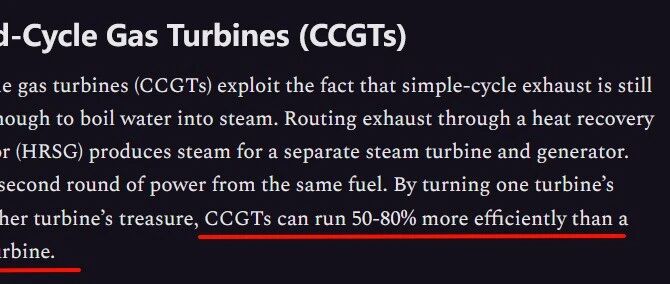
Group 1: Gas Turbines - The rise in oil prices will not significantly increase the cost of using gas turbines, as the lack of electricity is more critical than the cost of electricity [1] - Many data centers in North America are adopting the BYOG (Bring Your Own Generation) model due to the unreliability of the power grid, despite the higher costs associated with this model [2] - The efficiency of gas turbines is becoming increasingly important with rising gas prices, making the use of Heat Recovery Steam Generators (HRSG) more favorable [6] Group 2: Technology Comparison - The table comparing different technologies shows that Combined Cycle Gas Turbines (CCGT) are the most efficient, with a 50-80% improvement in efficiency over single gas turbines [4] - The delivery time and maintenance costs vary significantly among different types of generators, with CCGT having the lowest maintenance costs due to economies of scale [3] Group 3: Fiber Optics - The fiber optic sector is experiencing differentiation, with TDHL showing a significant increase despite overall market fluctuations [8] - TDHL's products are partly supplied to drones, which has become a hot topic in the context of the current geopolitical situation [10] - The collaboration with Corning, which has secured a large order from Meta, allows TDHL to act as a subcontractor for fiber optics [10]

数据中心狂飙时代的三道坎
傅里叶的猫· 2026-02-19 15:47
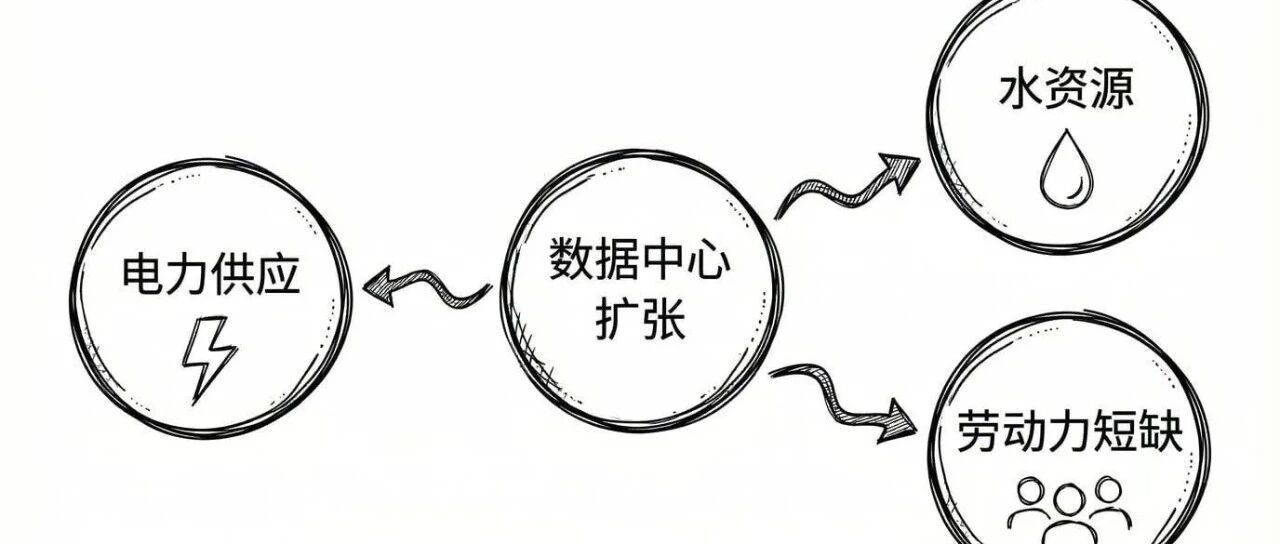
Core Insights - The article discusses the challenges faced by data centers, particularly focusing on three main constraints: electricity, water, and labor [1][13]. Electricity: The Primary Constraint - Electricity is identified as the most critical constraint for data centers, especially in urban areas where demand is already high. The influx of data centers exacerbates the strain on local power grids [4]. - AI training tasks are migrating to remote areas where electricity supply is more abundant, while inference tasks remain close to users for speed [4]. - Two potential solutions are proposed: 1. Flexible load management, which could unlock up to 100 GW of capacity but faces industry resistance and regulatory challenges [6]. 2. Behind-the-Meter (BTM) generation, where data centers build their own power sources, primarily using natural gas generators, though this is significantly more expensive, costing 5 to 20 times more than grid power [6][7]. Water Resources: A Growing Concern - The second challenge is water usage, as traditional cooling systems for data centers are water-intensive. The industry is shifting towards closed-loop and waterless cooling systems, which, while reducing water consumption, increase energy consumption significantly [9][11]. - The Power Usage Effectiveness (PUE) of traditional evaporative cooling systems is around 1.08, while closed-loop systems can rise to 1.35-1.40, indicating a substantial increase in energy costs [11]. - Despite the shift towards waterless cooling, demand for traditional cooling systems is expected to grow due to the overall expansion of data centers [11]. Labor: An Emerging Bottleneck - Labor shortages, particularly in skilled trades such as electrical and mechanical work, are becoming a significant constraint for data center construction and operation [14][16]. - The industry is collaborating with technical schools and even middle schools to attract more young people into technical careers, as estimates suggest that over 500,000 additional workers will be needed in the U.S. by 2030 to meet the demands of data center expansion [16].