Bond Investment

Search documents
VWOB or BND: Which Bond ETF Should You Buy?
Yahoo Finance· 2026-03-17 14:50
Core Insights - The current global economic uncertainty and high stock valuations are prompting investors to consider diversifying into bonds [1] - Bond exchange-traded funds (ETFs) are a simple way for everyday investors to access the bond market [1] Group 1: Bond ETFs Overview - The Vanguard Total Bond Market ETF (NASDAQ: BND) is highlighted as a low-cost option for bond investment [2] - For higher yields, investors may consider the Vanguard Emerging Markets Government Bond ETF (NASDAQ: VWOB), which focuses on government-issued debt from emerging markets [2][3] Group 2: Performance and Risk Analysis - VWOB has outperformed BND over the past year and several years, with average annual returns of 4.2% over the past 10 years, 2.6% over five years, 9.99% over three years, and 11.6% over the past year [8] - VWOB has an expense ratio of 0.15%, which is higher than BND, and is rated 3 out of 5 on the risk/reward scale, indicating it is a higher-risk investment compared to BND, which is rated 2 out of 5 [8][9] Group 3: Emerging Market Debt Considerations - VWOB consists of 902 government bonds from emerging markets, including countries like Saudi Arabia, Mexico, Turkey, and Indonesia [7] - Investing in emerging market government debt carries special risks, including potential defaults due to economic turmoil, political instability, and other vulnerabilities [10]
How Active Management Can Capture Yield In Today's Bond Environment
Seeking Alpha· 2026-03-16 16:23
Core Insights - Infrastructure Capital Advisors is a prominent provider of investment management solutions aimed at income-focused investors [1] - Jay Hatfield serves as the CEO and CIO, leading the investment team [1] - The firm manages several ETFs including InfraCap Small Cap Income ETF (NYSE: SCAP) and InfraCap Equity Income Fund ETF (NYSE: ICAP) among others [1] - Infrastructure Capital is frequently featured in major financial media outlets such as Fox Business, CNBC, and Bloomberg Radio/TV [1] Company Activities - The company publishes a monthly market and economic report, quarterly commentaries, and various research on asset classes and strategies [1] - Infrastructure Capital conducts monthly webinars and participates in industry conferences to provide educational resources for investors [1]


2 Active Bonds ETFs Rise to the Top Early in 2026
Yahoo Finance· 2026-03-16 16:06
Core Insights - Bond-focused exchange-traded funds (ETFs) are appealing for investors seeking a passive investment strategy, allowing for offloading of portfolio management tasks [3] - Active management in bond ETFs can outperform passive counterparts due to market inefficiencies and the ability to respond to interest rate shifts [4] - Two active bond funds, PIMCO Multisector Bond Active ETF (PYLD) and another unnamed fund, are highlighted for their strong performance and dividend yields [7] Group 1 - Bond ETFs provide a low-lift investment approach, suitable for retail investors seeking stable income, especially during stock market volatility [3] - Active bond ETFs can capitalize on inefficiencies in the bond market, with analysis indicating that active funds outperform passive ones in two-thirds of rolling 10-year periods [4] - Active management allows for strategic responses to market changes, such as interest rate fluctuations and credit cycles, enhancing investment opportunities [5] Group 2 - The PIMCO Multisector Bond Active ETF (PYLD) employs a broad, multisector strategy, focusing on securitized bonds while also including investment-grade and high-yield credit [6] - Both PYLD and another leading active bond fund offer dividend yields of 5.9% or better, with notable total returns over the past year [7]
2026年2月托管月报:银行为配债主力,资管户力量偏弱-20260306
Ping An Securities· 2026-03-06 12:39
1. Report Industry Investment Rating - No information provided in the given content 2. Core Viewpoints of the Report - In January 2026, the year - on - year growth rate of the bond custody balance was 11.36%, with stable supply. The new custody scale was 87 billion yuan, continuing the low - supply trend and increasing 28.07 billion yuan less year - on - year [3][4]. - Government bonds and credit bonds were the main supply forces, while inter - bank certificates of deposit continued to be weak. The new supply of treasury bonds was 42.57 billion yuan, and local bonds was 54.1 billion yuan, both at seasonal highs. The net supply of corporate credit bonds was 49.38 billion yuan, the highest since 2023. Commercial banks had abundant funds, and the net repayment of inter - bank certificates of deposit was 65.62 billion yuan [3]. - Banks were the main bond - allocating force, insurance's increase was average, and asset management accounts significantly reduced their holdings. After adding back reverse repurchases, commercial banks increased their holdings by 152.21 billion yuan, mainly allocating to treasury bonds and local government bonds. Insurance mainly increased its holdings of treasury bonds and local government bonds. Asset management accounts reduced their holdings by 64.44 billion yuan, mainly selling inter - bank certificates of deposit, policy - financial bonds, and treasury bonds. Foreign investors reduced their holdings by 10.99 billion yuan, and securities dealers' proprietary trading increased their holdings by 6.28 billion yuan [3]. - In terms of bond supply and institutional behavior outlook: In March, the supply of interest - rate bonds is expected to remain moderate, and the issuance rhythm in the first quarter of this year may be generally slow. Banks have abundant funds and strong bond - allocating willingness, but the actual bond - allocating scale may be limited by bond issuance. Insurance institutions' abundant premiums are expected to support medium - to - high - intensity allocation, but the strong equity market in spring may divert some insurance funds from bond investment. After the Spring Festival, residents' funds may flow back, and the buying power of asset management accounts is expected to improve marginally at a low level [3]. 3. Summary by Relevant Catalogs 3.1 Bond Supply Situation - **Overall Supply**: In January 2026, the bond custody balance had a year - on - year growth rate of 11.36%, and the new custody scale was 87 billion yuan, continuing the low - supply trend and increasing 28.07 billion yuan less year - on - year [3][4]. - **By Bond Type**: - Government bonds and credit bonds were the main supply forces, with inter - bank certificates of deposit showing a net repayment. Compared with the seasonality, treasury bonds, local government bonds, and corporate credit bonds had a large increase, while inter - bank certificates of deposit had a significant decrease [7][8]. - The supply of interest - rate bonds was at a seasonal high. The new supply of treasury bonds was 42.57 billion yuan, and local bonds was 54.1 billion yuan, with a combined supply of 96.67 billion yuan, a month - on - month increase of 17.75 billion yuan [12]. - Corporate credit bonds continued a strong issuance trend, with a net supply of 49.38 billion yuan in January 2026, the highest since 2023. Due to weak financing demand from financial institutions, the net repayment of inter - bank certificates of deposit was 65.62 billion yuan, which was the main contributor to the year - on - year decrease in custody volume [19]. 3.2 Institutional Bond - Allocating Behavior - **Commercial Banks**: In January 2026, commercial banks increased their holdings by 122.21 billion yuan (before adding back reverse repurchases), and after adding back, it was 152.21 billion yuan, a year - on - year increase of 145.36 billion yuan. They mainly increased their allocation to treasury bonds and local government bonds, and the allocation intensity to government bonds was stronger than the average of the past 12 months [22][26]. - **Insurance Institutions**: In January 2026, insurance institutions increased their holdings by 6.96 billion yuan, a year - on - year decrease of 8.61 billion yuan, mainly increasing their holdings of treasury bonds and local government bonds. The bond - allocating intensity was average, which may be related to the increase in equity investment during the bull market [31]. - **Asset Management Accounts**: In January 2026, asset management accounts reduced their holdings by 64.44 billion yuan, a year - on - year increase in reduction of 3.7 billion yuan, mainly selling inter - bank certificates of deposit, policy - financial bonds, and treasury bonds. The reduction may be related to the scale contraction of wealth management products, and the scale of pure - bond wealth management products decreased [34]. - **Other Institutions**: In January 2026, foreign investors reduced their holdings by 10.99 billion yuan, a year - on - year increase in reduction of 8.44 billion yuan, mainly selling inter - bank certificates of deposit. Securities dealers increased their holdings by 6.28 billion yuan, a year - on - year increase of 5.36 billion yuan, mainly increasing their holdings of policy - financial bonds and financial bonds and reducing their holdings of local government bonds [36]. 3.3 Outlook - **Bond Supply**: It is expected that the supply of interest - rate bonds in March will still be moderate. According to the issuance progress of treasury bonds and local government bonds from 2023 - 2025, the first quarter is not the peak of bond issuance, and there may be a wave of bond supply in May after the Two Sessions. The net financing of treasury bonds and local government bonds from January - February 2026 was less than that in the same period of 2025, and the issuance rhythm in the first quarter of this year may be generally slow [42]. - **Banks**: Banks have abundant funds and strong bond - allocating willingness. Since November 2025, the deposit - loan gap has risen significantly, and the net financing of inter - bank certificates of deposit has mostly been negative since June 2025. However, the actual bond - allocating scale may be limited by bond issuance. From January - February 2026, the secondary - market bond - buying strength of banks was average [50]. - **Insurance Institutions**: Insurance institutions have abundant premiums and maintain medium - to - high - intensity allocation. In 2025, insurance funds actively reduced low - return assets such as deposits and non - standard investments and shifted funds to the equity and bond markets. In 2026, the "good start" of insurance premiums was remarkable, but the strong equity market in spring may divert some insurance funds from bond investment [51]. - **Asset Management Accounts**: After the Spring Festival, residents' funds may flow back, and the buying power of asset management accounts is expected to improve marginally. From the secondary - market bond - buying volume in February, the absolute level may still be at a medium - low level [54].

Bond Investors Embrace Maturity Risk In 2026
Seeking Alpha· 2026-02-25 14:30
Group 1 - The article does not provide any relevant content regarding the company or industry [1]

BND Offers Broader Bond Mix Than VGIT
The Motley Fool· 2026-02-09 20:19
Core Viewpoint - Vanguard Total Bond Market ETF (BND) offers broader exposure to the U.S. bond market compared to Vanguard Intermediate-Term Treasury ETF (VGIT), which focuses on intermediate-term Treasuries, providing distinct options for income seekers [1]. Cost and Size - Both BND and VGIT have an expense ratio of 0.03% [3][4]. - BND has a current price of $74.24, with a 1-year return of 2.3% and a dividend yield of 4.2% [2][4]. - VGIT has a 1-year return of 2.5% and a dividend yield of 3.9% [3]. Performance and Risk Comparison - Over the past five years, BND experienced a maximum drawdown of -17.29%, while VGIT had a lower drawdown of -14.77% [5]. - The growth of $1,000 over five years was $994 for BND and $998 for VGIT, indicating similar performance despite BND's broader exposure [5]. Portfolio Composition - BND holds 11,444 different bonds with an average effective maturity of eight years, with 49.2% in Treasury bonds, 19.5% in government mortgage-backed securities, and 14.5% in industrial bonds [6]. - VGIT primarily consists of intermediate-term U.S. Treasuries, with only 102 positions, focusing on maximum safety from credit risk [7]. Investment Implications - BND's diversification and higher yield of 4.2% make it a more attractive option for income investors compared to VGIT's yield of 3.9% [8]. - BND's average duration of 5.7 years suggests less sensitivity to interest rate changes compared to VGIT's 4.9 years [9]. - VGIT's lower drawdowns and volatility may appeal to conservative investors, but BND could provide higher upside if interest rates decline [10].

How Does BND's Broad Bond Exposure Compare to VGIT's Lower Risk?
The Motley Fool· 2026-02-08 14:32
Core Insights - The Vanguard Intermediate-Term Treasury ETF (VGIT) and Vanguard Total Bond Market ETF (BND) provide exposure to the bond market but differ in bond grade and investment strategy [1] Cost & Size - Both VGIT and BND have an expense ratio of 0.03% - VGIT has a one-year return of 2.53% while BND has a return of 2.19% - VGIT's dividend yield is 3.79% compared to BND's 3.86% - Assets Under Management (AUM) for VGIT is $39.17 billion and for BND is $389.22 billion [2][3] Performance & Risk Comparison - VGIT has a maximum drawdown of -15.04% over five years, while BND has -17.93% - Growth of $1,000 over five years is $867 for VGIT and $850 for BND [4] Portfolio Composition - BND tracks the broad U.S. investment-grade bond market with around 15,000 securities, providing balanced exposure across Treasuries, mortgage-backed securities, and investment-grade corporates - VGIT primarily invests in intermediate-term U.S. Treasury securities, holding 104 AAA-rated bonds, the highest rating available [5] Risk Considerations - Approximately 72% of BND's holdings are AAA-rated bonds, but it also includes at least 12% of A and BBB-rated bonds, indicating slightly higher risk due to potential issuer default as bond ratings decline [8] - Bonds are generally less volatile than stocks, leading to lower expected dividend yields and returns [9]

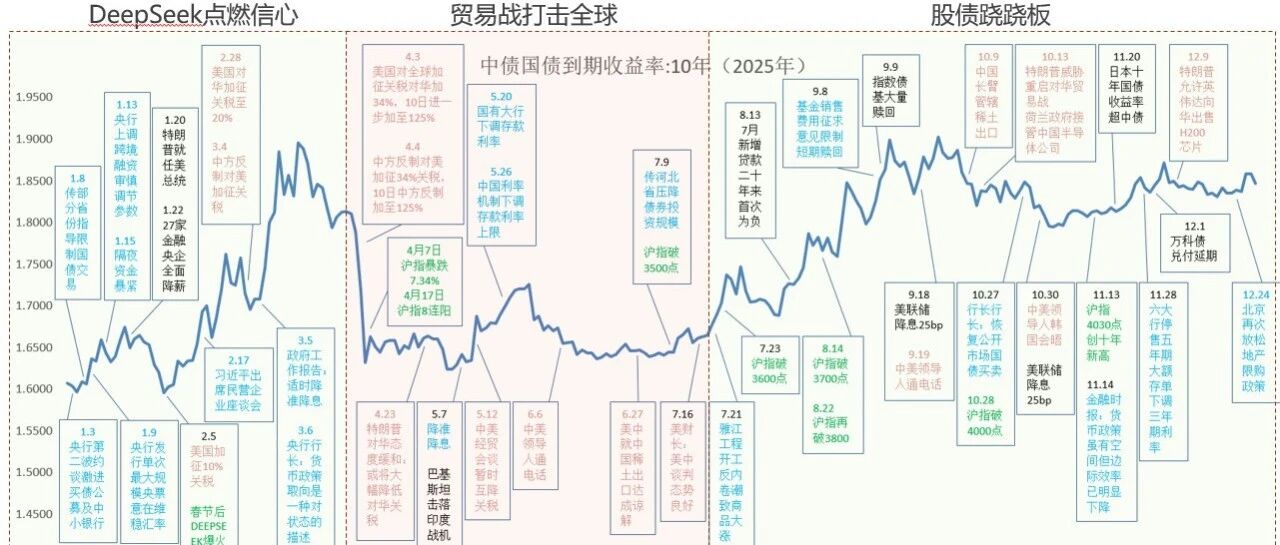
【2025年 债市大记事】
债券笔记· 2026-01-04 06:46
Group 1 - The article discusses the ongoing trends and significant events in the bond market from 2012 to 2025, highlighting key developments and changes in the industry [1] - It emphasizes the importance of staying informed about the bond market for investment strategies and decision-making [1] - The article offers insights into the expected performance of the bond market in 2024, suggesting potential opportunities for investors [1]
The Great Bond Debate: How Strategists Are Positioning Their ETFs
Etftrends· 2025-10-27 11:38
Core Insights - The bond market is currently characterized by a divergence of opinions among experts regarding positioning and risk, with many anticipating a Federal Reserve rate cut [1][7] - Active management is being favored over index-based strategies due to tight spreads and the complexities of the current economic cycle [4][5] Group 1: Investment Strategies - Jeffrey Sherman emphasizes that it is a credit-picker's market, suggesting that index-based investment-grade and high-yield valuations are rich, with a significant allocation to investment-grade corporate bonds in the DoubleLine Opportunistic Core Bond ETF (DBND) [2] - Jim Bianco recommends underweighting credit and prefers mortgage bonds and intermediate Treasury bonds, indicating concerns over corporate bond corrections [3] - Michael Arone advocates for active management in fixed income, highlighting the benefits of having experts manage bond investments [4] Group 2: Fund Allocations - The DBND ETF has a 40% allocation to investment-grade corporate bonds, 24% to government bonds, and 22% to agency bonds, with only 10% in high-yield corporates [2] - The WisdomTree Bianco Total Return Fund (WTBN) has a 32% weighting in mortgage-backed securities, with smaller allocations to Treasury bonds and limited exposure to corporate bonds [3] - The Astoria Dynamic Core US Fixed Income ETF (AGGA) has a substantial exposure to corporate bonds, with 15% in the SPDR Portfolio Intermediate Term Corporate Bond ETF and 12% in the iShares 5-10 Investment Grade Corporate Bond ETF [6]

Novice Investor’s Digest For Wednesday, September 24: Market Parses Powell’s Conservative View
Forbes· 2025-09-24 11:37
Market Overview - Stock prices experienced a decline, with the S&P 500 index falling by 0.6%, the Nasdaq Composite decreasing nearly 1%, and the Dow Jones Industrial Average dropping by 0.2% [3] - The decline in stock prices followed a period of record highs earlier in the week, influenced by Fed Chair Jerome Powell's cautious stance on interest rate reductions [4] Federal Reserve Insights - Jerome Powell expressed concerns regarding persistent inflation and a slowing labor market, describing the current economic situation as "challenging" [4] - Investors are anticipating a potential second interest rate reduction in 2025 during the Fed's October meeting, although Powell did not confirm this expectation [4] Economic Indicators - Upcoming economic reports include new residential housing sales for August, with analysts predicting a slight dip to 650,000 from July's 652,000 [6] - Cintas Corporation is expected to report an EPS of $1.20 for the August quarter, an increase from $1.10 in the prior year [6] - Uranium Energy is projected to report a loss per share of $0.04 for the July quarter, compared to a $0.03 loss in the previous year [6] - KB Home aims to exceed a consensus EPS estimate of $1.51 for the August quarter, down from $2.04 in the prior year [6]