
CPI与PPI走势

Search documents
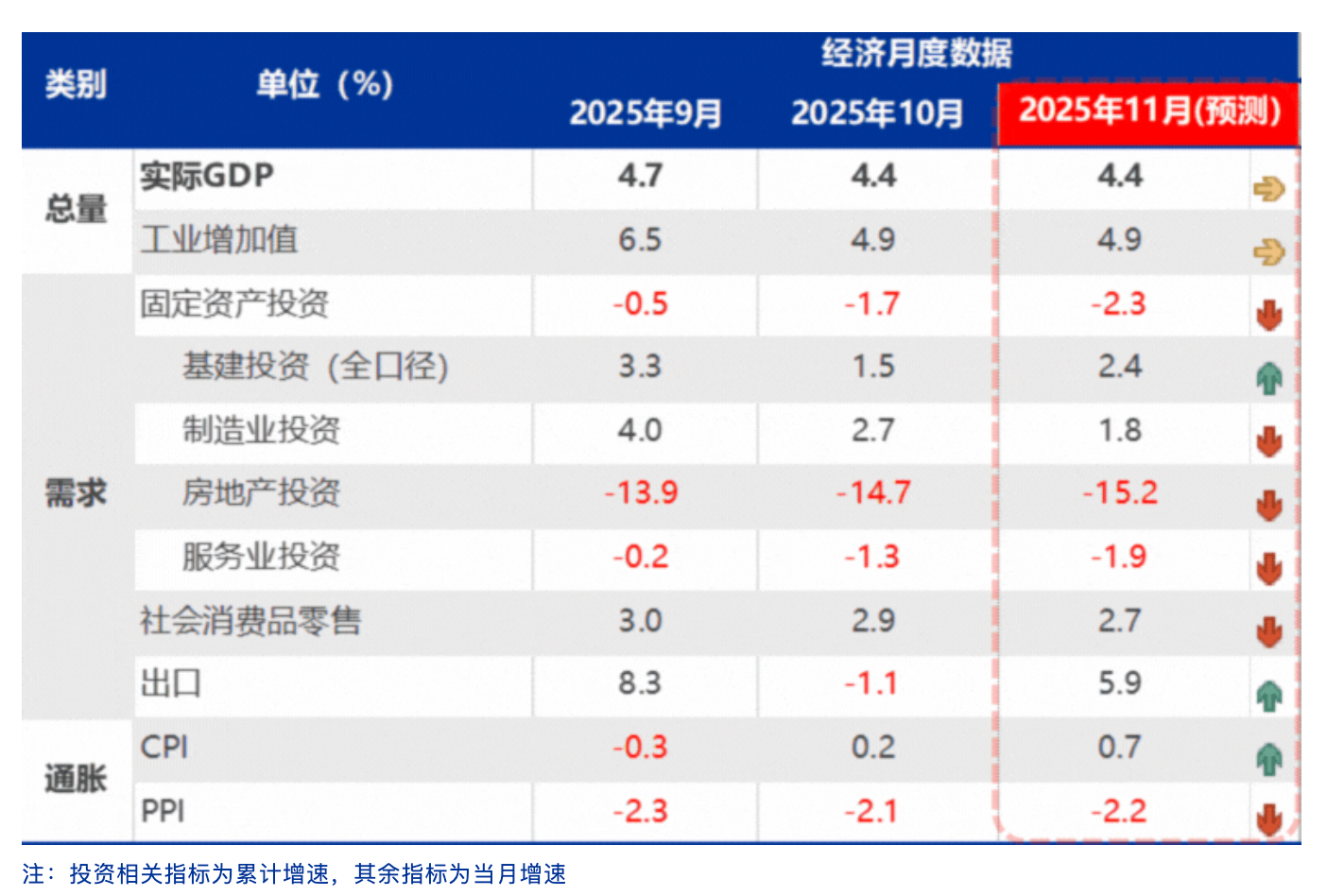
赵伟:11月经济或量价回升,保持增长韧性
Di Yi Cai Jing· 2025-12-11 06:16
供给扰动消退带动出口回升,政策加码或支撑服务消费、投资上行。 一问:11月经济活动有何亮点? 清账或持续约束制造业投资,地产对经济的拖累或尚未改善。 11月经济增长压力或仍聚焦于制造业领域,主要表现为企业加快清缴欠款,对投资产生额外拖累。本轮化债也要求企业加快清缴欠款,但由于当前企业盈利 偏弱,企业或将投资的资金用于清缴欠款,导致固定投资回落;10月应收账款增速降至5.1%。此外,去年来制造业投资强劲并非缘于政策驱动,更多是设 备处于自然更新上行周期;但下半年来,自然周期退坡,或也拖累制造业投资。 "反内卷"政策思路从严格限产转向构建中性成本机制,因而目前制造业中下游的反内卷进度偏慢,或令成本率仍处历史高位。与供给侧改革严格限产的政策 不同,本轮"反内卷"政策强调构建行业中性成本机制,引导企业避免低价竞争,而非直接限产,因而也导致反内卷进度偏慢的领域聚焦在中下游。规模以上 工业企业数据显示,目前其成本率仍维持高位,中下游消费链尤为明显。 地产对经济的拖累或未出现改善下,11月地产投资、商品房销售可能进一步回落。2021年房企融资承压导致施工周期拉长,今年四季度地产投资的在建项 目,对应的仍是2022年四季度开 ...

东莞证券财富通每周策略-20250711
Dongguan Securities· 2025-07-11 09:31
Market Overview - The market showed strong performance this week, with the Shanghai Composite Index surpassing 3500 points, recording three consecutive weekly gains. The Shanghai Composite Index rose by 1.09%, the Shenzhen Component Index increased by 1.78%, the ChiNext Index gained 2.36%, the STAR 50 Index rose by 0.98%, and the Beijing Stock Exchange 50 Index increased by 0.41% [1][3][5]. Economic Indicators - In June, the Consumer Price Index (CPI) turned from a decline to an increase, rising by 0.1% year-on-year, while the Producer Price Index (PPI) saw an expanded decline. The core CPI reached a 14-month high of 0.7% [2][9][10]. - The CPI's increase was driven by a significant recovery in industrial consumer goods prices, with international commodity prices contributing to increases in gold and platinum jewelry prices by 39.2% and 15.9%, respectively [9][10]. - The PPI's year-on-year decline expanded by 0.3 percentage points compared to the previous month, influenced by seasonal price decreases in raw materials and energy [9][10]. Policy Developments - The State Council issued 19 measures to stabilize employment, and the National Development and Reform Commission allocated an additional 10 billion yuan for employment support projects, which are expected to benefit 310,000 key groups [10][12]. - The government emphasized the need for industry self-discipline to prevent excessive competition, particularly in sectors like photovoltaic, steel, and cement [10][12]. International Trade and Monetary Policy - The U.S. has imposed tariffs on imports from multiple countries, with rates ranging from 25% to 50%, which may continue to pressure global trade growth expectations [12][13]. - The Federal Reserve is experiencing a divergence in opinions regarding interest rate policies, influenced by the potential impact of tariffs on inflation [12][13]. Sector Recommendations - The report suggests focusing on sectors such as banking, public utilities, construction decoration, non-ferrous metals, and technology, media, and telecommunications (TMT) for potential investment opportunities [14].