
稳就业政策

Search documents
张家港发布新一轮稳就业政策
Su Zhou Ri Bao· 2026-02-09 00:45
Group 1 - The core viewpoint of the news is the launch of new employment stabilization policies in Zhangjiagang, focusing on supporting enterprises and enhancing labor skills to meet employment demands during the Spring Festival period [1][2] - The new policies include eight specific measures aimed at stabilizing jobs and expanding employment opportunities, particularly for non-Suzhou residents [1] - From February to March 2026, companies hiring non-Suzhou residents for the first time and signing contracts for over one year will receive a subsidy of 500 yuan per person, provided they pay social insurance for at least three months [1] Group 2 - Zhangjiagang will support human resource agencies in supplying labor from outside the city, offering a subsidy of 500 yuan per person, with a maximum of 100,000 yuan [1] - Transportation subsidies will be provided for companies organizing point-to-point transportation for over 100 workers returning to work [1] - The city plans to hold 35 "Tonight's Good Market" talent night events and introduce a training brand called "Port Good Craftsman Night School," offering 133 skill courses to attract over 3,000 participants throughout the year [1] Group 3 - Zhangjiagang has organized over 150 recruitment events annually and has established partnerships with more than 700 key enterprises and over 130 key projects during the "14th Five-Year Plan" period, resulting in nearly 110,000 new urban jobs, a growth of over 50% [2] - The city will distribute a "Spring Warm Heart" employment package during the Spring Festival, including 10 million yuan in cultural and tourism consumption vouchers, discounts on scenic tickets, additional bus services, and free parking [2]
人社部将出台应对人工智能影响促就业文件
Zhong Guo Zheng Quan Bao· 2026-01-27 20:57
Group 1 - The Ministry of Human Resources and Social Security (MoHRSS) will implement actions to stabilize and expand employment, including key industry support measures and documents addressing the impact of artificial intelligence on employment [1][2] - A nationwide employment service action for college graduates will take place from December 18, 2025, to January 18, 2026, with approximately 718,000 individuals expected to reach preliminary employment intentions during this period [1][3] - The MoHRSS aims to deepen social security system reforms, expand the coverage of social insurance, and encourage flexible employment personnel to participate in employee insurance [1][2] Group 2 - By the end of 2025, the number of participants in basic pension, unemployment, and work injury insurance will reach 1.076 billion, 249 million, and 305 million respectively, with increases of 3.16 million, 3.29 million, and 1.02 million compared to the previous year [2][3] - The total income of the three social insurance funds for the year will be 9.1 trillion yuan, with total expenditures of 8.1 trillion yuan, resulting in a cumulative balance of 10.2 trillion yuan by the end of 2025 [2][3] - The MoHRSS reported that 12.67 million new urban jobs were created in 2025, with an average urban survey unemployment rate of 5.2% [3]
人社部:全年三项社会保险基金年底累计结余10.2万亿元
Jing Ji Guan Cha Wang· 2026-01-27 02:23
Employment Outlook - The Ministry of Human Resources and Social Security announced that 12.67 million new urban jobs are expected to be created in 2025, with an average urban survey unemployment rate of 5.2%, indicating overall stability in the employment situation [1] Social Security Developments - Nationwide pension insurance is being implemented steadily, with personal pension systems operating smoothly. The number of participants in occupational injury insurance pilot programs has reached 25.1 million [2] - By the end of 2025, the number of participants in basic pension, unemployment, and work injury insurance is projected to be 1.076 billion, 249 million, and 305 million respectively, reflecting increases of 3.16 million, 3.29 million, and 1.02 million compared to the previous year [2] - The number of social security cardholders has reached 1.39 billion, covering 98.9% of the population, with 1.104 billion electronic social security cards issued, covering 78.4% of the population [2] - The total balance of the three social insurance funds is expected to reach 10.2 trillion yuan by the end of the year [2] Unemployment Insurance and Job Creation - The reduction in unemployment insurance rates has alleviated burdens on enterprises by 187.2 billion yuan, with 33.6 billion yuan allocated for stable job retention funds [3] - Various regions have organized 21,000 job fairs for college graduates, releasing over 10 million job positions [3] - The "Skills Illuminate the Future" initiative has provided subsidized training for over 11 million individuals [3] - The scale of employment for the poverty alleviation population remains above 30 million [3]
王萍萍:2025年就业形势保持总体稳定
Guo Jia Tong Ji Ju· 2026-01-19 03:35
Group 1 - The overall urban survey unemployment rate in 2025 averaged 5.2%, which is below the expected target of around 5.5% [2] - The unemployment rate fluctuated throughout the year, peaking at 5.4% in February and stabilizing at 5.1% in the last quarter [2] - The average unemployment rate in 31 major cities was 5.1%, remaining stable compared to the previous year and lower than the national urban average by 0.1 percentage points [2] Group 2 - The unemployment rate for urban workers aged 30-59 averaged 4.0%, which is 1.2 percentage points lower than the national urban average [3] - The unemployment rate for migrant workers remained stable, averaging 4.7% for the year, with a decrease to 4.4% in November and December [3] - Efforts to support migrant workers through labor matching and the development of rural industries contributed to overall employment stability [3] Group 3 - Employment in the transportation, accommodation, and catering sectors continued to increase in 2025, reflecting the implementation of employment-first strategies [4] - The manufacturing sector maintained a stable share of national employment, while service industries showed significant growth in employment numbers [4] - Economic stability, industrial transformation, and supportive employment policies provided a solid foundation for maintaining employment levels [4]
报告显示企业员工离职率已连续三年小幅走低
Zhong Guo Jing Ji Wang· 2026-01-13 09:41
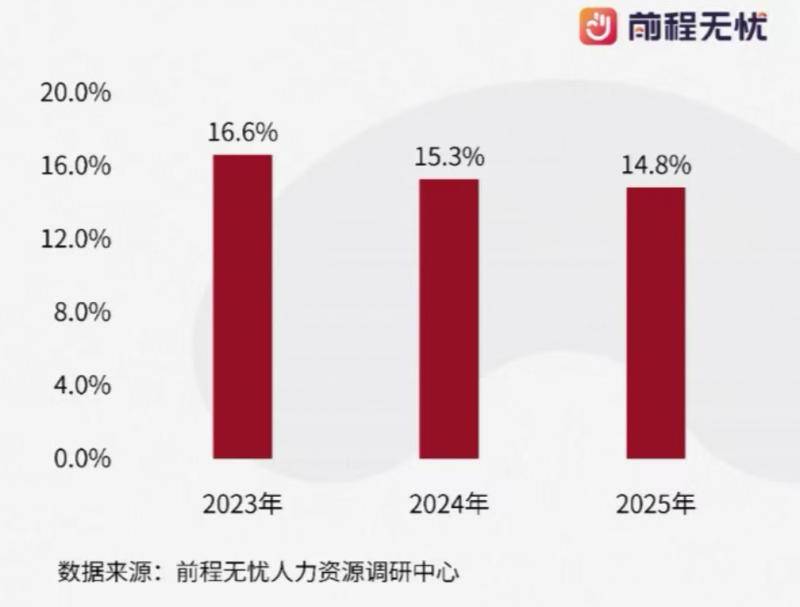
Core Insights - The overall employee turnover rate in 2025 decreased to 14.8%, a decline of 0.5 percentage points year-on-year, marking a continuous decrease over three years since 2023 with a total drop of 1.8% [1][2] - The hospitality, manufacturing, and real estate sectors had the highest turnover rates, with the hospitality sector remaining at the top despite only a 0.2 percentage point decrease from 2024 [1] - The turnover rates in various cities showed a decline compared to 2024, with a narrowing gap between first-tier cities and new first-tier cities, as the latter improved their talent attraction capabilities through specialized industry clusters [1] Industry Trends - Many companies are implementing cost-cutting and efficiency-enhancing strategies, leading to reduced hiring scales and a decrease in external job supply, which has increased employees' perception of job-switching risks and opportunity costs [2] - This risk-averse sentiment has lowered the willingness to voluntarily leave jobs, resulting in a market trend focused on stability [2] - Government policies aimed at stabilizing employment, such as expanding skills training and employment subsidies, have also contributed to mitigating fluctuations in the labor market [2] Employer Considerations - While the decrease in turnover rates has positive implications, it is essential for employers to balance efficiency with human care for long-term success [2] - Companies are encouraged to utilize this stable period to deepen internal talent management and shift focus from external recruitment to enhancing internal vitality [2]
人才流动进入“沉淀期” 2025年离职率降至14.8%
Sou Hu Cai Jing· 2026-01-13 07:06
Core Insights - The overall employee turnover rate in 2025 is projected to decrease to 14.8%, down from 15.3% in 2024, indicating a trend towards a more stable labor market after recent fluctuations [1][3]. Industry Analysis - The decline in turnover rates is influenced by external economic conditions rather than solely increased employee loyalty. Companies are controlling labor costs and reducing hiring, leading employees to perceive higher risks and opportunity costs associated with job changes [3]. - The report identifies the top three industries with the highest turnover rates in 2025: - Hospitality/Tourism at 16.5% - Manufacturing at 15.7% - Real Estate at 15.4% [4]. - The manufacturing sector's turnover rate remains at 15.7%, linked to industry upgrades and a greater desire to retain skilled workers, although high turnover in basic assembly line positions persists [4]. - The real estate sector's turnover rate has decreased from 15.9% in 2024, reflecting ongoing personnel optimization and transformation within the industry [4]. - The transportation/logistics sector shows the most significant decline in turnover, dropping 1.4 percentage points to 14.0%, indicating a more stable employment ecosystem as logistics systems mature [4]. - A comparison of turnover rates across various industries shows a general decline, with notable changes in the following sectors: - High-tech: from 16.1% to 15.3% - Consumer goods: from 15.5% to 15.2% - Trade/Wholesale: from 15.3% to 15.2% - Automotive: from 14.2% to 13.9% [5]. City-Level Insights - Turnover rates in 2025 have decreased across all cities compared to 2024, with a narrowing gap between first-tier cities (e.g., Beijing, Shanghai, Shenzhen) and new first-tier cities (e.g., Chengdu, Hangzhou). This trend suggests that talent mobility is becoming more balanced and not solely favoring major metropolitan areas [5].

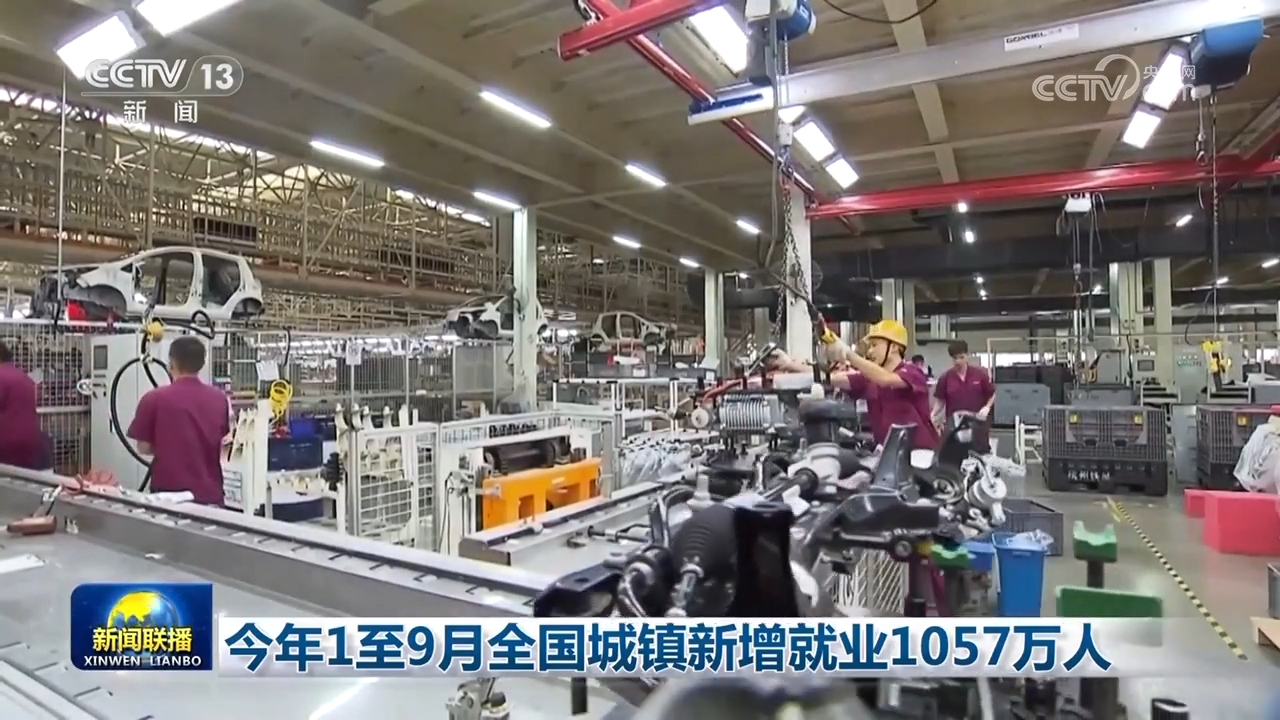
今年1至9月全国城镇新增就业1057万人
Yang Shi Wang· 2025-10-29 12:05
Group 1 - The core viewpoint of the articles highlights the Chinese government's efforts to stabilize employment through targeted policies, achieving 10.57 million new urban jobs from January to September, which is 88% of the annual target [1] - The social security system in China is operating smoothly, with 1.074 billion people covered by basic pension insurance, 248 million by unemployment insurance, and 304 million by work injury insurance as of the end of September [3] - The number of social security cardholders reached 1.39 billion, covering 98.9% of the population, with 1.1 billion people using electronic social security cards [3]
国家统计局人口和就业统计司司长:前三季度就业形势总体稳定
Guo Jia Tong Ji Ju· 2025-10-20 02:44
Core Viewpoint - The national economy is operating smoothly with overall stable employment conditions, supported by enhanced macro policies and employment stabilization measures [1] Group 1: Employment Statistics - The national urban surveyed unemployment rate averaged 5.2% from January to September, with quarterly averages of 5.3%, 5.0%, and 5.2%, showing a slight increase of 0.1 percentage points in the first quarter compared to the previous year, while the second and third quarters remained stable [2] - In September, the unemployment rate decreased to 5.2%, down 0.1 percentage points from August, following seasonal adjustments [2] - The unemployment rate in 31 major cities averaged 5.1%, which is 0.1 percentage points lower than the national average, with similar quarterly trends observed [2] Group 2: Employment in Key Sectors - Employment in key service sectors such as transportation, accommodation, and cultural industries improved due to active summer tourism and enhanced employment support policies [3] - The unemployment rate for migrant agricultural workers averaged 4.8%, which is 0.4 percentage points lower than the national urban average, with a slight increase in July due to seasonal factors, followed by a decrease in August and September [3] - The unemployment rate for the 16-24 age group, excluding students, saw a seasonal rise in July and August but significantly decreased in September as graduates secured jobs [3] Group 3: Economic Outlook and Policy Recommendations - The overall economic operation is stable, with steady progress in transformation and upgrading, although structural employment challenges remain in certain regions and industries [3] - There is a need for continued macro policy adjustments to stabilize employment, businesses, markets, and expectations, with an emphasis on enhancing employment support measures [3]
王萍萍:前三季度就业形势总体稳定
Guo Jia Tong Ji Ju· 2025-10-20 02:17
Group 1 - The overall urban surveyed unemployment rate in China remained stable at an average of 5.2% from January to September, with slight fluctuations in the third quarter due to seasonal factors [2][3] - The unemployment rate in 31 major cities averaged 5.1%, slightly lower than the national level, indicating a relatively stable employment situation in urban areas [2] - The unemployment rate for migrant workers was 4.8%, which is 0.4 percentage points lower than the national urban average, showing resilience in this demographic [3] Group 2 - Employment in key service sectors such as transportation, accommodation, and cultural industries improved due to increased support for employment policies and active summer tourism [3] - The unemployment rate for the 16-24 age group saw a seasonal increase during July and August but showed a significant recovery in September as graduates secured jobs [3] - The overall economic operation is stable, with steady progress in transformation and upgrading, although structural employment challenges remain in certain regions and industries [3]
江苏出台稳就业政策“组合拳”
Jiang Nan Shi Bao· 2025-09-25 15:29
Core Viewpoint - Jiangsu Province is implementing a comprehensive employment policy system to stabilize the job market, focusing on job creation, skill enhancement, service optimization, and strengthened guarantees to ensure sustained employment stability across the province [1][2]. Group 1: Policy Coverage - The employment policy framework in Jiangsu is designed to cover all stages and various stakeholders, with a focus on expanding job opportunities in key sectors, including digital economy and low-altitude economy, aiming to create at least 2.35 million jobs in 2023 [2]. - Specific targets include a minimum of 150,000 policy-based jobs, 2 million market-based jobs, and 100,000 public welfare jobs, along with 100,000 job training positions [2]. Group 2: Financial Support - The province is utilizing employment subsidy funds and unemployment insurance to support job policies, including reducing unemployment insurance rates from 3% to 1% and increasing the refund rate for small and medium enterprises from 60% to 90% [4]. - The maximum amount for "Su Gang Loan" has been raised from 300 million to 500 million yuan, with expected funding for unemployment insurance policies exceeding 20 billion yuan and "Su Gang Loan" disbursements surpassing 100 billion yuan [4]. Group 3: Targeted Support for Key Groups - Employment policies are tailored to meet the needs of specific groups, such as recent graduates and the unemployed, with initiatives like the "1151" service for graduates, which includes job information and training opportunities [5]. - A mechanism for tracking and supporting unemployed individuals has been established, ensuring that vulnerable groups receive equal access to employment support policies [5]. Group 4: Efficient Policy Implementation - To accelerate the implementation of employment policies, Jiangsu is conducting a "Employment Policy Promotion Month" in September, utilizing both online and offline methods to ensure that policies reach the intended beneficiaries effectively [7]. - The province is leveraging data and technology to streamline the process, allowing for direct access to benefits without the need for applications, thereby enhancing the overall experience for job seekers and employers [7].