
Dollar - Cost Averaging

Search documents
Worried About a Stock Market Bubble in 2026? Here's a Smarter Way to Prepare.
Yahoo Finance· 2026-03-14 20:55
Core Insights - The spending on AI infrastructure is projected to exceed $700 billion by 2026 among the five largest hyperscalers, raising concerns about a potential bubble in the market [1][2] - Nvidia, a key player in the AI sector, constitutes over 7% of the S&P 500 index and is experiencing significant capital expenditure pressures [2] - The valuation of Nvidia is currently reasonable with a forward P/E ratio of about 22, contrasting sharply with historical valuations during the dot-com era [3] Industry Impact - A slowdown in AI infrastructure spending could adversely affect major companies, including Nvidia, and lead to increased debt issuance among large cloud computing firms [2] - Major hyperscalers like Alphabet, Amazon, Microsoft, and Meta Platforms are heavily investing in AI data centers, which could lead to a reduction in future capital expenditures and improved free cash flow [4] - The market dynamics may shift, with potential winners emerging as AI data center spending fluctuates, particularly within the S&P 500 index [6] Investment Strategy - Dollar-cost averaging into an S&P 500 ETF is recommended as a prudent investment strategy, regardless of the current debate surrounding an AI infrastructure bubble [5][6] - The S&P 500 index is expected to allow new market leaders to emerge, benefiting from reduced AI data center spending in the long term [6]
How to Invest During Market Volatility Without Panicking
The Smart Investor· 2026-03-11 09:30
Group 1 - Market volatility is inherent in investing and can create opportunities for investors rather than just posing risks [1][2] - Emotional biases can lead to poor decision-making during volatile markets, causing investors to react impulsively to price movements [2][3] - Focusing on business fundamentals, such as earnings and cash flow, rather than daily price fluctuations is crucial for long-term investment success [4][5] Group 2 - A long-term investment plan helps investors stay focused on their goals and manage risk tolerance effectively [6][7] - Dividend-paying stocks like Singapore Exchange Limited (SGX) and Parkway Life REIT are recommended for income generation, while scalable companies like iFAST Corporation are suggested for capital appreciation [7] - Market pullbacks can present buying opportunities, as demonstrated by the recovery of DBS Group Holdings' stock price after significant declines during the pandemic [8][9] Group 3 - A balanced and diversified portfolio should include a mix of growth stocks, income-generating stocks, defensive stocks, and REITs to mitigate risks [10] - Regularly trimming portfolio allocations can help maintain long-term stability and prevent any single investment from dominating the portfolio [11] Group 4 - Common mistakes during volatile markets include emotional decision-making, market timing attempts, and following herd mentality instead of focusing on business fundamentals [12][13] - Staying disciplined and using strategies like Dollar-Cost Averaging (DCA) can help investors manage volatility effectively [14][15]


American millennials are getting richer faster than boomers and Gen X. Here are the secrets to their success
Yahoo Finance· 2026-03-10 19:20
Core Insights - Wealthfront's analysis indicates that wealthy millennials are successfully utilizing time-tested investment strategies, such as low-cost index funds, dollar-cost averaging, and maintaining investment discipline during market volatility [1][10]. Group 1: Millennial Wealth Growth - Millennial net wealth is projected to grow at an annual rate of 11.3% through 2045, nearly double the expected growth rate for total national wealth at 3% [2]. - The number of millennial millionaires in Wealthfront's user base has increased by 144% over the past five years [4]. - Millennials' total wealth is expected to rise from $3.85 trillion in Q3 2019 to $18.25 trillion in Q3 2025, marking a 374% increase [4]. Group 2: Investment Strategies - Millennials are holding over 90% of their invested Wealthfront assets in globally diversified portfolios of low-cost ETFs, which are seen as a solid investment strategy [7]. - The concept of "buy the dip" has gained popularity among millennials, who view market downturns as opportunities rather than risks [9][10]. - Consistent investing, such as dollar-cost averaging, is recommended to mitigate market volatility and enhance long-term growth potential [16][17]. Group 3: Emergency Funds and High-Yield Accounts - Maintaining an emergency fund is crucial, and millennials using Wealthfront's Cash Account earn more interest than with traditional accounts, facilitating faster fund growth [11][12]. - Wealthfront Cash Accounts currently offer a base variable APY of 3.30%, with new clients receiving a 0.75% boost for the first three months, totaling an APY of 4.05% [12]. Group 4: Diversification and Alternative Investments - Diversifying portfolios is essential, especially for older investors, to mitigate risks associated with market downturns [21][22]. - Gold has been highlighted as a strong inflation hedge, with prices reaching record highs, making gold IRAs an attractive investment option [23][24]. - Real estate investment platforms like mogul offer fractional ownership in rental properties, providing stable returns without the burdens of traditional landlord responsibilities [26][28].
Howard Marks says don’t let war ‘affect your emotions’ around investing. How to stay the course during turbulent times
Yahoo Finance· 2026-03-07 13:30
Core Insights - The article emphasizes the importance of preparation and maintaining a diversified portfolio during periods of market uncertainty, rather than reacting emotionally to market volatility [2][5][20] Market Conditions - Escalating tensions in the Middle East have caused disruptions in energy trade routes, leading to increased oil prices and heightened market uncertainty [5][11] - The Strait of Hormuz is a critical chokepoint for global oil consumption, responsible for approximately one-fifth of it, which adds to the volatility in energy markets [3][11] Investor Behavior - Panic selling during downturns can lock in losses for long-term investors, while those who remain invested and diversified tend to perform better [2][6] - Historical data shows that the average investor often underperforms the broader market due to poorly timed decisions driven by emotional responses [6][20] Investment Strategies - Professional guidance from financial advisors can help investors navigate turbulent markets and make informed decisions [6][7] - Automated investment platforms and high-yield accounts can provide better returns on cash holdings, allowing investors to maintain liquidity while generating interest [17][18] Long-term Investment Philosophy - Warren Buffett's advice highlights the importance of contrarian investing, suggesting that investors should be cautious when others are overly optimistic and vice versa [19][20] - Studies indicate that markets typically recover from geopolitical shocks, and the risk of missing out on rebounds is greater for those who panic sell [20][22] Alternative Investments - Gold has historically been a strong performer during geopolitical instability, serving as a diversifier in investment portfolios [12][11] - Investing in physical precious metals or gold IRAs can be part of a long-term wealth preservation strategy amid economic uncertainty [12][13]
History Says Stocks Always Rebound, Even After Deep Downturns. Here's the Proof
The Motley Fool· 2026-03-01 21:30
Group 1 - The rise of artificial intelligence (AI) brings both promise and uncertainty, with concerns about potential job displacement and economic recession [1][2] - Investors show modest optimism, with nearly 70% expecting stock gains of 4% or more by 2026, but 45% are worried about a recession and 37% about a weakening labor market [2] - Historical data indicates that while individual stocks may decline significantly, the broader stock market tends to recover over time, as evidenced by the S&P 500's strong returns from 1980 to 2020 [4] Group 2 - Market capitalization weighting in indexes like the S&P 500 and Russell 3000 means that larger companies have a greater impact on index performance, with about 10% of stocks in the Russell 3000 being major contributors to returns [5] - Technological shifts, including the rise of AI, have historically led to job changes and market adaptations, with some companies becoming irrelevant while others thrive [6] - The market has consistently rebounded from significant events, including the 9/11 attacks and the financial crisis, suggesting resilience in the face of challenges like an AI bubble [7] Group 3 - Predicting the long-term effects of AI on industries is complex, with uncertainty about whether AI will replace or enhance existing software solutions [9][10] - A recommendation for investors is to consider exchange-traded funds (ETFs) like the Vanguard S&P 500 ETF, which allows the market to determine winners through a survival-of-the-fittest approach [11]

5 Smart Money Habits to Build Financial Success in the Year of the Horse
The Smart Investor· 2026-02-17 03:30
Market Overview - The Singapore market is experiencing significant momentum, with DBS Group Holdings Ltd trading at record highs near S$60 and Singapore Exchange Ltd surpassing a historic peak of S$19.20 [1] - The Straits Times Index has risen from 3,372 to nearly 5,000 over the past year, indicating strong market performance [1] Investment Strategies - **Avoid FOMO**: Investors are advised not to chase stocks that are hitting new highs, but rather to assess whether they are buying strong businesses or merely reacting to price increases [3] - **Reinvest Dividends**: Emphasizing the importance of reinvesting dividends from blue-chip stocks and REITs to benefit from compounding returns [5][6] - **Review Gearing**: Investors should regularly check the gearing ratio of their holdings, as companies with lower debt levels have more flexibility and resilience in changing market conditions [7][8] - **Dollar-Cost Averaging**: A consistent investment strategy, such as dollar-cost averaging, helps mitigate the emotional aspects of investing during market fluctuations [9][10] - **Long-Term Patience**: Maintaining investments during market volatility is crucial, as successful investing relies on time in the market rather than timing the market [11][12] Key Takeaway - The Year of the Red Fire Horse presents opportunities, but a disciplined approach focusing on reinvestment, balance sheet strength, and patience is essential for long-term investment success [13]

Is It Too Late to Buy SGX?
The Smart Investor· 2026-01-26 23:30
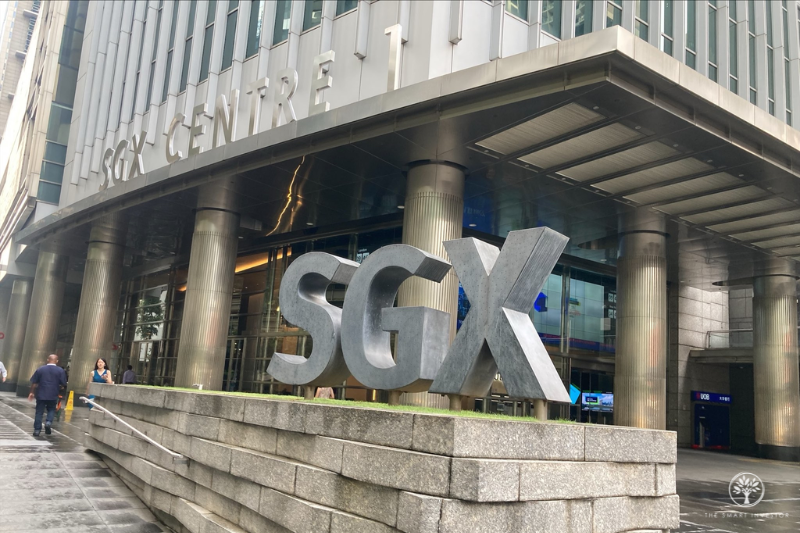
Core Viewpoint - Singapore Exchange Limited (SGX) has experienced a significant share price increase of approximately 43% over the past year, driven by strong fundamentals, increased trading volumes, new IPOs, and supportive policies [1][3]. Group 1: Business Fundamentals - SGX operates as Singapore's sole approved and regulated stock exchange, creating a natural monopoly that allows for robust cash flow generation with minimal capital expenditure [2]. - The exchange has a solid dividend track record, having paid annual dividends since 2003, which has historically rewarded long-term shareholders with dependable dividends and capital appreciation [5][6]. - SGX's recent annual dividend for 2025 is S$0.375 per share, with a payout ratio of 61.9%, supported by a healthy free cash flow of S$773.6 million for FY2025 [6]. Group 2: Recent Developments - Recent market fluctuations have led to increased trading and derivatives volumes, alongside positive policy initiatives and market reforms that have heightened interest in Singapore's markets [3][4]. - SGX is diversifying its offerings, including data, derivatives, and fixed income, which reduces reliance on equity trading and supports revenue growth [5][7]. Group 3: Investment Considerations - Despite the positive outlook, SGX's current forward price-to-earnings (P/E) ratio stands at 27.6 times, which is elevated compared to its 10-year historical average of 21.9 times, indicating stretched valuations [8]. - Long-term investors should focus on underlying fundamentals rather than short-term price movements, with current trailing annual yield at 2.1%, below the 10-year average of 3.44% [9][10]. - A dollar-cost-averaging (DCA) strategy may be prudent for investors to mitigate the risk of buying at a premium while ensuring consistent dividend income [11].
Veteran-turned-trader who regularly beats the S&P 500 shares 3 key tips for 2026. Why passive investors should take note
Yahoo Finance· 2026-01-17 11:00
Core Insights - A retail investor, Erik Smolinski, has achieved an average return of 24.6% annually from 2018 to 2022 and "triple-digit" gains in 2023, providing insights for investors looking to improve their strategies for 2026 [1][2] Group 1: Long-term Investment Strategy - Smolinski emphasizes the importance of a long-term investment plan, suggesting that investors should consider how their portfolio will align with future market conditions over the next three to five years [3] - The focus should be on significant trends, such as artificial intelligence, rather than short-term market fluctuations [3] - Historical data indicates that the S&P 500 has delivered approximately 10% annualized returns, reinforcing the value of a long-term perspective [4] Group 2: Active vs. Passive Management - Research shows that only about 20% of active funds outperform their index counterparts over the long term, with around 65% of active funds underperforming the S&P 500 in 2024 [4] - This data supports the notion that maintaining a long-term investment strategy is more beneficial than reacting to market volatility [5] Group 3: Investment Automation - Smolinski advocates for putting money to work through automated contributions, such as monthly transfers from paychecks to investment accounts, to facilitate compounding growth [5] - The dollar-cost averaging (DCA) strategy is recommended as a method to mitigate risk while building wealth over time [6]
5 Simple ETFs to Buy With $1,000 and Hold for a Lifetime
The Motley Fool· 2026-01-13 00:16
Core Insights - ETFs are recommended as an effective way for new investors to achieve diversification and start investing [1] - A consistent investment strategy, such as dollar-cost averaging, can lead to significant wealth accumulation over time [2] ETF Analysis - **Vanguard 500 ETF**: This fund tracks the S&P 500 and includes 500 of the largest U.S. companies, providing a strong foundation for most investors' portfolios. It has generated an average annual return of 14.8% over the last decade and 23% over the past three years [3][5] - **Vanguard Growth ETF**: This ETF focuses on growth stocks and has produced a yearly return of 17.5% over the past 10 years and 32.5% over the last three years [6] - **Invesco QQQ Trust**: Tracking the Nasdaq-100 index, this ETF has generated an average return of 19.4% over the last decade and 32.9% over the past three years, heavily weighted towards tech stocks [6] - **Global X Artificial Intelligence & Technology ETF**: This ETF offers exposure to international AI companies, with nearly 35% of its portfolio in international stocks. It achieved a 32% return in 2025 and an average of 36.4% over the past three years [7][8] - **Schwab U.S. Dividend Equity ETF**: This fund focuses on companies that can maintain and grow their dividends, with a forward yield of 3.8% and an average annual return of 11.5% over the past decade [9][11]
How This Couple Grew Their Liquid Net Worth to $2.3 Million and Crafted Their FIRE Plan
Yahoo Finance· 2026-01-07 20:04
Core Insights - A couple in their mid-30s has $2.3 million in liquid assets and aims to reach $4 million by age 42, with a combined annual income of $550,000 [2][3] Group 1: Financial Situation - The couple's liquid net worth includes cash and investments that can be quickly converted to cash, excluding assets like their home or retirement accounts [5] - Their liquid assets provide significant flexibility, allowing them to navigate financial challenges without stress [6] Group 2: Investment Strategy - The couple employs dollar-cost averaging, investing equal amounts at regular intervals regardless of market conditions, which helps manage investment costs over time [9] - Staying invested during market downturns has been crucial for their financial success, as it prevents timing mistakes that can lead to lower returns [10]