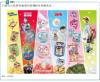
IP+零食

Search documents
金添动漫“闯关”港股:存货攀升,IP非独家授权“埋雷”
Bei Ke Cai Jing· 2025-10-23 13:06
Core Viewpoint - Guangdong Jintian Animation Co., Ltd. (Jintian Animation) has submitted its listing application to Hong Kong, leveraging its 26 authorized IPs to drive revenue through IP-themed snacks, although it faces risks related to the non-exclusive nature of its IP licenses and the need for regular renewals [1][10]. Group 1: Business Model and Revenue - Jintian Animation's revenue primarily comes from the sale of IP-themed snacks, with a business model that integrates snacks as a medium and IP as a driving force [1]. - In 2022, Jintian Animation's revenue exceeded 800 million RMB, positioning it as the largest IP-themed snack company in China by revenue, with a market share of 7.6% [3]. - The company operates five production bases nationwide and has over 600 active SKUs across five product categories: candies, biscuits, puffed snacks, chocolates, and seaweed snacks [4]. Group 2: Financial Performance - Jintian Animation's revenue for the years 2022, 2023, and projected for 2024 is approximately 5.96 billion RMB, 6.64 billion RMB, and 8.77 billion RMB respectively, with net profits of 370 million RMB, 750 million RMB, and 1.3 billion RMB for the same years [6]. - The gross profit margins for its product categories in 2024 are projected to be 29.3% for candies, 38.7% for biscuits, 48.9% for puffed snacks, 34.3% for chocolates, and 18% for seaweed snacks [5]. Group 3: Market Strategy and Distribution - The company employs a multi-channel marketing strategy, integrating a network of over 2,600 distributors and direct sales to retailers, covering more than 1,700 counties with over 60% county-level coverage [7]. - Jintian Animation is also exploring e-commerce channels through third-party platforms like Douyin, Pinduoduo, Tmall, Taobao, JD.com, Xiaohongshu, and Kuaishou to sell products directly to consumers [8]. Group 4: IP Licensing and Risks - Jintian Animation's business heavily relies on IP licenses, which are typically non-exclusive and require periodic renewals, creating vulnerabilities in its operational model [10][13]. - The company has several IP licenses with varying durations, with some licenses like Ultraman and Nezha having only 12 months left before renewal [11][12]. - The competitive landscape is intense, with the top five companies in the IP-themed snack market holding only 16.7% of the market share, necessitating continuous product development and innovation [10]. Group 5: Future Development Plans - Jintian Animation plans to diversify and enrich its IP matrix, focusing on both established and trending IPs to drive growth [2][14]. - The company aims to develop its own IP through independent design and procurement, with part of the funds raised from the Hong Kong listing allocated for this purpose [16].

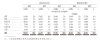
从新三板到港交所,利润激增3.5倍,金添动漫玩转“IP+零食”生意经
3 6 Ke· 2025-10-21 11:14
Core Viewpoint - Guangdong Jintian Animation Co., Ltd. (Jintian Animation) has submitted an application for a mainboard listing on the Hong Kong Stock Exchange, showcasing impressive financial performance with a projected net profit increase of 72.9% in 2024, alongside a continuous rise in gross margin [1][10]. Financial Performance - Jintian Animation's revenue for 2022, 2023, and 2024 is reported at 596 million, 664 million, and 877 million yuan respectively, with gross profits of 159 million, 217 million, and 296 million yuan, leading to gross margins of 26.6%, 32.6%, and 33.7% [2]. - The net profits for the same years are 36.71 million, 75.22 million, and 130 million yuan [2]. IP Portfolio and Revenue Sources - The company has established a strong IP portfolio with 26 authorized IPs, including popular characters like Ultraman and My Little Pony, contributing significantly to revenue [1][3]. - Ultraman is the most profitable IP, generating revenues of 373 million, 418 million, and 479 million yuan from 2022 to 2024, accounting for 62.6%, 63.0%, and 54.5% of total revenue respectively [2]. Product Categories and Sales Channels - Candy and biscuits are the main product categories, contributing 66.2% of total revenue in the first half of 2025, with candy sales reaching 178 million yuan [3]. - The company is shifting its sales strategy, with direct sales to retailers increasing from 3.5% to 43.2% from 2022 to the first half of 2025, while sales to distributors decreased from 95.2% to 55.1% [5]. Market Potential and Growth - The IP food market in China is projected to grow from 354 billion yuan in 2024 to 849 billion yuan by 2029, with a compound annual growth rate (CAGR) of 18.5% [7][8]. - The IP fun food segment is expected to grow from 56 billion yuan in 2020 to 115 billion yuan in 2024, with a CAGR of 19.6% [7]. Competitive Position - Jintian Animation holds a 7.6% market share in the IP fun food sector, making it the largest player in this niche, and a 2.5% share in the broader IP food market, ranking fourth [8]. - The company is also noted for having the most IP licenses in the IP fun food industry in China as of mid-2025 [9]. Strategic Outlook - Future growth will depend on the company's ability to transition from being an "IP carrier" to a "self-brand builder" and "industry leader," potentially through developing proprietary IPs and enhancing supply chain efficiency [9]. - The IPO process is seen as a significant indicator of the development trajectory of the IP fun food industry in China [11].
金添动漫携“IP+零食”闯港股:增长放缓,IP依赖隐忧浮现
Sou Hu Cai Jing· 2025-10-21 03:50
Core Viewpoint - Guangdong Jintian Animation Co., Ltd. (Jintian Animation) has submitted its prospectus to the Hong Kong Stock Exchange, aiming to capitalize on the growing "IP + snack" market, despite facing potential risks and a slowdown in growth [1][13]. Company Overview - Jintian Animation, established in 2004 and incorporated in 2011, focuses on the IP fun food sector, providing enjoyable and healthy snack products [1]. - The company is recognized as the largest IP fun food enterprise in China by revenue, holding a market share of 7.6% in the IP fun food sector and 2.5% in the broader IP food market as of 2024 [1]. Market Position and Growth - As of June 30, 2025, Jintian Animation has 26 authorized IPs and over 600 active SKUs, covering five major product categories: candy, biscuits, puffed snacks, chocolate, and seaweed snacks [1]. - The company has experienced significant revenue growth, with direct sales to retailers increasing from 21.11 million RMB in 2022 to 290 million RMB in 2024, reflecting a compound annual growth rate of 271% [5]. - Overall revenue rose from 596 million RMB in 2022 to 877 million RMB in 2024, with net profit increasing from 36.71 million RMB to 130.09 million RMB during the same period [5][6]. Sales Channels - Jintian Animation has established a comprehensive sales network that includes distributors, direct retail, and e-commerce platforms, although it remains heavily reliant on offline channels [4]. - As of June 30, 2025, the company covered over 1,700 counties in China, achieving a county-level coverage rate exceeding 60%, while e-commerce contributed only about 0.2% of total revenue in 2024 [4]. Product Dependency and Risks - The company heavily relies on external licensed IPs for revenue, with 99.5% of its income sourced from these IPs in the first half of 2025 [7]. - Key IPs such as Ultraman, My Little Pony, and Crayon Shin-chan account for nearly 80% of total revenue, raising concerns about sustainability and dependence on licensing agreements [7][9]. - The average duration of existing licensing agreements is generally short, often 24 months or less, which poses a risk to revenue stability if renewals are not secured [9][10]. Product Performance - The growth in recent years has been primarily driven by candy and biscuits, which together contributed 66.2% of revenue in the first half of 2025 [11]. - Conversely, sales and revenue from puffed snacks and chocolate have declined, attributed to early inventory preparations for the 2025 Spring Festival [11][12]. - Seaweed snacks have also shown a continuous decline in performance since 2023, as the company reallocates resources to focus on higher-margin product categories [12]. Future Outlook - The company faces challenges such as slowing growth, over-reliance on a few external IPs, and a relatively narrow product structure [13]. - Future key developments will depend on the company's ability to transition from being an "IP handler" to a "self-owned brand builder" or "industry chain leader," potentially through the incubation of proprietary IPs and enhanced supply chain efficiency [13].