NOA智能辅助驾驶

Search documents
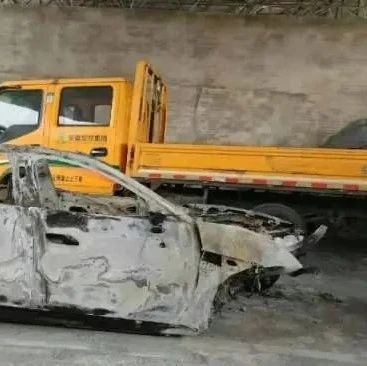
小米SU7碰撞爆燃致3女生死亡:车辆为SU7标准版,电池未配备电芯倒置技术,雷军回应安徽SU7事故!
Sou Hu Cai Jing· 2025-04-02 13:45
Core Viewpoint - The recent accident involving a Xiaomi SU7 vehicle has raised significant concerns regarding the safety features and battery technology of the model, particularly in light of the tragic loss of three lives in the incident [1][8][29]. Group 1: Accident Details - On March 29, a Xiaomi SU7 standard version was involved in a severe traffic accident on the highway, resulting in the deaths of three young women [1][8]. - The vehicle was operating in NOA (Navigation on Autopilot) mode at a speed of 116 km/h before the driver took control, with a final speed of approximately 97 km/h at the time of collision with a concrete barrier [9][25]. - Xiaomi has established a special team to cooperate with police investigations and has submitted vehicle data and system information for analysis [10][29]. Group 2: Vehicle Specifications - The Xiaomi SU7 is available in three versions: Standard, Pro, and Max, each with different battery configurations [3]. - The Standard version lacks the battery cell inversion technology, which may pose safety risks compared to the Pro and Max versions that include this feature [3][18]. - The Pro version is equipped with a 94.3 kWh lithium iron phosphate battery, while the Max version has a 101 kWh ternary lithium battery, both supplied by CATL [3]. Group 3: Safety Features and Concerns - There are concerns regarding the vehicle's door unlocking mechanism during accidents, as it is required by national standards to unlock automatically when airbags deploy [13]. - Xiaomi has stated that emergency pull handles are available in the vehicle to manually open doors even if the battery is damaged [16][20]. - The company has not confirmed whether the battery cell inversion technology is standard across all models, leading to questions about the safety of the Standard version [18]. Group 4: Company Response - Xiaomi's spokesperson expressed deep sorrow over the incident and emphasized the company's commitment to transparency and cooperation with ongoing investigations [8][29]. - The company has faced criticism for not contacting the victims' families immediately after the accident, but they have since attempted to reach out under police guidance [23]. - Xiaomi's founder, Lei Jun, publicly expressed condolences and assured that the company would not evade responsibility and would continue to support the investigation [29].

小米SU7事故从提示到碰撞仅2秒,公众质疑:谁能这么快反应?
Zhong Guo Qi Che Bao Wang· 2025-04-02 01:44
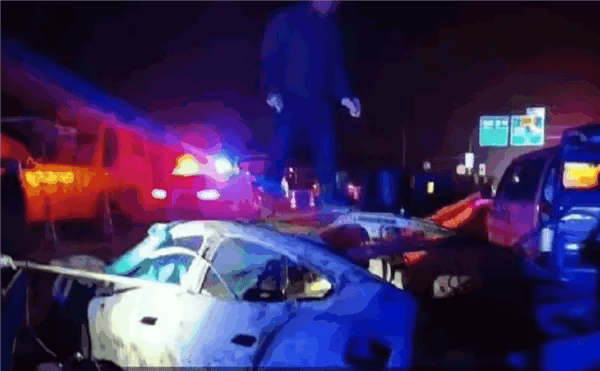
Core Viewpoint - The incident involving the Xiaomi SU7 vehicle, which caught fire after a collision on a highway, has raised significant public concern regarding the reliability of the company's autonomous driving technology and the implications for driver responsibility in such scenarios [2][5]. Group 1: Incident Details - On March 29, 2025, at 22:44, a Xiaomi SU7 was involved in a serious traffic accident while operating in NOA (Navigation on Autopilot) mode at a speed of 116 km/h [2][3]. - The vehicle detected an obstacle and issued warnings before the driver took control, but the vehicle still collided with a concrete barrier at a speed of approximately 97 km/h [2][4]. - Xiaomi has established a special team to cooperate with police investigations and has provided data regarding the vehicle's operation during the incident [3][4]. Group 2: System Performance and Limitations - The timeline indicates that there was only a 1-second gap between the system's risk warning and the driver's takeover, with just 3 seconds from system disengagement to collision [5]. - Experts highlight that the current L2+ level driving assistance systems may not provide sufficient reaction time for drivers in extreme conditions, revealing limitations in the technology [5]. - The incident underscores the gap between marketing claims of autonomous driving capabilities and the actual performance in critical situations [4][5]. Group 3: Legal and Consumer Implications - The legal framework surrounding autonomous driving is lagging, as current laws require drivers to maintain full supervision, potentially placing liability on the driver despite reliance on the system [5]. - Consumer trust in autonomous systems is still developing, with a survey indicating that 63% of consumers express concerns about the safety of autonomous driving features [5]. - The incident may exacerbate public fears regarding the safety of transitioning responsibilities between human drivers and automated systems [5][6].

雷军发声之后,遇难者家属最新表态
凤凰网财经· 2025-04-01 15:39
以下文章来源于启阳路4号 ,作者极速财讯 启阳路4号 . 聚焦财经热点事件,通过深度调查寻找财经真相。 来源丨极速财讯 作者丨夏天 " 没说到重点,都是推卸责任 " ,对于小米的回应,小米 su7 爆燃事件中一位遇难者的父亲罗先生表达了愤怒。 近日, 3 名女孩从湖北自驾小米 su7 到安徽参加考试,在德上高速枞阳至祁门路段发生事故。有华瑞医院工作人员对媒体表示,赶到时,前排两人 已经被 " 烧没了 " ,罗先生告诉极速财讯,后排的那名女孩被送往医院抢救无果后也已经死亡。 罗先生是小米 su7 碰撞爆燃事件中的驾驶者小罗的父亲,也是微博 " 诗雨 370491153" 当事人家属王女士的丈夫。对于小米的回应,他认为是 " 避重就轻 " 。罗先生表示,直到现在,作为遇难者家属与小米的联系,还是在事故发生后自己的女婿(指女儿的男朋友)主动给小米客服打的电话。 " 小米没跟我们对接,(是)我们不断地跟小米公司联系、客服联系,(而且)我们只有通过客服渠道联系,客服很官方地说,这个事我们上报了, 请等通知、等回复,(但)一直到现在还没有回复 " ,罗先生表示。 4 月 1 日晚 10 点 19 分,雷军发布微博回应,表 ...

小米公布“SU7高速碰撞爆燃”事故细节 专家解读事件疑点
Zhong Guo Jing Ying Bao· 2025-04-01 13:55
Core Viewpoint - A serious traffic accident involving a Xiaomi SU7 vehicle resulted in the deaths of the driver and two passengers, raising concerns about the vehicle's safety features and emergency response mechanisms [2][3]. Group 1: Accident Details - The accident occurred on March 29, with the vehicle traveling at a speed of 116 km/h in NOA (Navigation on Autopilot) mode before the driver took control and the vehicle collided with a concrete barrier at approximately 97 km/h [4][5]. - The vehicle's doors were reportedly locked and could not be opened after the collision, leading to questions about the electronic locking system's functionality during emergencies [3][6]. Group 2: Company Response - Xiaomi has established a dedicated task force to investigate the incident and is cooperating with authorities and the victims' families to provide detailed information and support [3][4]. - The company expressed deep regret over the incident and is committed to transparency in the investigation process, having submitted vehicle data and system information to the police [4][5]. Group 3: Technical Insights - Experts have raised concerns about the vehicle's braking response, noting that the maximum brake pedal engagement was only 38%, which is lower than expected in emergency situations [6]. - The potential causes for the vehicle catching fire post-collision include battery damage leading to chemical reactions, while the failure of the door locking mechanism may relate to sensor malfunctions or electrical failures [6][6].
刚刚,小米通报“SU7高速碰撞爆燃”细节
21世纪经济报道· 2025-04-01 05:39
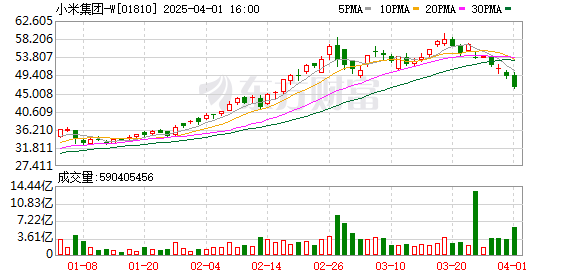
Core Viewpoint - The article discusses a serious traffic accident involving a Xiaomi SU7 vehicle, highlighting the company's response and ongoing investigation into the incident [1][4]. Summary by Sections Incident Details - On March 29, 2025, at 22:44, a Xiaomi SU7 standard version was involved in a severe traffic accident on the De-Shang Expressway, traveling at a speed of 116 km/h in NOA (Navigation on Autopilot) mode [1][4]. - The accident occurred due to road construction, which required a detour into the opposite lane. The vehicle detected an obstacle and began to decelerate before the driver took control, with a final speed of approximately 97 km/h at the time of collision with a concrete barrier [1][4]. Company Response - Xiaomi immediately contacted the vehicle owner to confirm that they were not driving at the time of the accident. Emergency services were called, and the company expressed deep regret over the incident [1][2][4]. - A special team was established to assist with the investigation, cooperating with police and providing all relevant vehicle data and system information [1][4][5]. Investigation and Support - The company is committed to transparency and will continue to cooperate with the police investigation. They will also reach out to the families of the victims to offer support and assistance [2][4][5]. Market Reaction - Following the news of the accident, Xiaomi Group's stock price fell over 5%, with a reported price of 47.2 HKD, reflecting a decrease of 4.07% by 13:20, with trading volume exceeding 12.9 billion HKD [6].