
Oil price forecast

Search documents
Front-month Brent oil futures extend gains after record monthly rise in March
Reuters· 2026-04-01 00:42
Oil Market Overview - Brent front-month futures for June delivery increased by 66 cents or 0.63% to $104.63 per barrel, while U.S. West Texas Intermediate (WTI) crude futures for May rose by 96 cents or 0.95% to $102.34 per barrel [2] - Brent futures recorded a remarkable monthly gain of 64% in March, marking the highest increase since LSEG began tracking data in June 1988 [2] Geopolitical Factors - Despite ongoing diplomatic efforts and comments from the U.S. administration suggesting a potential end to the conflict, analysts note that limited progress, ongoing maritime attacks, and threats to energy assets contribute to heightened supply risks [3] - President Trump's statements indicated a possible end to military actions within two to three weeks, although he clarified that Iran does not need to make a deal for the conflict to conclude [4] Supply Chain Impacts - Analysts predict that even if the conflict concludes, damage to infrastructure will likely keep oil supplies constrained [5] - OPEC's oil output fell by 7.3 million barrels per day in March compared to the previous month, highlighting the impact of export cuts due to the closure of the Strait of Hormuz [6] Price Forecast Adjustments - A Reuters survey conducted in March forecasts that Brent crude will average $82.85 per barrel in 2026, which is approximately 30% higher than the previous forecast of $63.85 made in February, prior to the conflict [7] - The $19 increase in the forecast represents the largest adjustment in Reuters' monthly oil poll data since 2005 [7]

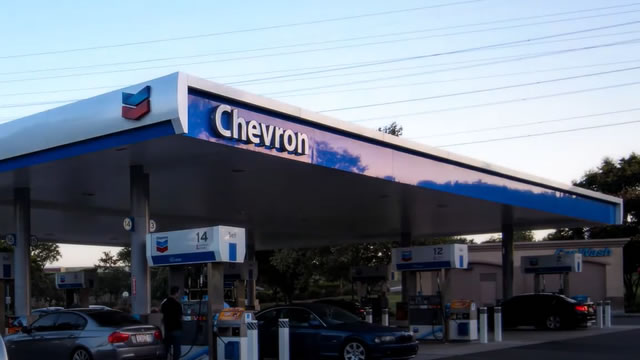
Jim Cramer says oil price upsurge is over; Here's why
Finbold· 2026-03-31 09:01
Group 1: Oil Price Trends - Jim Cramer suggests that oil prices may have peaked temporarily, as indicated by a correction in Chevron's stock price [1][2] - West Texas crude prices have decreased by 2.32% to $102.60, while Brent crude prices are down 1.59% to $107 [2][3] - Chevron's stock price showed a slight increase in pre-market trading, suggesting a potential resumption of the oil price rally [4] Group 2: Geopolitical Factors Impacting Oil Prices - Analysts predict that oil prices could reach $200 per barrel, influenced by geopolitical tensions, particularly involving Iran's capabilities in the Strait of Hormuz [6] - The U.S. is reportedly preparing to open the Strait of Hormuz, but its effectiveness is uncertain due to Iran's ability to threaten shipping in the area [7] - The entry of Yemen's Ansar Allah movement into the conflict poses risks to Saudi Arabia's oil exports, further contributing to elevated oil prices [8]

Oil Price Forecast: WTI Rebounds After 10% Drop as Iran Tensions Revive Supply Risks
FX Empire· 2026-03-24 07:45AI Processing
EnglishItalianoEspañolPortuguêsDeutschالعربيةFrançaisImportant DisclaimersFXEmpire is owned and operated by Empire Media Network LTD., Company Registration Number 514641786, registered at 7 Jabotinsky Road, Ramat Gan 5252007, Israel. The content provided on this website includes general news and publications, our personal analysis and opinions, and materials provided by third parties. This content is intended for educational and research purposes only. It does not constitute, and should not be interpreted a ...

石油分析:油价将维持高位,且上行风险持续更久-Oil Analyst_ High Prices and Upside Risks for Longer
2026-03-24 01:27
Summary of Key Points from the Conference Call Industry Overview - The analysis focuses on the oil industry, particularly the impact of the ongoing Iran war on oil prices and supply dynamics. Core Insights and Arguments 1. **Price Forecast Upgrade**: The price forecast for Brent crude oil has been upgraded to an average of $110 for March-April, reflecting a 62% increase from the 2025 annual average due to prolonged disruptions in Hormuz flows, which are expected to remain at only 5% of normal levels for a longer period of 6 weeks before a gradual recovery [1][24]. 2. **Long-Term Price Expectations**: The expected average prices for Brent and WTI in 2026 have been raised to $85 and $79 respectively, with further increases anticipated for 2027 [1][37]. 3. **Risk Premium and Price Trends**: Prices are expected to trend higher during the disruption, with a growing risk premium required to hedge against potential shortages. The market is likely to require precautionary demand destruction to manage risks associated with prolonged disruptions [1][23]. 4. **Scenarios for Price Movements**: Under adverse scenarios where Hormuz flows remain at 5% for 10 weeks, Brent prices could exceed the 2008 record of $147. In a severely adverse scenario with a persistent 2mb/d loss in Mideast production, Brent could spike to $115 in 2026Q4 [1][55][57]. 5. **Structural Supply Risks**: The analysis highlights the structural risks associated with high concentration of oil production in the Middle East, which is likely to lead to higher strategic stockpiling and long-dated prices [1][13]. 6. **Impact of US Military Actions**: There is a downside risk to prices if the US were to end military actions, which could reduce the risk premium in global crude prices. Additionally, potential US oil export restrictions could widen the Brent-WTI price gap further [1][61][63]. Additional Important Insights 1. **Market Dynamics**: The current oil supply shock is primarily a local issue affecting oil in transit and causing tightness in Asia, while commercial crude stocks in American and European OECD countries are still rising [1][27]. 2. **Production Loss Estimates**: The analysis estimates that crude production losses in the Middle East could peak at 17mb/d, with a gradual recovery expected after the reopening of the Strait of Hormuz [1][39]. 3. **Strategic Reserve Releases**: The US Strategic Petroleum Reserve (SPR) releases are characterized as loans rather than sales, indicating a need for future replenishment [1][37]. 4. **Investor Behavior**: There is a noted reluctance among investors to hedge against price increases due to the uncertainty surrounding military actions, which could lead to volatility in oil futures [1][32]. This summary encapsulates the critical insights and projections regarding the oil market's response to geopolitical tensions and supply disruptions, emphasizing the potential for sustained high prices and the associated risks.

Goldman Lifts Oil Price Forecast on Longer Hormuz Disruption
WSJ· 2026-03-23 08:38
Core Viewpoint - Brent crude oil prices are projected to average $85 per barrel this year, an increase from the previous forecast of $77 per barrel [1] - The U.S. oil benchmark, West Texas Intermediate, is now expected to average $79 per barrel, up from an earlier estimate of $72 per barrel [1] Summary by Category - **Brent Crude Oil Forecast** - The average price is revised to $85 per barrel for the current year, reflecting a significant upward adjustment from $77 [1] - **West Texas Intermediate Forecast** - The average price is now anticipated to be $79 per barrel, an increase from the prior forecast of $72 [1]

原油分析-油价将在更长周期内维持高位-Oil Analyst_ Higher Prices for Longer_
2026-03-20 02:41
Summary of Key Points from the Oil Analyst Report Industry Overview - The report focuses on the oil industry, particularly the implications of geopolitical tensions affecting oil supply, specifically regarding the Strait of Hormuz and the Iran war [1][2][6]. Core Insights and Arguments 1. **Short-term Oil Price Trends**: - Oil prices are expected to trend higher due to low flows through the Strait of Hormuz [1][6]. - Brent crude prices may exceed the 2008 all-time high if supply disruptions persist [1][6]. 2. **Long-term Price Risks**: - The report highlights several risks to long-term oil prices stemming from the Iran war and potential supply disruptions: - **Risk 1 (Price Upside)**: Low oil output could persist longer due to infrastructure damage, with historical data suggesting an average production hit of 42% after four years from major supply shocks [1][8][12]. - **Risk 2 (Limit Upside)**: OPEC may stabilize prices by deploying spare capacity after the Strait reopens [1][25][26]. - **Risk 3 (Upside)**: Strategic stockpiling may accelerate due to geopolitical uncertainties, potentially increasing demand from 2027 [1][35][41]. - **Risk 4 (Downside)**: High prices could slow demand growth by promoting fuel efficiency and shifting to alternative fuels [1][43][45]. 3. **Production Estimates**: - Iran and other Persian Gulf countries produced 3.5 million barrels per day (mb/d) and 21.8 mb/d of crude oil in 2025, respectively, accounting for 30% of global crude production [1][19][22]. - If Iran experiences a 42% production hit, it could result in a reduction of 1.5 mb/d [1][20]. 4. **OPEC's Role**: - OPEC's spare capacity is estimated at 3.7 mb/d, primarily concentrated in Saudi Arabia and the UAE, which could be utilized to stabilize markets post-disruption [1][25][27]. 5. **Strategic Stockpiling**: - The report anticipates a potential increase in global strategic stockpiling rates to 1.9 mb/d from 2027, which could add $12 to the end-2027 price forecast [1][37][41]. 6. **Price Scenarios**: - Various scenarios for Brent prices in 2027Q4 include: - $24/bbl if Hormuz flows remain low for 60 days - $20/bbl if Middle Eastern production is persistently 2 mb/d lower after reopening - $12/bbl if global strategic stockpiling accelerates [1][56]. Additional Important Insights - Historical analysis indicates that persistent supply losses often result from damage to oil infrastructure and low investment in affected regions [1][17]. - The report emphasizes the importance of geopolitical stability in the Middle East for future oil supply and pricing dynamics [1][19][21]. This summary encapsulates the critical insights and projections regarding the oil market as discussed in the report, highlighting both potential opportunities and risks for investors.
Natural Gas, WTI Oil, Brent Oil Forecasts – Oil Prices Pull Back As IEA Releases Reserves
FX Empire· 2026-03-19 19:13
Core Viewpoint - The content emphasizes the importance of conducting personal due diligence and consulting with competent advisors before making any financial decisions, particularly in relation to investments in cryptocurrencies and CFDs [1]. Group 1 - The website provides general news, personal analysis, and third-party materials intended for educational and research purposes [1]. - It explicitly states that the information should not be interpreted as a recommendation or advice for investment actions [1]. - The accuracy and reliability of the information are not guaranteed, and users are cautioned against relying solely on the content provided [1]. Group 2 - The website discusses the complexities and high risks associated with cryptocurrencies and CFDs, highlighting the potential for significant financial loss [1]. - It encourages users to conduct their own research and fully understand the instruments and risks involved before making investment decisions [1].

Natural Gas and Oil Forecast: WTI Near $98 – Middle East Tensions Eye $150 Oil Spike?
FX Empire· 2026-03-19 06:57
Core Viewpoint - The content emphasizes the importance of conducting personal due diligence and consulting with competent advisors before making any financial decisions, particularly in the context of investments in complex instruments like cryptocurrencies and CFDs [1]. Group 1 - The website provides general news, personal analysis, and third-party materials intended for educational and research purposes [1]. - It explicitly states that the information should not be interpreted as a recommendation or advice for investment actions [1]. - The accuracy and reliability of the information are not guaranteed, and users are cautioned against relying solely on the content provided [1]. Group 2 - The website includes information about cryptocurrencies, CFDs, and other financial instruments, highlighting their complexity and associated high risks [1]. - Users are encouraged to conduct their own research and fully understand the workings and risks of any financial instruments before investing [1].

原油追踪_能源基础设施风险加剧;霍尔木兹海峡流量仍处低位-Oil Tracker_ Energy Infrastructure Risks Rise; Still Low Hormuz Flows
2026-03-19 02:36
Summary of Key Points from the Conference Call Industry Overview - The report focuses on the energy infrastructure sector, particularly oil and natural gas markets, highlighting risks associated with geopolitical tensions and infrastructure attacks in the Middle East [3][4][6]. Core Insights and Arguments - **Rising Energy Prices**: Energy prices are increasing due to heightened risks to energy infrastructure, with Brent crude prices rising by 3% to $107, while WTI remained flat at $96 [3]. - **Impact of Geopolitical Events**: An Israeli air strike on Iranian gas infrastructure at the South Pars natural gas field, which is crucial for Iran's power generation (79% of total), poses risks to oil production [3]. - **Targeted Energy Sites**: Iran has identified energy sites in Saudi Arabia, Qatar, and the UAE as potential targets, indicating a broader risk to regional energy supply [3]. - **Crude Price Divergence**: Dubai cash prices closed at $156 per barrel, significantly higher than Brent futures at $103, reflecting localized physical tightness in the Middle Eastern crude market [3][5]. - **Low Oil Flows**: Oil flows through the Strait of Hormuz are reported to be 97% below normal levels, with total oil flow impacts from the Persian Gulf estimated at 16.1 million barrels per day (mb/d) [4][13]. - **Pipeline Redirection Risks**: The potential for pipeline redirection from Iraq to Turkey via the Kirkuk-Ceyhan pipeline presents both upside and downside risks, with current flows significantly below capacity [6][8]. - **Jones Act Waiver**: A 60-day waiver of the Jones Act allows foreign-flagged vessels to transport goods between US ports, potentially lowering East Coast refined product prices by $0.6 to $0.8 per barrel [6]. Additional Important Insights - **Refinery Outages**: Refinery outages in the Middle East are currently 1.9 mb/d above seasonal norms, indicating supply constraints [27]. - **Duration of Conflict Impact**: The probability of the conflict in Iran ending by March 31st has decreased from 24% to 6%, suggesting prolonged market volatility [29]. - **Increased Freight Rates**: The Middle East crude freight rate has moderated to $12 per barrel, reflecting ongoing logistical challenges [62]. - **Physical Risks for Oil Tankers**: The risk of attacks on oil tankers in the Middle East remains elevated, impacting shipping and supply chain stability [22]. This summary encapsulates the critical points discussed in the conference call, providing insights into the current state and risks within the energy infrastructure sector.
Standard Chartered Predicts Oil Prices Will Remain Higher For Longer
Yahoo Finance· 2026-03-17 23:00
Group 1 - The European Union foreign ministers rejected U.S. President Trump's request for military assistance in securing the Strait of Hormuz, focusing instead on enhancing the security of their own military bases in the region [1] - Kaja Kallas, Vice-President of the European Commission, proposed extending Operation Aspides to improve security in the Strait of Hormuz due to rising tensions and energy disruptions [1] - Germany's Defence Minister Boris Pistorius emphasized that Europe does not want to be involved in the conflict, questioning the effectiveness of European frigates compared to the U.S. Navy [2] Group 2 - Standard Chartered analysts predict that oil prices will remain elevated longer than previously anticipated due to the ongoing conflict, with an increased average Brent price forecast for 2026 at $85.50 per barrel and for 2027 at $77.50 per barrel [3] - The firm estimates that the Middle East conflict has reduced global oil supply by 7.4-8.2 million barrels per day, with significant production declines in Iraq, Saudi Arabia, UAE, Qatar, and Kuwait [4] - Saudi Arabia is utilizing additional capacity in the East-West pipeline to increase transit volumes to the Red Sea to 7 million barrels per day [4] Group 3 - Standard Chartered sees a price floor for oil in the low-to-mid 70s due to a historic release of 400 million barrels of oil from strategic reserves by the IEA, marking the largest release in its history [5]