PPP+EPC模式

Search documents
杭衢高铁开始试运行,全线开通进入倒计时
Xin Jing Bao· 2025-11-24 04:52
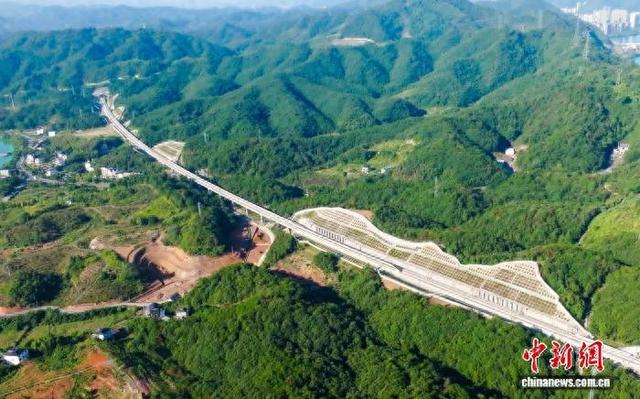
Core Points - The Hangzhou-Quchi High-Speed Railway has entered the trial operation phase, with full operation expected by the end of December [1] - The trial operation will last approximately one month, involving various tests to simulate the railway's operational status [1] - The railway spans about 131 kilometers, featuring 38 tunnels and 119 bridges, with a bridge-tunnel ratio of 78.7% [1] - It is the first high-speed railway in China to adopt the "PPP+EPC" model for construction [1] Industry Impact - The Hangzhou-Quchi High-Speed Railway will enhance the intercity rapid transport network in the Yangtze River Delta, serving as an important auxiliary route for the Shanghai-Kunming corridor [2] - The project is expected to create an efficient transportation artery and economic link between the Hangzhou Bay Economic Circle and the Jinquli Economic Belt [2] - It will play a significant role in optimizing the regional railway network structure and promoting high-quality development in Zhejiang [2]

这条“短线”高铁,为何“砸锅卖铁也要上”
3 6 Ke· 2025-11-21 02:12
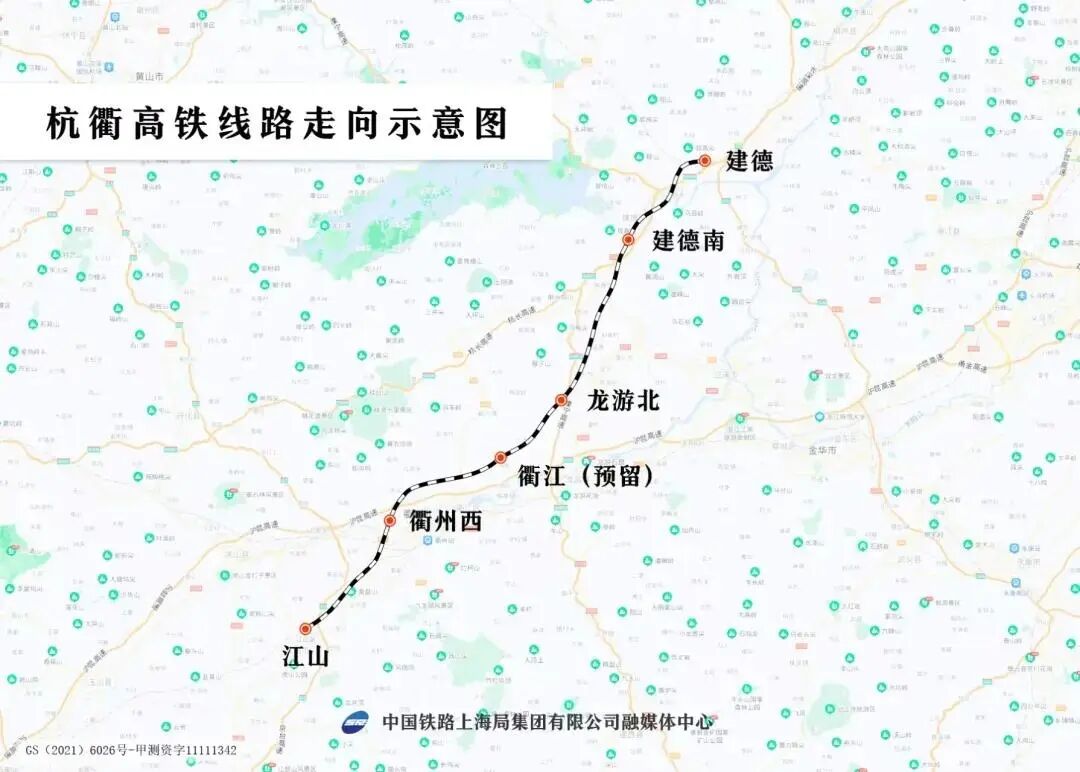
Core Points - The Hangzhou-Qiuzhou High-Speed Railway (杭衢高铁) has entered the trial operation phase, marking a significant milestone towards its full operational launch [1] - The railway spans approximately 131 kilometers with a design speed of 350 km/h, featuring six stations and a bridge-tunnel ratio of 78.7% [3] - The railway is expected to significantly reduce travel time between Hangzhou and Qiuzhou from about 1 hour to approximately 40 minutes, enhancing connectivity and economic development in the region [3][4] Group 1: Project Overview - The Hangzhou-Qiuzhou High-Speed Railway starts from Jiande City and ends at Jiangshan City, passing through several districts in Qiuzhou [3] - Construction began in May 2020, with an expected operational readiness by the end of December 2025 [3] - The total investment for the project is approximately 23.63 billion yuan, utilizing a "PPP+EPC" model for its development [4] Group 2: Economic Impact - The railway is anticipated to enhance the flow of people, goods, and information towards western Zhejiang, providing growth opportunities for businesses constrained by space in Hangzhou [4] - It serves as a critical link for expanding Zhejiang's influence into neighboring provinces such as Anhui, Jiangxi, and Fujian, facilitating regional integration [4] - Local experts suggest that the railway should aim for interconnectivity with existing rail lines to maximize its service potential and support commuter needs [4]

杭衢高铁进入试运行阶段
Xin Hua She· 2025-11-20 08:11
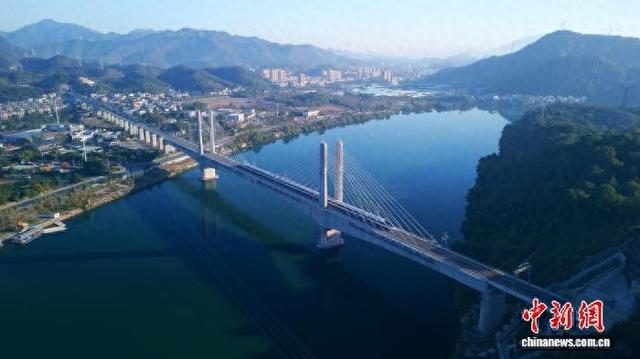
Core Points - The first trial run of the Hangzhou-Qichun High-Speed Railway (杭衢高铁) commenced on November 20, marking the start of the trial operation phase, with full operation expected by the end of December [1] - The trial run will last approximately one month, focusing on testing train operation parameters, fault simulation, emergency rescue drills, and adherence to the train schedule [1] - The railway spans approximately 131 kilometers and is designed for a speed of 350 km/h, representing the first high-speed railway in China to adopt the "PPP+EPC" model [1] Infrastructure Details - The Hangzhou-Qichun High-Speed Railway features 38 tunnels and 119 bridges, with a bridge-to-tunnel ratio of 78.7% [2] - A significant engineering challenge is the 685-meter-long Jin Qian Railway Bridge, where BIM technology was utilized for construction simulation and optimization [2] Economic and Regional Impact - The railway will enhance the transportation network between the Hangzhou Bay Economic Circle and the Jin Quli Economic Belt, serving as a vital economic link [2] - The project is expected to optimize the regional railway network structure and contribute to the high-quality development of Zhejiang Province, supporting the integrated development of the Yangtze River Delta [2]
杭衢高铁开始试运行 预计12月底具备开通运营条件
Zhong Guo Xin Wen Wang· 2025-11-20 06:10
Core Viewpoint - The trial operation of the Hangzhou-Quzhou High-Speed Railway (杭衢高铁) has commenced, marking a significant milestone in its construction and indicating that it is entering the trial operation phase, with expectations for operational readiness by the end of December 2023 [2][5]. Group 1: Project Overview - The Hangzhou-Quzhou High-Speed Railway is the first in China to adopt the "PPP+EPC" model, combining public-private partnerships with engineering procurement contracts [2]. - The railway spans approximately 131 kilometers with a design speed of 350 kilometers per hour and includes six stations: Jiande, Jiande South, Longyou North, Qujiang (reserved), Quzhou West, and Jiangshan [2]. - The bridge-tunnel ratio of the railway is 78.7%, indicating a significant portion of the route is comprised of bridges and tunnels [2]. Group 2: Trial Operation Details - The trial operation will last for about one month, focusing on testing train operation parameters, simulating faults, conducting emergency rescue drills, and testing train operation according to the schedule [4]. - This comprehensive "real combat" testing aims to provide a scientific basis for the railway's formal opening and operation [5]. Group 3: Economic and Social Impact - Once operational, the Hangzhou-Quzhou High-Speed Railway will create a direct route between Hangzhou and Quzhou, significantly reducing travel time and enhancing connectivity with Shanghai and the entire Yangtze River Delta region [5]. - The railway is expected to serve as a vital transportation artery and economic link between the Hangzhou Bay Economic Circle and the Jinquli Economic Belt, promoting the optimization of the regional railway network and contributing to high-quality development in Zhejiang [5].
杭衢高铁联调联试跑出最高试验时速
Zhong Guo Xin Wen Wang· 2025-10-10 08:55
Core Insights - The Hangzhou-Quchi High-Speed Railway has successfully achieved a test speed of 385 kilometers per hour, meeting its trial objectives [2] - This railway is the first in China to adopt the "PPP+EPC" model, enhancing public-private collaboration in infrastructure development [2] - The railway spans approximately 131 kilometers with a designed speed of 350 kilometers per hour, featuring a bridge-tunnel ratio of 78.7% [2] Summary by Sections - **Testing and Speed Achievements** - The railway conducted a single train speed test, reaching the target speed of 385 kilometers per hour, which is 110% of the designed speed [2] - The testing process includes both single and multiple train configurations, with ongoing tests planned for signal systems and further speed trials [2] - **Operational Readiness and Economic Impact** - The Hangzhou-Quchi High-Speed Railway is expected to be operational by December this year [3] - Once operational, it will serve as a vital transportation link between the Hangzhou Bay Economic Circle and the Jinquli Economic Belt, significantly enhancing regional connectivity and supporting high-quality development in the Yangtze River Delta [3]
浙江:杭衢高铁进入开通倒计时
Xin Hua Wang· 2025-10-01 01:09
Core Viewpoint - The newly constructed Hangzhou to Quzhou High-Speed Railway (referred to as Hangzhou-Quzhou High-Speed Railway) has entered the joint debugging and testing phase, with expectations to be operational by the end of the year [2] Group 1: Project Overview - The Hangzhou-Quzhou High-Speed Railway is located within the boundaries of Jiande City and Quzhou City in Zhejiang Province [2] - It is the first high-speed railway in China to adopt the "PPP+EPC" model, which combines public-private partnerships with engineering procurement and construction [2] - The railway has a total length of approximately 131 kilometers and is designed for a maximum speed of 350 kilometers per hour, with a bridge-tunnel ratio of 78.7% [2] Group 2: Economic Impact - Once operational, the railway will create an efficient and convenient transportation artery between the Hangzhou Bay Economic Circle and the Jinqiu-Li Economic Circle [2] - The project is expected to optimize the regional railway network structure and contribute significantly to the high-quality development of the Yangtze River Delta integration [2]
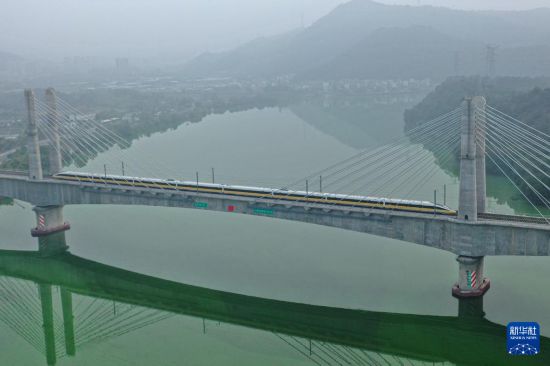
杭衢高铁启动联调联试,年底有望开通运营
Zhong Guo Xin Wen Wang· 2025-09-25 00:41
Core Points - The new Hangzhou to Quzhou high-speed railway (referred to as Hangzhou-Quzhou High-speed Railway) has entered a critical phase with the initiation of joint debugging and dynamic testing on September 23, 2023, and is expected to be operational by the end of this year [1] - This railway is the first in China to adopt the "PPP+EPC" model for operation, indicating a significant innovation in infrastructure financing and construction [1] Summary by Categories Project Details - The Hangzhou-Quzhou High-speed Railway spans approximately 131 kilometers, starting from the Yangcunqiao section of the Hangzhou-Changsha High-speed Railway and ending at Jiangshan Station [1] - The railway is designed for a maximum speed of 350 kilometers per hour and includes six stations: Jiande (existing), Jiande South, and Longyou North [1] - The project features a high bridge-tunnel ratio of 78.7%, highlighting its engineering complexity [1] Operational Milestones - The commencement of joint debugging and dynamic testing marks a significant step towards the railway's operational readiness [1] - The project is positioned as a key infrastructure development in Zhejiang Province, enhancing connectivity within the region [1]
杭衢高铁预计11月具备开通运营条件
Zhong Guo Xin Wen Wang· 2025-09-21 10:57
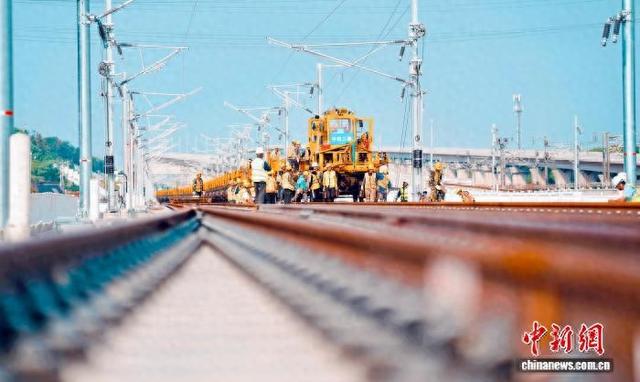
Core Insights - The Hangzhou-Quzhou High-Speed Railway has officially initiated its contact network hot sliding test, marking a significant milestone in its development [2][4] - The project is expected to enter the joint debugging and testing phase after the hot sliding test, with operations anticipated to commence in November 2023 [2] - This railway is notable for being the first in China to adopt the "PPP+EPC" model, enhancing collaboration between government and private sectors [2] Project Details - The Hangzhou-Quzhou High-Speed Railway spans approximately 131 kilometers with a design speed of 350 kilometers per hour [2] - It includes six stations: Jiande (existing), Jiande South, Longyou North, Qujiang (reserved), Quzhou West, and Jiangshan (renovated) [2] - The bridge-to-tunnel ratio of the railway is 78.7%, indicating a significant investment in infrastructure [2] Testing Phase - The hot sliding test is a critical step before the electrified railway's joint debugging and testing, scheduled to conclude by September 23, 2023 [4] - During the test, the train will operate at speeds not exceeding 80 kilometers per hour to accurately assess the relationship between the contact network and the pantograph [4] - Successful completion of this phase will confirm that the necessary equipment meets the conditions for further testing [4] Economic Impact - Once operational, the railway will serve as a vital transportation artery between the Hangzhou Bay Economic Circle and the Jinquli Economic Belt [4] - It is expected to optimize the regional railway network structure and contribute to the high-quality development of the Yangtze River Delta integration [4]
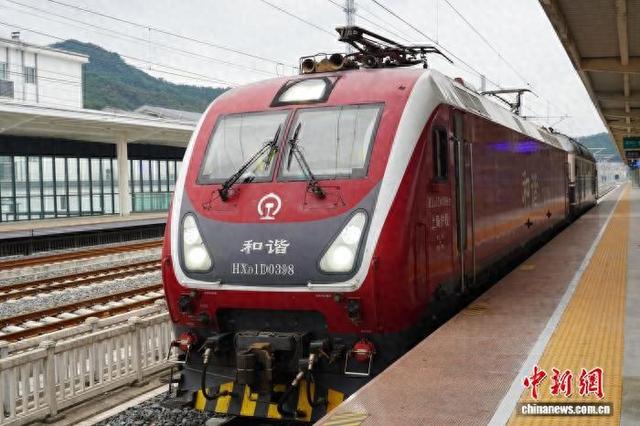
杭衢高铁开始静态验收
Zhong Guo Xin Wen Wang· 2025-08-01 11:14
Core Viewpoint - The Hangzhou to Quzhou High-Speed Railway (Hangzhou-Quzhou High-Speed Rail) has officially commenced static acceptance work, marking a significant step towards its operational goal, with the main construction nearly completed [2]. Group 1: Project Overview - The Hangzhou-Quzhou High-Speed Rail is the first high-speed railway in China to adopt the "PPP+EPC" model, which stands for Public-Private Partnership plus Engineering Procurement Construction [2]. - The railway spans approximately 131 kilometers with a design speed of 350 kilometers per hour, featuring six stations and a high bridge-tunnel ratio of 78.7% [3]. Group 2: Construction and Management - Since its commencement in May 2020, the Shanghai Railway Bureau Group has enhanced project management and early operational involvement, ensuring high-quality construction through standardized management and innovative construction methods [2]. - The static acceptance process includes comprehensive inspections across various engineering disciplines, ensuring the quality of construction and equipment installation [2]. Group 3: Economic and Regional Impact - The completion and operation of the Hangzhou-Quzhou High-Speed Rail will create an efficient transportation artery between the Hangzhou Bay Economic Circle and the Jinquli Economic Belt, significantly optimizing the regional railway network [3]. - This project is crucial for promoting high-quality development in Zhejiang and supporting the integrated development of the Yangtze River Delta [3].