Profit margins

Search documents
Novo Nordisk Is Slashing Prices for Ozempic and Wegovy. Here's Why That Might End Up Helping the Stock
Yahoo Finance· 2026-03-09 16:20
Core Viewpoint - Novo Nordisk is planning to significantly reduce the list prices of its GLP-1 treatments, which may help regain market share despite concerns about profitability and competition in the weight loss market [2][4][5]. Pricing Strategy - Starting in 2027, Novo Nordisk will cut the list price of its GLP-1 medications by up to 50%, bringing the monthly cost down to $675 from $1,349 for Wegovy [4]. - This price reduction aims to make treatments more accessible for patients with high deductibles, although the company may offset some of the price decline by reducing rebates [4]. Competitive Landscape - The price cut comes amid increased pressure from the government to lower drug prices and heightened competition from Eli Lilly, whose weight loss drug Zepbound is priced at around $1,100 per month and has shown better weight loss results than Wegovy [5]. - By lowering prices, Novo Nordisk may regain market share from Eli Lilly and provide current patients with less incentive to switch to competitors [6]. Growth Prospects - Novo Nordisk is currently facing growth challenges, forecasting a potential double-digit decline in the upcoming year [7]. - The company has strong profit margins of approximately 33%, allowing it to sacrifice some profit for market share growth [7]. - While a 50% price reduction may seem significant, the overall impact may be mitigated by lower rebates, suggesting that the financial implications may not be as drastic as they appear [7].

Elliott Takes Stake in London Stock Exchange Owner
WSJ· 2026-02-11 12:48
Group 1 - An activist investor has acquired a stake in LSEG, indicating potential influence on company strategies [1] - The investor is expected to advocate for increased stock buybacks, which could enhance shareholder value [1] - There is an anticipated push for actions aimed at improving profit margins within LSEG [1]


'That's Basic Econ' — Dave Ramsey Says Increased Tariffs Do Not Cost Companies Money, As 'They Pass The Tariff Cost On To The Customer'
Yahoo Finance· 2026-02-01 13:35
Core Message - Rising tariffs do not directly reduce company profits; instead, they lead to increased prices for consumers, as companies pass on the costs to customers [1][5]. Group 1: Impact of Tariffs on Pricing - Companies do not absorb the costs associated with tariffs; they raise prices to maintain profit margins [5][6]. - The logic of passing on costs applies to all external cost increases, including tariffs [5][6]. Group 2: Business Strategies in Tight Margins - When facing tighter margins, businesses should focus on revenue opportunities rather than cutting costs [3][4]. - Companies that fail to raise prices in response to rising costs may find their profit margins shrinking, as competitors will likely increase their prices [4][6]. Group 3: Real-World Examples - An example provided is the increase in the price of hardcover books from $17 to $32 over the past decade due to rising production costs [4][5].
Tariffs linger over earnings, even as companies get used to them
Reuters· 2026-01-26 11:09
Core Insights - Many U.S. companies are attempting to reassure investors that tariffs are "manageable" [1] - Early comments from the earnings season indicate that profit margins may be at risk as consumers are resistant to higher prices [1] Company Responses - Companies are actively communicating with investors to mitigate concerns regarding the impact of tariffs [1] - The focus is on maintaining investor confidence despite potential challenges posed by increased costs [1] Industry Implications - The overall industry sentiment suggests that profit margins could be pressured due to consumer pushback against price increases [1] - This situation may lead to a reevaluation of pricing strategies across various sectors [1]
Read This Before Buying Chewy Stock
Yahoo Finance· 2026-01-25 17:25
Core Viewpoint - Chewy is leveraging e-commerce to enhance sales of over 130,000 pet products, but long-term investors have seen a decline of over 70% in stock value over the past five years, indicating a need for caution [1] Group 1: Company Performance - Chewy reported an 8.3% year-over-year revenue growth in Q3 2025, maintaining this growth rate for the previous two quarters, although revenue growth has been slowing over the last three years [3] - The company has low net profit margins, with fiscal 2023 and fiscal 2024 margins at 0.4% and 3.3% respectively, and a Q3 2025 margin of 1.9%, which is significantly lower than high-growth tech companies [4][5] - Chewy's gross margins are below 30%, making it difficult to achieve high net profit margins, suggesting that the current revenue growth rate may not sustain long-term gains [5] Group 2: Strategic Focus - Chewy aims to increase profit margins by focusing on high-margin opportunities such as health and wellness, exemplified by its acquisition of SmartEquine to enter the profitable equine health market [6] - The acquisition of SmartEquine aligns with Chewy's strategy to enhance annual recurring revenue and customer lifetime values, potentially making revenue more predictable [7] - Despite Chewy's expansion into high-margin business categories, the overall pet industry is characterized by low margins, which may limit the company's ability to significantly improve net profit margins [8][9]


Double-Digit Earnings Growth Could Continue. It Still Might Not Satisfy Investors.
Barrons· 2026-01-13 19:05
Core Viewpoint - Investors are anticipating another robust earnings season, but challenges such as margin pressures, GDP trends, and elevated expectations may complicate potential upside [1] Group 1: Earnings Expectations - The upcoming earnings season is expected to be strong, reflecting positive sentiment among investors [1] - High expectations for earnings growth may lead to increased scrutiny on companies' performance [1] Group 2: Margin Pressures - Companies are facing margin pressures that could impact overall profitability during the earnings season [1] - The ability to maintain or improve margins will be a critical factor for investors [1] Group 3: Economic Trends - Trends in GDP are influencing investor sentiment and expectations for corporate earnings [1] - Economic indicators may play a significant role in shaping the outlook for the earnings season [1]

Costco’s Trump Lawsuit and Q1 2026 Earnings: What Investors Need to Watch
Yahoo Finance· 2025-12-07 17:49
Core Viewpoint - Costco is challenging the Trump administration's tariffs through a lawsuit, highlighting the economic risks associated with the tariffs and the political implications for the company [1][5][6]. Legal Context - The lawsuit was filed in early December with the US Court of International Trade, seeking refunds if the Supreme Court rules the tariffs imposed under the International Emergency Economic Powers Act were unlawful [5]. - The Supreme Court is currently reviewing the case, with arguments heard on November 5, raising doubts about the justification for such tariffs [3]. Financial Implications - Costco's annual revenue stands at $275.2 billion, and even a small share of the disputed tariff amount could significantly impact its profitability, especially given its thin margins [4][7]. - The company reported $86.16 billion in net sales and $2.61 billion in net income for Q4 2025, with comparable sales increasing by 5.7% [9]. Earnings Call Focus - The upcoming Q1 2026 earnings call on December 11 will serve as a platform for Costco to explain its legal strategy and the financial stakes involved in the lawsuit [8]. - Investors are particularly interested in management's comments regarding the lawsuit and its potential impact on profit margins [10]. Margin Protection Strategies - Costco's CFO indicated a mix of efficiency gains and sourcing shifts as strategies to manage tariff impacts, with a focus on maintaining profit margins [10][12]. - The private-label brand Kirkland Signature is seen as a key tool against tariff pressures, with management noting improved margins due to increased penetration [13]. E-Commerce and Supply Chain - E-commerce growth of over 15% in fiscal 2025 provides Costco with strategic flexibility to mitigate tariff impacts [14]. - The company is working on diversifying its supply chain to reduce reliance on imports from China, which is crucial for long-term tariff exposure management [15]. Competitive Landscape - Costco faces competitive pressures from rivals like Sam's Club and BJ's Wholesale, which may benefit from avoiding political entanglements [18]. - Despite these challenges, Costco's membership model and plans to open 35 new warehouses in fiscal 2026 indicate confidence in long-term demand [19][20].

中国:铜、金反弹;铝利润率改善;锂表现强劲-Basic Materials - China-Copper & Gold Rebound; Aluminum Margins Improve; Lithium Strong
2025-11-24 01:46
Summary of Key Points from Conference Call Industry Overview Basic Materials - China - **Copper Prices**: LME copper rose 1.5% WoW to US$10,856/t, while the China price increased 1.3% WoW to RMB87,200/t [1][31] - **Aluminum Prices**: LME aluminum slipped 0.2% WoW to US$2,830/t, while the China aluminum price increased 1.7% WoW to RMB21,910/t. Domestic aluminum margins improved by RMB395/t WoW to RMB6,094/t due to lower power costs [1][31][52] - **Gold Prices**: COMEX gold climbed 2% WoW to US$4,084/oz [1][11] - **Lithium Prices**: Average price of domestic battery-grade lithium carbonate (99.5%) rose 5.9% WoW to RMB85.2k/t [1][55] - **Uranium Prices**: Uranium U₃O₈ spot prices settled at US$77.7/lb, down 2.7% WoW [1][57] - **Cobalt Prices**: China cobalt spot price edged up 1% WoW to RMB395,000/t [1][63] Steel Industry - **Finished Steel Prices**: Rebar prices edged up 0.2% WoW to RMB3,218/t, and HRC rose 0.2% WoW to RMB3,298/t [2][66] - **Inventory and Consumption**: Finished steel inventory fell 1.7% WoW to 14.8 million tons, while apparent consumption slipped 0.7% WoW to 8.6 million tons [2][66] - **Iron Ore Prices**: Iron ore prices declined 1% WoW to USD104/t [2][66] - **Profit Margins**: Higher coke costs pressured margins, with rebar narrowing by RMB28/t WoW to –RMB392/t and HRC contracting by RMB36/t to –RMB380/t [2][66][75] Cement Industry - **Cement Prices**: Average national cement price traded higher by 0.6% WoW to RMB345/t. Prices in various provinces showed mixed trends [3][88] - **Demand Recovery**: National cement demand slightly recovered amid favorable weather conditions, with producers planning to push prices higher by year-end [3][88] - **Shipment and Inventory Ratios**: Nationwide shipment ratio decreased by 0.3 percentage points WoW to 40.0%, while inventory ratio was at 69.4%, down 0.2 percentage points WoW [3][20] Paper and Glass Industries - **Paper Prices**: Paper price rose by 1.76% WoW to RMB3,669/t, supported by supply shrinkage and low inventory [3][99] - **Glass Prices**: National average float glass price settled lower by 0.16% WoW to RMB1,195/t amid lukewarm demand. Xinyi float glass GPM was down 0.5 percentage points to 10.8% [3][22][98] Solar Materials - **Polysilicon Prices**: N-type polysilicon and granular silicon prices remained stable at RMB53/kg and RMB51/kg, respectively [3][109] - **Solar Glass Capacity**: Solar glass daily capacity climbed 1.43% WoW to 88,590t/day, with inventory days expanding 6.5% WoW to 25.63 [3][122] Additional Insights - **Market Sentiment**: The end of the U.S. government shutdown eased risk-off sentiment, supporting copper prices [1][31] - **Cement Producers' Strategy**: Cement producers are looking to increase prices to secure more profit by year-end [3][88] - **Steel Mill Margins**: Spot cash margins at steel mills indicate a challenging environment with negative margins for both rebar and HRC [2][75][81] This summary encapsulates the key points from the conference call, highlighting the performance and trends across various sectors within the basic materials industry in China.
SCOTUS tariff decision may be too late for the holidays, says Bank of America's Lorraine Hutchinson
Youtube· 2025-11-06 19:22
Core Insights - The upcoming holiday shopping season is expected to be significantly affected by tariffs, with a crucial decision from the Supreme Court impacting the retail sector [1][3] - Retailers have already received their holiday inventory, which has been subject to tariffs, leading to anticipated higher prices for apparel and footwear [2][3] - The potential for lower unit volumes is expected as consumers react to increased prices, raising questions about demand elasticity [3] Retail Pricing and Tariffs - Retailers are currently facing an incremental 20% tariff on holiday goods, with a possibility of a 15% tariff being enacted for up to 150 days if current tariffs are struck down [5][6] - If tariffs are upheld, no changes will be made to existing models, but if struck down, adjustments will be necessary based on new tariff scenarios [4][5] Consumer Behavior and Market Dynamics - Consumers may be reluctant to absorb price increases, particularly for non-essential items, leading to potential discounting strategies to stimulate sales [7][8] - Products with strong brand recognition and innovation may maintain sales at higher prices, while undifferentiated products could face challenges as consumers prioritize essential spending [8][9] - The overall concern is that essential items will become more expensive, prompting consumers to limit spending on non-essential goods [9]


PNC's Yung-Yu Ma: Market bifurcation will continue for some time
CNBC Television· 2025-11-06 17:03
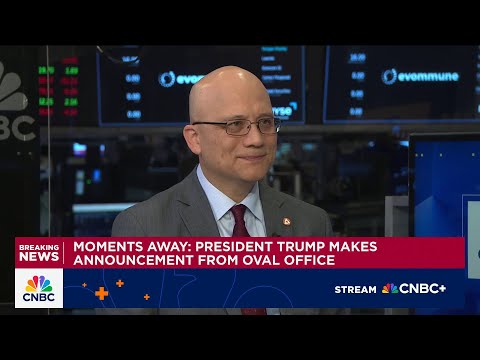
Let's get to the outlook for the markets now with stocks taking a little bit of a leg lower. Yang Yu Ma is here PNC asset management chief investment strategist. Welcome back.It's nice to have you. So, how vulnerable do you do you see this market right now. >> I wouldn't say the market is extremely vulnerable.I think the action we're seeing right now is healthy push and pull uh some pullbacks in the market, some resetting, some assessment of the actual growth trends that we're seeing and who can capitalize ...