
U型复苏

Search documents
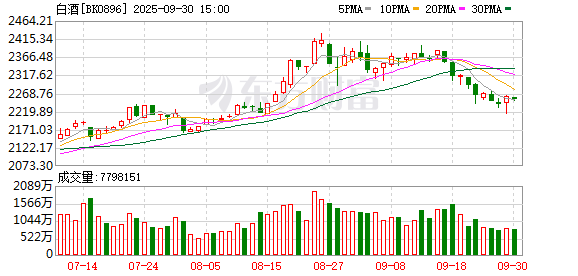
白酒市场“旺季不旺” 机构展望“U型”复苏
Xin Hua Cai Jing· 2025-10-08 04:51
Group 1 - The traditional peak season for the liquor industry during the Mid-Autumn Festival and National Day is showing signs of decline, with overall liquor wholesale prices down approximately 20% year-on-year [2][3] - Leading liquor companies have seen a slight month-on-month price recovery before the holiday, but year-on-year sales remain weak, particularly in gift box sales, while mid-range products priced between 100 to 300 yuan have shown stable sales [3][4] - The liquor index has dropped by 3.93% in September, with major companies like Wuliangye and Kweichow Moutai experiencing stock price declines of 6.21% and 2.43% respectively [3] Group 2 - The importance of the traditional peak season for liquor consumption is decreasing, with consumers increasingly spending on travel and experiences rather than liquor, impacting demand [4] - Analysts predict that the liquor industry may enter a "U-shaped" recovery cycle, with the first supply-demand inflection point expected in Q4 2025 [4][5] - Current market conditions indicate that while the liquor sector faces short-term challenges, there is potential for recovery by 2026 as companies optimize product structures and focus on core consumer experiences [5]

黄金周看点 | 白酒市场“旺季不旺”,机构展望“U型”复苏
Xin Hua Cai Jing· 2025-10-08 04:48
Core Viewpoint - The traditional peak season for the liquor industry during the Mid-Autumn Festival and National Day has not materialized as expected, with overall liquor prices down approximately 20% year-on-year, indicating a shift in consumer behavior and market dynamics [1][2]. Price Trends - Overall liquor prices have decreased by about 20% compared to last year's double festival period, despite a slight month-on-month increase in prices for leading brands before the holiday [2]. - Specific brands like Moutai saw a month-on-month price increase of 30-50 yuan per bottle, while Wuliangye increased by 10-20 yuan per bottle, but year-on-year sales remain weak [2]. - The liquor index fell by 3.93% in September, with leading companies like Wuliangye and Moutai experiencing stock price declines of 6.21% and 2.43%, respectively [2]. Changing Consumption Patterns - The importance of the Mid-Autumn Festival and National Day as peak consumption periods for liquor is decreasing, while the consumption share during the Spring Festival is increasing [3]. - Consumers are now more inclined to spend on travel and experiences rather than liquor, leading to a decline in traditional gifting and consumption scenarios [3]. - A consumer reported spending nearly 20,000 yuan on travel, resulting in reduced expenditure on liquor [3]. Market Outlook - The liquor industry is expected to enter a "U-shaped" recovery cycle, with a potential supply-demand turning point anticipated in the fourth quarter of 2025 [3][4]. - Current market conditions indicate that demand is showing signs of marginal improvement, with a gradual reduction in sales decline since August [4]. - The price of Moutai's old liquor is still on a downward trend, with significant declines from historical highs, indicating ongoing pressure in the market [4]. Financial Performance Expectations - The liquor sector's third-quarter reports are expected to remain under pressure, but the decline may narrow due to lower year-on-year comparisons [4]. - Some high-dividend stocks in the sector are considered to have long-term investment value, suggesting opportunities for gradual positioning [4]. - Analysts believe that the industry will need to undergo a "pain period" for demand recovery, but improvements in product structure and consumer experience could lead to a rebound by 2026 [4].
Lattice Semiconductor(LSCC) - 2025 Q1 - Earnings Call Transcript
2025-05-05 22:02
Financial Data and Key Metrics Changes - The company reported revenue of $120.1 million for Q1 2025, reflecting a 2% increase compared to Q4 and a 15% decline year-over-year [15][8] - Non-GAAP gross margin was 69%, up 690 basis points from Q4, indicating resilience despite lower revenue levels [16][8] - Non-GAAP operating margin was 26.2%, and adjusted EBITDA margin was 33.4%, demonstrating financial discipline [17][8] - Free cash flow for Q1 was $23.3 million, with a free cash flow margin of 19.4% [17][8] Business Line Data and Key Metrics Changes - The communications and computing segment experienced its first year-on-year growth in two years, while industrial and automotive grew 6% sequentially, marking its first quarter of sequential growth in six quarters [9][10] - Revenue from new products continued to grow at a strong double-digit pace, both sequentially and year-on-year [10][12] Market Data and Key Metrics Changes - The company noted improvements in bookings across various end markets, particularly in cloud and AI-related sectors [33][34] - The industrial sector showed positive trends with PMI above 50 for the past four years, while automotive remained flat [34][35] Company Strategy and Development Direction - The company is focused on cost controls, operational efficiency, and delivering value to shareholders while navigating macroeconomic uncertainties [7][8] - There is a strong emphasis on expanding design win rates in small and mid-range FPGAs, with a goal of achieving high teens percentage of new product revenue for the full year 2025 [10][12] - The company is committed to driving innovation and expanding customer engagements, with a strong belief in sustainable growth [12][14] Management's Comments on Operating Environment and Future Outlook - Management expressed cautious optimism regarding the second half of 2025, closely monitoring the impact of tariffs and customer demand [13][20] - The company expects a U-shaped recovery in the long term, supported by improving demand signals and a strong backlog [12][13] - Management remains confident in the strength of their product portfolio and market position, despite potential macroeconomic challenges [12][34] Other Important Information - The company repurchased approximately $25 million of common stock during the quarter, reducing dilution by 4.6% [19][20] - The balance sheet remains strong, with no debt and ready access to capital for future growth investments [18][19] Q&A Session Summary Question: Update on 2025 revenue outlook - Management sees no change in the 2025 revenue outlook, citing improving demand signals and a better book-to-bill ratio [26] Question: Differences in growth rates between segments - The decline in the communications and computing segment was primarily due to client revenue decline related to older platforms, while server and communication businesses have shown growth [28] Question: Impact of tariffs on customer positioning - Management noted strong demand from cloud customers and improvements in industrial sectors, while remaining cautious about potential tariff impacts [34][35] Question: Design win momentum and growth drivers - Design win momentum remains strong, driven by differentiation in product attributes, with both unit recovery and ASP improvements contributing to growth [37] Question: Inventory levels and normalization - Channel inventory is expected to take longer to normalize than initially anticipated, but internal inventory has seen significant reductions [46][48] Question: Competitive landscape in low power, small size FPGAs - The company remains confident in its unique architecture and product advantages, despite increased competition from larger players [80] Question: New product growth expectations - New product growth is expected to accelerate, with contributions from Nexus and Avant products layering in over the next few years [108][110]
