
城市建设与更新

Search documents
城市更新又有新政策支持
Xin Lang Cai Jing· 2026-01-25 22:24
Core Viewpoint - The recent notification from the Ministry of Natural Resources and the Ministry of Housing and Urban-Rural Development aims to support urban renewal by addressing policy bottlenecks and enhancing the integration of planning and land policies. Group 1: Urban Renewal Policies - The notification introduces measures to enhance the adaptability of detailed planning, optimize transitional support policies, and promote temporary use of existing land and space [2][3] - It emphasizes the need for detailed planning to serve as a legal basis for issuing construction project planning permits and conducting various construction activities [2] Group 2: Land Use and Development - Local governments are encouraged to create positive lists and control requirements for mixed land development and spatial composite use, which can be considered compliant with detailed planning upon approval [3] - The notification allows for micro-renewal projects, such as community service facilities and green spaces, to be exempt from planning permits under certain conditions [3] Group 3: Transitional Policies - The previous fixed five-year transitional policy for land use and planning conditions has been adjusted to a more flexible approach, allowing localities to negotiate the transitional period based on specific project needs [4] - This adjustment aims to lower financial costs and enhance investment confidence, thereby stabilizing market expectations and supporting the real economy [4][5] Group 4: Temporary Land Use - The notification proposes rules for the temporary use of idle construction land, ensuring that such uses do not affect future planning implementations [5] - It includes provisions for managing temporary uses of existing buildings without increasing their volume or height, streamlining the process by allowing certain uses to be exempt from planning permits [5] Group 5: Case Studies and Best Practices - The Ministry of Natural Resources has released a collection of innovative planning and land policy cases to promote new industries and business formats, showcasing successful examples from cities like Beijing, Shanghai, and Nanjing [6] - Notable examples include Nanjing's transformation of idle land into a sports park and Shanghai's integrated agricultural project that combines breeding, planting, and research [6]

聚焦优化过渡期支持政策、存量土地和空间临时利用等方面两部门推出六大措施支持城市更新行动
Xin Lang Cai Jing· 2026-01-20 20:57
Core Viewpoint - The Ministry of Natural Resources and the Ministry of Housing and Urban-Rural Development have jointly issued a notification to further support urban renewal actions through six major measures aimed at addressing policy bottlenecks and enhancing the integration of planning and land policies [1][3]. Group 1: Key Measures - The notification includes enhancing the adaptability of detailed planning by optimizing evaluation and approval processes for urban renewal areas, allowing for flexible market adaptation while providing necessary planning basis [1][2]. - It introduces a flexible transitional policy for the use of existing land and property resources, changing the previous fixed five-year transitional period to a more adaptable approach [2][3]. - The notification encourages the temporary use of idle construction land and existing buildings without increasing their volume or height, establishing rules for their management [2][3]. Group 2: Policy Implementation and Goals - The notification aims to innovate real estate registration services, allowing for pre-registration of real estate units and simplified application processes for land with buildings [2][3]. - It emphasizes the proper handling of historical land use issues, ensuring clarity and compliance with national land survey results [2][3]. - The strategic importance of urban renewal is highlighted, with plans to elevate it to a national strategy level, integrating it into urban economic transformation and modernization processes [3][4]. Group 3: Regional Developments - Various provinces are shifting from large-scale development to a focus on enhancing urban quality, vitality, safety, and sustainability, with specific projects and investments outlined [4][5]. - Cities like Beijing and Chongqing are prioritizing the revitalization of old factories and inefficient buildings, while others like Guangzhou and Hangzhou are focusing on resource integration for functional upgrades [4][5]. - The notification indicates a growing emphasis on underground infrastructure renovation and ecological restoration as essential components of urban safety and resilience [4][5].
海南:到2030年可持续城市更新模式和政策法规基本形成
Jin Rong Jie· 2026-01-16 03:32
Core Viewpoint - The Hainan Provincial Department of Housing and Urban-Rural Development, along with 11 other departments, has issued a notification regarding the "Hainan Province Continuous Promotion of Urban Renewal Action Plan," aiming for significant urban renewal achievements by 2027 and 2030 [1] Group 1 - By the end of 2027, the urban renewal action is expected to achieve initial results, with a preliminary establishment of urban renewal systems and mechanisms [1] - The plan aims to create 20 key urban renewal demonstration areas and over 5 vibrant street blocks, supporting cities and counties to integrate resources and projects through these key areas [1] - By 2030, the urban renewal efforts are projected to make significant progress, with improved mechanisms, support policies, technical methods, and management systems for urban renewal [1] Group 2 - The plan emphasizes the effective protection of historical and cultural heritage in urban areas, aiming to create urban models in Hainan that reflect regional characteristics, historical depth, and contemporary style [1]
城发集团以城市更新赋能高质量发展
Qi Lu Wan Bao· 2025-12-31 11:57
Core Insights - Urban renewal is identified as a core engine driving high-quality development and a key approach to enhancing public welfare in the city [1] - In 2023, the company has undertaken 17 projects with a total investment exceeding 7.2 billion yuan, achieving breakthroughs in four major areas: residential improvement, transportation accessibility, ecological enhancement, and cultural empowerment [1] Residential Quality Improvement - The company has renovated 119 old residential communities, benefiting 24,000 households and covering a renovation area of over 2.3 million square meters [1] - The company is simultaneously advancing four high-quality residential projects, including Lingwan Ruicheng, which has been selected as a smart construction project in Qingdao, and Heyue Ruicheng, which has received recognition as a demonstration-level standardized construction site [1] Infrastructure and Public Welfare Empowerment - The Wahan Road West Extension project, with a total investment of 840 million yuan and a length of 19.14 kilometers, aims to address construction challenges and accelerate implementation, becoming an important east-west transportation corridor in the Qingwei urban area [1] - The Jiang Road overpass for the oil company was completed eight months ahead of schedule, and micro-renewal projects like the Haixi Bay photovoltaic carport have been precisely implemented [1] - The second phase of the Chang'an Road area renovation has delivered 16 high-quality residential buildings, providing over 1,400 housing units, with more than 700 households successfully relocated [1] Integration of Industry and Culture - The Dahuangzhuang village renovation employs a "construction + investment + operation" model to create a community life square, which is expected to generate over 500 new jobs [1] - The investment of 126 million yuan in the Xihai Coast Senior University San Sha Road campus has been completed and has won provincial and municipal engineering awards [1] Future Outlook - The company will continue to fulfill its responsibilities as a state-owned enterprise, focusing on optimizing urban functions, enhancing living standards, and empowering industrial upgrades [2]
住建部:编制城市更新规划,推动各项任务尽快落地见效
2 1 Shi Ji Jing Ji Bao Dao· 2025-10-11 08:59
Core Viewpoint - China's urban development is transitioning from large-scale expansion to improving existing stock, with urban renewal becoming a key driver for high-quality urban development [2] Group 1: Urban Renewal Achievements - The Ministry of Housing and Urban-Rural Development has implemented 2,387 urban village renovation projects, providing over 2.3 million housing units for resettlement [2] - During the 14th Five-Year Plan, over 240,000 old urban residential communities and more than 40 million households have been renovated, benefiting 110 million residents [2] - A total of 84,000 kilometers of various underground pipelines have been renovated, enhancing urban safety and operational resilience [2] Group 2: Focus Areas for Urban Renewal - The Ministry emphasizes three main tasks for urban renewal: improving existing buildings, renovating old residential communities, and enhancing urban infrastructure and ecological systems [3] - The approach includes a systematic promotion of the "Four Goods" construction: good houses, good communities, good neighborhoods, and good urban areas [3] Group 3: Sustainable Urban Renewal Model - The Ministry is adopting a demand-driven, project-oriented urban renewal mechanism, ensuring financial sustainability for each project [5] - A closed-loop work mechanism is being established to integrate urban inspections with renewal efforts, ensuring that identified issues are addressed effectively [5] - Collaboration among financial, tax, and land policies is being prioritized to support urban renewal projects [5] Group 4: Old Residential Community Renovation - The Ministry is focusing on three key areas in old residential community renovations: improving infrastructure, enhancing community services, and involving residents in decision-making [7][8] - Infrastructure improvements include updating 310,000 kilometers of aging pipelines and adding 129,000 elevators through renovation projects [7] - Community service enhancements involve creating 64,000 new facilities for elderly care and childcare, and constructing over 18,000 pocket parks [7]
“服务+创意”赋予老建筑“年轻”姿态 “旧空间”玩转新玩法创造“新价值”
Yang Shi Wang· 2025-08-04 04:46
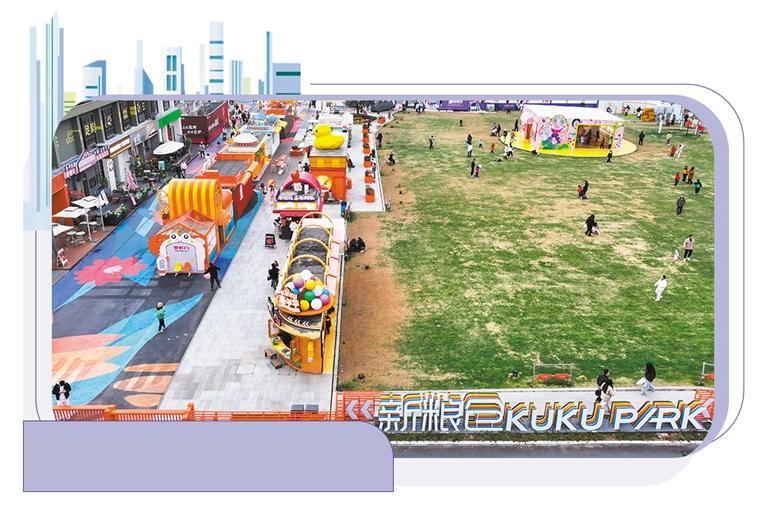
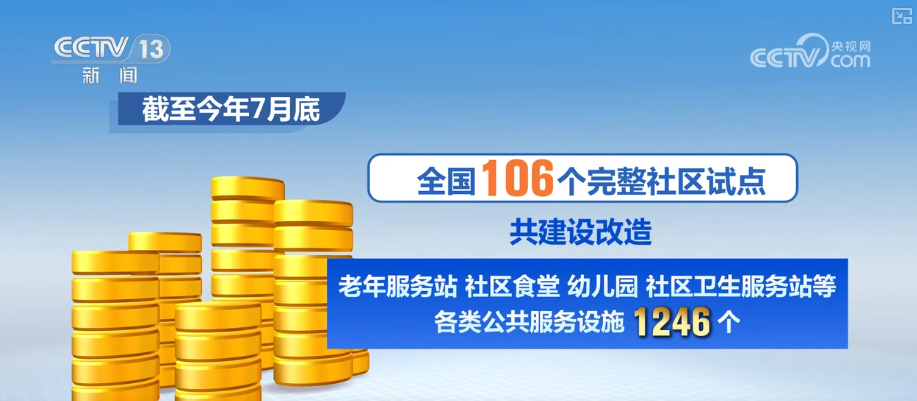
Core Viewpoint - The recent Central Urban Work Conference outlined seven key tasks for urban development, emphasizing the importance of urban renewal as a means to enhance community construction and transition from mere repairs to quality improvement since 2025 [1] Group 1: Urban Renewal and Community Development - The Ministry of Housing and Urban-Rural Development identified community service function enhancement as a critical task for 2025, with 1,246 public service facilities established across 106 complete community pilot projects by July 2025 [2] - Since 2025, various regions have constructed over 700 convenience stores and service points, added 24,700 parking spaces, and developed 710,000 square meters of public activity spaces and green areas, benefiting 1,088,500 residents [3] Group 2: Resource Reutilization and New Consumption Scenes - Localities are focusing on the reutilization of existing resources, such as transforming idle urban land into leisure spaces, exemplified by a project in Jiangxi where a vacant lot is being converted into a multifunctional area [5] - The acceleration of urban renewal has led to the emergence of new consumption and entertainment scenes, contributing to urban economic vitality [5] Group 3: Historical and Cultural Resource Activation - Cities with rich historical resources are revitalizing old buildings to create new cultural experiences, with 34 historical renovation projects implemented in Chongqing [22] - The renovation of historical residences, such as the Kang Youwei Memorial Museum in Qingdao, has integrated cultural activities to enhance visitor engagement [13][20] Group 4: Pocket Parks and Cultural Integration - Since 2025, 5,400 pocket parks have been established nationwide, with a focus on integrating local cultural elements into park designs, enhancing community engagement [25][29] - The construction of pocket parks in Anhui emphasizes local cultural narratives, with parks designed around themes such as poetry and historical references [27][28]
★多部门联手推进城市更新行动
Zhong Guo Zheng Quan Bao· 2025-07-03 01:56
Core Viewpoint - The Chinese government is set to implement a special budget for urban renewal projects, with a focus on enhancing infrastructure and public services, particularly in old residential areas and communities [1][2][3] Group 1: Urban Renewal Investment Plans - A special central budget for urban renewal will be established by June 2023, aimed at supporting public infrastructure and services [2] - The plan includes expanding support for projects related to the transformation of dilapidated housing and old neighborhoods [1][2] Group 2: Financing Mechanisms - The government will enhance the use of local government special bonds to finance urban renewal projects, encouraging participation from private enterprises and social capital [2][3] - A new loan management approach for urban renewal projects will be developed to clarify loan conditions and standards [3] Group 3: Community Improvement Initiatives - The government emphasizes the importance of renovating old residential areas and constructing complete communities, focusing on safety and living conditions [3][4] - From 2019 to 2024, 280,000 old residential areas have been renovated, benefiting 48 million households and improving various infrastructure [4] Group 4: Planning and Coordination - The Ministry of Natural Resources will guide the development of urban renewal plans, ensuring alignment with overall strategic planning and land use policies [4] - Efforts will be made to promote successful experiences from pilot cities in land redevelopment to enhance urban renewal policies [4]
推动城市功能完善、品质提升 城市更新让生活更美好
Jing Ji Ri Bao· 2025-06-01 00:02
Core Insights - Urban renewal is becoming a crucial initiative for high-quality development and meeting the needs of citizens' better lives, with various regions actively exploring ways to enhance urban functions and quality [1][4]. Group 1: Urban Infrastructure Improvements - In Shandong's Heze City, a comprehensive upgrade of aging gas facilities is underway, enhancing safety and efficiency for residents [2]. - Jinan's Tianqiao District is developing a modern parking service system that integrates smart technology, improving traffic efficiency by over 60% [2]. - In Hangzhou, a comprehensive sewage network construction project is being implemented across 14 towns, significantly improving drainage efficiency and residents' quality of life [3]. Group 2: Policy and Planning - Zhejiang Province has established a provincial urban renewal policy framework that includes planning, assessment, implementation, and supervision [4]. - The newly enacted Taizhou Urban Renewal Regulations outline development goals and environmental protection requirements [4]. - Shandong is researching sustainable urban renewal models that involve government guidance, market operations, and public participation [4]. Group 3: New Business Opportunities - Urban renewal is reshaping city landscapes and fostering new business models, as seen in Shanghai's Yangpu District, where historical neighborhoods are revitalized into modern community spaces [6][7]. - The 228 Block in Shanghai has transformed into a vibrant community hub, offering various services and enhancing residents' quality of life within a 15-minute living radius [7]. - In Jinhua's Wucheng District, the old railway station has been converted into a cultural park, preserving historical architecture while promoting local culture and tourism [8].
城市更新按下加速键,不搞大拆大建
21世纪经济报道· 2025-05-16 23:15
Core Viewpoint - The article discusses the recent issuance of the "Opinions on Continuing to Promote Urban Renewal Actions" by the Central Committee of the Communist Party of China and the State Council, which provides a top-level design framework for urban renewal efforts in China, aiming for significant progress by 2030 [1][2]. Summary by Sections Urban Renewal Goals - The "Opinions" outline multiple urban renewal goals to be achieved by 2030, including improved urban development mechanisms, enhanced service efficiency, better living environments, and effective cultural heritage protection [1]. Key Tasks for Urban Renewal - Eight main tasks are proposed, such as strengthening the renovation of existing buildings, improving old residential areas, constructing complete communities, and enhancing urban infrastructure [1]. Policy Framework and Support - The article emphasizes the need for a robust policy framework to support urban renewal, including establishing implementation mechanisms, improving land policies, and diversifying financing methods [1][2]. Urbanization Trends - By 2024, China's urbanization rate is projected to reach 67%, indicating a shift from quantity-focused urban development to quality and structural optimization [4]. Economic Implications - Urban renewal is highlighted as a crucial driver for economic growth, addressing challenges like structural adjustments and insufficient domestic demand, while also promoting investment and consumption [5]. Progress and Achievements - Since 2019, nearly 280,000 old residential areas have been renovated, benefiting 120 million residents, with significant improvements in infrastructure and community facilities [6]. Emphasis on Preservation - The "Opinions" stress the importance of preserving cultural heritage during urban renewal, advocating for a cautious approach to demolition and construction [7][9]. Financing Urban Renewal - The article outlines the need for diverse financing sources for urban renewal projects, including central budget investments, local government funding, and participation from financial institutions [10].
政在发声|城市更新按下加速键,不搞大拆大建
2 1 Shi Ji Jing Ji Bao Dao· 2025-05-16 13:51
Core Viewpoint - The central government has issued guidelines to promote urban renewal, aiming for significant progress by 2030, with a focus on improving living conditions, enhancing urban functions, and protecting cultural heritage [1][2][4]. Group 1: Urban Renewal Goals and Tasks - The guidelines outline eight main tasks for urban renewal, including the renovation of existing buildings, improvement of old residential areas, and enhancement of urban infrastructure [1]. - By 2030, the urban renewal actions are expected to lead to improved living environments, diversified economic activities, and better protection of cultural heritage [1][2]. Group 2: Policy and Economic Implications - Urban renewal is seen as a crucial driver for economic growth, addressing structural adjustments and insufficient internal demand by revitalizing idle land and old buildings [3][4]. - The government has emphasized the importance of urban renewal in its recent economic plans, indicating an acceleration in policy implementation and support [2][4]. Group 3: Financing and Investment - The guidelines propose a diversified financing approach for urban renewal, including central budget investments, local government funding, and participation from financial institutions [8]. - The funding sources for urban renewal projects are expected to include various government bonds and financial instruments, which will facilitate the necessary capital for these initiatives [8]. Group 4: Preservation and Sustainable Development - The guidelines stress the importance of preserving cultural heritage during urban renewal, advocating for a balanced approach that avoids large-scale demolitions [6][7]. - The focus is on utilizing existing resources and enhancing urban functions rather than solely pursuing new construction [7].