脑科学研究

Search documents
数据流动如何影响科研?封关为脑科学创造新机会
Xin Lang Cai Jing· 2026-01-18 01:56
Core Viewpoint - The article emphasizes that "orderly flow of data security" is a significant institutional benefit brought by the closure, which is expected to enhance academic data sharing and promote international collaboration in brain science [1] Group 1: Data Flow and Research Impact - The orderly flow of data is anticipated to facilitate smoother academic data sharing, allowing scientists both domestically and internationally to access and utilize research effectively [1] - The previous challenges in data sharing have limited the impact of research outputs, as illustrated by the example of a high-precision mouse brain atlas created by a research team [1] Group 2: International Collaboration - The framework for regulated data flow is expected to enhance the utilization of international open data, fostering greater exchange and cooperation in the global brain science community [1]
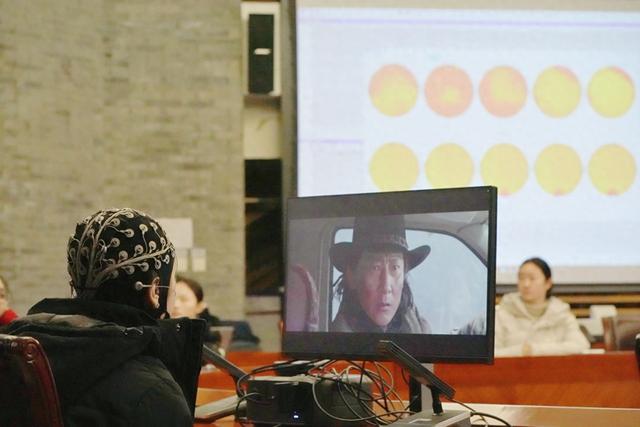
清华神经美学实验揭秘“脑洞世界”
Xin Lang Cai Jing· 2025-12-27 11:29
Core Insights - The event at Tsinghua University focused on the intersection of neuroscience and aesthetics, utilizing high-precision EEG devices to capture audience neural activity during film viewing [2][4] - The research aims to explore the neural activity patterns involved in art appreciation, providing scientific support for artistic creation and education [4] Group 1: Event Overview - The "Science + Art" film neuroscience and neuroaesthetics seminar featured student volunteers wearing portable EEG devices while watching a film segment [2] - The research team from Tsinghua's Biomedical Engineering School aims to assist in brain-computer interface and decoding algorithm research through this experiment [2] Group 2: Research Findings - Real-time neural activity from the prefrontal cortex was displayed, indicating significant changes during emotionally charged film segments, suggesting empathy and emotional engagement [2] - The research is also exploring applications of neuroaesthetic principles in areas such as emotional disorder rehabilitation, aesthetic education, and cognitive intervention for the elderly [4] Group 3: Film and Participation - The film "Distant Progangri" showcases the development of Tibet's Shuanghu region, with a focus on the stories of young university students and herders, and is set to be released on December 16 [4] - The event attracted participation from students and faculty from various universities, including Tsinghua, Peking University, Beijing Normal University, and Beijing Dance Academy [4]

绘制全脑神经活动图谱(科技大观)
Ren Min Ri Bao· 2025-11-30 22:01
Core Insights - The international brain laboratory has published a groundbreaking study in *Nature*, creating the first high-resolution neural activity map of the entire mouse brain throughout the decision-making process, which enhances understanding of how the brain makes decisions and introduces a new paradigm in international neuroscience research [1][2] Research Methodology - The study involved 12 renowned neuroscience research teams globally, utilizing a standardized experimental paradigm across different laboratories, where mice performed a visual choice task to receive a reward [2] - A total of 139 mice underwent 699 electrode insertions, covering 279 anatomically defined brain regions, recording approximately 622,000 neurons' firing activities, resulting in a dynamic, panoramic "whole-brain neural activity map" [2][3] Findings on Neural Activity - The research revealed that during tasks, the mouse brain exhibits a "city-wide illumination" style of coordinated activation, with visual stimuli triggering local activation that rapidly spreads across the brain, indicating that decision-making involves multiple neural nodes interacting within milliseconds [3] - The findings suggest that decision-making is not confined to higher brain regions like the prefrontal cortex but involves synchronous activity across various brain areas, highlighting a decentralized approach to cognitive functions [3] Implications for Neuroscience - This study implies that many neuropsychiatric disorders may not stem from damage to a single brain area but rather from imbalances in large-scale neural network coordination, suggesting future treatment strategies may shift from "point repair" to "network regulation" [3][4] - The research also emphasizes the need for further studies to establish causal relationships and to explore brain activity in freely behaving subjects, aiming to create a comprehensive "digital twin" of the brain [4] Collaborative Research Model - The organization of this research exemplifies high levels of collaboration, with 12 laboratories functioning like different brain regions, working under unified standards to achieve scientific breakthroughs beyond the capabilities of individual teams [4]
AI音乐如何疗愈身心?众专家研讨AI时代音乐科技与健康
Nan Fang Du Shi Bao· 2025-11-24 05:40
Core Insights - The event titled "Music Technology and Health in the AI Era" was held at Shanghai Conservatory of Music, focusing on the intersection of music, artificial intelligence, neuroscience, and medicine [1] - Experts and artists discussed how AI can reshape artistic boundaries and contribute to human mental and physical health [1] Group 1: AI and Music Therapy - Music is recognized not only as an art form but also as an important therapeutic method, with AI technology facilitating cross-disciplinary collaborations to benefit patients [3] - The Shanghai Conservatory of Music's AI Music Therapy Lab is exploring applications in various scenarios such as sleep disorders and depression, generating personalized "sound therapy capsules" based on AI models and physiological data [5][6] - Clinical experts provided evidence of music therapy's effectiveness, highlighting its role in enhancing emotional connections and alleviating pain in cancer patients [6][7] Group 2: Educational Initiatives - The Shanghai Conservatory of Music is developing interdisciplinary talent training systems in music AI and music therapy to bridge the gap between music, technology, and health [7] - The institution is implementing a comprehensive training model that integrates undergraduate, master's, and doctoral programs, emphasizing collaboration across disciplines [7] - Industry representatives discussed the potential of AI agents to create personalized therapeutic music based on user emotions and preferences, making music therapy more accessible [7] Group 3: Event Highlights - The event featured live demonstrations, including EEG experiments to visualize brain activity in response to different music forms, illustrating the interaction between sound and the brain [4] - Attendees experienced the "AI Music Therapy Space" developed by the Shanghai Conservatory of Music, showcasing the innovative applications of music therapy [8]

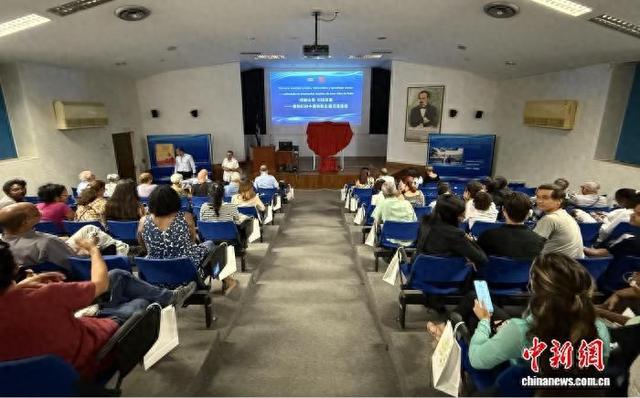
“跨越山海 交流互鉴”裴德乐的中国情缘主题交流活动在古巴举行
Zhong Guo Xin Wen Wang· 2025-11-12 02:32
Core Points - The event "Bridging Mountains and Seas, Mutual Learning" focused on the Chinese connection of Dr. Pei Dele, held in Havana, Cuba, where over 150 guests witnessed the signing ceremony for the Spanish version of the book "Pei Dele's Chinese Story" and watched the documentary "Cuban Heart, Chinese Feelings" [1][3][5] Group 1 - The event was attended by Chinese Ambassador to Cuba, Hua Xin, who emphasized the deepening of Sino-Cuban relations over 65 years, highlighting Dr. Pei Dele as a model for scientific collaboration [3][5] - The President of the Cuban Biotech and Pharmaceutical Industry Group, Maida Mauri Perez, noted that Dr. Pei Dele's work has introduced new technologies to Cuba's healthcare system, with significant implications beyond national borders [3][5] - Luis Velasquez Perez, President of the Cuban Academy of Sciences, stated that Dr. Pei Dele has built a bridge connecting the scientific communities of both countries, enabling them to tackle global challenges together [3][5] Group 2 - A memorandum of cooperation was signed between the University of Electronic Science and Technology of China and the Cuban Information Technology and Advanced Remote Services Company to promote the publication of the Spanish version of Dr. Pei Dele's book and the airing of the documentary on Cuban national television [5] - The event was co-hosted by multiple organizations, including the State Council Information Office of China and the Cuban Neuroscience Center, showcasing the collaborative efforts in science and technology between the two nations [5] - Dr. Pei Dele, a prominent neuroscientist and co-founder of the Cuban Neuroscience Center, has made significant advancements in brain science research and talent development since joining the University of Electronic Science and Technology of China in 2015 [5]
用创新成果守护群众生命健康(编辑手记)
Ren Min Ri Bao· 2025-11-06 22:05
Core Viewpoint - Brain-computer interface technology is transforming science fiction into reality, enabling individuals with disabilities to regain grasping abilities and allowing for high-precision decoding of neural signals for "thought reading" [1] Group 1: Technological Advancements - The Tianjin University neuroengineering team has focused on non-invasive brain-computer interfaces, achieving significant breakthroughs over more than a decade of research [1] - Key developments include the creation of artificial neural robotic systems and human-machine collaboration in extreme environments [1] Group 2: Clinical Application and Innovation - The transition from scientific exploration to clinical application reflects the integration of disciplines and the responsibility of researchers [1] - The Liu Xiuyun team is addressing diagnostic challenges in brain diseases by merging cutting-edge brain science research with clinical needs, creating a comprehensive system for "diagnosis-monitoring-treatment-prediction" [1] Group 3: Future Prospects - The reciprocal relationship between advanced technology and medical practice highlights the power of innovation in safeguarding public health [1] - There is an expectation for more cutting-edge technologies to accelerate their implementation, benefiting the lives of the general public [1]
信长星在镇江宣讲党的二十届四中全会精神并调研时强调 切实把思想和行动统一到全会精神上来 凝心聚力推进中国式现代化江苏新实践
Zhen Jiang Ri Bao· 2025-10-30 23:25
Group 1 - Jiangsu University is recognized as one of the first high-level universities in the province, with a focus on historical development, technological innovation, and international cooperation [2] - The university emphasizes the importance of the "14th Five-Year Plan" period for achieving socialist modernization and encourages students to enhance their sense of responsibility and mission [2] - Jiangsu University has a distinctive educational approach that integrates engineering with agriculture, aiming to cultivate talent for national development [2] Group 2 - Huichuang Medical Company specializes in brain science research and is positioned to benefit from the strategic goal of significantly improving technological self-reliance during the "14th Five-Year Plan" [3] - The company is encouraged to explore cutting-edge technologies and contribute to public health, with support from provincial and municipal departments to address practical challenges [3] - Wode Agricultural Machinery Company is recognized for its efforts in agricultural modernization and is urged to leverage local educational and industrial resources to innovate in smart and green agricultural technologies [3]
信长星在镇江宣讲党的二十届四中全会精神并调研时强调切实把思想和行动统一到全会精神上来 凝心聚力推进中国式现代化江苏新实践
Xin Hua Ri Bao· 2025-10-29 23:33
Group 1 - Jiangsu University is recognized as one of the first high-level universities in the province, emphasizing the importance of education and technology in achieving national development goals [2] - The university has a long history and a distinctive focus on integrating engineering with agriculture, which aligns with the strategic goals set for the next five years [2] - The university is encouraged to foster a sense of responsibility among students to contribute to the country's technological self-reliance and innovation [2] Group 2 - Huichuang Medical Company specializes in brain science research and is positioned to benefit from the national strategy aimed at enhancing technological self-reliance during the 14th Five-Year Plan [3] - The company is urged to explore cutting-edge technologies and address practical challenges with the support of local government [3] - Wode Agricultural Machinery Company is recognized for its efforts in modernizing agriculture through technology and is encouraged to innovate in smart and green agricultural machinery [3]
θ波像雷达一样“读取”大脑记忆
Ke Ji Ri Bao· 2025-10-28 08:48
Core Insights - The research conducted by scientists at MIT reveals that the ability to detect subtle changes in visual information relies on a low-frequency brain wave known as theta wave [1][2] - Theta waves function like a radar, scanning the visual cortex to "read" information in visual working memory, which is crucial for short-term recognition of changes [1] Group 1: Research Findings - The study involved an animal experiment designed as a "find the difference" task, where animals had to quickly identify a color change in a set of colored blocks [1] - The accuracy and speed of the animals' responses were closely linked to the phase of theta waves, indicating a rhythmic fluctuation in the brain's processing of visual working memory [1][2] - When the color-changing block appeared in the area being scanned by theta waves, the animals responded most quickly and accurately; mismatched timing led to a significant decline in recognition performance [1] Group 2: Mechanisms of Brain Function - Theta waves not only correlate with response speed but also coordinate other brain wave activities, such as suppressing beta wave activity during theta wave excitation [2] - This inter-wave coordination mechanism helps explain how the brain utilizes different frequency brain waves to perform cognitive operations [2] - The influence of theta waves becomes more pronounced as the number of blocks to remember increases, suggesting that theta waves may limit the capacity of working memory [2]
【科技日报】解读“大脑宇宙”的“天书”
Ke Ji Ri Bao· 2025-07-15 01:16
Core Insights - Chinese scientists have made significant progress in brain mapping research, with 10 studies published in international journals, including "Cell" and "Neuron," showcasing advancements in understanding brain structure and function [1][2][3] Group 1: Research Achievements - The "Whole Brain Mesoscopic Neural Connectivity Atlas" project aims to create detailed brain maps of non-human primates and humans, addressing the complexity of mammalian brains, which contain nearly 100 billion neurons and over 100 trillion connections [2][3] - A team of over 300 researchers from more than 30 institutions has successfully completed studies that analyze brain cell diversity, connectivity patterns, and molecular mechanisms of brain diseases, enhancing China's international influence in this field [2][3][6] - The research includes the first high-resolution evolutionary atlas of 1.3 million brain cells from various species, revealing key gene evolution related to differences in brain cell types across species [3][12] Group 2: Technological Innovations - The development of specific genetic tools for primate brain research allows for precise delivery of functional proteins to targeted cells, potentially enabling targeted therapies for brain diseases [4][5][25] - A new collection of tools for specific labeling and observation of primate brain cells has been established, marking a significant advancement in understanding brain structure and diseases [4][25][30] Group 3: Collaborative Efforts - The establishment of the "International Primate Mesoscopic Brain Atlas Alliance" aims to enhance global collaboration in brain mapping research, with a focus on creating a shared database for brain atlas data [9][32] - The research integrates contributions from various international institutions, highlighting the collaborative nature of modern neuroscience research [9][32] Group 4: Future Directions - The goal is to complete the mesoscopic neural connectivity atlas for mice by 2025 and for macaques by 2035, indicating a long-term commitment to advancing brain mapping technologies [8][9] - Continued development of imaging and labeling technologies is essential for achieving high-quality brain maps, which are crucial for understanding complex brain functions [14][15]