
轨道交通建设

Search documents
重庆轨道交通7号线一期工程建设取得新进展
Zhong Guo Jing Ji Wang· 2025-12-05 08:35
Core Viewpoint - The successful completion of the TBM breakthrough for the Chongqing Rail Transit Line 7 Phase I project marks a significant milestone in the construction of a vital north-south transportation artery in western Chongqing, enhancing connectivity among various urban clusters [1][2]. Group 1: Project Overview - The Chongqing Rail Transit Line 7 Phase I project spans approximately 28 kilometers with 18 stations, connecting key areas such as Xiyong, Hangu, and Jinfeng [1]. - The recently completed section measures 2,340.669 meters, with the TBM segment accounting for 1,727.363 meters, navigating through complex geological conditions including high-strength sandstone and mudstone [1]. Group 2: Technical Innovations - The project team implemented innovative technologies to address the challenges of tunneling through long-distance, high-strength rock layers, utilizing a proprietary wear-resistant coating with a shear strength exceeding 350 MPa, significantly enhancing tool durability [2]. - The team achieved a remarkable feat of continuous tunneling through hard rock without the need for opening storage or changing tools, ensuring a smooth construction process [2]. Group 3: Safety Measures - To mitigate the risk of segment uplift in hard rock layers, the project team meticulously controlled tunneling parameters and optimized grouting processes, resulting in high-quality tunnel lining with no significant misalignment or damage [2]. - A specially developed track surface treatment device was created to enhance traction on steep gradients, effectively addressing safety concerns during transportation within the tunnel [2].
北京地铁14号线阜通站B2出入口正式投用
Xin Jing Bao· 2025-11-29 02:23
Group 1 - The B2 entrance of the Beijing Subway Line 14 and its associated overpass have officially opened, enhancing connectivity in the area [1] - The B2 entrance features a construction area of approximately 1,177 square meters and a passage width of 5.5 meters, equipped with escalators and stairs [1] - The opening of the B2 entrance is part of Beijing's efforts to optimize public transportation services and promote regional development, improving access for residents and enhancing overall operational efficiency at the station [1] Group 2 - The construction of the B2 entrance utilized the jacking method to tunnel under Fengtong West Street, overcoming challenges such as complex geological conditions and high groundwater levels [2] - The project team successfully addressed technical difficulties, demonstrating advanced construction techniques and management capabilities in urban infrastructure development [2]
地铁10号线最深车站封顶
Chang Jiang Ri Bao· 2025-11-29 00:36
Core Points - The completion of the last concrete pour for the Yujiaotou Station marks a significant milestone in the construction of Wuhan Metro Line 10 Phase I [1] - Yujiaotou Station is located at the intersection of Heping Avenue and Guosheng Road in Wuchang District, featuring a four-level underground structure with a maximum depth of 35.5 meters, equivalent to a 12-story building [1] - The station will have four entrances and will facilitate transfer to Line 5 upon completion [1] Construction Details - The construction team is adhering to a "zero leakage" standard, employing various techniques such as secondary roughening, custom cross-joint waterproof steel plates, and embedded grouting pipes to ensure structural integrity [1] - The entire Phase I project spans approximately 19 kilometers, connecting Hankou Railway Station to Beiyang Bridge and includes eight stations, all of which are currently under construction [1][2] Station Connectivity - The eight stations include Hankou Railway Station (interchange with Line 2), Tangjiadun Station (interchange with Line 6), Zhuye Mountain Station (interchange with Line 8), Erqi Xiaolu Station (interchange with Line 3), Erqi Road Station (interchange with Line 1), Yujiaotou Station (interchange with Line 5), Gangdu Huayuan Station (interchange with Line 12), and Gongye Road Station [2] - The Line 10 Phase I serves as a crucial link between the core areas of Hankou and Wuchang, connecting two major transportation hubs: Hankou Railway Station and Wuhan Railway Station [2]
市域(郊)铁路成都至德阳线启动预制梁架设
Zhong Guo Xin Wen Wang· 2025-11-26 08:51
Core Viewpoint - The Chengdu-Deyang Line of the suburban railway has commenced the prefabricated beam installation, marking a significant advancement in the construction of the elevated section of the line [1] Group 1: Project Overview - The Chengdu-Deyang Line is a key project in the "urban rail transit circle," utilizing a "factory prefabrication and on-site installation" method to enhance construction efficiency and reduce environmental impact compared to traditional methods [3] - The elevated section of the Chengdu-Deyang Line spans approximately 45.4 kilometers, accounting for 64% of the total line length, requiring the installation of 1,156 prefabricated beams produced at three manufacturing sites [3][4] Group 2: Construction Techniques and Innovations - The construction employs a composite foundation reinforcement technique to address the challenges of soft soil in the Sanxingdui area, ensuring the safe placement of heavy prefabricated beams [3] - A smart beam yard management platform has been established to create a "growth profile" for each prefabricated beam, enabling digital control of production parameters for quality assurance and traceability [4] Group 3: Project Progress and Impact - As of now, significant milestones have been achieved, including the completion of the main structure for nine underground stations and the ongoing installation of electromechanical systems and decorations in two stations [4] - The Chengdu-Deyang Line is expected to significantly reduce travel time between Chengdu and Deyang, facilitating regional industrial collaboration and efficient transportation for personnel [4]

地铁11号线盾构机从汤山站出发,向汉阳高铁站掘进
Chang Jiang Ri Bao· 2025-11-25 12:48
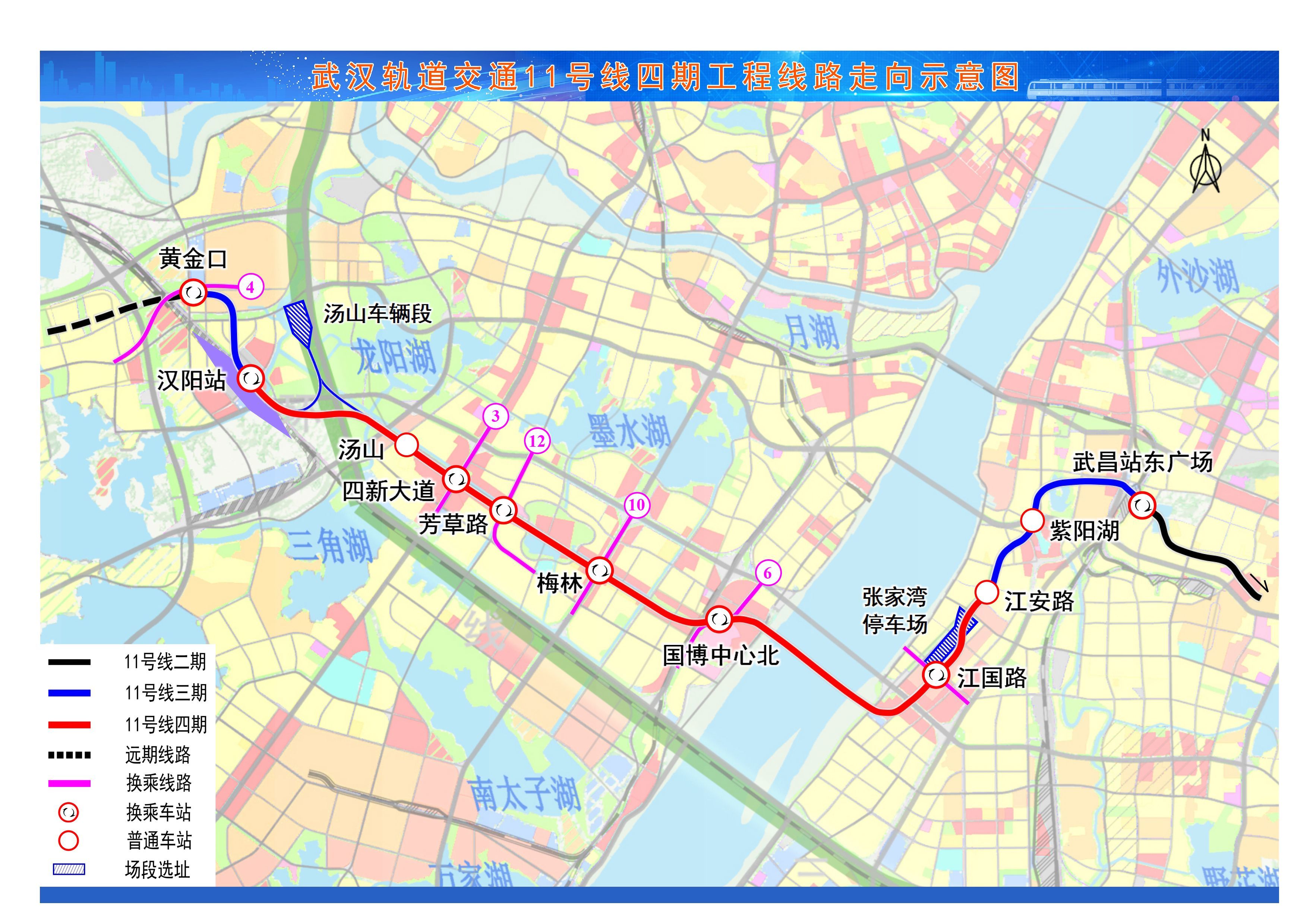
Core Viewpoint - The Wuhan Metro Line 11 Phase IV project has made significant progress with the commencement of tunnel construction between Tangshan Station and the entry-exit line, utilizing advanced tunneling technology to address various engineering challenges [1][5]. Group 1: Project Overview - The total length of the Line 11 Phase IV project is 16.2 kilometers, featuring six stations: Tangshan Station, Sixin Avenue Station, Fangcao Road Station, Meilin Station, North National Expo Center Station, and Jiangguo Road Station [13]. - The construction of the right line tunnel spans 1,735 meters and faces three major technical challenges: shallow burial, steep slopes, and sharp bends [5]. Group 2: Engineering Challenges and Solutions - The minimum burial depth of the tunnel is only 4.4 meters, significantly less than the diameter of the tunneling machine, necessitating multiple protective measures, including a 0.7-meter thick anti-floating reinforced concrete slab on the surface and 40 anti-pull piles on both sides of the tunnel [5]. - The maximum slope of the section reaches 32‰, and the minimum turning radius is 300 meters, which poses high operational demands on the tunneling machine [5]. Group 3: Construction Progress - Another tunneling machine from Tangshan Station has safely advanced 400 meters towards Sixin Avenue Station, navigating through 12 different geological layers, which complicates tunnel axis control [7]. - The left line tunneling machine is expected to complete assembly next week, allowing for simultaneous tunneling of both left and right lines [5][13]. Group 4: Workforce and Expertise - A total of three tunneling machines will be deployed from Tangshan Station, supported by a team of 120 personnel with an average experience of five years, including a core group of "post-80s" assembly workers and "post-90s" operators [9].
北京轨道交通22号线(平谷线)河北段铺轨
Xin Hua She· 2025-11-20 06:03
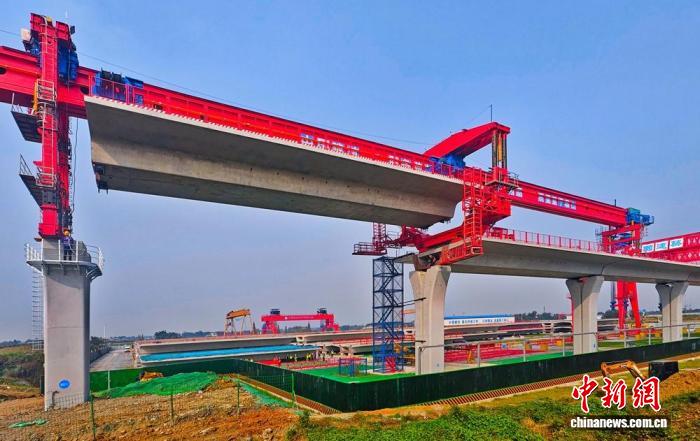
Core Viewpoint - The construction of the Beijing Subway Line 22 (Pinggu Line) has officially entered the track laying phase, marking a significant milestone for the project [1] Group 1: Project Development - The track laying work at the Hebei section of the Beijing Subway Line 22 has commenced, with two large-span gantry cranes successfully placing 25-meter standard track segments [1] - This development lays a solid foundation for the subsequent progress of the project [1] Group 2: Impact on Transportation - Once completed and operational, the new subway line is expected to effectively alleviate traffic pressure on cross-border roads [1] - The line will significantly enhance commuting efficiency for residents traveling between Beijing and Hebei [1]
深圳北部将添“大动脉”
Shen Zhen Shang Bao· 2025-11-20 05:36
Core Points - The Shenzhen Metro Line 25 Phase I is planned to be completed by 2029, serving as a major transportation link for areas including Shiyan, Dalang, Longhua Center, and Banxuegang, effectively becoming an "underground artery" for northern Shenzhen [1][2] - The total length of Line 25 Phase I is 16.5 kilometers, featuring 14 stations and 3 transfer stations, with all sections being fully underground [1][2] - The largest station, Chuangyicheng Station, has a length of 331.5 meters, width of 25 meters, and depth of 26.1 meters, designed with a dual-layer structure and innovative green construction practices [1][2] Construction Innovations - The construction employs a "five-level sedimentation + filter press treatment" method to recycle wastewater and rainwater for dust control, achieving over 50% energy savings through the use of air pump technology instead of traditional electric pumps [2] - Additional measures, such as the installation of drainage pipes and grouting techniques, have been implemented to address challenges related to "bedrock fissure water," ensuring effective waterproofing [2] Strategic Importance - Upon completion, Line 25 Phase I will enhance connectivity with urban spatial structures and core urban areas, support the development of key districts, and improve coverage in previously underserved areas, maximizing the network benefits of the metro system [2]
穿江“大动脉”已开挖 地铁15号线一期工程大盾构顺利始发
Mei Ri Shang Bao· 2025-11-20 02:51
Core Points - The construction of Hangzhou Metro Line 15 Phase I has reached a critical milestone with the successful launch of the "Kechuang" shield tunneling machine, marking the start of a new phase of simultaneous multi-point advancement [1][2] - The total length of Line 15 is approximately 40.5 kilometers, connecting four districts: Linping, Gongshu, Shangcheng, and Xiaoshan, with a total investment of about 446.8 billion yuan [1] - The SG15-8 section is a key control project, featuring a shield tunnel that runs under the Qiantang River, with a total length of 2,448 meters and an outer diameter of 11.3 meters, making it the only section of Line 15 to use large-diameter shield construction [1] Industry Insights - The successful initiation of the shield tunneling process is expected to accelerate the construction timeline of the north-south urban transit line, with six to seven shield machines anticipated to operate simultaneously during peak construction periods [2] - The completion of Line 15 will significantly enhance the transportation connectivity across the Qiantang River, playing a vital strategic role in improving the overall transportation capacity of Hangzhou [1]
地铁10号线三期关键区间贯通 将融入杭德市域铁路运营体系
Hang Zhou Ri Bao· 2025-11-19 02:22
Core Points - The successful completion of the right line connection between Renhe South Station and Renhe Station marks the full dual-line connection of the Hangzhou Metro Line 10 Phase III project [2] - The dual-line length between Renhe South Station and Renhe Station is 1199.9 meters, showcasing the project's efficient construction speed [2] - The Hangzhou Metro Line 10 Phase III project is a crucial link connecting Line 10 with the Hangde Intercity Railway, facilitating transportation between the Renhe area, Hangzhou city center, and Deqing [2][3] Summary by Sections Project Overview - The Hangde Intercity Railway, a key project in Zhejiang Province, connects Yuhang District in Hangzhou (Renhe North Station) to Deqing County in Huzhou (Deqing High-speed Railway Station) with a total length of 25.6 kilometers and 9 stations [3] - The project is designed for a maximum operating speed of 120 kilometers per hour and is expected to be completed and operational by 2026 [3] Construction Achievements - The project team completed the shield tunneling for both lines, with significant milestones achieved in a short timeframe, including 21 days for equipment installation and 100 days for tunneling of 800 rings [2] - The construction speed has been highlighted as "Iron Army Speed," reflecting the efficiency and effectiveness of the project team [2]
地铁施工现场进行火灾演练:微型消防站快速响应,紧急灭火
Xin Jing Bao· 2025-11-16 22:41
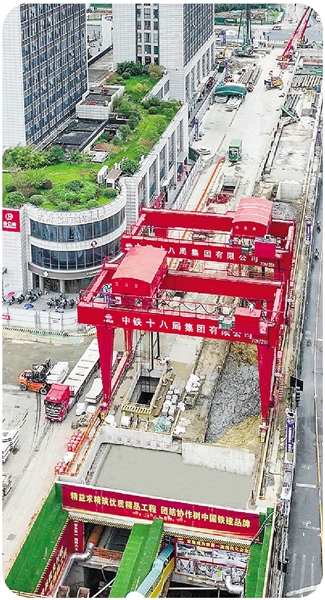
Core Points - The event held by Beijing Rail Transit Fire Department focused on fire safety awareness and management in the construction of the 2025 rail transit projects, with over 3,600 participants [1][2] - Various fire safety management measures were showcased, including fire alarm systems and emergency evacuation simulations [1] - The event emphasized the importance of fire safety capabilities in construction sites, with ongoing fire safety promotional activities planned across over 100 construction sites in the city [2] Group 1 - The "119" fire safety promotional month series event was conducted both online and offline, highlighting the active participation of construction units in fire safety initiatives [1] - Recognition was given to outstanding individuals and units in fire safety, including the "Flame Blue Caring Person" awards [1] - A simulated fire emergency drill was conducted to demonstrate quick response and evacuation procedures during a fire incident at the construction site [1] Group 2 - The fire department aims to enhance fire safety awareness and management capabilities through practical exercises and interactive communication during the promotional month [2] - The focus areas for fire safety promotion include management of hot work, electrical safety, and combustible material clearance [2] - The initiative is part of a broader effort to establish a solid fire safety foundation for the construction of a safe Beijing subway system [2]