Funds

Search documents
ULTY: Eye-Popping 88%+ Distribution Yield From Volatile Holdings
Seeking Alpha· 2025-09-17 17:17
Group 1 - The CEF/ETF Income Laboratory manages closed-end fund (CEF) and exchange-traded fund (ETF) portfolios targeting safe and reliable yields of approximately 8% [2] - YieldMax is a fund sponsor gaining popularity for its ultra-high-yield focused ETFs, which often come with high share prices [2] - The service provided by the CEF/ETF Income Laboratory includes managed portfolios, actionable income and arbitrage recommendations, and in-depth analysis of CEFs and ETFs [2] Group 2 - The majority of holdings in the CEF/ETF Income Laboratory are monthly-payers, which aids in faster compounding and smoothing income streams [2] - Nick Ackerman, a former financial advisor, provides coverage on closed-end funds and exchange-traded funds, leveraging over 14 years of personal investing experience [3]


视频|南方基金:防骗那些事儿丨当心“李鬼”机构,三招识破谎言!
Xin Lang Ji Jin· 2025-09-17 10:11
Group 1 - The article discusses the formation of MACD golden cross signals, indicating a bullish trend for certain stocks [1] - It highlights that stocks showing this signal have experienced significant upward momentum recently [1] Group 2 - The article does not provide specific company names or detailed financial data related to the stocks mentioned [1]

视频|建信服贸会展台
Xin Lang Ji Jin· 2025-09-17 10:04
Group 1 - The article discusses the high-quality development activities of public funds in Beijing, emphasizing the themes of a new era, new funds, and new value [1] - It highlights the formation of MACD golden cross signals, indicating positive trends in certain stocks [1]
政达通基金:数字炸弹之投教版
Xin Lang Ji Jin· 2025-09-17 09:58
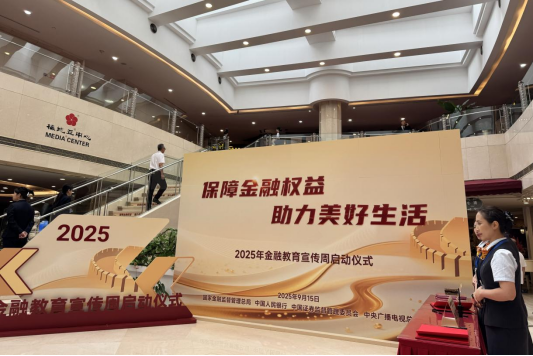
Core Viewpoint - The article emphasizes the importance of financial education in safeguarding financial rights and enhancing quality of life, highlighting the actions taken by the fund industry in this regard [1] Group 1: Financial Education Initiatives - The 2025 Financial Education Promotion Week aims to raise awareness about financial rights and provide resources for better financial management [1] - The fund industry is actively participating in this initiative, showcasing its commitment to improving financial literacy among the public [1] Group 2: Market Signals - The article mentions the formation of a MACD golden cross signal, indicating a potential bullish trend in certain stocks [1] - This technical analysis signal suggests that investors may find opportunities in stocks that are showing positive momentum [1]
视频|以金融“五篇大文章”书写时代发展答卷,华商基金以专业与担当积极参与金融强国建设
Xin Lang Ji Jin· 2025-09-17 08:14
MACD金叉信号形成,这些股涨势不错! 责任编辑:石秀珍 SF183 专题:北京公募基金高质量发展系列活动 新时代、新基金、新价值 ...
这两类投资或迎巨变?《公募销售费用管理规定》背后的长线逻辑
Sou Hu Cai Jing· 2025-09-17 08:13
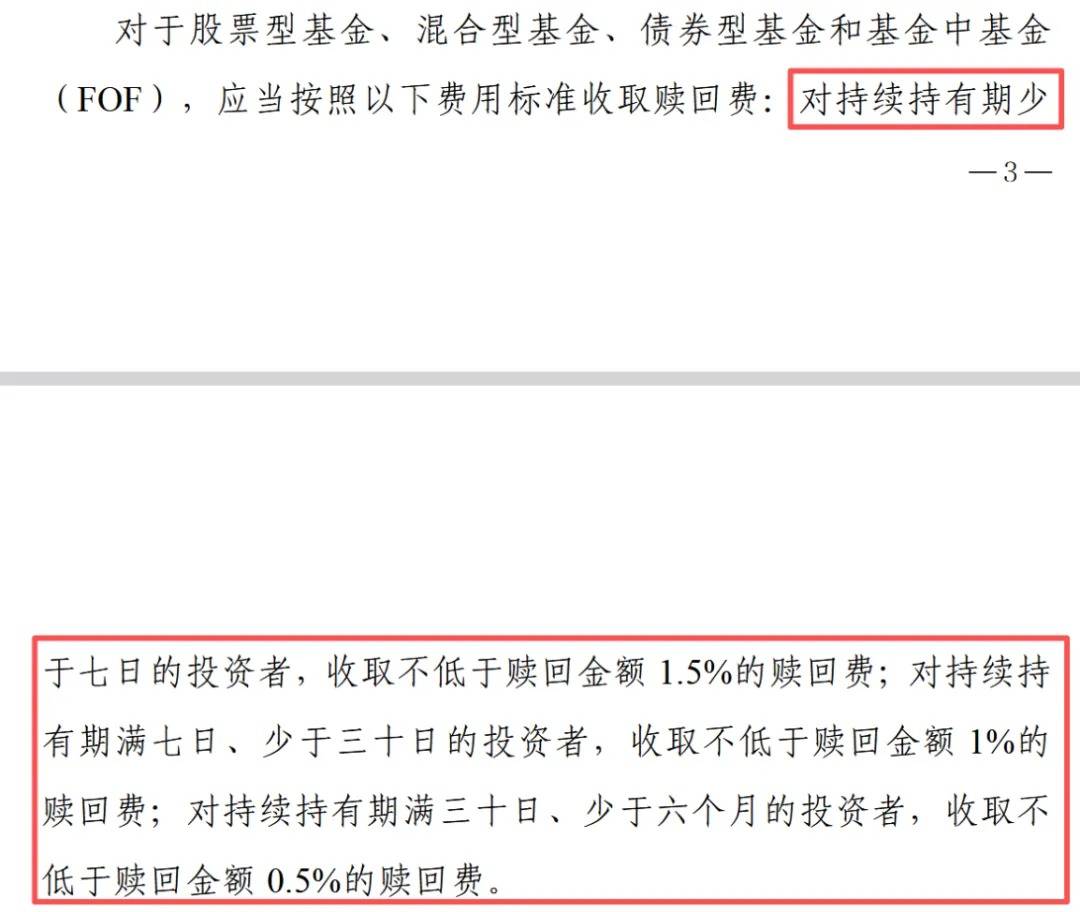
Core Viewpoint - Recent changes in redemption fees for various fund types may significantly impact investor strategies, particularly for short-term bond funds, potentially discouraging investment in these products due to increased costs [1][2][3]. Fee Structure Changes - The maximum subscription fees for equity, mixed, and bond funds have been reduced to 0.8%, 0.5%, and 0.3% respectively, while service fees for equity and mixed funds, index funds, and money market funds have been lowered to 0.4% per year, 0.2% per year, and 0.15% per year [1]. - New redemption fee requirements stipulate that investors must hold stocks, mixed, bonds, and FOF products for over six months to avoid a minimum redemption fee of 0.5% [1]. Impact on Short-term Investors - Short-term investors may face higher redemption fees, with fees of 1.5% for redemptions within 7 days, 1% for 7-30 days, and 0.5% for 30 days to 6 months, making it essential for investors in pure bond funds to prepare for a holding period of at least six months [3]. - The introduction of a 0.5% redemption fee could significantly reduce the effective yield of short-term bond funds, which currently hover around 1% [2]. C-Class Fund Implications - C-class funds, which previously offered advantages in redemption fees, will now face similar restrictions as A-class funds, as the new rule requires a six-month holding period for fee exemption, diminishing the appeal of C-class funds for short-term investors [4]. Market Trends and Regulatory Guidance - The recent regulatory guidance emphasizes the shift from scale-oriented to investor return-oriented strategies, aiming to create long-term stable returns for investors [6][7]. - The focus on long-term investment strategies is becoming a key theme in the public fund industry's development, with a push for high-quality growth and a recognition that short-term volatility is a normal aspect of market behavior [7].
银华基金:《推动公募基金高质量发展行动方案》核心要点速览!
Xin Lang Ji Jin· 2025-09-17 08:11
Core Viewpoint - The "Action Plan for Promoting High-Quality Development of Public Funds" aims to shift the focus of the public fund industry from "scale" to "return" for sustainable growth [2][19]. Group 1: Key Measures - The plan proposes 25 measures to enhance the industry's development [3]. - It includes optimizing the fee structure for actively managed equity funds, introducing performance-based floating management fees [3][4]. - Funds that significantly underperform compared to benchmarks will have reduced management fees [5]. Group 2: Strengthening Investor Relations - The plan emphasizes aligning the interests of fund companies with investors by establishing a performance-based evaluation system [6]. - It suggests increasing the proportion of fund managers' investments in their own funds and implementing stricter lock-up periods [7]. - A compensation management system linked to investment returns will be established, with significant penalties for underperformance [7]. Group 3: Enhancing Investor Services - The industry is encouraged to optimize resources for investment research, product design, risk management, and marketing to promote long-term and value investing [8]. - Regulations for public fund investment advisory services will be introduced to standardize the development of advisory businesses [9]. - A direct sales platform for institutional investors will be launched to facilitate their participation in fund investments [10]. Group 4: Increasing Investment Scale and Stability - The plan aims to optimize fund registration processes and introduce more index funds and low-volatility products [11]. - It will strengthen the constraints of performance benchmarks and implement long-term assessments of fund performance [12]. Group 5: Regulatory Enhancements - The plan includes improving regulatory frameworks and enforcement mechanisms to ensure high-quality development [13]. - It calls for enhancing the governance of fund companies and ensuring accountability among major shareholders and management [14]. - Liquidity risk management mechanisms will be improved to elevate compliance standards [15]. - The industry is encouraged to enhance its reputation management capabilities and promote a positive economic outlook [16]. - The initiative aims to foster a unique financial culture and accelerate the establishment of top-tier investment institutions [17].
国联基金权益部门大洗牌
Shen Zhen Shang Bao· 2025-09-17 06:43
Group 1 - The core point of the articles highlights significant turnover in the investment research team at Guolian Fund, particularly among equity fund managers, following the merger with Minsheng Securities and the restructuring of the investment departments [1][2] - Guolian Fund has seen the departure of 7 fund managers this year, with 5 leaving in the second half of the year, indicating a trend of instability within the team [1] - Notably, three senior fund managers with tenures of approximately 4.5 years, 10 years, and 5 years left the company recently, raising concerns in the market [1] Group 2 - The company has hired 7 new fund managers this year, with 6 being newcomers without prior public fund management experience, which may impact the overall expertise within the team [2] - Currently, Guolian Fund has a total of 29 fund managers, with an average tenure of 2 years and 18 days, which is below the industry average of 2 years and 104 days [2] - Among the 29 fund managers, 10 have less than 2 years of experience, with 7 of them being equity fund managers, indicating a potential risk in investment decision-making [2]
摩根中证A500指数增强成立 1基金经理管某产品4年仍亏
Zhong Guo Jing Ji Wang· 2025-09-17 03:19
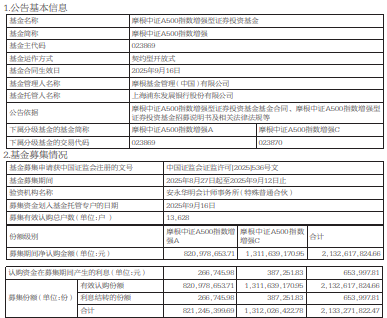
Core Viewpoint - Morgan Fund has announced the effective contract of the Morgan CSI A500 Index Enhanced Securities Investment Fund, with a total subscription amount of approximately 2.13 billion yuan and a total of over 2.13 billion shares issued [1][3]. Fund Information - Fund Name: Morgan CSI A500 Index Enhanced Securities Investment Fund [3] - Fund Code: 023869 [3] - Fund Type: Open-ended [3] - Effective Date: September 16, 2025 [3] - Fund Manager: Morgan Fund Management (China) Co., Ltd. [3] - Custodian: Bank of Communications Co., Ltd. [3] Fundraising Details - Total Subscription Amount: 2,132,617,824.66 yuan [1][3] - Interest Earned During Subscription Period: 653,997.81 yuan [1][3] - Total Effective Subscription Accounts: 13,628 [3] Fund Management Team - Fund Manager Hu Di has extensive experience, having worked at Merrill Lynch and CICC before joining Morgan Fund in May 2020 [1]. - Fund Manager He Zhihao has also held significant roles at CICC and joined Morgan Fund in July 2020 [1]. Performance Overview - Hu Di currently manages 15 funds, while He Zhihao manages 14 funds, primarily focusing on index funds [2]. - He Zhihao's management of the Morgan MSCI China A-Share ETF has shown a cumulative loss of 8.05% over more than four years [2].
践行投教责任,传递金融温度——南方基金投教基地参与金融教育宣传周启动活动
Xin Lang Ji Jin· 2025-09-17 01:09
启动仪式上,南方基金投教基地荣获"'百姓学金融'科普阵地优秀合作单位",南方基金投教讲师荣获"优 秀金融安全守护者",体现了南方基金投教基地在金融知识普及、投资者教育方面的专业能力与责任担 当。 专题:2025金融教育宣传周:保障金融权益 助力美好生活 基金行业在行动 为全面贯彻落实党的二十大和二十届二中、三中全会精神以及中央经济工作会议、中央金融工作会议部 署,深入践行金融工作政治性、人民性,持续提升公众金融素养和风险防范能力,维护金融消费者和投 资者合法权益,9月15日,金融监管总局、中国人民银行、中国证监会在北京联合启动金融教育宣传周 活动。南方基金现场出席启动仪式。 同日,在深圳金融监管局、深圳市地方金融管理局、中国人民银行深圳市分行、深圳证监局等监管部门 指导下,深圳第三届金融教育宣传节暨2025年金融教育宣传周启动仪式在莲花山公园举行,南方基金投 教基地参与了此次活动,通过多元形式将金融知识和防非反诈常识送至千家万户,充分发挥金融教育预 防性保护作用,帮助群众明辨风险、远离侵害、维护合法权益。 启动仪式:共筑安全防线 MACD金叉信号形成,这些股涨势不错! 责任编辑:石秀珍 SF183 同时,南方 ...