
种植业

Search documents
单产升 总量增 内蒙古玉米生产获丰收
Xin Hua She· 2025-10-23 14:03
Core Insights - Inner Mongolia is experiencing a significant increase in corn production, characterized by higher yields and total output, as it is one of China's major corn-producing regions [1][2] Group 1: Production and Yield - In the Bayannur City, the average yield of corn is reported to be over 2,200 jin per mu, with an expected profit of over 2,000 yuan per mu, marking an increase of approximately 150 jin per mu compared to previous years [1] - The total area planted with grain corn in Bayannur City reached 5.1789 million mu, with 3.5 million mu utilizing high-density planting techniques, achieving record-high yield indicators in the region [1] - In Tongliao City, the average yield reached 2,000 jin per mu, an increase of 100 jin compared to the previous year, with 6,000 mu planted using high-density techniques [1][2] Group 2: Technological Advancements - The integration of advanced agricultural technologies, such as high-density planting, precise sowing, and efficient water and fertilizer management, has been pivotal in enhancing corn yields [2] - Inner Mongolia has implemented a comprehensive technical system that combines good land, good seeds, good machinery, and good methods to address the challenges of increasing corn production and quality [2] - The promotion of high-density planting and other key technologies across 87 counties is expected to lead to an increase in production by approximately 800 million jin [2]
全国秋粮收获近八成 各地多措并举保丰收
Yang Shi Wang· 2025-10-23 12:08
Core Viewpoint - The current autumn grain harvest in China has reached nearly 80%, with various regions accelerating agricultural production progress, indicating a stable advancement in autumn harvesting and sowing [1] Group 1: Harvest Progress - The harvest progress of crops in Heilongjiang has exceeded 90%, with new rice varieties in Fuxin achieving a yield of 1,100 jin per mu and significantly improving the milling rate [1] - The overall grain harvest progress in Liaoning province has surpassed 87% [1] Group 2: Autumn Sowing - Hebei province is intensifying efforts to plant winter wheat, with agricultural experts providing scientific guidance based on soil moisture conditions, resulting in the completion of 7.5 million mu of winter wheat sowing [1] - Major winter wheat-producing provinces in the Huang-Huai-Hai region are implementing detailed measures for wet sowing [1] - Due to continuous rainfall, the wheat sowing time in Henan province is later than in previous years, with 18 expert teams dispatched to provide targeted guidance on seed selection and techniques, and approximately 10 million mu of land has been prepared for late sowing [1]
全国秋粮收获近八成!直击各地秋粮抢收抢烘一线→
Sou Hu Cai Jing· 2025-10-23 11:29
Group 1 - The core viewpoint of the articles indicates that the autumn grain harvest in China is progressing well, with nearly 80% of the crop harvested by October 21, particularly in the case of medium rice, corn, and soybeans, which are nearing completion of their harvest [1] - In Heilongjiang, over 200 million mu of autumn grain has been harvested, with the harvest pace faster than the same period last year. A corn demonstration field in Dongxing Village achieved a yield of 1,800 jin per mu [3] - The use of advanced harvesting machinery is highlighted, with a 12-row harvester capable of harvesting approximately 500 mu per day, ensuring efficiency and minimal loss [5] Group 2 - In Jiangsu Province, local agricultural cooperatives have organized mechanical harvesting operations, deploying 3,162 drying machines and providing information on 469 grain drying service points to ensure timely drying of harvested rice [7] - Jiangsu has allocated nearly 92,000 tracked harvesters and over 35,000 fixed drying machines to conduct urgent harvesting and drying operations across 33.44 million mu of rice, ensuring grain is safely stored [9]


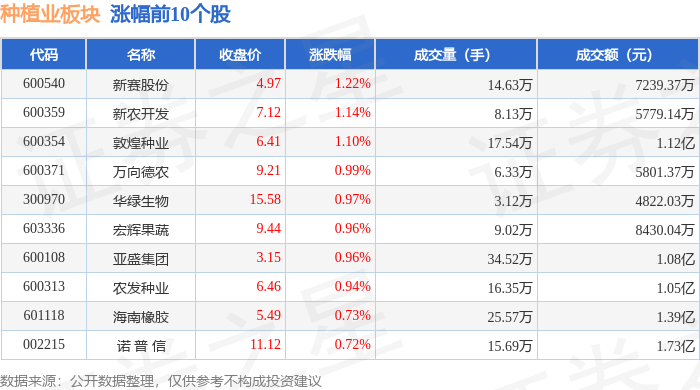
种植业板块10月23日涨0.47%,新赛股份领涨,主力资金净流出8614.93万元
Zheng Xing Xing Ye Ri Bao· 2025-10-23 08:14
从资金流向上来看,当日种植业板块主力资金净流出8614.93万元,游资资金净流出4913.76万元,散户资 金净流入1.35亿元。种植业板块个股资金流向见下表: | 代码 | 名称 | 主力净流入(元) | | 主力净占比 游资净流入(元) | | 游资净占比 散户净流入 (元) | | 散户净占比 | | --- | --- | --- | --- | --- | --- | --- | --- | --- | | 002772 众兴菌业 | | | 557.18万 | 2.19% | -869.64万 | -3.42% | 312.46万 | 1.23% | | 600540 | 新塞股份 | | 267.61万 | 3.70% | -86.00万 | -1.19% | -181.62万 | -2.51% | | 600371 万向德农 | | | 253.27万 | 4.37% | -601.39万 | -10.37% | 348.11万 | 6.00% | | 002041 | 三号越奥 | | 219.36万 | 5.07% | -329.95万 | -7.62% | 110.59万 | 2.55% ...

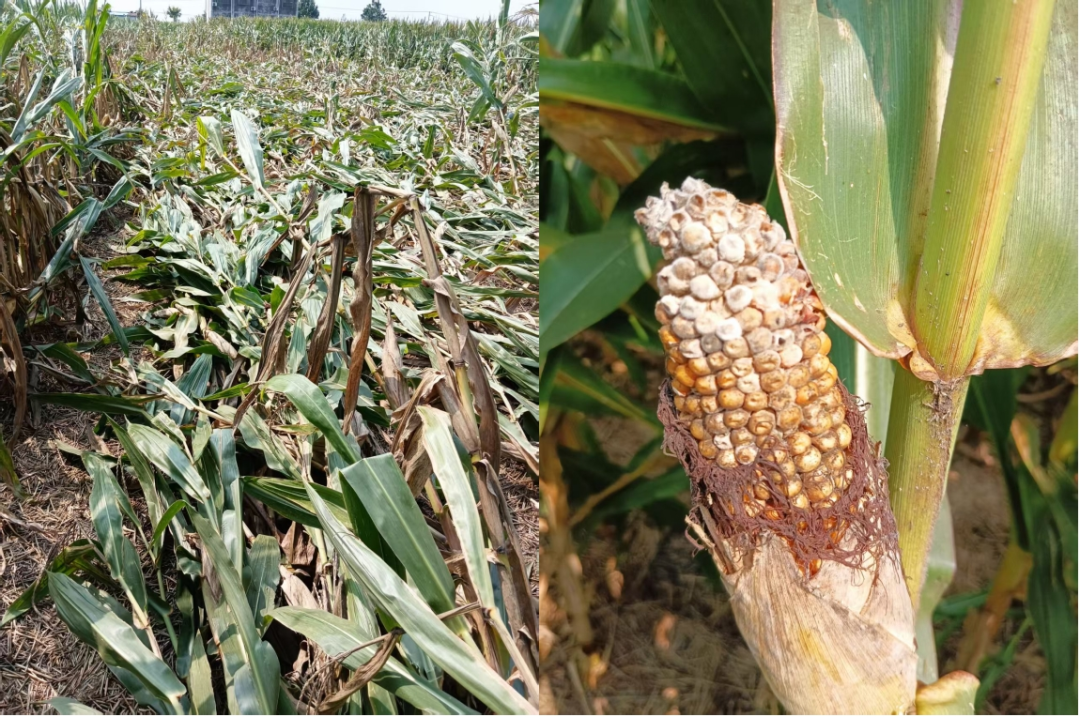
为啥我们至今还没挣脱 “靠天吃饭”?
Hu Xiu· 2025-10-23 07:32
Core Viewpoint - The article discusses the severe challenges faced by China's agricultural sector during the 2025 autumn harvest due to extreme weather conditions, including drought followed by excessive rainfall, leading to significant crop losses and increased costs for farmers [3][4][6][21]. Summary by Sections Weather Impact on Harvest - The main agricultural regions, particularly the Huang-Huai-Hai area, are experiencing unprecedented weather fluctuations, with drought conditions in summer followed by heavy rainfall in autumn [3][6][8]. - From June to August, Henan experienced over 20% less rainfall, while temperatures were significantly higher, causing severe drought conditions [4]. - In September, rainfall surged, with Henan recording an average of 349.6 mm, 2.6 times more than the historical average, marking the highest level since 1961 [9]. Crop Damage and Quality Issues - Continuous rainfall has led to poor crop quality, with many crops like corn and peanuts suffering from mold and rot due to excessive moisture [21][23]. - The adverse weather has resulted in reduced yields, with many farmers reporting that their crops are unsellable due to quality degradation [25][41]. Harvesting and Drying Challenges - Farmers are facing logistical challenges in harvesting due to muddy fields, which have made it difficult for machinery to operate [12][17]. - The cost of harvesting has increased significantly, with some farmers resorting to manual labor, which is several times more expensive than usual [17][31]. - The demand for drying facilities has surged, but the available resources are insufficient to meet the needs of all farmers [27][28]. Government and Institutional Response - Various government bodies have initiated support measures, including the establishment of drying centers and the mobilization of agricultural machinery for emergency harvesting [33][36]. - Insurance companies are also stepping in to expedite claims to mitigate farmers' losses [35]. Long-term Agricultural Resilience - The article highlights the need for a more resilient agricultural system capable of withstanding extreme weather events, emphasizing the importance of modernizing infrastructure and improving disaster response mechanisms [42][57]. - It suggests that lessons can be learned from international practices in disaster management and agricultural insurance to enhance China's agricultural resilience [53][56].
内蒙古巴彦淖尔成功建设百万亩玉米“吨粮田”
Zhong Guo Jing Ji Wang· 2025-10-23 07:25
Core Insights - The corn yield per acre in Bayannur City, Inner Mongolia, has reached a record high of 1,095.05 kg, achieving the "ton grain field" standard through the implementation of advanced agricultural techniques [1][3] - The initiative involves the cultivation of corn over 3.5 million acres, with 3.1 million acres designated for "ton grain field" construction, showcasing significant advancements in agricultural productivity [1][2] Group 1: Agricultural Techniques - The high-yield corn cultivation technique involves increasing planting density to 6,000-7,000 plants per acre, utilizing a combination of wide and narrow row planting to enhance ventilation and light conditions [2] - Integrated water and fertilizer management, along with shallow buried drip irrigation, are employed to improve resource utilization [2] - The city promotes high-standard farmland construction and employs soil improvement techniques for saline-alkali and sandy soils, alongside deep plowing and straw return practices to enhance soil fertility [2] Group 2: Monitoring and Management - A comprehensive yield measurement was conducted by a team of 22 experts from 10 organizations, covering 24 towns and 3,651 sampling points, confirming the highest corn yields in the region [3] - The city has established a monitoring and early warning system for pest and weather-related disasters to minimize crop loss [2][3] Group 3: Collaborative Efforts - The local government has implemented a collaborative work mechanism involving various departments to enhance agricultural productivity and research [3] - An expert team has been formed to address key challenges in yield improvement, integrating resources from research institutions and universities [3] - Training and high-yield competitions are organized to ensure widespread adoption of advanced agricultural techniques [3]
金秋好“丰”景:全国秋粮收获已近八成 特色轮作与多元种植模式促增产增收
Yang Shi Wang· 2025-10-23 07:11
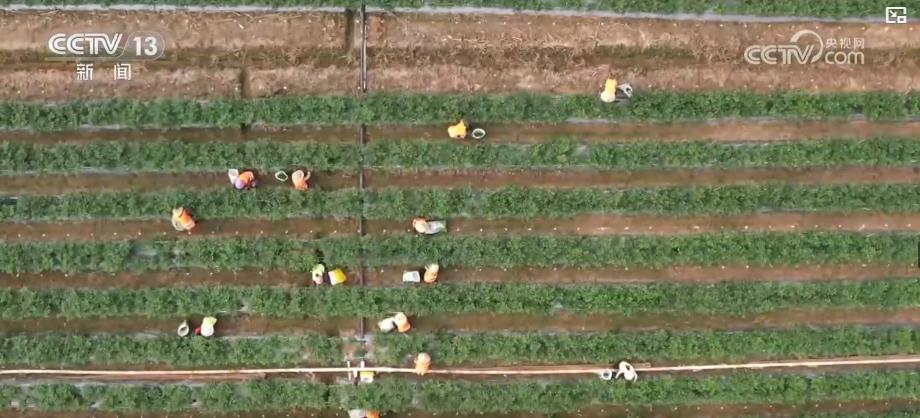
Group 1 - The core viewpoint of the articles highlights the significant progress in the harvest of autumn crops across various regions in China, with nearly 80% of the autumn grain harvested by October 21, 2023 [1] - In the Huang-Huai-Hai region, the harvest rate is also close to 80%, with Hebei at 95%, Shandong and Anhui over 80%, Shanxi and Shaanxi over 65%, and Jiangsu nearly at 30% [1] - The articles emphasize the adoption of innovative agricultural practices, such as crop rotation, to enhance productivity and sustainability in farming [2][4][6][8] Group 2 - In Hunan, the implementation of a "pepper + corn" rotation model has been reported, which improves soil fertility, reduces pest occurrences, and enhances the flavor of the crops [4] - The "rice-vegetable rotation" model in Hunan's Yuanjiang has led to the harvesting of over 30 tons of fresh vegetables daily, which are quickly distributed to the Guangdong-Hong Kong-Macao Greater Bay Area [6] - In Nanchang, Jiangxi, farmers are focusing on diversified planting of high-quality black rice and brown rice, utilizing full mechanization to improve land utilization and diversify agricultural products [8]
秋满神州“丰”景万里 科技“唱主角”让农户“粮袋子”更鼓“钱袋子”更实
Yang Shi Wang· 2025-10-23 05:53
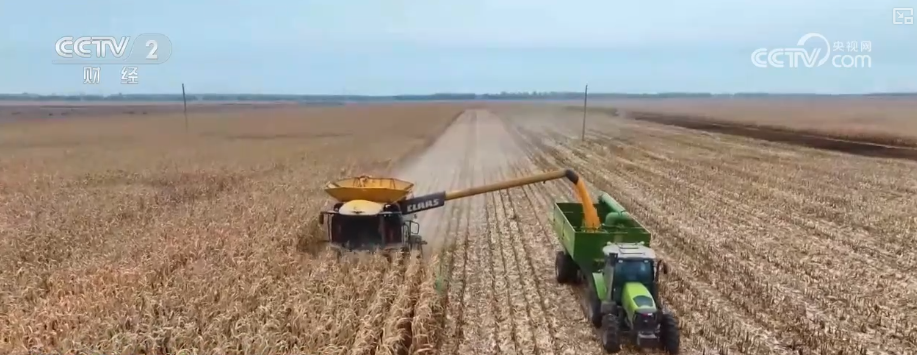
Core Insights - The latest agricultural report indicates that nearly 80% of the autumn grain harvest has been completed nationwide as of October 21, with specific crops showing varying completion rates [1][3] Group 1: Crop Harvesting Progress - The harvesting progress for different crops includes nearly 80% for mid-season rice, over 80% for corn, nearly 90% for soybeans, and over 20% for late double-crop rice [1] - Regionally, the Huang-Huai-Hai area has nearly 80% completion, while Northeast, Southwest, and Northwest regions exceed 80%. The Yangtze River middle and lower reaches are at nearly 70%, and South China is over 30% [3] Group 2: Specific Crop Insights - In Tonghua County, Jilin Province, farmers are actively harvesting late rice, particularly the "Jihong 6" variety, which has shown strong growth characteristics [4][6] - The "Jihong 6" variety exhibits high germination rates and robust stems, with an average yield of approximately 1,100 pounds per acre. The harvest is expected to be delayed by 10 days compared to previous years due to late frost, allowing for better maturation [9] Group 3: Sales and Economic Impact - The local rice planting cooperative has established contracts with a local rice processing group, ensuring stable sales channels and price certainty for farmers, which enhances their income security [12] - In Tonghua City, the total area harvested for autumn crops has surpassed 2.1415 million acres, with an expected total grain output of over 2.9 billion pounds for 2025 [14] Group 4: Seed Production and Technology - In Xiangdong District, Jiangxi Province, 45,000 acres of seed rice are being harvested, with an expected average yield of 370 kilograms per acre, representing a 2% increase from 2024 [16] - The district has built 24 modern grain drying facilities with a daily drying capacity of 9,100 tons to support seed producers [17] Group 5: Other Crop Harvests - In Ningxia's Xiji County, the zucchini harvest is underway, with over 20,000 acres planted, generating a production value of over 36 million yuan [20][22] - In Henan's Xichuan County, the soft-seed pomegranate harvest is thriving, with over 20,000 acres planted, benefiting from eco-friendly cultivation practices [24][26]
多地抗秋汛抢麦播:农技指导+农机作业 全力推进小麦种植
Yang Shi Wang· 2025-10-23 03:39
在鹤壁市淇县,当地采取了深松散墒法,通过松土机上的深松铲进行深层松土,增强土壤的透气透水能力,促进土壤水分快速散失。 央视网消息:受到此前阴雨天气影响,河南的麦播较常年推迟约7至15天。目前各地正积极开展抗湿播种工作,解决土壤湿涝难题。 受前段时间连阴雨天气影响,安徽多地的秋季小麦播种被迫推迟。安徽省农业部门派出农技专家,下田指导农户关注种子和耕地质量,降 低天气对农业生产带来的不利影响。 在淮北市濉溪县,当地的小麦秋播工作暂未开始,农技专家正指导农户抓紧清沟沥水,为小麦播种做好各种准备。 在马鞍山市当涂县姑孰镇宝塔村,这里的农田刚刚完成水稻收获。受前不久连续阴雨天气影响,目前,土地仍然较湿,小麦播种工作暂时 不能进行。对此农技专家也给出了相应的判断。 在安阳市老店镇,当地的耕地目前达到了小麦播种条件,农机手操作精量播种机不停作业,抓紧时间进行播种。 目前,河南省已派出18个省级小麦生产指导组,联合农技人员深入生产一线开展指导服务。据河南气象部门预测,10月底至11月上旬,全 省大部土壤墒情将转为适宜,预计10月25日左右全省可开展大面积麦播。 安徽:派出农技专家 积极应对小麦迟播 目前,安徽省农业农村厅已经 ...
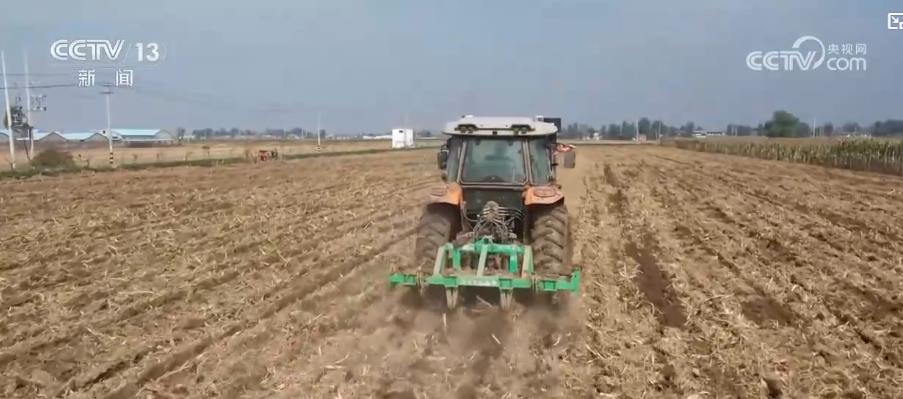
巴彦淖尔市建成百万亩“吨粮田”
Nei Meng Gu Ri Bao· 2025-10-23 02:40
Core Insights - The corn yield per acre in Bayannur City has reached a record high of 1,095.05 kg, achieving the "ton grain field" standard through the implementation of advanced agricultural techniques and practices [1][3]. Group 1: Agricultural Techniques and Practices - The city has promoted high-density planting techniques, increasing planting density to 6,000-7,000 plants per acre, and utilizing a combination of wide and narrow row planting to improve ventilation and light conditions [2]. - Integrated water and fertilizer management, along with shallow buried drip irrigation technology, has been employed to enhance the utilization of light, heat, and water [2]. - The city is advancing high-standard farmland construction, promoting soil improvement techniques for saline-alkali land and sand land, and implementing deep plowing and straw return measures to enhance soil fertility [2]. Group 2: Monitoring and Support Mechanisms - A monitoring and early warning system for pests and weather-related disasters has been established to minimize crop loss [2]. - The measurement of corn yield was conducted by a team of 22 experts from 10 organizations, covering 24 towns and 3,651 points, confirming the highest corn yield records in the region [3]. Group 3: Government and Expert Involvement - The local government has established a collaborative mechanism involving various departments to enhance agricultural productivity, with a focus on integrating research and practical application [4]. - An expert team has been formed to address key challenges in yield improvement, ensuring effective technology dissemination and support for farmers [4].