
信托

Search documents
五矿信托董事长刘国威:ESG是信托业回归本源、服务国家战略的重要引擎
Sou Hu Cai Jing· 2025-09-07 13:42
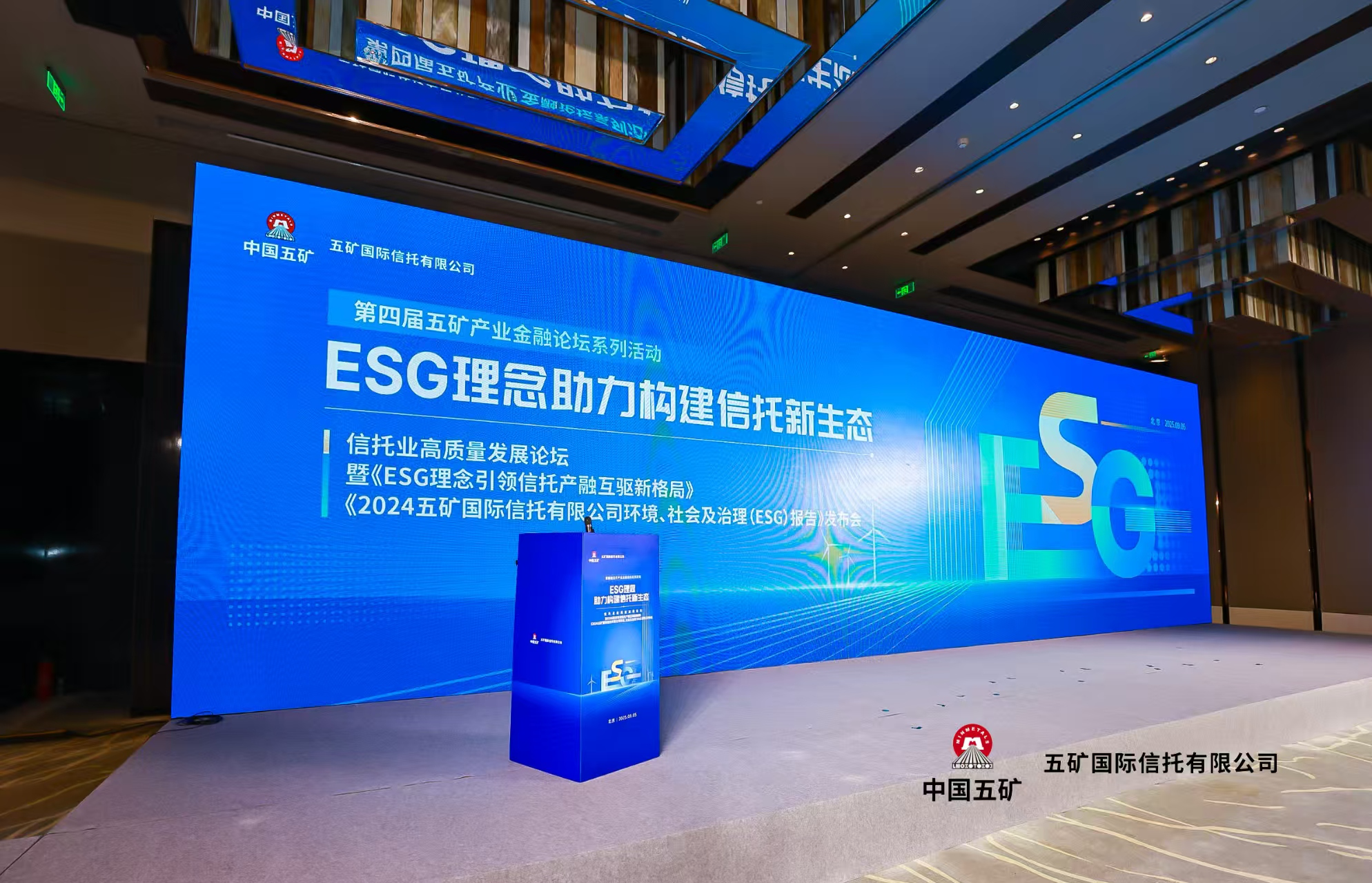
Core Viewpoint - The forum emphasized the importance of ESG (Environmental, Social, and Governance) principles in transforming the trust industry and achieving high-quality development in alignment with national strategies [1][3][5]. Group 1: ESG Integration in Trust Industry - ESG principles are highly compatible with China's "Five-in-One" overall layout and the financial "Five Major Articles" strategy, serving as a crucial engine for the trust industry's transformation [1][5]. - The trust industry must move away from traditional path dependence and integrate asset allocation, wealth management, and social services into the promotion of Chinese-style modernization [3][6]. Group 2: Industry Developments and Achievements - Five Minerals Trust released the industry research report "ESG Principles Leading the New Pattern of Trust and Financial Integration" and the "2024 ESG Report" showcasing its annual achievements [7]. - The scale of green trust at Five Minerals Trust reached 6.402 billion yuan, with successful products like "Green Investment No. 3" [8]. - By the end of 2024, the scale of investments directed towards the real economy reached 543.062 billion yuan, accounting for 85.21% of the total trust plan principal [9]. Group 3: Innovations and Social Contributions - The family trust management scale approached 80 billion yuan, with innovations in pension trusts and special needs trusts leading the industry [10]. - The "Sanjiangyuan" charity trust brand accumulated a scale of 220 million yuan, ranking among the industry leaders, while the company actively participated in the establishment of the charity trust sector [10].

【第四届五矿产业金融论坛系列活动】五矿信托ESG理念助力构建信托新生态-信托-金融界
Jin Rong Jie· 2025-09-07 07:44
Core Viewpoint - The event focused on the strategic significance of ESG (Environmental, Social, and Governance) principles in the transformation and high-quality development of the trust industry, emphasizing the alignment with national strategies and the necessity for the industry to integrate ESG into its operations [4][7]. Group 1: Industry Insights - The trust industry is undergoing a transformation that aligns with national strategies such as "accelerating the green transformation of development methods," making the adoption of ESG principles essential for achieving high-quality development [4][5]. - The China Trust Industry Association is actively promoting the implementation of ESG principles through initiatives like the revised "Green Trust Guidelines" and the "ESG Disclosure Guidelines" [5][9]. - The trust industry has a natural compatibility with ESG principles, as it emphasizes long-term value, rigorous risk control, and flexible business models that can innovate green financial products [9][19]. Group 2: Company Developments - Minmetals International Trust released the "ESG Principles Leading the New Pattern of Trust Industry and Financial Integration" report and the "2024 ESG Report," showcasing its commitment to ESG practices [10][14]. - As of the end of 2024, the trust industry had a total of 16.68 trillion yuan supporting the real economy, representing 75% of the total trust scale, highlighting the industry's role as a connector between financial capital and industrial elements [13]. - Minmetals International Trust's green trust scale reached 6.402 billion yuan, and its investments in the real economy amounted to 543.062 billion yuan, accounting for 85.21% of its total trust plan principal [14]. Group 3: Expert Perspectives - Experts discussed how ESG is reshaping the trust business value chain, emphasizing the need for the industry to address externalities and internalize environmental and social costs [19][20]. - ESG is seen as a dual return model, combining financial returns with social value, thus redefining the role of trust institutions in wealth management [20][21]. - The transition towards ESG principles is viewed as a critical step for the trust industry to align with national strategic needs and to overcome financing bottlenecks in green industries [21].
【财闻联播】上交所:对*ST亚振等异常波动风险警示股票重点监控!亿华通:终止重大资产重组事项
券商中国· 2025-09-05 13:25
Macro Dynamics - Mexico's President is considering imposing tariffs on countries without trade agreements with Mexico, including China, which has prompted a response from China's Foreign Ministry advocating for mutually beneficial economic cooperation and opposing unilateralism and protectionism [2] - The State Administration of Foreign Exchange encourages banks to include more cross-border e-commerce platforms and small and micro enterprises in the facilitation policies for trade foreign exchange income and expenditure [3] - The Ministry of Commerce has extended the anti-dumping investigation period for imported canola seeds from Canada until March 9, 2026, due to the complexity of the case [4] Financial Institutions - Zhejiang Merchants Bank was fined a total of 11.308 million yuan for imprudent management of related internet loan businesses [7] Market Data - On September 5, A-shares saw all three major indices rise, with the Shanghai Composite Index up 1.24%, Shenzhen Component Index up 3.89%, and ChiNext Index up 6.55%. The total trading volume in the Shanghai and Shenzhen markets was approximately 230.47 billion yuan, a decrease of about 23.96 billion yuan from the previous trading day [9] - The Hong Kong stock market closed with the Hang Seng Index up 1.43% and the Hang Seng Tech Index up 1.95%, with significant gains in the solar energy sector [10] Company Dynamics - The Shanghai Stock Exchange announced it would closely monitor stocks with abnormal trading behaviors, including *ST Yazhen, and has reported five suspected illegal cases to the China Securities Regulatory Commission [11] - Yihua Tong announced the termination of a major asset restructuring plan due to a lack of consensus among the parties involved [12] - Tesla's board proposed a new compensation plan for CEO Elon Musk, seeking to supplement 60 million shares for employees [13] - Former Vivo Vice President Jia Jingdong has joined Anker Innovations as Chief Marketing Officer [14] - Dalian Wanda Group's equity worth over 9.4 billion yuan has been frozen for three years by the Beijing Financial Court [15] - Baili Tianheng's self-developed drug, the world's first EGFR×HER3 dual-target ADC drug, has been included in the priority review program by the National Medical Products Administration [17]
浙金信托荣获第八届“浙江慈善奖”
Zhong Zheng Wang· 2025-09-05 12:35
Core Insights - The "善本信托·浙金" charity trust series won the 8th "Zhejiang Charity Award," recognizing its successful integration of finance and charity [1] - The charity trust series was established in November 2023, with a total of 65 projects and a cumulative registered scale of 26.45 million yuan, and expenditures of 9.6 million yuan [2] - The projects cover various areas such as education assistance, poverty alleviation, and rural revitalization, benefiting vulnerable groups in cities like Hangzhou, Taizhou, Lishui, and Nanjing [2] Summary by Categories Charity Trust Series - The "善本信托·浙金" charity trust series has established 65 projects with a total registered scale of 26.45 million yuan and has spent 9.6 million yuan [2] - The model highlights the advantages of the Zhejiang Charity Federation's project execution experience, banking fund custody, and the company's expertise in the trust sector [2] Impact and Recognition - The charity trust series has been recognized for its role in promoting the construction of a common prosperity demonstration zone [2] - It has also received the "2024 Hangzhou Innovative Charity Trust Excellent Case" award, indicating its innovative approach in the charity sector [2] Future Plans - The company aims to continue its commitment to its state-owned enterprise mission, focusing on financial benevolence and public service [2] - Plans include continuous innovation in service models, enhancing service quality, and optimizing the charity cooperation ecosystem [2]
官宣!云南信托甘煜辞任董事长
Jing Ji Guan Cha Bao· 2025-09-05 12:24
Core Viewpoint - Yunnan International Trust Co., Ltd. announced the resignation of its chairman, Gan Yu, due to job relocation, with General Manager Shu Guang temporarily assuming the chairman and legal representative roles for up to six months [1] Group 1: Resignation Details - Gan Yu submitted a written resignation application to the board, which became effective upon delivery [1] - The board expressed gratitude for Gan Yu's outstanding contributions during his tenure [1] Group 2: Company Background - Yunnan Trust was established in 1991 and was re-registered as a non-bank financial institution in 2003 with a registered capital of 2.2 billion yuan [1] - Gan Yu has served as chairman since March 2019 and has previous experience with the People's Bank of China, the former China Banking Regulatory Commission, and Ping An Bank [1]
他将出任华润信托总经理!
Zheng Quan Shi Bao Wang· 2025-09-05 10:59
Group 1 - The former chairman of Yunnan Trust, Gan Yu, will take over as the general manager of China Resources Trust after completing necessary procedures [1][2] - The previous general manager of China Resources Trust, Hu Hao, has been appointed as the party secretary and chairman (proposed) of the company [1][2] - Gan Yu has served as the chairman of Yunnan Trust for six years and has a strong academic background, holding a PhD in finance [1][2] Group 2 - Yunnan Trust's board expressed gratitude for Gan Yu's contributions during his tenure [2] - Following Gan Yu's departure, the board appointed Shu Guang, the current president of Yunnan Trust, to temporarily fulfill the chairman and legal representative duties for up to six months [2] - China Resources Trust, established in 1982, has a registered capital of 11 billion yuan, with China Resources Financial Holdings holding 51% and Shenzhen Investment Holdings holding 49% [2] Group 3 - China Resources Trust is a leading trust company, achieving an operating income of 2.912 billion yuan and a total profit of 1.563 billion yuan in 2024 [3] - As of the end of 2024, the trust asset scale of China Resources Trust reached 2.68 trillion yuan, ranking among the top in the industry [3]
9.5犀牛财经晚报:多家券商保证金产品短暂下调管理费率 华夏银行被罚8725万元
Xi Niu Cai Jing· 2025-09-05 10:32
Group 1 - Several brokerage firms have recently adjusted management fees for margin products in response to declining yields, with Shenyin Wanguo Asset Management announcing a management fee adjustment to 0.30% for its money market fund starting September 2 [1] - The adjustment of management fees is closely related to the decline in yields, as many asset management contracts stipulate that fees will be adjusted if the calculated yield falls below twice the current deposit rate [1] - Brokerage margin products are favored for their liquidity services, including T+0 real-time redemption and unlimited withdrawals, which enhance their competitive edge in the market [1] Group 2 - The domestic silicon wafer production plan for September has been raised for the first time, with an overall output increase compared to August, as many silicon wafer companies raise their operating rates due to price increases [2] - The global battery cell production is expected to reach approximately 60GW in September, a 2.3% increase from August, with domestic production also showing a similar increase [2] - The semiconductor industry is experiencing a structural recovery, with the analog chip sector seeing a significant rebound in profitability, with a nearly fourfold increase in net profit in the second quarter compared to the previous quarter [2] Group 3 - A new study has identified a weak point in certain blood cancers that can be targeted by drugs, potentially allowing for the selective elimination of cancer cells without harming healthy cells [3] - The research emphasizes the urgent need for new drugs with fewer side effects and stronger targeting capabilities, particularly for conditions like myelodysplastic syndromes [3] Group 4 - Deep Insight Technology announced that its subsidiary has received regulatory approval for a mobile MRI system, making it the first company in China to master and register this core technology [4] - The latest version of the Kimi K2 model has been released, extending the context length to 256K and supporting high output speeds [4] Group 5 - Alibaba and other shareholders have exited Yuanrong Qihang, with the company stating that this is part of its restructuring process [5] - White Elephant's e-commerce subsidiary has been fined for false advertising, highlighting regulatory scrutiny in the sector [5] Group 6 - Zhongshan Securities' Hefei branch has been ordered to rectify its operations due to violations related to investor solicitation activities [6] - Huaxia Bank has been fined 87.25 million yuan for imprudent management of loans and related business [7] Group 7 - Hangzhou Bank's approval for a shareholding change has been revoked due to failure to complete the change within the stipulated time [8] - Yunnan Energy Investment's subsidiary has received a subsidy of 309 million yuan for renewable energy, contributing to its total subsidies of 591 million yuan for the fiscal year [15] Group 8 - The market saw a significant increase in the ChiNext index, with a rise of 6.55%, driven by strong performance in the solid-state battery sector [17] - The overall market showed a positive trend with over 4,800 stocks rising, while only a small number of stocks declined [17]

他将出任华润信托总经理!
券商中国· 2025-09-05 10:31
近日,券商中国记者从多位信源获悉,云南信托原董事长甘煜在履行完必要的程序后,将出任华润信托总经理一职。 此前,华润信托原总经理胡昊,已出任华润信托党委书记、董事长(拟任)。据悉,甘煜已从云南信托离职,云南信托 董事长一职目前由总裁舒广代为履职。 据了解,甘煜在云南信托董事长任上已有6年。2019年3月,原云南银保监局核准了甘煜云南信托董事、董事长的任职资 格。甘煜出生于1976年,15岁进入吉林大学物理系少年班学习,取得理学学士学位;1997年至2002年在西南财经大学金 融学院进行硕博连读,25岁即获得博士学位。 博士毕业后,甘煜先后在央行和原银监会任职,曾担任原银监会银行监管二部副处长和办公厅正处长级秘书等职务。 2016年4月至2018年10月,甘煜在平安银行担任法律合规部总经理。 记者注意到,就在前几天,云南信托发布了甘煜的离职公告。公告称,公司董事会于近日收到甘煜书面提交的《辞任申 请》,其因工作调动,向董事会提出辞任,辞去公司董事、董事会下设委员会委员、董事长及法定代表人职务。甘煜的 《辞任申请》自送达公司董事会之日起生效。 华润信托是头部信托公司。2024年,华润信托实现营业收入29.12亿元, ...

云南信托原董事长甘煜将出任华润信托总经理
Zheng Quan Shi Bao Wang· 2025-09-05 06:16
Core Viewpoint - The former chairman of Yunnan Trust, Gan Yu, has been appointed as the general manager of China Resources Trust after completing necessary procedures [1] Group 1 - Gan Yu has officially left Yunnan Trust, and the chairman position is currently being held by the president, Shu Guang [1] - The former general manager of China Resources Trust, Hu Hao, has been appointed as the party secretary and chairman (pending) of China Resources Trust [1]
兴业信托亮相SNEC大会,“信租联动”驱动绿金业务发展
Zhong Guo Jin Rong Xin Xi Wang· 2025-09-05 06:03
Core Viewpoint - The article discusses the introduction of the "Trust-Rental Linkage" service model by Industrial Trust at the SNEC conference, highlighting its role in addressing challenges in the renewable energy sector and facilitating collaboration between equipment manufacturers and leasing companies [1][2][3]. Group 1: Industry Trends - The "Trust-Rental Linkage" model was developed in response to the new regulatory framework for trust companies, which categorizes trust business into three main types, with asset service trust being the primary focus for transformation [2]. - The leasing industry is evolving, with companies needing to adapt to regulatory guidance and focus on core responsibilities, particularly in advanced manufacturing and green industries [2]. - The demand for cash flow from renewable energy equipment manufacturers has increased due to the rapid growth in installed capacity and the limitations of grid absorption capacity [3]. Group 2: Service Model Development - The "Trust-Rental Linkage" service model aims to bridge the gap between renewable energy equipment manufacturers seeking to transition to asset-light operations and leasing companies needing investment cash flow [4]. - The first transaction under the "Trust-Rental Linkage" model was completed on January 20, 2025, involving a commercial photovoltaic project in Hubei, utilizing advanced BIPV technology [4]. - The model has undergone two rounds of upgrades within months, becoming popular among renewable energy manufacturers, facilitating mutual benefits between leasing companies and manufacturers [5]. Group 3: Financial Impact and Projections - The "Trust-Rental Linkage" model is expected to generate hundreds of new accounts for Industrial Bank annually, leading to significant deposit accumulation and comprehensive revenue from settlement and custody services [6]. - The service trust products linked to the model have connected numerous photovoltaic projects across various provinces, with the potential to manage assets totaling 1,000 megawatts, resulting in an estimated annual carbon reduction of 750,000 tons [6].