
通信服务

Search documents
世纪鼎利(300050.SZ):2025年中报净利润为865.40万元,同比扭亏为盈
Xin Lang Cai Jing· 2025-08-22 03:04
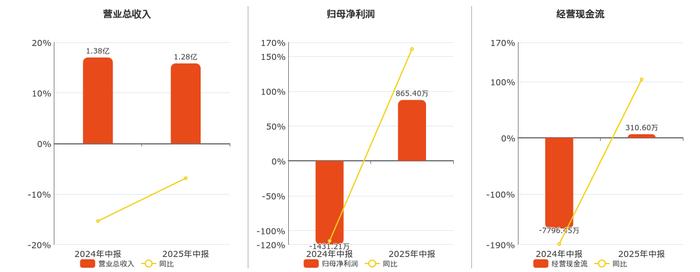
Core Insights - Century Dingli (300050.SZ) reported a total operating revenue of 128 million yuan for the first half of 2025, with a net profit attributable to shareholders of 8.654 million yuan, an increase of 22.97 million yuan compared to the same period last year [1] Financial Performance - The company achieved a net cash inflow from operating activities of 3.106 million yuan, which is an increase of 81.0704 million yuan compared to the same period last year [1] - The latest debt-to-asset ratio stands at 32.39%, a decrease of 1.15 percentage points from the previous quarter [3] - The gross profit margin is reported at 29.88%, an increase of 0.49 percentage points compared to the same period last year [3] - The return on equity (ROE) is 2.15%, which is an increase of 5.21 percentage points year-on-year [3] Earnings and Ratios - The diluted earnings per share (EPS) is 0.02 yuan, an increase of 0.04 yuan compared to the same period last year [4] - The total asset turnover ratio is 0.21 times, reflecting a year-on-year increase of 14.25% with two consecutive years of growth [4] - The inventory turnover ratio is 5.90 times, which is an increase of 3.72 times compared to the same period last year, marking a 170.20% year-on-year increase and two consecutive years of growth [4] Shareholder Structure - The number of shareholders is reported at 46,800, with the top ten shareholders holding a total of 126 million shares, accounting for 23.20% of the total share capital [4] - The largest shareholder is Sichuan Tequ Mayflower Education Management Co., Ltd., holding 9.18% of the shares [4]


中国通信服务绩后跌近4% 中期股东应占溢利同比微增0.18% 三大客户市场稳健发展
Zhi Tong Cai Jing· 2025-08-22 03:00
Core Viewpoint - China Communication Services (00552) experienced a nearly 4% decline in stock price following the release of its financial results, with a current price of HKD 4.68 and a trading volume of HKD 21.58 million [1] Financial Performance - For the six months ending June 30, 2025, the company reported operating revenue of RMB 76.939 billion, representing a year-on-year increase of 3.4% [1] - Shareholder profit attributable to the company was RMB 2.129 billion, showing a slight increase of 0.18% year-on-year [1] - Basic earnings per share were RMB 0.307 [1] Revenue Breakdown - The company's service revenue reached RMB 74.981 billion, up 2.9% from RMB 72.855 billion in the first half of 2024 [1] - The three major customer markets of the company showed stable development [1] Market Trends - The company capitalized on the opportunities presented by the artificial intelligence technology transformation, engaging in multiple intelligent computing center constructions and data center renovation projects [1] - Revenue from the domestic non-telecom operator customer market saw significant growth, with combined revenue from domestic non-telecom operators and overseas markets exceeding 50% of total operating revenue for the first time [1]
港股异动 | 中国通信服务(00552)绩后跌近4% 中期股东应占溢利同比微增0.18% 三大客户市场稳健发展
智通财经网· 2025-08-22 02:18
Core Viewpoint - China Communication Services (00552) experienced a nearly 4% decline in stock price following the release of its financial results, with a current trading price of HKD 4.68 and a transaction volume of HKD 21.58 million [1] Financial Performance - For the six months ending June 30, 2025, the company reported operating revenue of RMB 76.939 billion, representing a year-on-year increase of 3.4% [1] - Shareholder profit attributable to the company was RMB 2.129 billion, showing a slight increase of 0.18% year-on-year [1] - Basic earnings per share were reported at RMB 0.307 [1] Revenue Breakdown - The company's service revenue reached RMB 74.981 billion, up 2.9% from RMB 72.855 billion in the first half of 2024 [1] - The three major customer markets of the company showed stable development [1] Market Opportunities - The company is capitalizing on the opportunities presented by the AI technology transformation, particularly in the computing power market [1] - It has undertaken multiple projects related to intelligent computing centers and data center renovations, leading to significant revenue growth from the domestic non-telecom operator customer market [1] - Revenue from the combined domestic non-telecom operator customer market and overseas markets has surpassed 50% of total operating revenue for the first time [1]
国脉科技(002093.SZ):2025年中报净利润为1.51亿元、较去年同期上涨94.39%
Xin Lang Cai Jing· 2025-08-22 02:08
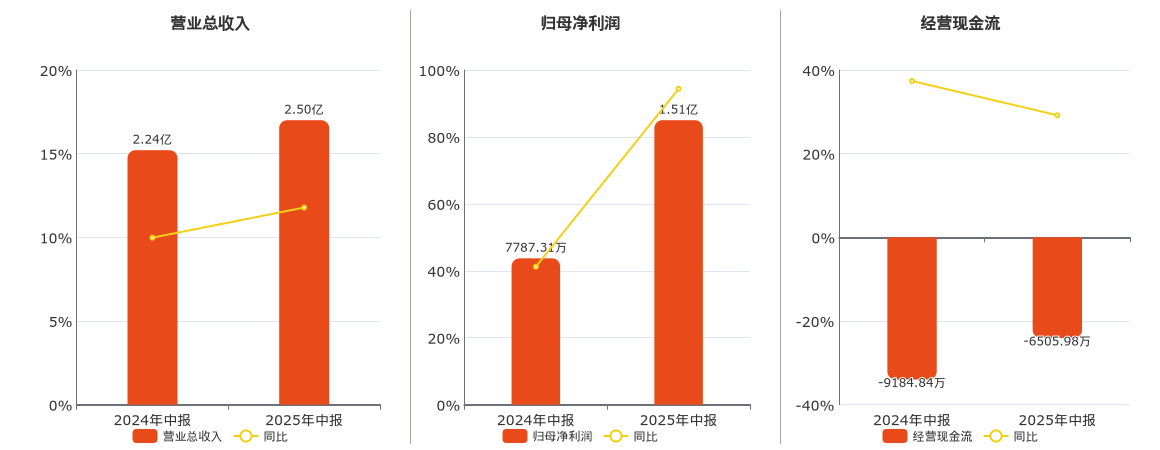
Core Insights - The company reported a total operating revenue of 250 million yuan, an increase of 26.34 million yuan compared to the same period last year, marking a 11.78% year-on-year growth [1] - The net profit attributable to shareholders reached 151 million yuan, up by 73.51 million yuan from the same period last year, reflecting a significant year-on-year increase of 94.39% [1] - The company experienced a net cash outflow from operating activities of 65.06 million yuan, which is an improvement of 26.79 million yuan compared to the previous year, indicating a positive trend over the past two years [1] Financial Ratios - The latest debt-to-asset ratio stands at 13.32%, a decrease of 0.23 percentage points from the previous quarter and a reduction of 1.97 percentage points year-on-year [3] - The gross profit margin is reported at 52.25% [3] - The return on equity (ROE) is 4.06%, which is an increase of 1.89 percentage points compared to the same period last year [3] Earnings Per Share and Turnover Ratios - The diluted earnings per share (EPS) is 0.15 yuan, an increase of 0.07 yuan from the same period last year, achieving a year-on-year growth of 95.39% [3] - The total asset turnover ratio is 0.06 times, which is an increase of 0.01 times year-on-year, reflecting an 11.97% growth [3] - The inventory turnover ratio is 0.10 times, up by 0.03 times from the previous year, indicating a year-on-year increase of 40.65% [3] Shareholder Structure - The number of shareholders is 92,200, with the top ten shareholders holding a total of 574 million shares, accounting for 56.95% of the total share capital [3] - The largest shareholder is Lin Huirong, holding 27.3 million shares [3] - Other significant shareholders include Chen Guoying with 21.5 million shares and Fujian Guomai Group Co., Ltd. with 4.72 million shares [3]

【机构策略】A股市场中期慢涨格局有望延续
Zheng Quan Shi Bao Wang· 2025-08-22 00:45
Group 1 - The A-share market showed mixed performance on Thursday, with the Shanghai Composite Index experiencing narrow fluctuations while the Shenzhen Component and ChiNext Index saw early dips followed by recoveries and subsequent declines [1][2] - Key sectors such as mining, electricity, software development, and communication services performed well, while industries like motors, batteries, small metals, and electronic chemicals lagged [1] - Policy measures are providing strong support to the market, with a notable shift of household savings towards capital markets, creating a continuous source of incremental funds [1] Group 2 - The overall profit growth expectation for A-share listed companies is projected to turn positive in 2025, ending a four-year decline, with significant profit elasticity observed in the technology innovation sector [1] - The market sentiment remains cautious as main funds show a net outflow, indicating some investors are opting to secure profits [2] - The market is expected to maintain a strong upward trend in the medium term, supported by the recovery of the domestic economy, continuous policy efforts, and a stable funding environment [2]
国脉科技: 关于2025年半年度利润分配方案的公告
Zheng Quan Zhi Xing· 2025-08-21 19:20
Group 1 - The company held its ninth board meeting on April 25, 2025, where the mid-year dividend proposal was approved with 7 votes in favor and no opposition [1] - The company reported a retained earnings of 1,222.47 million yuan as of June 30, 2025, and proposed a cash dividend of 0.4 yuan per share, totaling an estimated cash distribution of 39.68 million yuan [1][2] - The board's decision to distribute dividends is based on the company's historical high profits for the first half of 2025 and a low debt ratio of 13.32%, ensuring sufficient cash availability for normal operations and long-term development [2] Group 2 - The company emphasizes that shares held in the repurchase account will not participate in profit distribution, and any changes in total shares or repurchased shares will adjust the distribution ratio accordingly [2] - The proposed dividend distribution aligns with regulatory guidelines and the company's articles of association, ensuring legality and compliance [2]
国脉科技:2025年半年度净利润约1.51亿元,同比增加94.39%
Mei Ri Jing Ji Xin Wen· 2025-08-21 16:21
Core Viewpoint - Guomai Technology (SZ 002093) reported a significant increase in both revenue and net profit for the first half of 2025, indicating strong financial performance and growth potential [2]. Financial Performance - The company's revenue for the first half of 2025 is approximately 250 million yuan, representing a year-on-year increase of 11.78% [2]. - The net profit attributable to shareholders is around 151 million yuan, showing a substantial year-on-year increase of 94.39% [2]. - Basic earnings per share (EPS) is reported at 0.1526 yuan, which is an increase of 95.39% compared to the previous year [2].
世纪鼎利:8月20日召开董事会会议
Mei Ri Jing Ji Xin Wen· 2025-08-21 16:18
Group 1 - The company, Century Dingli, held its 12th board meeting on August 20, 2025, to discuss the reappointment of the accounting firm for the fiscal year 2025 [1] - For the first half of 2025, the revenue composition of Century Dingli was as follows: 72.07% from the telecommunications service industry, 26.52% from the vocational education sector, and 1.41% from other businesses [1] - As of the report date, Century Dingli's market capitalization was 3.6 billion yuan [1]
三大业务板块全面增长 中国通信服务上半年经营收入769.39亿元
Shang Hai Zheng Quan Bao· 2025-08-21 14:16
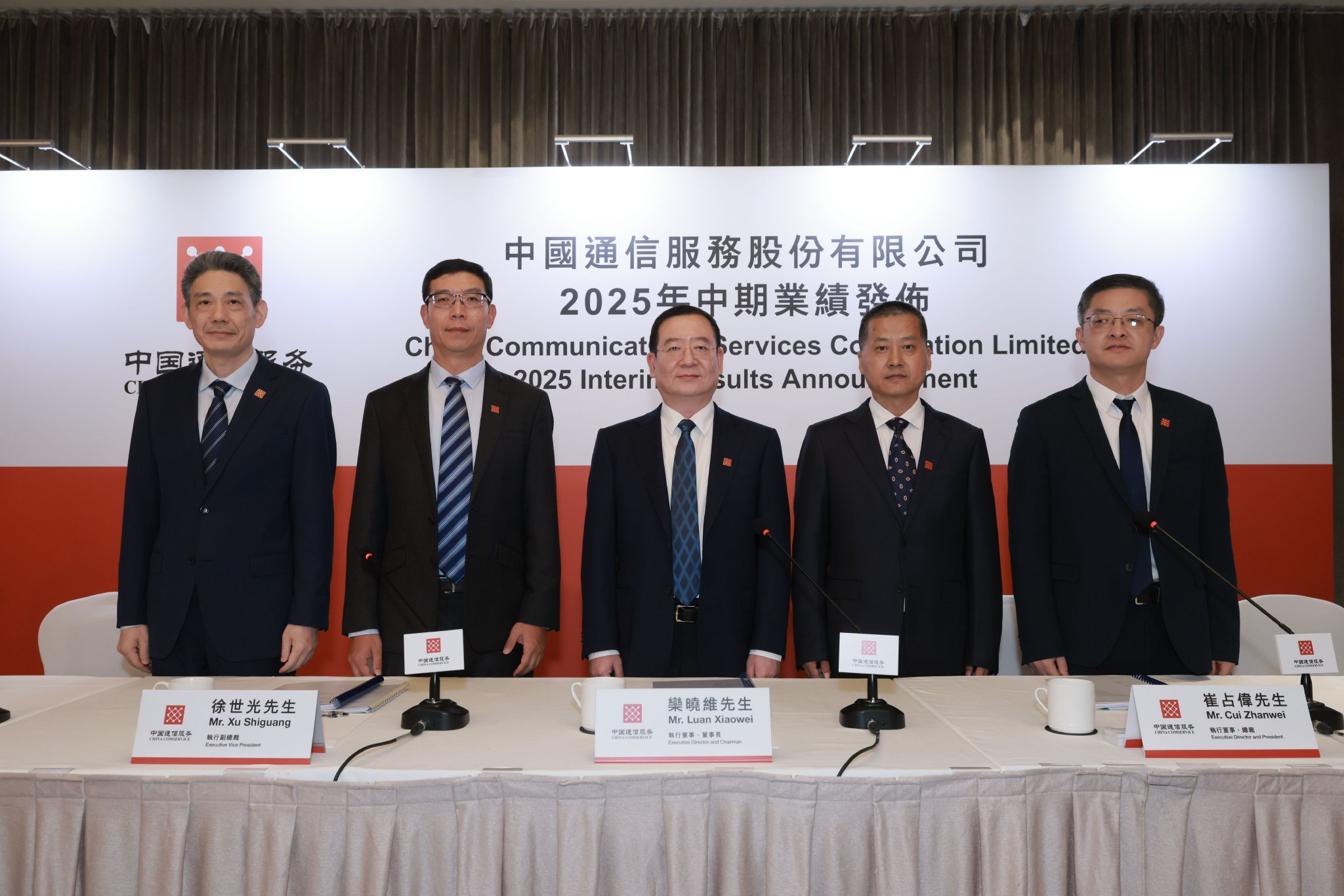
Core Viewpoint - China Communication Services reported a steady growth in revenue and net profit for the first half of 2025, indicating resilience in its business operations despite market challenges [1][3]. Financial Performance - The company achieved operating revenue of 76.939 billion yuan, a year-on-year increase of 3.4% [1]. - Net profit reached 2.129 billion yuan, reflecting a slight growth of 0.2% year-on-year [1]. Business Segments - The three main business segments showed positive trends: - Telecommunications infrastructure services generated revenue of 38.272 billion yuan, up 1.6% year-on-year [3]. - Business process outsourcing services earned 22.383 billion yuan, with a growth of 1.0% [3]. - Application, content, and other services saw a significant increase in revenue to 16.284 billion yuan, growing by 11.7% [3]. Market Development - The company maintained a strong presence in the domestic telecommunications operator market by focusing on high-quality delivery and expanding into strategic emerging business areas such as computing power network construction and smart city initiatives [4]. - Revenue from domestic non-telecom operator group clients was approximately 36.585 billion yuan, marking a robust growth of 12.9% [4]. - In the overseas market, revenue reached about 2.151 billion yuan, reflecting an 8.7% increase, supported by projects in the Asia-Pacific and Middle East regions [4]. Artificial Intelligence Initiatives - The rapid development of artificial intelligence has prompted the company to innovate in this area, focusing on integrated innovation and ecosystem collaboration [5]. - The company secured new contracts in the AI sector exceeding 1.3 billion yuan, serving over 200 clients [5]. - The chairman emphasized the commitment to becoming a "new generation comprehensive smart service provider" and enhancing technological innovation while embracing AI [5].
国脉科技:关于聘任证券事务代表的公告
Zheng Quan Ri Bao· 2025-08-21 14:13
Core Viewpoint - Guomai Technology announced the appointment of Zhao Qing as the company's securities affairs representative, effective from the date of the board meeting approval until the current board's term ends [2]. Group 1 - The ninth board meeting of Guomai Technology is scheduled for August 21, 2025 [2]. - The board approved the proposal to appoint Zhao Qing to assist the board secretary in fulfilling related responsibilities [2].