
旅游服务

Search documents
入境游火爆 “China Travel”掀起新风潮
Zhong Guo Zheng Quan Bao· 2025-10-03 14:47
Group 1: Travel Trends - The most popular destinations for foreign tourists during the National Day holiday include Shanghai, Beijing, Guangzhou, Shenzhen, Chengdu, Chongqing, Hangzhou, Xiamen, Kunming, and Xi'an [1] - The top 10 countries with the highest increase in inbound tourists during the National Day holiday are Uzbekistan, Kazakhstan, Spain, Hungary, Saudi Arabia, Myanmar, South Korea, Canada, the UK, and Singapore [1] Group 2: Policy Benefits - The inbound tourism surge is supported by the continuous optimization of visa-free policies, including the extension of the transit visa-free period from 72 hours to 240 hours and the addition of 21 new entry-exit ports [2] - The range of visa-free countries has expanded, with new visa-free policies for ordinary passport holders from Brazil, Argentina, Chile, Peru, Uruguay, Saudi Arabia, Oman, Kuwait, Bahrain, and Russia introduced this year [2] - Local governments are enhancing their tourism offerings to attract international visitors, such as new activities in Hangzhou and the "Nanjing Inbound Tourism PASS Card" initiative [2] Group 3: Enhancing Visitor Experience - Various platforms are enhancing the experience for foreign tourists, with Alipay and Ant Group participating in a cross-border QR code gateway initiative to facilitate payments for international travelers [3] - Alipay supports 16 languages and offers a range of travel services beyond payments, including tax refunds, translation, transportation, hotel bookings, and more [4] - Ctrip is leveraging AI technology to improve hotel services for foreign tourists, addressing language barriers and enhancing the overall visitor experience [4] - The integration of visa, payment, consumption, product, and service improvements is leading to a new phase of rapid growth and high-quality development in China's inbound tourism [4]
台湾旅游需求不振 业界期盼陆客早日到来
Xin Hua Wang· 2025-10-03 12:28
Core Insights - The tourism industry in Taiwan is experiencing a significant decline in demand, particularly due to the sharp decrease in visitors from mainland China [1][2] - Industry professionals are urging the Taiwanese government to reopen borders to mainland tourists to revive market demand and support the tourism sector [1][2] Group 1: Tourism Demand Decline - Visitor numbers to Alishan, a major tourist attraction, have plummeted from over 2.7 million in 2014 and 2015 to less than 900,000 last year, with July and August this year seeing even lower figures compared to the same months last year [1] - The overall number of tourists to Taiwan in the first half of this year was 4.19 million, which is only about 70% of the levels seen in the same period of 2019, indicating a significant gap compared to global tourism recovery [2] Group 2: Impact on Local Businesses - Local businesses, including tea shops and restaurants in tourist areas like Alishan, are reporting drastic reductions in sales and foot traffic, with some businesses seeing income drop by several tens of percent [2] - The absence of mainland tourists has led to a noticeable decline in activity at popular sites across Taiwan, such as Sun Moon Lake and Gaomei Wetlands, where previously crowded conditions have turned sparse [2] Group 3: Regional Tourism Highlights - In contrast, tourism in Kinmen has shown positive signs, with the resumption of mainland tourist visits leading to increased foot traffic in local attractions during the recent holiday period [3] - The "small three links" between Kinmen and mainland China have seen stable growth, with over one million visitors recorded by the end of July this year, suggesting a potential recovery in this specific region [3]
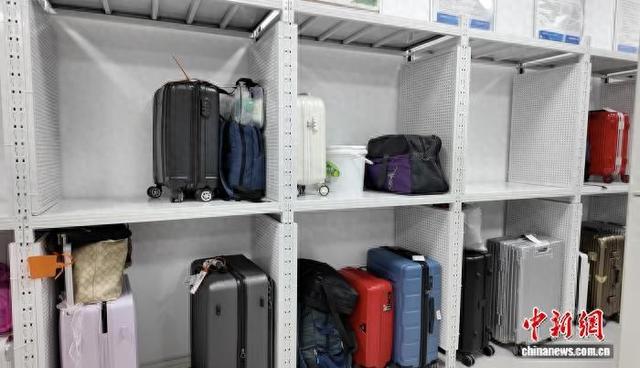
杭州“轻松游”行李服务升级 游客实现“减负”出游
Zhong Guo Xin Wen Wang· 2025-10-03 08:45
Core Insights - The "Easy Travel" luggage service has quickly become a new hallmark of public tourism services in Hangzhou, enhancing the travel experience for visitors during the National Day holiday [1][3]. Service Overview - The "Easy Travel" luggage service addresses common travel inconveniences by offering luggage storage, delivery, transportation guidance, and tourism consultation, allowing tourists to enjoy their activities without the burden of their luggage [3]. - The service network covers major transportation hubs in Hangzhou, including Hangzhou East Station, Xiaoshan International Airport, and Hangzhou West Station, and connects with over 410 hotels in the city, creating an efficient point-to-point service loop [3]. Performance Metrics - On average, the service handles about 300 orders per month under normal conditions, with daily orders increasing to around 60 during the National Day holiday, and expectations to exceed 90 orders per day during the return peak on October 7 and 8 [5]. - The service has undergone upgrades this year, including a trial operation of the luggage service center at Hangzhou West Station and the launch of a subway luggage delivery line, providing a more efficient and flexible luggage handling solution for tourists [5].

港股收评:缩量收跌,阿里巴巴和中芯国际逆势创新高
Ge Long Hui A P P· 2025-10-03 08:34
Group 1 - The Hong Kong stock market experienced a pullback after three consecutive days of gains, with the Hang Seng Index closing down by 0.54% [1] - The Hang Seng Technology Index fell by 0.9%, while the Hang Seng China Enterprises Index decreased by 0.68% [1] - Trading volume significantly shrank to HKD 134.78 billion [1] Group 2 - Among the constituents of the Hang Seng Index, notable declines were observed in CITIC Limited, China Resources Mixc Lifestyle, Longfor Group, Sands China, and WH Group, all dropping over 2% [1] - In the Hang Seng Technology Index, BYD Company, Kuaishou, and others saw declines exceeding 3%, while XPeng, Li Auto, and NIO fell over 2% [1] - Conversely, Alibaba and SMIC reached new highs despite the overall market downturn [1]


通讯|铁杆友谊和免签政策带动中国游客赴塞旅游热
Xin Hua She· 2025-10-03 07:20
巴尔干悦知旅地接社总经理杨晓亮说:"我们推出的'省心全包'团,'十一'期间共排20个团,成团率超 90%。"截至国庆节前夕,今年已接待超过180个来自中国的旅游团,约2600人次,平均每月接待超200 人。 国庆节当日,塞尔维亚泷鼎昇集团旗下餐厅、酒店人气火爆。记者在餐厅看到,午餐时段,不少中国游 客在排队等位。记者查询多个旅游应用程序,显示该集团酒店全部房型已订完。 泷鼎昇国际旅行社总经理沈夏天告诉记者,今年"十一"黄金周,面向中国游客的餐饮包厢、热门房型预 订率均明显高于平日。"叠加中塞自贸协定生效与直航航线拓展,我们判断该时段团队与散客将呈'双 高'特征。" 新华社贝尔格莱德10月3日电 通讯|铁杆友谊和免签政策带动中国游客赴塞旅游热 新华社记者张璇石中玉康逸 10月,塞尔维亚已进入深秋。在首都贝尔格莱德中国文化中心门前,两座纪念碑崭亮如新,鲜花锦簇。 几瓶已开封的酒、数张中国九三阅兵的照片、十几面五星红旗摆放在纪念碑四周,仿佛在诉说着中塞两 国人民的深厚情谊。 作为欧洲较早对中国游客实行免签政策的国家,塞尔维亚近年来见证了中国游客入境人数持续走高。免 签政策及两国之间的铁杆友谊让中国游客赴塞旅游热度不 ...
“中国游客赴韩文明旅游安全月”活动在首尔启动
人民网-国际频道 原创稿· 2025-10-03 03:30
Core Points - The South Korean government has implemented a visa-free policy for Chinese group tourists, supported by the Chinese Embassy in South Korea and the Seoul Chinese Cultural Center [1] - The "Civilized Tourism Safety Month" event aims to promote safe and civilized travel behaviors among Chinese tourists, enhancing their travel experience in South Korea [1] Group 1: Event Objectives - The event focuses on advocating for civilized and safe tourism, aiming to improve the travel experience for Chinese tourists in South Korea [1] - It promotes high-quality cultural and tourism exchanges and cooperation between China and South Korea [1] Group 2: Activities and Initiatives - Activities include multi-channel promotion of civilized tourism tips at airports, scenic spots, hotels, and duty-free shops [1] - Practical information handbooks on transportation, medical services, and emergency contacts will be distributed to enhance safety for Chinese tourists [1] - Collaboration with travel agencies, shopping malls, and tourism service providers to offer better products and services for Chinese tourists [1] Group 3: Industry Impact - The event is seen as a significant opportunity to enhance people-to-people exchanges and mutual understanding between China and South Korea [1] - Various industry organizations and companies, including the Korea Tourism Industry Association and New World Duty Free, will provide souvenirs, discounts, and Chinese-language safety assistance to create a friendly and safe environment for Chinese tourists [1] - The organizers plan to use this event as a foundation to develop new brands and models for cultural and tourism exchanges between China and South Korea in the future [1]
海南自贸港多个重点项目国庆假期加紧施工
Zhong Guo Xin Wen Wang· 2025-10-03 01:51
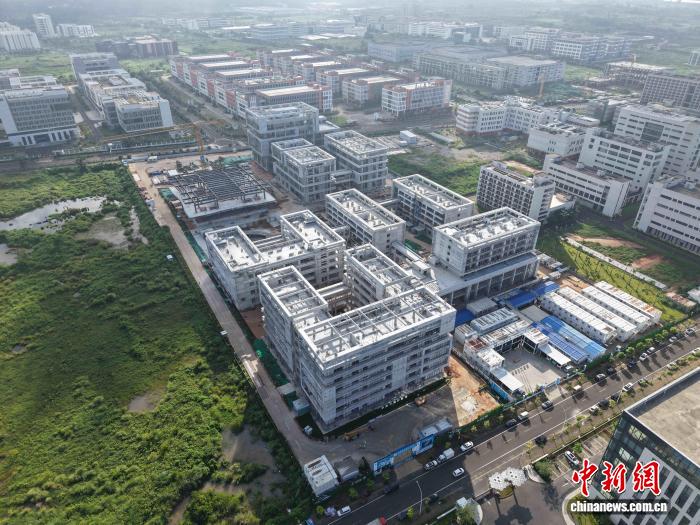
Core Insights - The construction of key projects in Hainan Free Trade Port is accelerating during the National Day holiday, with continuous work to meet project deadlines [1][3][4] Group 1: Project Developments - The Biopharmaceutical Innovation Center in Haikou High-tech Zone is under construction with over 300 workers aiming to complete the main structure of nine buildings by the end of November [1] - The "Zhejiang-Qiong Cooperation Industrial Park" project in Hainan Old Town, covering a total area of 131,300 square meters, is progressing with multiple construction machines conducting ground clearing and geological surveys [3] - The first phase of the China Travel Service's Sun Moon Bay Station project is nearing completion, featuring the country's first super artificial surfing pool, which will enhance tourism offerings in Hainan [4]
免签“朋友圈”扩大 “中国游”持续火爆
Yang Shi Xin Wen Ke Hu Duan· 2025-10-03 01:49
近年来,随着不断推进高水平对外开放,我国的免签"朋友圈"不断扩充,过境免签政策与区域性免签、单方面免签、互免签证等政策互相协调、梯次互补, 让"China Travel"持续火爆。 今年2月,东盟国家旅游团入境西双版纳144小时免签政策正式生效。新政策刺激下,西双版纳半年多内迎来了近百个东盟国家旅游团。 他们都喜欢哪些风景?体验什么项目?一起跟随记者的镜头来了解。 一名叫坎洪的游客来自老挝南部地区。他告诉记者,这已经是他第四次来中国,之前去过北京、上海、重庆等大城市旅游。尽管听说西双版纳的风景很美, 还和老挝山水相连,但一直没有机会来。 老挝旅游团游客 坎洪:我们很想来,但是原来签证办理比较麻烦,现在有东盟国家旅游团入境西双版纳的免签政策,签证程序简单。这次就和亲戚朋友一 起组团过来了。我一直以为出远门坐飞机是最方便的,现在发现坐中老铁路过来,也很方便,舒适又安全。 老挝旅游团游客 坎洪:和大城市相比,我更喜欢这边的民族风情。这些是我记忆里小时候见过的风景,在老挝已经很久没见过。来这里就和回到以前自己 的家一样。这里传统房屋保护得很好,现代建筑很有民族风格,传统和现代融合得很好。 4天的行程里,他们看过了西双 ...

海南环岛旅游公路首次开通“无人驾驶”旅游专线
Hai Nan Ri Bao· 2025-10-03 01:41
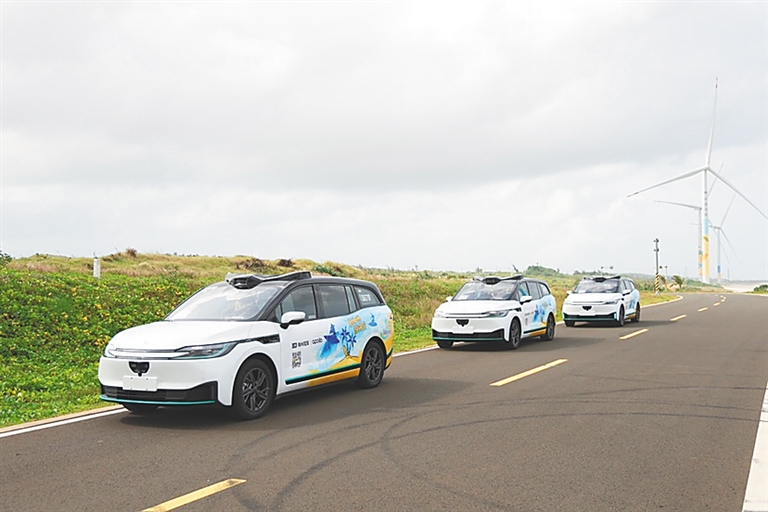
Core Insights - The launch of the "driverless" tourism route on Hainan's circular tourism highway marks a significant innovation in travel, allowing tourists to experience self-driving cars without a human driver [3][4][5] Group 1: Technology and Innovation - The "driverless" tourism route utilizes L4 level autonomous driving systems, capable of navigating the complex environments of Hainan's tourism highway [5] - The vehicles are equipped with features such as KTV, a refrigerator, and smart voice interaction, transforming the car into a "mobile leisure cabin" [4][5] - The integration of autonomous driving technology into the entire tourism service process aims to provide a new travel experience rather than just renting a vehicle [6] Group 2: User Experience - Tourists can enjoy a seamless travel experience with features like route recommendations, historical background information, and practical travel tips provided within the vehicle [5] - The service covers popular routes from Haikou to Wenchang and Sanya to Lingshui, connecting various tourist attractions [5] - The first three days of the National Day holiday saw all autonomous vehicles fully booked, indicating strong demand for this service [5] Group 3: Business Collaboration - The initiative is a collaboration between Hainan's transportation investment company and Shenzhou Car Rental, focusing on the integration of technology and tourism [4][6] - The project aims to build an ecosystem that includes technology partners, manufacturers, financial institutions, and various sectors such as energy and tourism [6]
海南升级“宠客”模式守护假期旅途
Hai Nan Ri Bao· 2025-10-03 01:41
Core Viewpoint - Hainan is enhancing its tourism services through a comprehensive action plan aimed at improving service quality, market regulation, and transportation upgrades, particularly in anticipation of the National Day and Mid-Autumn Festival holidays [2][4]. Group 1: Service Optimization - A luggage management service at Sanya Phoenix International Airport has been well-received, with over 170,000 items processed, allowing tourists to enjoy their trips without the burden of carrying luggage [2]. - The "100-day action" launched on September 8 focuses on 37 tasks to create a safe and welcoming environment for tourists, emphasizing service optimization and quality [2][4]. Group 2: Market Regulation - Authorities in Wanning have been actively conducting market regulation efforts, addressing illegal operations in high-risk sports and ensuring compliance with safety standards in the tourism sector [2][3]. - The Wanning tourism office has issued 66 rectification responsibility letters to address various compliance issues, including illegal diving operations and food safety in restaurants [3]. Group 3: Transportation Upgrades - New ferry routes have been introduced at multiple ports in Haikou, and significant upgrades have been made to the transportation infrastructure to facilitate smoother travel for tourists during the holiday season [3][4]. - The provincial transportation department is enhancing car rental services and public road facilities, including the addition of scenic viewpoints and charging stations along tourist routes [4].