Robotics

Search documents
深圳“机器人谷”闪耀CES 打开“物理AI”连接入口
2 1 Shi Ji Jing Ji Bao Dao· 2026-01-08 08:55
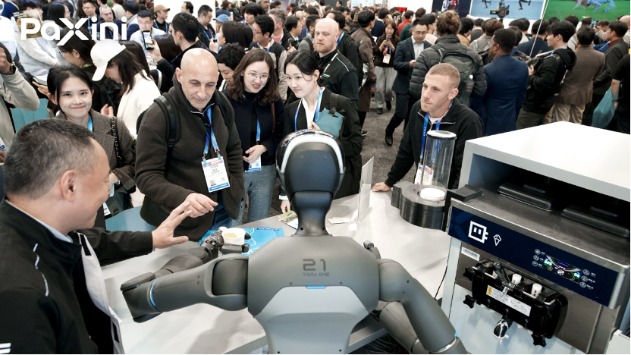
Core Insights - The 2026 International Consumer Electronics Show (CES) showcased a strong presence from Shenzhen's "Robot Valley," highlighting China's capabilities in embodied intelligence and commercialization potential [1] - Companies from Shenzhen, including SUTENG Juchuang, YUEJIANG Technology, and others, presented innovations in humanoid robots, quadruped robots, tactile perception systems, and 3D vision modules, forming a complete technology chain from perception to application [1] Group 1: Humanoid Robots - The humanoid robot TORA-ONE demonstrated its ability to make ice cream, showcasing real-time perception of human actions and dynamic interaction strategies, emphasizing the importance of tactile sensing in reliable interactions [2][4] - ZHUIJI Dynamics introduced its flagship product LimX Oli, a full-sized humanoid robot with 31 degrees of freedom, designed for various applications from gait planning to multi-modal interaction [2][3] Group 2: Market Expansion and Collaboration - ZHUIJI Dynamics aims to explore valuable application scenarios and expand collaboration opportunities at CES, focusing on markets with high labor costs and aging populations [4] - The company has actively developed a global distributor network, targeting regions with direct demand for their robots [4] Group 3: Technological Breakthroughs - SUTENG Juchuang showcased an "unmanned intervention" delivery process, highlighting its self-developed VTLA-3D operational model that integrates visual, tactile, and language information for enhanced operational efficiency [7][11] - The company’s model improves data efficiency and reduces reliance on extensive training data by utilizing high-precision 3D point clouds [11] Group 4: Data Collection and AI Integration - PASINI introduced a full-modal embodied intelligence data collection system, establishing the world's largest data collection and model training base, capable of producing 200 million high-quality data sets annually [12][14] - The integration of tactile feedback systems and AI models is crucial for bridging the gap between AI and the physical world, enhancing the commercial viability of embodied intelligence [11][15] Group 5: Product Innovations - The launch of the Gemini 305, a compact dual-camera designed for robotic arms, offers independent configuration of color and depth data resolution, providing precise visual solutions for collaborative robots [13] - Other products showcased include the T800 quadruped robot and the Rover X1, which are designed for various applications from high-end research to consumer markets [5][9]


新石器无人车等在义乌成立科技公司 注册资本1000万
Xin Lang Cai Jing· 2026-01-08 08:36
Group 1 - The core point of the article is the establishment of a new company, New Stone Technology (Zhejiang) Co., Ltd., which focuses on the development of intelligent robots and sales of new energy vehicle battery swapping facilities and artificial intelligence hardware [1] - The legal representative of the newly established company is Li Ziyi, and it has a registered capital of 10 million RMB [1] - The shareholders of the company include New Stone Technology (Beijing) Co., Ltd. and Yiwu Zhonghuan Trading Co., Ltd. [1]
江苏雷利(300660.SZ):控股子公司鼎智科技获评智元机器人优秀合作伙伴
Ge Long Hui· 2026-01-08 07:52
Core Viewpoint - Jiangsu Leili (300660.SZ) is actively developing products in the humanoid robot sector, including hollow cup reduction motors, linear transmission components, and frameless torque motors, and is currently validating these products with multiple robot manufacturers [1] Group 1 - The company has a product portfolio that includes hollow cup reduction motors, linear transmission components, and frameless torque motors [1] - Jiangsu Leili is engaged in sample delivery and customer validation with several robot manufacturers [1] - The subsidiary Dingzhi Technology has been recognized as an excellent partner by Zhiyuan Robotics [1]

阿里云发布多模态交互开发套件可应用于机器人等!机器人ETF(562500) 放量上行,成交额逼近10亿
Mei Ri Jing Ji Xin Wen· 2026-01-08 07:22
Group 1 - The Robot ETF (562500) has shown strong performance, rising by 0.97% and demonstrating resilience with significant trading volume approaching 1 billion yuan and a turnover rate of 3.75% [1] - Key stocks within the ETF have experienced a surge, with leading stocks like Jingpin Special Equipment and Fengli Intelligent rising over 11%, and several others hitting the daily limit [1] - Industry dynamics are characterized by three main trends: 1) Cross-industry capital influx actively exploring new sectors, 2) Collaborative efforts across the supply chain strengthening the industry foundation, and 3) Stable orders validating the commercialization process, accelerating market applications [1] Group 2 - The Robot ETF (562500) is the only robot-themed ETF in the market with a scale exceeding 20 billion yuan, covering various segments such as humanoid robots, industrial robots, and service robots [2] - Recent adjustments to the ETF's constituent stocks have increased the humanoid robot content to nearly 70%, successfully removing underperforming stocks and incorporating quality candidates, achieving a "retain the strong, eliminate the weak" strategy [2]
Where is AeroVironment (AVAV) Headed According to Wall Street?
Yahoo Finance· 2026-01-08 06:31
Group 1 - AeroVironment, Inc. (NASDAQ:AVAV) is considered a strong buy stock, with KeyBanc initiating coverage with an Overweight rating and a price target of $285, citing the company's leverage to defense and tech growth, industry-leading margins, and a differentiated product portfolio [1] - Bank of America Securities reaffirmed a Buy rating on AeroVironment with a price target of $450, viewing recent stock declines as an overreaction and highlighting increased demand for the company's products in both domestic and international markets [2][3] - The company is involved in the development and production of multi-domain robotic systems, operating through segments such as UnCrewed Systems, Loitering Munitions Systems, and MacCready Work [4] Group 2 - The performance of AeroVironment's SCDE products, particularly within the C-UAS portfolio, is noted as solid, with promising developments in its BADGER phased array antenna and Locust Laser Weapon System [3] - Challenges faced by the company, including delays in task order awards and margin compression, are considered temporary, with expectations of recovery as integration complications from the BlueHalo acquisition are resolved [2]

Vbot SuperDog Makes Its CES 2026 Debut, Signaling the Rise of Consumer Embodied AI
Globenewswire· 2026-01-08 05:43
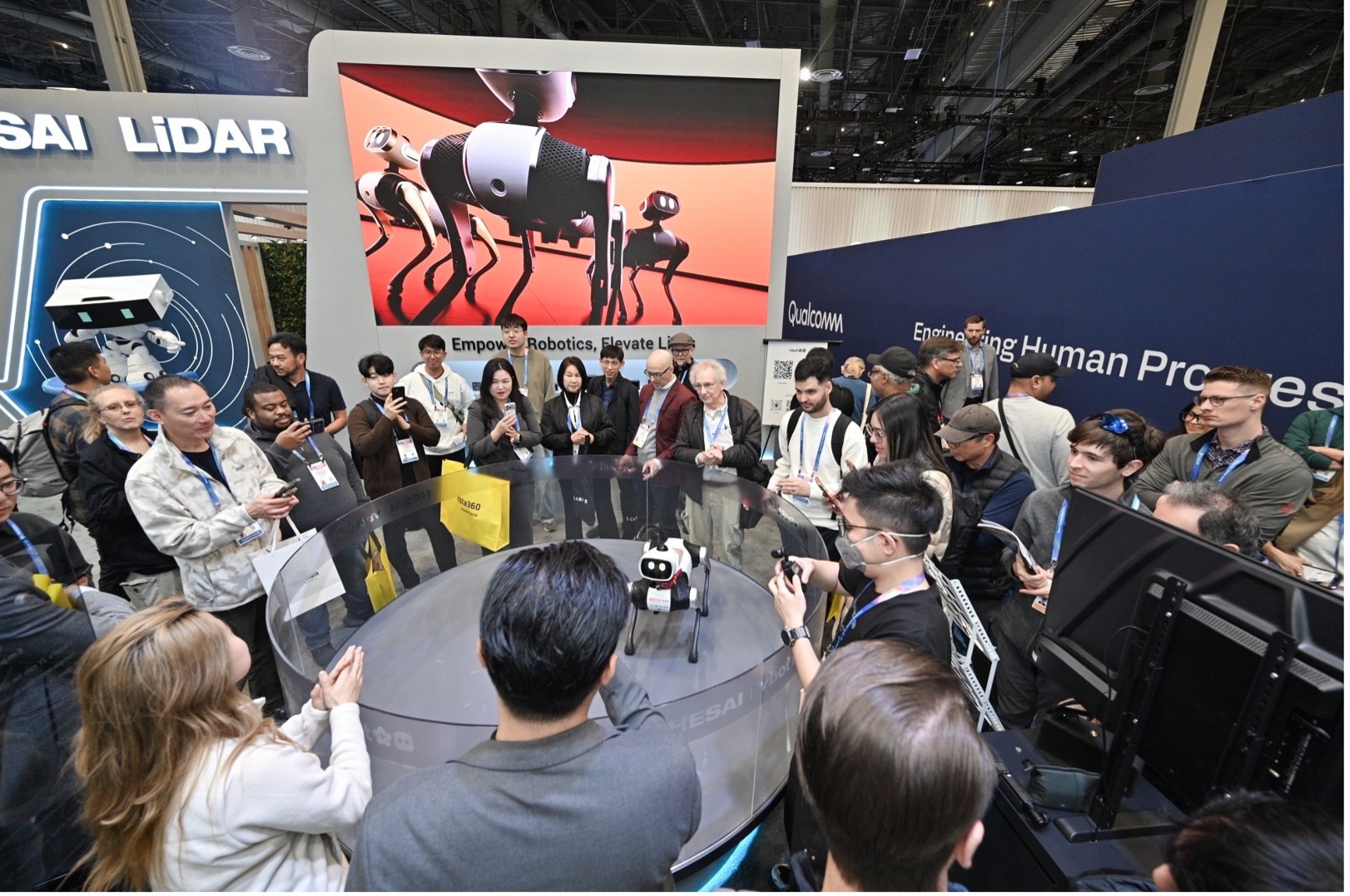
Core Insights - CES 2026 marks a significant moment for AI as Vbot introduces its SuperDog, a robot designed for real-world applications with features like no-remote-control operation and real-time environmental understanding [1][6] Group 1: Product Features - Vbot SuperDog emphasizes intuitive design and practicality for everyday household use, showcasing the potential of consumer-grade embodied intelligence [3] - The robot is powered by N45 high-performance permanent-magnet joint motors, each weighing 0.4 kg and delivering 24.5 Nm of torque, allowing it to support a 12 kg payload and tow up to 100 kg [4] - SuperDog's intelligent navigation system enables it to interpret surroundings and plan paths autonomously, even in crowded environments [5] Group 2: User Interaction and Safety - The robot can deliver beverages, functioning as an "intelligent guide" and enhancing visitor interaction at CES [6] - Its design includes a rounded, edge-free body and anti-pinch joint features, ensuring safety during human-robot interactions [6] - Expressive movements and gaze feedback inspired by animation principles give SuperDog a lifelike quality, positioning it as a household companion [6] Group 3: Market Potential - The global edition of Vbot SuperDog is expected to launch in Q2 2026, targeting markets in North America, Europe, and the Middle East [6]
Hyundai Mobis Forms Strategic Collaboration Framework with Boston Dynamics!
Prnewswire· 2026-01-08 04:50
Core Insights - Hyundai Mobis has formed a strategic collaboration with Boston Dynamics to supply actuators for the next-generation humanoid robot, Atlas, as part of a $26 billion U.S. investment plan [2][11] - This partnership marks Hyundai Mobis's entry into the global robot components market, securing its first official customer in the robotics sector [3][11] - The collaboration is expected to enhance both companies' positions in the emerging robotics components industry, which currently lacks a dominant global player [8] Company Strategy - Hyundai Mobis is expanding beyond the automotive industry into high-value-added fields such as robotics, aligning with its mid- to long-term strategy to adapt to the evolving mobility landscape [4] - The company aims to establish a large-scale actuator manufacturing system and strengthen its design capabilities for high-performance robotics components [7] Market Potential - Actuators are a critical subsystem for humanoid robots, representing over 60% of their material cost, and Hyundai Mobis plans to leverage its automotive component development expertise to enter this market [5] - Hyundai Motor Group announced plans to build a robot factory capable of producing 30,000 units annually, positioning Hyundai Mobis to play a significant role in the robotics ecosystem [9]

Salcomp's Debut on CES 2026
Prnewswire· 2026-01-08 03:53
Core Insights - Salcomp is showcasing its complete humanoid robot technology matrix at CES 2026, emphasizing its capabilities in core components, hardware manufacturing, and scenario implementation [1][3] - The company aims to challenge the top three intelligent hardware manufacturers globally, contributing to the development of physical intelligent industries [2] Company Capabilities - Salcomp has established a comprehensive technical chain in the robotics field, covering core components, assembly R&D, and industrial scenario implementation, positioning itself as a provider of integrated services including ODM design, processing, assembly, and testing [3] - The company has completed over 5,000 units of humanoid robot hardware and assembly services, demonstrating its large-scale service capability [4] Production Capacity - Salcomp has set up an embodied intelligent robot innovation center, with a pilot base capable of producing 5,000 units per year, aimed at bridging the gap from laboratory prototypes to large-scale production [5] - Future plans include upgrading this base to a super factory with an annual production capacity of 500,000 units, enhancing its large-scale delivery advantage [5] Strategic Focus - At CES 2026, Salcomp highlighted its strengths in manufacturing, application understanding, and mass production guarantee, aiming to assist enterprises in accelerating technology implementation and product mass production [6] - The company is committed to advancing the global embodied intelligent industry towards high-quality development through its full-stack service capabilities [6]
绿的谐波-人形机器人与实体 AI 时代的核心受益者,目标价上调至 233 元
2026-01-08 02:43
Summary of Leader Drive (688017.SS) Conference Call Company Overview - **Company Name**: Leader Drive (LD) - **Industry**: Robotics and Automation - **Specialization**: Production and sale of precision reducers, including harmonic reducers and mechatronic actuators for various sectors such as industrial robots, service robots, CNC machine tools, aerospace, and medical equipment [22][23] Key Points and Arguments Humanoid Robot Market Potential - **Market Position**: Leader Drive is positioned as a key beneficiary in the humanoid robot and physical AI era, with expectations of mass production and commercialization of humanoid robots [1] - **Growth Forecast**: Management indicated that humanoid robot shipments could at least double in 2026, leading to a significant increase in revenue contribution from humanoid robots, projected to rise from approximately 20% in 9M25 to 40-50% in 2026 [4][1] Financial Performance and Projections - **Earnings Forecast**: For 4Q25E, Leader Drive is expected to report a net profit of Rmb27 million, an increase of 11.2 times year-over-year from a net loss of Rmb3 million in 4Q24, driven by humanoid robot contributions and market share gains in industrial robots [3] - **Revised Earnings Estimates**: Earnings forecasts for 2025, 2026, and 2027 have been raised by 1%, 1%, and 2% respectively, reflecting a more positive outlook on the humanoid robot business [1] - **Target Price Adjustment**: The target price has been increased by approximately 25% to Rmb233, based on a revised P/E ratio of 233x for 2026E [1][5] Valuation Metrics - **Valuation Ratios**: The new target price reflects a P/E ratio of 233x for 2026E, adjusted from 281x for 2025E, indicating a more conservative approach due to gross profit margin pressures on the industrial robot side [5] - **Market Capitalization**: As of January 7, 2026, Leader Drive's market cap is Rmb34,994 million (approximately US$5,011 million) [7] Competitive Landscape - **Comparison with Competitors**: While Leader Drive has a higher exposure to humanoid robot revenues, Hengli Hydraulic is preferred due to its cheaper valuation despite Leader Drive's stronger growth potential in humanoid robots [1][4] Risks and Challenges - **Downside Risks**: Key risks include slower growth in the automation market, increased competition, higher raw material costs affecting gross profit margins, and lower contributions from humanoid robots and other emerging applications [25] Financial Summary - **Projected Financials**: - **2025E Net Profit**: Rmb122 million - **2026E Net Profit**: Rmb184 million - **2027E Net Profit**: Rmb248 million - **2026E EPS**: Rmb1.006, with a growth rate of 50.7% [6][12] Additional Insights - **NVIDIA's Role**: NVIDIA's open-source platforms are expected to accelerate the development and deployment of humanoid robots, enhancing Leader Drive's market position [2] - **Capacity Expansion**: Leader Drive is expanding its production capacity from 40,000 units per month to 80,000 units per month to meet the anticipated demand for humanoid robots [4] This summary encapsulates the critical insights from the conference call regarding Leader Drive's strategic positioning, financial outlook, and market dynamics in the robotics industry.

郑州机器人产业跑出加速度
He Nan Ri Bao· 2026-01-07 23:20
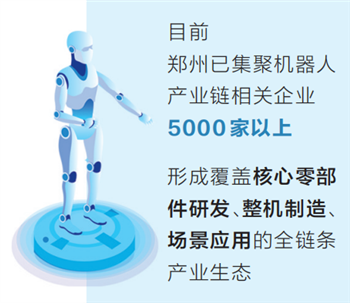
Group 1 - Zhengzhou has signed a strategic cooperation framework agreement with Zhiyuan Innovation (Shanghai) Technology Co., Ltd., marking a significant step in the humanoid robot sector [2] - The establishment of the Zhiyuan Robot Central Bodily Intelligence Industrial Base in Zhengzhou aims to enhance technology research and development, product incubation, and industrial layout [2] - The city is set to become a major hub for the robot industry, with multiple companies like UBTECH and Shenzhen Zhongqing planning to establish production bases and manufacturing centers in Zhengzhou [2][3] Group 2 - Major research platforms such as the Zhongyu Bodily Intelligence Laboratory are accelerating their development in Zhengzhou, with leading AI companies establishing operations in the area [3] - The collaboration between Zhongyu Bodily Intelligence Laboratory and Zhuoyide has led to the development of humanoid robots that have performed well in competitions and are being utilized for city tours [3] - Zhengzhou has over 5,000 companies in the robot industry chain, creating a comprehensive ecosystem that includes core component research, complete machine manufacturing, and application scenarios [3] Group 3 - Zhengzhou's manufacturing sector is diverse, with a large market space and rich application scenarios that facilitate the gathering of upstream and downstream partners [4] - The city benefits from a complete set of industrial factors, ample talent reserves, and convenient logistics networks, which are crucial for attracting robot companies [4] Group 4 - The local government has introduced several policy initiatives, such as the "Henan Province Bodily Intelligence Industry Development Action Plan (2024-2027)" to create new advantages for industry development [5] - The focus on prioritizing future industries is seen as a key driver for enhancing urban capabilities and supporting high-quality economic development [5]