Banking

Search documents
It’s New Year’s Day 2026. What’s open and closed?
Fortune· 2026-01-01 11:00
Federal Services - Non-essential federal offices, including Social Security Administration field offices and passport agencies, will be closed on New Year's Day [2] - IRS services will also be unavailable, requiring individuals to wait until the following day for assistance [2] Financial Markets - Major U.S. exchanges, including the New York Stock Exchange and Nasdaq, will be closed for trading on New Year's Day, with operations resuming on January 2 [3][6] Mail and Delivery Services - The U.S. Postal Service will not operate on New Year's Day, with only Priority Mail Express deliveries being made [4] - FedEx and UPS will also pause operations, with limited services available for urgent shipments [5] Banking Sector - Most major banks, including Bank of America and Wells Fargo, will be closed for the holiday, although mobile banking and ATMs will remain accessible [7] Retail and Grocery - Major retailers like Walmart and Target will operate on New Year's Day, while grocery stores show a mixed picture with some chains open and others closed [8][9] - Discount grocers such as Aldi and Trader Joe's will remain closed, while convenience stores and pharmacies like CVS and Walgreens will generally stay open [10] Restaurants - Fast-food chains, including McDonald's and Starbucks, will have many locations open, although hours may vary by franchisee [12]



SLM Corporation (SLM) Shareholders Who Lost Money Have Opportunity to Lead Securities Fraud Lawsuit
Prnewswire· 2025-12-31 20:39
Core Viewpoint - The Law Offices of Howard G. Smith is announcing a class action lawsuit against SLM Corporation (Sallie Mae) for securities fraud, inviting investors who have suffered significant losses to participate in the lawsuit [1][2]. Group 1: Lawsuit Details - The lawsuit alleges that between July 25, 2025, and August 14, 2025, SLM Corporation failed to disclose a significant increase in early-stage delinquencies [3]. - It is claimed that SLM overstated the effectiveness of its loss mitigation and loan modification programs, as well as the overall stability of its PEL delinquency rates [3]. - The lawsuit argues that the positive statements made by SLM regarding its business operations and prospects were materially misleading and lacked a reasonable basis during the relevant time period [3].



Dollar Finishes Higher and Precious Metals Plunge in Year-End Trading
Yahoo Finance· 2025-12-31 20:32
Group 1: Dollar Index and Economic Indicators - The dollar index (DXY00) reached a 1-week high, finishing up by +0.07%, driven by rising T-note yields and a drop in weekly US unemployment claims to a 1-month low of 199,000, which was a decrease of -16,000 from previous claims [1][3] - The markets are currently pricing in a 15% probability of a -25 basis point rate cut at the upcoming FOMC meeting on January 27-28 [3] Group 2: Fed Policy and Market Sentiment - Questions regarding the independence of the Federal Reserve are limiting the dollar's gains, particularly after President Trump suggested he might fire Fed Chair Powell [2] - The dollar is under pressure as the Fed is expected to cut interest rates by approximately -50 basis points in 2026, while other central banks like the BOJ and ECB are expected to raise or maintain rates, respectively [4] - Concerns about President Trump's potential appointment of a dovish Fed Chair, with Kevin Hassett being the likely candidate, are also bearish for the dollar [5] Group 3: Euro and Global Market Dynamics - The EUR/USD pair fell to a 1-week low, down by -0.03%, as the dollar's strength pressured the euro, compounded by ongoing concerns regarding the Russian-Ukrainian war [6]
Crypto Crystal Ball 2026: Is Wall Street the Industry's Next Villain?
Yahoo Finance· 2025-12-31 17:01
Core Insights - The crypto industry has gained significant political influence in 2023, raising concerns about potential backlash and new adversaries by 2026 [1] - Wall Street may emerge as a key opponent to the crypto sector, particularly in light of recent regulatory developments [2] Group 1: Wall Street's Position - Citadel Securities, a major Wall Street player, has expressed strong opposition to regulatory exemptions for the crypto industry, warning that such actions could undermine investor protections [3] - Traditional finance entities, including Nasdaq, are also urging the SEC to reconsider granting key exemptions to the crypto sector [4] Group 2: Legal Challenges - The DeFi Education Fund's executive director anticipates that traditional finance giants will likely pursue legal action against the crypto industry due to its recent regulatory successes [4] - The banking lobby has actively opposed certain provisions in crypto-related legislation, although the GENIUS Act passed Congress despite their efforts [5] Group 3: Internal Dynamics - The crypto industry has already successfully countered traditional finance's opposition this year, indicating its growing political clout [5] - There is a division within Wall Street regarding crypto, with some players recognizing the technology's potential to reduce costs and navigate regulatory landscapes [6]
人才竞争:金融范式变革主旋律
Xin Lang Cai Jing· 2025-12-31 16:58
Core Insights - The global financial landscape is characterized by a complex interplay of anxiety and relaxation, with ongoing debates surrounding digital assets and concerns over AI investment bubbles as the world approaches 2026 [1] - Talent competition is identified as the central theme in the evolving global dynamics, driven by the emergence of a multipolar world and the need for adaptive talent strategies [2][3] Talent Competition - The concept of a "multipolar era" signifies a transformation in global financial paradigms, necessitating a reconfiguration of talent competition strategies to address intertwined crises and economic shifts [3] - The success of talent competition directly influences a nation's voice in global financial negotiations, emphasizing the importance of core talent teams in driving national competitiveness [4][5] Financial Philosophies - The debate between "planting" versus "harvesting" philosophies in finance highlights differing value systems, with a focus on nurturing long-term growth rather than short-term gains [6][8] - Historical examples of financial figures embodying the "planting" philosophy illustrate a commitment to societal welfare over personal gain, contrasting sharply with the "harvesting" mentality that has led to financial crises [6][8] Financial Talent Development - The need for a diverse and adaptable financial talent matrix is critical as the industry faces increasing competition and evolving challenges [10] - The "Hamburger structure" model proposes a multi-layered approach to developing high-end financial talent, addressing the integration of traditional and emerging financial paradigms [11] Core Competencies - Five categories of financial talent are identified, each with specific knowledge requirements and current challenges, including traditional finance, internet finance, blockchain finance, AI finance, and quantum finance [11][12] - The integration of these competencies is essential for fostering a resilient financial ecosystem capable of navigating future challenges [13] Governance and Risk Management - The development of a comprehensive governance framework is necessary to address new types of financial risks emerging from the integration of online and offline financial systems [15][16] - The cultivation of talent capable of implementing effective risk management strategies is crucial for maintaining stability in the evolving financial landscape [16]
Crypto Market Gets Year-end Boost as Fed Injects $74 Billion Into Economy
Yahoo Finance· 2025-12-31 16:19
Group 1 - The New York Fed injected $74.6 billion into the banking system through repo operations, marking the largest operation this year, which is seen as bullish for the crypto market [2][3][7] - This injection follows previous operations where the Fed injected $26 billion on December 29 and $3 billion on December 30, indicating a trend of increasing liquidity support [3] - The crypto market is experiencing liquidity pressures due to the holiday season and tax-loss harvesting, but there are expectations for a year-end rally [4] Group 2 - Bitcoin long-term holders have ceased selling, which may reduce selling pressure on Bitcoin and the broader crypto market [5] - Bitcoin reached a peak of $89,000 earlier in the day but retraced after the U.S. market opened, likely influenced by tax-loss harvesting [5][7] - Bitcoin ETFs recorded a daily net inflow of $355 million on December 30, ending a seven-day streak of outflows, which could support a significant market rally if sustained [6]
CITI-稳定币2030
2025-12-31 16:02
Summary of Key Points from the Conference Call on Stablecoins Industry Overview - The report focuses on the **stablecoin** market and its evolution, highlighting its role in the broader **blockchain** and **digital asset** ecosystem [11][24][25]. Core Insights and Arguments 1. **Market Growth Projections**: - Stablecoin issuance is forecasted to reach **$1.9 trillion** in the base case and **$4.0 trillion** in the bull case by 2030, revised from previous estimates of **$1.6 trillion** and **$3.7 trillion** respectively [13][30]. - The issuance volume has increased from approximately **$200 billion** at the start of 2025 to about **$280 billion** [12][53]. 2. **Drivers of Growth**: - Growth is primarily driven by the **crypto-native ecosystem**, **e-commerce**, and **international demand** for holding USD [25]. - The report emphasizes that stablecoins will coexist with other on-chain money formats, particularly **bank tokens** [25][26]. 3. **Institutional Adoption**: - Institutional adoption of stablecoins is still in its early stages, rated at **0.5** on a scale of 0 to 10, but interest is growing among banks and asset managers [57]. - Transaction volumes in stablecoins are approaching **$1 trillion per month**, nearly double from the previous year [57][62]. 4. **Transaction Velocity**: - Stablecoins could support nearly **$100 trillion** in transaction activity by 2030 under the base case, with the bull case suggesting up to **$200 trillion** [30][89]. 5. **Regulatory Environment**: - The passage of the **GENIUS Act** is seen as a game changer for stablecoin legislation, promoting innovation and consumer protection [36][37]. - Regulatory clarity is expected to drive further institutional adoption and integration of stablecoins into existing financial systems [66][67]. 6. **Bank Tokens vs. Stablecoins**: - Bank tokens, which offer trust and regulatory safeguards, may see transaction volumes exceed those of stablecoins by 2030 [17][26]. - The report suggests that bank tokens could become a preferred choice for many corporates due to their integration with existing financial systems [92]. Additional Important Insights - **Ecosystem Integration**: Major payment networks are beginning to support stablecoin settlements, facilitating easier adoption for end-users [72]. - **Global Trends**: The report notes that while the U.S. is a significant market, regions like **Hong Kong** and the **UAE** are also becoming active hubs for stablecoin development [30][72]. - **Use Cases**: Stablecoins are increasingly being recognized not just for crypto trading but as infrastructure for **24x7 liquidity** and **real-time money movement** [62][104]. - **Challenges**: Despite the positive outlook, challenges remain for wider adoption, including regulatory hurdles and the need for interoperability among different digital money formats [45][75]. This summary encapsulates the key points discussed in the conference call regarding the stablecoin market, its growth potential, and the evolving regulatory landscape.

Here Is The Remarkable Big Picture For Gold As We Head Into 2026
Kingworldnews· 2025-12-31 15:32
Core Viewpoint - The global financial system is under significant strain due to unprecedented debt levels, leading to a shift from paper currencies to real assets like gold as a store of value [4][7][44]. Group 1: Economic Context - The U.S. national debt reached $38 trillion in 2025, with a debt-to-GDP ratio of 124%, indicating a severe financial imbalance compared to historical levels [15][19]. - The U.S. dollar's status as the world's reserve currency is increasingly questioned, with countries like China and Japan reducing their holdings of U.S. Treasuries [32][33]. - The global shadow-banking system, valued at $250 trillion, poses significant credit risks, particularly as it operates outside regulated frameworks [26]. Group 2: Market Dynamics - In 2025, U.S. markets experienced a significant downturn, with the DXY and dollar value declining, while other markets, including those in the UK and Japan, outperformed U.S. indices [21][22]. - Stock buybacks in 2025 amounted to $1.3 trillion, indicating market manipulation by insiders to inflate share prices [28]. - The reliance on AI-driven market gains, which accounted for 80% of U.S. market growth, raises concerns about sustainability and underlying economic health [23][24]. Group 3: Precious Metals Outlook - The trend towards gold and silver as superior assets is reinforced by the ongoing de-dollarization and central banks' increasing gold acquisitions [43][44]. - Despite potential short-term fluctuations, the long-term trajectory for gold and silver prices is expected to rise as paper currencies continue to lose purchasing power [48][49]. - The anticipated structural quantitative easing in 2026 is likely to further weaken the dollar, providing a favorable environment for precious metals [36][38].


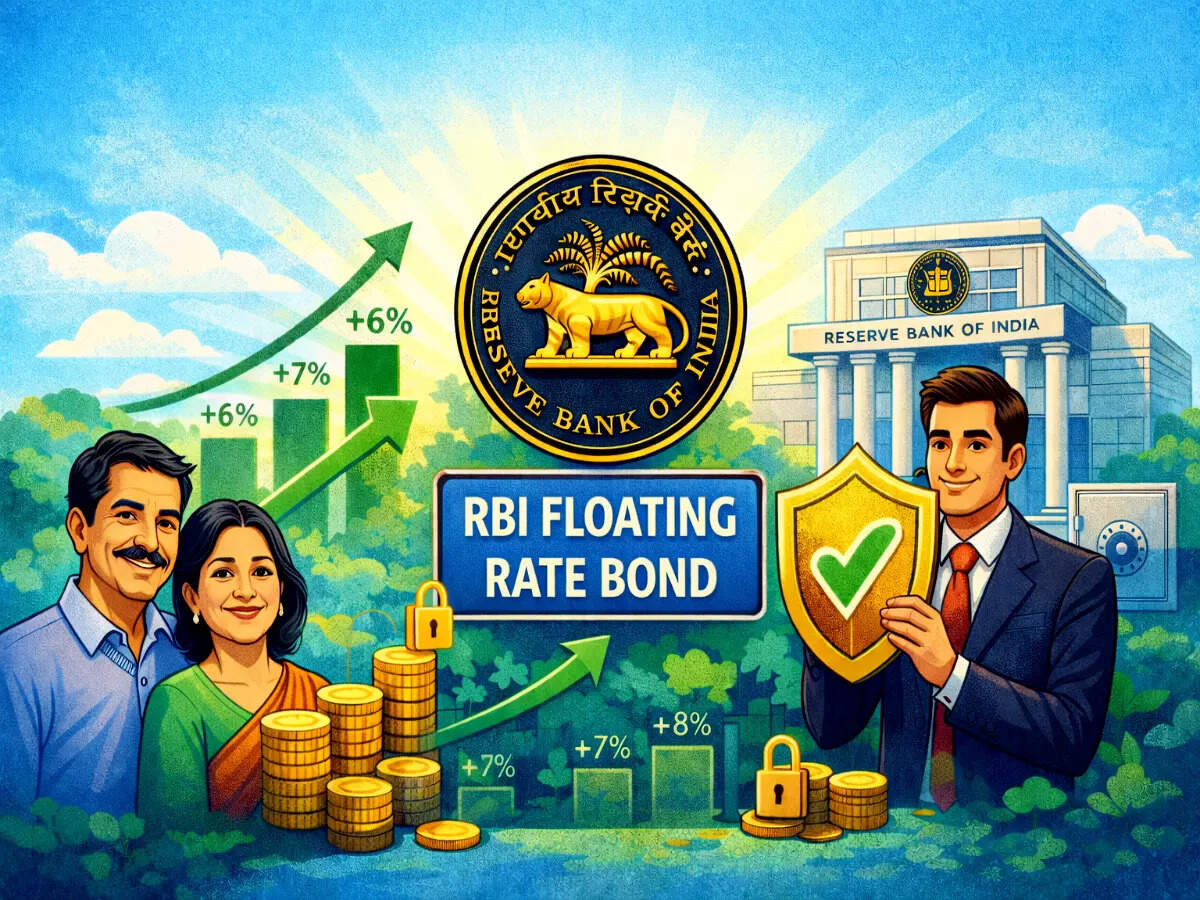
Why RBI floating rate bond with 8.05% interest is still one of the best investment options for most investors?
The Economic Times· 2025-12-31 14:35
Core Insights - The RBI floating rate bond offers a higher interest rate than many fixed deposits (FDs) and allows unlimited investment, making it an attractive option for investors [1][13] - The bond's interest rate is linked to the National Savings Certificate (NSC) rate plus a fixed spread of 0.35%, with a current rate of 8.05% per annum [7][13] - Unlike fixed deposits, the interest rate on RBI bonds adjusts with market rates, providing better protection against interest rate fluctuations [6][10] Investment Comparison - Current FD rates from large banks range from 6% to 7%, which are fixed at the time of investment, while RBI bonds offer a floating rate that adjusts over time [2][13] - Among small savings schemes, the highest interest rate is 8.2% in the Senior Citizen Savings Scheme (SCSS) and Sukanya Samriddhi Account (SSY), but both have investment limits, unlike the RBI bond [8][14] Safety and Risk - The RBI bond is issued by the Reserve Bank of India on behalf of the government, carrying no default risk, making it safer than corporate bonds or bank FDs [5][13] - The floating mechanism of the bond protects against erosion of returns in a rising rate environment, making it suitable for conservative investors [6][11] Investment Strategy - Investors are advised to consider RBI floating rate bonds for low-risk portions of their portfolios, particularly for long-term goals or retirement income planning [10][14] - The bonds provide semi-annual payouts, creating a consistent income stream, which is beneficial for retirees seeking periodic income [11][14] - It is suggested that conservative investors incorporate RBI bonds as a core holding in their debt allocation for stability, potentially pairing them with equities for growth [12][14]
Change of issuer of Lassila & Tikanoja’s EUR 75 million sustainability-linked notes
Globenewswire· 2025-12-31 12:30
Lassila & Tikanoja PlcStock exchange release31 December 2025 at 2.30 pm EET Change of issuer of Lassila & Tikanoja’s EUR 75 million sustainability-linked notes NOT FOR RELEASE, PUBLICATION OR DISTRIBUTION, DIRECTLY OR INDIRECTLY, TO ANY PERSON LOCATED OR RESIDENT IN OR INTO THE UNITED STATES, AUSTRALIA, CANADA, HONG KONG, SOUTH AFRICA, JAPAN, NEW ZEALAND OR SINGAPORE OR ANY OTHER JURISDICTION WHERE SUCH RELEASE, PUBLICATION OR DISTRIBUTION WOULD BE UNLAWFUL OR REQUIRE REGISTRATION OR ANY OTHER MEASURES. TH ...