Agriculture

Search documents
Orbia Announces Third Quarter 2025 Financial Results
Businesswire· 2025-10-22 21:16
Core Insights - Orbia Advance Corporation reported third quarter 2025 revenues of $1.97 billion, a 4% increase from the previous year, with EBITDA of $295 million, reflecting a 2% increase [2][5][6] - The company is focused on strengthening market positions, cost reduction, and cash generation despite subdued demand in certain sectors [4][34] Financial Performance - Net sales for Q3 2025 were $1,966 million, up 4% from $1,887 million in Q3 2024 [5][6] - Cost of sales increased by 5% to $1,533 million, while selling, general and administrative expenses decreased by 1% to $303 million [5][9] - Operating income rose to $130 million, a 4% increase year-over-year, while EBITDA margin slightly decreased to 15.0% [5][10] - The company reported a net loss of $120 million for the quarter, compared to a net income of $86 million in the same quarter last year [7][14] Business Group Performance - **Polymer Solutions**: Revenues increased by 2% to $647 million, but EBITDA decreased by 13% to $78 million due to lower resin pricing and higher ethane costs [18][19] - **Building & Infrastructure**: Revenues also rose by 2% to $647 million, with EBITDA decreasing by 3% to $76 million, impacted by restructuring costs [21][22] - **Precision Agriculture**: This segment saw an 11% increase in revenues to $257 million and a 28% increase in EBITDA to $30 million, driven by strong demand in Brazil and the U.S. [24][25] - **Connectivity Solutions**: Revenues grew by 8% to $253 million, with EBITDA increasing by 36% to $42 million, supported by strong volume growth [27][28] - **Fluor & Energy Materials**: Revenues increased by 3% to $227 million, but EBITDA decreased by 3% to $64 million due to higher input costs [30][31] Cash Flow and Debt Management - Operating cash flow for the quarter was $271 million, a decrease of 4% from the previous year, while free cash flow improved by 1% to $144 million [15][32] - Net debt increased to $3,910 million, with a net debt-to-EBITDA ratio of 3.85x, down from 3.98x in the previous quarter [16][31] Outlook - The company reaffirms its full-year 2025 Adjusted EBITDA guidance in the range of $1,100 million to $1,200 million, likely falling in the lower half of the range [34] - Capital expenditures are projected to be approximately $400 million, focusing on safety and operational integrity [35]
X @Forbes
Forbes· 2025-10-22 20:47
Trade Policy Impact - Tariffs imposed on cattle entering the United States, including a 50% tariff on Brazil, are credited with the improved performance of cattle ranchers [1] Industry Performance - Cattle ranchers are experiencing their best performance in decades [1]
Valmont(VMI) - 2025 Q3 - Earnings Call Transcript
2025-10-21 14:00
Financial Data and Key Metrics Changes - Net sales increased by 2.5% year over year to $1,050 million, with operating margin improving by 120 basis points to 13.5% [20][21] - Diluted earnings per share rose by 21.2% to $4.98, marking a notable improvement compared to historical third-quarter performance [5][19] - Gross profit margin increased by 80 basis points to 30.4% [20] Business Line Data and Key Metrics Changes - Infrastructure sales grew by 6.6% to $808.3 million, with utility sales increasing by 12.3% driven by pricing and higher volumes [22] - Agriculture sales decreased by 9% year over year to $241.3 million, primarily due to lower irrigation equipment volumes and economic pressures in Brazil [24] - Telecommunications sales grew by 37%, supported by a quick turn order strategy [22] Market Data and Key Metrics Changes - The utility market is experiencing strong demand driven by data center expansion, manufacturing onshoring, and broader electrification, with transmission CapEx expected to grow at a 9% CAGR through 2029 [10] - The agriculture market in North America remains soft, with the USDA expecting a 2.5% decline in crop receipts for 2025 [13][14] - International sales in agriculture showed double-digit growth year to date, despite challenges in specific regions [16] Company Strategy and Development Direction - The company is focused on simplifying its business, directing resources to high-return initiatives, and enhancing performance through disciplined execution [5][6] - Valmont aims to lead the North American utility market through capacity expansions and operational improvements [6][27] - The strategy includes investing in aftermarket parts and technology to improve margins and support long-term growth [7][28] Management's Comments on Operating Environment and Future Outlook - Management expressed confidence in the long-term fundamentals of the business, despite near-term macro pressures [17][18] - The company is raising its full-year earnings guidance, projecting net sales of approximately $4.1 billion and adjusted diluted earnings per share in the range of $18.7 to $19.5 [30][31] - Management highlighted the importance of maintaining flexibility in capacity to respond to customer needs while ensuring operational efficiency [44][45] Other Important Information - The company recorded $11 million in bad debt expense in the agriculture segment, impacting operating income and margins [25][83] - Cash and liquidity remain strong, with approximately $226 million in cash and net debt leverage below one times [26] - The company is investing in a project to simplify its legal entity structure to improve efficiency and reduce compliance burdens [29] Q&A Session Summary Question: What are the main opportunities for margin expansion in the infrastructure segment? - Management indicated that margin improvements stem from pricing and cost actions, with utility expansions contributing significantly to operating margins [35][36] Question: Can you discuss the capacity additions in the utility segment? - Management confirmed that capacity additions are tracking above expectations, with plans to exceed the benchmark of $100 million in additional revenue for every $100 million of capacity [39][40] Question: What is the outlook for pricing trends in the utility segment? - Management expects strong pricing trends to continue due to a tight demand-supply balance and healthy margins in the bid market [81] Question: What is driving current demand in the utility segment? - Demand is strong across all product lines, driven by electrification, AI, and grid connectivity, with a well-diversified customer base [73][74] Question: What are the expectations for agriculture margins moving forward? - Management anticipates that while Q4 may be challenging, margins should improve in Q1 as bad debt issues are resolved [84]

Valmont(VMI) - 2025 Q3 - Earnings Call Presentation
2025-10-21 13:00
Q3 2025 Financial Performance - Net sales reached $1.05 billion, a 2.5% increase compared to the previous year[10] - Operating margin improved by 120 bps to 13.5%[10] - Diluted EPS increased by 21.2% to $4.98[10] Segment Performance - Infrastructure sales increased by 6.6% to $808.3 million, with operating income up by 15.9%[27, 28] - Utility sales grew by 12.3% to $391.9 million, while Telecommunications saw a significant increase of 37.0% to $88.1 million[31] - Agriculture sales decreased by 9.0% to $241.3 million, with operating income down by 19.7%[34, 35] Capital Allocation and Cash Flow - Q3 2025 operating cash flows were $112.5 million[43] - The company invested $42 million in capital expenditures[41] - Share repurchases amounted to $26 million at an average price of $374.33 per share[41] Outlook - Full-year 2025 net sales are projected to be approximately $4.1 billion[46] - Adjusted diluted EPS outlook raised to $18.70 to $19.50[46] - The adjusted effective tax rate is expected to be around 25.0%[46]
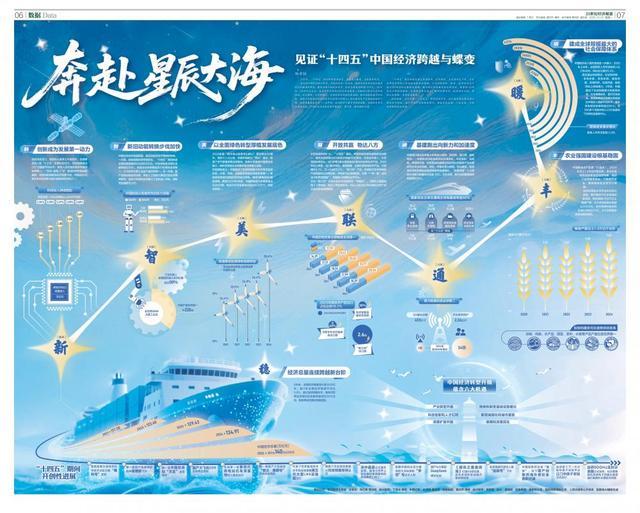
奔赴星辰大海 见证“十四五”中国经济跨越与蝶变
2 1 Shi Ji Jing Ji Bao Dao· 2025-10-17 22:48
Core Insights - The article highlights the significant achievements of China's economy during the "14th Five-Year Plan" period, emphasizing its resilience and contributions to global economic growth [1][3]. Economic Growth - Over the past five years, China's economic increment is expected to exceed 35 trillion yuan, with an average annual growth rate of 5.5%, surpassing the global average [3]. - China's contribution to global economic growth has remained around 30% annually, establishing it as a stable anchor for the world economy [3]. Innovation - National R&D investment has increased by nearly 50% compared to the end of the "13th Five-Year Plan," with R&D intensity approaching the OECD average [4]. - China ranks 10th in the global innovation index and has maintained the largest number of R&D personnel in the world for several years [4]. Industrial Transformation - The manufacturing sector is projected to contribute an additional 8 trillion yuan during the "14th Five-Year Plan," maintaining over 30% of global manufacturing growth [5]. - China continues to lead in the production of over 220 major industrial products, with significant advancements in AI and innovative pharmaceuticals [5]. Green Development - China has made substantial progress in environmental quality, with the fastest improvement in air quality and the largest increase in forest resources globally [6]. - By mid-2025, the installed capacity of renewable energy has surpassed that of coal, with 368.9 million new energy vehicles and nearly 16.7 million charging facilities, both ranking first in the world [6]. Trade and Global Cooperation - During the "14th Five-Year Plan," China's goods trade volume has remained the largest globally, with service trade expected to exceed 1 trillion USD for the first time in 2024 [8]. - High-tech products account for nearly 20% of exports, with significant growth in electronic information and high-end equipment sectors [8]. Infrastructure Development - China has established the world's largest networks of highways, high-speed rail, and ports, while also rapidly expanding new infrastructure in computing and smart cities [9]. - The computing power scale has grown at an annual rate of 30% over the past five years, with major nodes accounting for about 70% of the national total [9]. Agricultural Strength - China has achieved 21 consecutive years of grain production growth, with a target of 1.4 trillion jin by 2024, ensuring food security [10]. - The country has built over 1 billion mu of high-standard farmland, with a mechanization rate exceeding 74% for major crops [10]. Social Welfare - By mid-2025, the per capita disposable income reached 21,840 yuan, reflecting a nominal growth of 5.3% [11]. - China has developed the largest education, social security, and healthcare systems globally, with a basic pension insurance coverage exceeding 95% [11].

Market’s Wild Ride: Trump’s Tweets, Tariffs, and the Art of Economic Surprise
Stock Market News· 2025-10-16 06:00
Economic Theatrics and Market Reactions - Donald J. Trump continues to influence market dynamics through his announcements and social media posts, creating a unique environment where investor sentiment is swayed more by his rhetoric than by fundamental analysis [1][5][17] - The U.S.-China trade war remains a central theme, with Trump reiterating threats of imposing a 100% tariff on Chinese goods, particularly in response to China's control over rare earth exports [2][4] Company-Specific Impacts - Bunge Global SA's shares surged over 12% to $92.71 following Trump's threat to end cooking oil purchases from China, highlighting the fragmented market reactions to his policy statements [3] - Archer-Daniels-Midland Co. also saw a 2.5% increase in shares to $63.41, benefiting from potential increased domestic demand for soybeans [3] Market Volatility - Significant market turbulence was observed, with the S&P 500 dropping 2.7% and the Nasdaq 100 losing 3.5% on October 10 due to tariff threats, marking one of the worst trading days since the COVID-19 pandemic [4] - A subsequent recovery occurred, with major indices rebounding by 2.2% to 1.3% after Trump reassured investors via social media, illustrating the volatility and rapid shifts in market sentiment [5] International Trade and Tariff Threats - The International Monetary Fund (IMF) upgraded its global growth forecast but warned of "Trump-US-China Trade Risks," indicating the pervasive influence of Trump's trade policies on global economic outlooks [6] - Trump's threats of tariffs on Spain could impact Spanish exports worth up to €22.7 billion, further complicating international trade dynamics [9] Domestic Policy and Economic Implications - Trump's proposal of a "$1,000 stimulus check for every newborn" could significantly impact consumer discretionary stocks, reflecting the potential for broad-based economic stimulus to influence market sectors [11] - The withholding of $40.6 million from California over truck driver English proficiency rules highlights how regulatory disputes can affect local economies and infrastructure projects [10] Geopolitical Factors - Trump's comments on Venezuela and potential military actions introduce geopolitical volatility that could indirectly affect energy markets, although immediate impacts on companies like ExxonMobil are unclear [7] - Oil prices have contracted significantly, with Brent and WTI futures falling by 3.82% and 4.24% respectively amid fears of reduced demand due to tariff implementations [8] Regulatory Environment and Corporate Responses - Trump's criticism of the EU's $3.5 billion fine on Google reflects his engagement with corporate regulatory issues, adding unpredictability for tech giants [13] - The market's response to Trump's fluctuating policies underscores the need for companies to navigate a landscape characterized by rapid changes and uncertainty [15][17]


Market Whimsy: Trump’s Latest Tariff Tantrum and the Trembling Tickers
Stock Market News· 2025-10-10 18:00
Core Insights - The announcement of a "massive increase" in tariffs on Chinese goods by former President Donald Trump led to significant market turmoil, with major indices experiencing sharp declines [1][2][3] Market Reaction - The Dow Jones Industrial Average (DJIA) dropped between 456 to 622 points, a decline of 1% to 1.3% [2] - The S&P 500 (SPX) fell by 1.5% to 2%, marking its worst loss since April [2] - The NASDAQ Composite (NDAQ) reversed earlier gains, sinking by 2% to 2.7% [2] - U.S.-listed shares of Chinese companies, such as Alibaba and JD.com, saw stock losses of 5% to 7.79% and 5.6% to 6.74%, respectively [4] - Commodities were also affected, with copper prices dropping over 4% and West Texas Intermediate crude oil futures falling 4% to approximately $59 per barrel [4] Trade Relations - The catalyst for the market's reaction was China's "hostile" export controls on rare-earth elements, which are essential for various industries [3] - Trump's declaration of a tariff increase and cancellation of a meeting with Chinese President Xi Jinping at the APEC summit added to the tension [3] Analyst Sentiment - Analysts expressed frustration over the unpredictability of the market, with comments highlighting the challenges of navigating investments amid such volatility [5] - The situation was described as a "four-year management exercise" under the influence of the U.S. president, indicating a long-term pattern of market reactions to political statements [5] Broader Implications - The concept of "Trade War 2.0" emerged, suggesting ongoing tensions between the U.S. and China that could impact market stability [6] - Despite other significant announcements from Trump, such as a ceasefire in Gaza and domestic projects, none had the same immediate market impact as the tariff threats [8] Digital Influence - The direct correlation between Trump's social media posts and market movements underscores the power of individual statements in modern financial markets [9] - Analysts noted that Trump's posts can disrupt market calm and lead to rapid shifts in investor sentiment [9] Closing Market Summary - By the end of the trading day, major indices were down, with China-exposed stocks and commodities like copper and soybeans feeling the pressure [10] - Gold saw a modest increase of 0.6%, while Bitcoin fell by 2.6%, reflecting the chaotic market environment [10]


President Trump threatens 'massive' tariff increase on Chinese products into U.S.
Youtube· 2025-10-10 15:54
Group 1: Market Reaction - The market has sharply declined following the president's announcement regarding potential retaliatory measures against China, particularly in response to China's restrictions on rare earth materials [1][7] - The NASDAQ, which was approaching its 33rd record high of the year, fell by a full percent due to the tariff discussions [7] Group 2: U.S.-China Relations - The president has threatened unspecified retaliatory actions against China and appears to have canceled a scheduled meeting with President Xi Jinping, citing the Chinese move as surprising and inappropriate [2][4][9] - The president indicated that the U.S. has two monopolies and is considering a significant increase in tariffs on Chinese imports as a countermeasure [5][6] Group 3: Rare Earth Materials - The U.S. is particularly vulnerable to China's control over rare earth materials, which are essential for various industries [14] - The Chinese government is perceived to be leveraging its position during a transitional period for the U.S. as it attempts to establish its own supply chains for rare earths [14][15] Group 4: Agricultural Impact - The U.S. agricultural sector, particularly soybean farmers, is facing significant challenges due to reduced Chinese purchases, prompting discussions of a targeted bailout for the soy industry [20][24] - The political sensitivity surrounding rural America is highlighted, as the president aims to mitigate the economic impact of trade policies on this demographic [24][25]
Government shutdown delays farmer bailout, Nasdaq closes above 23,000 for the first time
Youtube· 2025-10-08 22:35
Market Overview - US stocks ended the day mixed, with the S&P 500 and NASDAQ returning to rally mode, while the Dow saw minimal movement, down by one point [1] - The NASDAQ composite reached a record high, up 1.11%, and the NASDAQ 100 increased by 1.2%, while the S&P 500 rose by 0.6% [1] - Technology sector led the market, finishing up 1.75%, followed by industrials and utilities, which also performed well [1] Sector Performance - Energy sector was the worst performer, down approximately 0.6%, with real estate, staples, finance, and communication services also lagging [1] - Notable performers included Nvidia, which rose by 2%, and AMD, which saw a significant increase of 43% over the trailing week [1] Economic Sentiment - Investors remain broadly optimistic, but there is substantial demand for safety, pushing gold prices to new highs [1] - Skepticism exists regarding the sustainability of the recent rally, particularly in value-oriented spaces and broader economic indicators such as employment and consumer spending [1][4] Earnings and Valuation - Recent earnings growth has exceeded expectations, setting a positive tone for future quarters, but concerns remain about high valuations and narrow market leadership [2][3][4] - The market is experiencing a significant gap between value and growth stocks, with a focus on diversifying investments to include lagging value cohorts [5][6] Government Shutdown Impact - The ongoing government shutdown is causing delays in federal assistance programs, particularly affecting farmers who are awaiting promised bailouts [19][20] - The USDA is operating with reduced staff, complicating the rollout of financial assistance for farmers impacted by tariffs and market conditions [21][22] Agricultural Sector Challenges - Soybean farmers are facing significant losses due to a lack of demand from China, with estimates suggesting losses of over $100 per acre [22][26] - The current market conditions are exacerbated by a bumper crop and reduced prices, with soybeans selling around $10 per bushel, down from $13-$14 in previous years [28][29] Future Outlook - The market is pricing in optimism despite growing skepticism regarding fiscal issues and the potential impact of a government shutdown on the labor market [9][10] - Concerns about the Federal Reserve's approach to interest rates and the overall economic landscape are influencing investor sentiment [40]