
Artificial Intelligence

Search documents
第零智能递表港交所主板
Zhi Tong Cai Jing· 2026-02-10 22:45
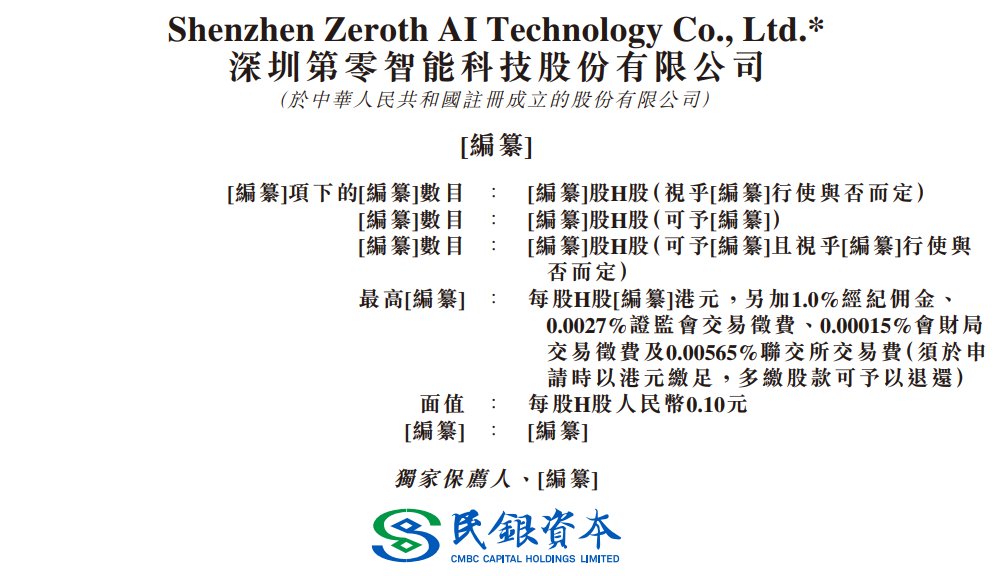
| 蒙頂下的[端餐]數目 | : : | 「編纂]股H股(視乎[編纂]行使與否而定) | | --- | --- | --- | | [编纂]數目 | : | [编纂]股H股(可予[编纂]) | | [编纂]數目 | :: | 「編纂」股H股(可予編纂]目視乎編纂]行使與 | | | | 合而定) | | 最高 编纂] | : | 每股H股[編纂]港元,另加1.0%經紀佣金、 | | | | 0.0027%證監會交易徵費、0.00015%會財局 | | | | 交易徵費及0.00565%聯交所交易費(須於申 | | | | 請時以港元繳足,多繳股款可予以退還) | | 面值 | : | 每股H股人民幣0.10元 | | [编纂] | : : | [编纂] | 据港交所2月10日披露,深圳第零智能科技股份有限公司(简称:第零智能)向港交所主板递交上市申请,民银资本为其独家保荐人。招股书披 露,第零智能是中国领先的企业AI智能体解决方案提供商。公司致力于开发AI智能体解决方案,为客户提升效率、扩展性及精准度,根据弗若 斯特沙利文,就2024年的收益而言,公司已跃居中国企业级AI智能体解决方案第五大供应商,市场份额 ...

新股消息 | 第零智能递表港交所主板
智通财经网· 2026-02-10 22:44
智通财经APP获悉,据港交所2月10日披露,深圳第零智能科技股份有限公司(简称:第零智能)向港交所主板递交上市申请,民银资本为其独家 保荐人。招股书披露,第零智能是中国领先的企业AI智能体解决方案提供商。公司致力于开发AI智能体解决方案,为客户提升效率、扩展性及 精准度,根据弗若斯特沙利文,就2024年的收益而言,公司已跃居中国企业级AI智能体解决方案第五大供应商,市场份额为3.0%。 | 纂頂下的[編纂]數目 | ・・ | [编纂]股H股(視乎[编纂]行使與否而定) | | --- | --- | --- | | [编纂]數目 | .. | [编纂]股H股(可予[编纂]) | | 「編纂]數目 | :: | 「編纂]股H股(可予編纂]目視乎編纂]行使與 | | | | 合而定) | | 最高 编纂] : | | 每股H股[編纂]港元,另加1.0%經紀佣金、 | | | | 0.0027%證監會交易徵費、0.00015%會財局 | | | | 交易徵費及0.00565%聯交所交易費(須於申 | | | | 請時以港元繳足,多繳股款可予以退還) | | 面值 | : | 每股H股人民幣0.10元 | | [編纂 ...
G42将在越南发展主权人工智能和云基础设施 每日热文
Shang Wu Bu Wang Zhan· 2026-02-10 22:23
路透社2月9日消息,阿布扎比科技集团G42与越南FPT(电信)集团及Viet Thai集团组成的财团签署协 议,将在越南发展主权人工智能和云基础设施。根据框架协议,各方计划投资10亿美元,在越南三处数 据中心部署云计算能力,以支持"AI原生社会"建设并保障数据主权。越南媒体此前报道称,相关方还计 划在胡志明市建设一座价值20亿美元的超大规模数据中心。 【资料图】 ...

一杯奶茶会让AI更“香”吗
Mei Ri Shang Bao· 2026-02-10 22:15
本报评论员岑嵘 日前,千问App豪掷30亿元,推出"1分钱喝奶茶"活动。用户只需通过邀请好友等方式,就能拿到奶茶 免单券,喜茶、霸王茶姬等品牌随便点。这场"奶茶狂欢"效果立竿见影,千问App迅速登顶苹果免费应 用榜。由于订单量暴增,系统多次崩溃,外卖骑手直呼"送不过来";更有人将免单权益挂在二手平台, 标价6到10元转卖"代下单",当起了"奶茶黄牛"。对此,千问官方紧急回应,严禁转售变现,并将免单 使用期延长至2月底,呼吁用户错峰下单。 一个是高大上的人工智能应用,一个是普普通通的奶茶,两者为何会结合起来,其中的逻辑又是什么? 但这种烧钱模式同样让人担忧。这场看似薅羊毛的免费奶茶狂欢,实则是互联网企业惯用的烧钱模式。 回顾当年的外卖大战,美团、阿里、京东累计投入超700亿元补贴,换来的是存量市场的零和博弈。如 今,这场竞争以AI的名义卷土重来,本质仍是用资本堆砌流量壁垒。 AI大战下沉到消费场景,容易陷入"重营销、轻技术"的误区。大模型的核心竞争力,本应是算法精度、 场景适配能力等等,而非补贴力度的大小。企业与其烧钱,不如沉下心实实在在做好产品,让人工智能 大模型不断迭代升级。唯有摒弃短视的流量思维,深耕技术 ...
肩负使命担当 投身强国建设
Xin Lang Cai Jing· 2026-02-10 22:11
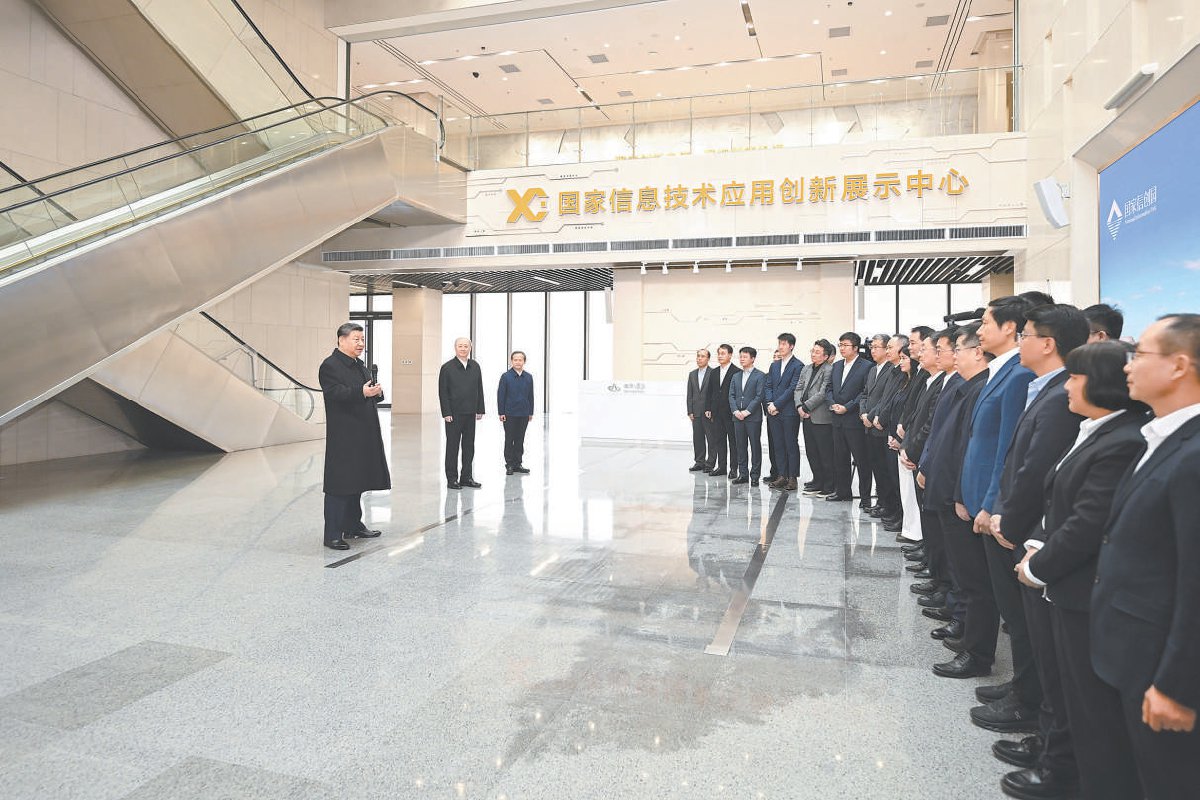
Group 1 - Xi Jinping visited the National Innovation Park in Beijing, emphasizing the importance of technological innovation and encouraging researchers and tech entrepreneurs to contribute to national modernization [2][4] - The National Innovation Park has attracted 1,000 companies, with a focus on cutting-edge fields such as quantum information, 6G communication, and smart hardware [4] - Companies like Beijing Lingzu Times Technology and Beijing Brain Science and Brain-like Research Institute expressed motivation from Xi's visit, highlighting the need for continuous innovation and tackling significant technological challenges [3][5] Group 2 - The emphasis on "self-reliance and self-improvement in technology" was a key message from Xi, inspiring organizations to focus on original innovation and breakthrough technologies [4][5] - The Beijing Quantum Information Science Research Institute aims to lead in quantum technology research, integrating it with artificial intelligence to enhance technological capabilities [8][9] - The robotics sector, represented by companies like Shurui Robotics, is committed to overcoming technical challenges and contributing to China's technological independence [9][10] Group 3 - The "14th Five-Year Plan" outlines goals for Beijing to become a global hub for scientific innovation, focusing on high-level talent and open innovation [12] - The National Blockchain Technology Innovation Center is dedicated to ensuring that China's blockchain technology remains globally competitive, addressing critical issues in the field [12] - The overall sentiment among tech companies is one of determination to fulfill Xi's vision for a technologically advanced nation, with a strong focus on practical applications and real-world problem-solving [10][11]
SoundHound AI To Report 2025 Fourth Quarter and Full Year Financial Results, Host Conference Call and Webcast on February 26
Globenewswire· 2026-02-10 21:10
Core Insights - SoundHound AI, Inc. will report its 2025 fourth quarter and full year financial results on February 26, 2026, after market close [2] - A conference call and webcast will be hosted by CEO Keyvan Mohajer and CFO Nitesh Sharan on the same day at 2:00 p.m. PT / 5:00 p.m. ET [3] Company Overview - SoundHound AI is a global leader in voice and conversational AI, providing solutions that enhance customer experiences across various industries [3] - The company's proprietary technology delivers high-speed and accurate voice AI solutions in multiple languages for sectors including retail, financial services, healthcare, automotive, smart devices, and restaurants [3] - Key products include Smart Answering, Smart Ordering, Dynamic Drive-Thru, and the Amelia Platform, which supports AI Agents for enterprises [3] - SoundHound's Agentic AI for Automotive and Autonomics automates IT processes, enabling the company to power millions of products and services and process billions of interactions annually for leading businesses [3]


“不要对AI说谢谢”不需要那么多算计
Xin Lang Cai Jing· 2026-02-10 21:07
如果无数网民,把精力用在关注这类话题上,才是真正的"算力浪费"。 (来源:千龙网) 这种话语,其核心还是对AI的认知上存在偏差,只有纯粹把AI当作生产的工具或解决问题的工具,才 会产生这种多说一句"谢谢"就浪费能源的观点。而实际上,AI对人类来说,既可以是工具助手,也可以 是亲朋好友,大量的用户通过向AI倾诉来获取精神抚慰,这也是有价值的。 例如,近日一款基于OpenClaw打造的韩国AI女友——Clawra正式上线,瞬间引发关注。她不仅有记 忆、会自拍,还能视频通话。她充当的就是情感陪护角色,对这样的AI说句"谢谢"岂不理所当然?没有 谁会在意所谓的浪费电力。 另一重认知误区在于,把礼貌当成浪费,本身是一种价值观错误。礼貌的对象不是AI,而是人类自 己,人类说礼貌用语是出于维持日常语言习惯,维持社交规范,本质上,说出"谢谢"可以让自己更舒 适,有其情感价值,与AI无关。 如果把"谢谢"省了,表面上确实节省了能源,但有可能淡化人类的社交习惯,使交往变得更冷漠,这相 当于以工程效率逻辑碾轧了社会伦理。两相比较,到底是维护文明更重要,还是节省那点电力更重要? 答案不言自明。 AI确实正在大量消耗电力,但谈到节能, ...
Blackstone boosts stake in AI startup Anthropic to about $1 billion, source says
Reuters· 2026-02-10 20:56
Core Insights - Blackstone is increasing its investment in Anthropic, the maker of the Claude chatbot, raising its stake to approximately $1 billion at a valuation of around $350 billion [1] Company Summary - Blackstone's investment in Anthropic signifies a strong confidence in the growth potential of AI technologies, particularly in the chatbot sector [1] - The valuation of Anthropic at $350 billion reflects the increasing market interest and competition in AI-driven solutions [1]


The Stock Market's Paradoxical Doomsday: Artificial Intelligence Is Running Out of Gas yet Bound to Replace Software
Yahoo Finance· 2026-02-10 20:35
Group 1 - Concerns about AI stocks have emerged as investors question the high valuations and the potential returns from significant capital expenditures planned by major tech companies [1][6] - Recent sell-offs in software stocks are attributed to fears that AI could disrupt software-as-a-service (SaaS) products and business models, leading to a paradox where AI is perceived as both struggling and a threat to existing software [2][9] - The heavy investment in AI-related capital expenditures by large tech firms raises doubts about the sustainability of returns, especially given the resource demands of AI, such as power and water for data centers [6][7] Group 2 - A report from the Lawrence Berkeley National Laboratory predicts that by 2028, over half of the power used by data centers will be for AI, potentially consuming electricity equivalent to 22% of all U.S. households [7] - McKinsey estimates that $6.7 trillion will be needed for data center spending by 2030 to meet the growing demand for computing power [7] - Criticism of OpenAI's latest models has led to skepticism about whether the substantial investments in AI will result in significantly improved models, contributing to the recent market sell-off [8][10] Group 3 - The introduction of new AI tools, such as Anthropic's Claude Cowork, has intensified fears that AI could render many existing software models obsolete [9] - Bank of America's Vivek Arya suggests that while AI models offer unprecedented intelligence, the process of harnessing and productizing this intelligence will take several years, indicating a disconnect between current investment expectations and future outcomes [10]
报道:黑石参投Anthropic融资轮,持股规模升至10亿美元
Xin Lang Cai Jing· 2026-02-10 20:32
Core Insights - Blackstone is increasing its investment in AI company Anthropic PBC, raising its stake to approximately $1 billion based on the startup's current valuation [1] - In the ongoing funding round, Blackstone will invest $200 million, valuing Anthropic at $35 billion [1] - Anthropic is developing the Claude AI model, and due to strong investor demand, the company's funding is expected to exceed its initial target of $10 billion by more than double [1]