高速公路

Search documents
安徽皖通高速公路(00995)与S19联合体其他成员成立合资公司,以实施有关S19淮南至桐城高速公路舒城至桐城段的项目
智通财经网· 2026-01-27 11:15
S19合资公司的宗旨及工作范围如下: 1.宗旨及业务范围:(1)S19项目的投资、建设及管理;(2)S19项目指定区域内服务设施及广告业务的运营 及管理; 智通财经APP讯,安徽皖通高速公路(00995)发布公告,于2026年1月27日,本公司与S19联合体其他成 员订立S19合资协议,并就成立S19合资公司的相关安排达成一致。联合体向S19合资公司出资总额将达 人民币14.47亿元,其中安徽交控集团、本公司、交控工程、交控建工、交控信息产业及迅捷物流将分 别出资人民币12.3亿元、人民币1.45亿元、人民币4342万元、人民币1447万元、人民币724万元及人民币 724万元。S19合资公司注册成立后之初始注册资本为人民币2亿元。 2.工作范围:项目规划、资金筹集、前期工作、建设实施、运营管理、债务清偿及资产管理;高速公路 (含土地使用权)、高速公路配套设施及相关资料须按照特许经营权协议规定无偿移交交通相关部门。 诚如本公司日期为2026年1月13日之公告所述,S19淮南至桐城高速公路舒城至桐城段是连接S19淮南 段、合肥段及衔接合枞高速的重要通道。与S19联合体其他成员成立S19合资公司将使本公司能够参与 ...

江苏云杉资本管理有限公司增持江苏宁沪高速公路(00177)827.4万股 每股作价约9.77港元
智通财经网· 2026-01-27 10:55
本交易涉及其他关联方:江苏交通控股有限公司。 智通财经APP获悉,香港联交所最新资料显示,1月26日,江苏云杉资本管理有限公司增持江苏宁沪高 速公路(00177)827.4万股,每股作价9.7711港元,总金额约为8084.61万港元。增持后最新持股数目为 1.37亿股,最新持股比例为11.25%。 ...

东莞控股:莞深高速主线目前采用双向六车道通行标准,其改扩建工程按双向十车道标准推进建设
Zheng Quan Ri Bao Wang· 2026-01-27 08:43
Core Viewpoint - Dongguan Holdings (000828) is currently upgrading the Guanshen Expressway to enhance traffic capacity and efficiency, with a focus on minimizing disruption to traffic flow [1] Group 1: Project Details - The main line of the Guanshen Expressway is currently operating under a dual six-lane standard, with the expansion project advancing to a dual ten-lane standard, and some sections will adopt a dual twelve-lane standard [1] - The construction of the upgrade began in 2022 and is expected to be completed by the end of 2028 [1] Group 2: Construction Approach - The project prioritizes minimizing interference with traffic flow, focusing construction efforts on peripheral sections [1] - During the construction period, only temporary closures of specific stations, such as Dongguan Station and Management Center Station, have occurred, without implementing unilateral closures on the main line [1]


公募REITs2025Q4业绩分析:关注边际改善信号,布局筑底企稳机会
Shenwan Hongyuan Securities· 2026-01-27 07:15
1. Report Industry Investment Rating The report does not provide an industry investment rating. 2. Core Viewpoints - In 25Q4, most asset performances showed marginal improvement. The revenue and EBITDA of public utilities, consumption, industrial parks, and warehousing logistics all increased, while the EBITDA decline of energy and transportation significantly narrowed year-on-year. However, the rental income and EBITDA of affordable rental housing decreased slightly, and IDC benefited from long - term contracts with major clients, maintaining stable performance [3]. - The performance of different sectors in the future will be affected by various factors. Public utilities are expected to have stable cash - flows, but performance differentiation depends on the active management ability of operators. The consumption sector is expected to have a compensatory increase in 26Q1, and its performance is expected to be stable in the long - term. Affordable rental housing will face new supply shocks in 2026, and different operators need to find a balance between volume and price. The energy sector's revenue stability depends on power trading strategies. The traffic sector's performance is related to road network planning and cost control. The warehousing sector's rent is expected to decline in the short - term, and the industrial park sector will enter a deep adjustment period [3][35][56][80][102][126][147][175]. 3. Summary by Directory 3.1 Overview - In 25Q4, the performance of most assets showed a marginal improvement trend. The revenue and EBITDA of consumption, industrial parks, and warehousing logistics increased quarter - on - quarter, and the revenue of public utilities increased year - on - year. The EBITDA decline of energy and transportation significantly narrowed, and the single - quarter distribution rate of the three major types of operating - rights assets increased significantly in 25H2 [3][6][8]. - The available distribution amount completion rate of REITs established in 2024 and 2025 was 79% and 64% respectively [11][13]. 3.2 Public Utilities - As of January 23, 2026, the expansion project of Shougang Water Service REIT was terminated. The scale and price of the four listed public - utility REITs are regulated by the government [20]. - In 25Q4, the waste treatment volume and power generation of Shougang Biomass REIT increased year - on - year. The sewage treatment volume of Shougang Water Service REIT decreased quarter - on - quarter, and the water supply volume of Shaoxing Raw Water REIT decreased quarter - on - quarter. The actual heat - stop rate of Jinan Energy Heating REIT was lower than expected, and the heating area increased [23]. - The revenue of Shougang Biomass REIT increased by more than 24% year - on - year, and Jinan Energy Heating REIT achieved significant cost - reduction. The revenue, profit, and available distribution amount of Shougang Water Service REIT decreased quarter - on - quarter, and the revenue, EBITDA, and available distribution amount of Shaoxing Raw Water REIT decreased quarter - on - quarter [27]. - In 2026, the cash - flows of public - utility REITs are expected to be stable, but the performance differentiation depends on the active management ability of operators. Attention should be paid to seasonal fluctuations, external interventions, and local new competition [35]. 3.3 Consumption - There are 12 listed consumption REITs, involving four types of sub - assets: shopping centers, outlet malls, supermarkets + community commerce, and agricultural product markets. The project management is generally carried out by high - quality commercial real - estate operating enterprises [39]. - In 25Q4, the eight consumption REITs achieved good operating performance. The rental rate and rent generally increased slightly year - on - year/quarter - on - quarter or remained basically the same, and the collection rate was close to full collection. Half of the projects' rent reached a new high in the past five periods [45]. - The fund revenue generally increased, and the performance of Bailian Consumption REIT significantly improved. The available distribution amount of most consumption REITs increased year - on - year/quarter - on - quarter or remained basically the same, but the available distribution amount of China Green Development Commercial REIT and Huagong Agricultural Market REIT decreased significantly quarter - on - quarter [49][56]. - In 26Q1, the operating performance of consumption REITs is expected to have a compensatory increase. In the long - term, with the implementation of the "national subsidy" policy and the focus on expanding domestic demand, the performance of consumption REITs is expected to be stable [56]. 3.4 Affordable Rental Housing - As of 25Q4, 8 affordable rental housing REITs were listed, and China Resources Youchao REIT completed its expansion and issuance [58]. - Government - led projects had stable volume and price, while market - oriented projects exchanged price for volume. The overall rental rate remained stable, but the rental rate of some projects decreased significantly, and the bottom - floor business recruitment progress of some projects was slow [61][64]. - The overall revenue increased, but the profit margin generally decreased quarter - on - quarter. The available distribution amount of most projects changed little or increased year - on - year, but the available distribution amount of some projects decreased significantly [65][69][74]. - In 2026, affordable rental housing REITs will face new supply shocks. First - tier cities' rents are expected to be more resilient, while second - and third - tier cities' rents may face greater pressure. Different operators need to find a sustainable balance between volume and price [80]. 3.5 Energy - As of January 23, 2026, 9 energy infrastructure REITs had been recruited. In 25Q4, China National Nuclear Power Clean Energy REIT was newly issued, and Beijing Energy Photovoltaic REIT completed its expansion [82]. - More than half of the energy REITs' power generation decreased year - on - year, and the power price generally declined year - on - year. The revenue slightly decreased, and the EBITDA stabilized, but the profit indicators were differentiated [84][88][94]. - About 67% of the REITs' available distribution amount increased year - on - year, driving the overall and unit available distribution amount to increase by 3.0% year - on - year [97]. - In 2026, the mechanism power generation will set a floor for revenue. The stability and elasticity of project revenue depend on power trading strategies and capabilities [100][102]. 3.6 Transportation - As of January 23, 2026, 13 transportation infrastructure REITs were listed, and 3 projects were queuing up [104]. - In 25Q4, most projects' daily average traffic volume decreased quarter - on - quarter/year - on - year, and the toll revenue decreased quarter - on - quarter but increased year - on - year. More than half of the projects' EBITDA profit margin was at the lowest level in the year [108][111][115]. - 40% of the REITs' available distribution amount increased year - on - year. The available distribution amount of some projects increased significantly, while that of some projects decreased due to high maintenance costs [122]. - In 2026, the traffic performance of projects affected by diversion in 2025 is expected to improve year - on - year, and the performance of projects still facing diversion pressure depends on refined cost control [126]. 3.7 Warehousing Logistics - As of January 23, 2026, 11 warehousing logistics REITs had been issued, mainly located in first - tier cities and their surrounding areas and logistics hub cities [128]. - In 25Q4, the national warehousing logistics rental market still faced rent adjustment pressure, with "regional differentiation and overall pressure". The rent of market - oriented rental projects decreased, and the overall rental rate increased slightly. The rent of whole - lease projects was relatively stable, with small fluctuations [131][135][136]. - The revenue and profit margin generally weakened, but the available distribution amount increased quarter - on - quarter on average due to the year - end centralized dividends of newly - listed REITs [138][142]. - In the short - term, the national warehousing rent is expected to continue to decline. The performance of projects will vary according to regional levels and rental operation models, and some projects with improved supply - demand conditions may recover first [147]. 3.8 Industrial Parks - As of 25Q4, 20 industrial park REITs were listed, involving 50 projects, mainly in the east of the Hu Line, with a continuous increase in R & D/office and manufacturing projects [149]. - The rental rate and collection rate of business parks increased, but the rent was still at the bottom. The rental rate and collection rate of manufacturing parks were high, but the rent still faced downward pressure [155][159]. - The marginal improvement of fund revenue began to appear, but the EBITDA was still under pressure. The change trend of the available distribution amount of individual bonds was differentiated, and some industrial park REITs' secondary - market net value dropped to a low level, with the distribution rate reaching a new high in the past five periods [163][167][171]. - In 2026, the supply of industrial parks is expected to be at a high level, and the rental downward pressure will continue. Attention should be paid to high - quality projects with a good supply - demand pattern, marginal improvement in operating fundamentals, and a stable rent trend [175]. 3.9 IDC - Two listed IDC - REITs operate under long - term agreements with major clients. In 25Q4, their operation was stable, and the financial indicators increased significantly quarter - on - quarter [177][181]. - In 2026, the basic business of the two IDC projects is expected to be stable due to long - term agreements. Attention should be paid to cost - side changes, such as the construction progress of surrounding substations and the control of energy - efficiency indicators [185].
公募REITs四季度报点评:强者恒强,关注业绩筑底走向
GUOTAI HAITONG SECURITIES· 2026-01-27 05:19
Group 1: Report's Overall Investment Rating - Not provided in the content Group 2: Core Views - The operation performance of dominant sectors remains stable in the fourth - quarter financial data, and it's worth noting the stabilization signals of relatively weak sectors [3][5][35] - Since 2026, the REITs market has achieved a "double jump", and the suppressed market sentiment showed signs of loosening before the earnings report disclosure. Some projects even had a "front - running" upward trend. Currently, policy dividends are still being realized, and institutional allocation demand is strong. Attention should be paid to the short - term allocation rhythm of dominant sectors, and potential projects with more upside space can be explored [5][36] Group 3: Summary by Directory 3.1. Affordable Housing - The operating indicators of the affordable housing sector are steadily rising, with some fluctuations in a few market - oriented projects. The rental - allocation projects maintain stable growth, and the pressure mainly comes from the denominator [7] 3.2. Warehousing - The phenomenon of trading price for volume is still common in the warehousing sector, but the overall fluctuation is limited. The sector is still under pressure, and the year - on - year growth rate of comparable project revenue indicators shows a marginal decline, while the month - on - month data shows more increases than decreases [10] 3.3. Consumption - The growth of the consumption sector is relatively obvious, but there is also some differentiation among projects. Leading projects have achieved growth in both rent and rental area, while some projects' revenue indicators have declined due to renovation progress [14] 3.4. Industrial Park - The industrial park sector continues to bear pressure, but the decline slope of some low - level projects has slowed down marginally. Factory - type projects are more stable, and some R & D office projects are shifting from "double decline in volume and price" to "trading price for volume", with the rent collection rate improving at the end of the year [17][18] 3.5. Municipal Environmental Protection - The municipal environmental protection sector shows a steady - to - rising trend. The China Aviation Shougang Green Energy project performs outstandingly, and the heating area of Jinan Energy has increased slightly [22] 3.6. High - speed - The high - speed sector is under overall pressure. Except for a few projects, most projects' revenue indicators have declined year - on - year and month - on - month. Road network changes, toll policies, and weather are the common influencing factors [25][26] 3.7. Energy - The energy sector shows a differentiated performance, with large fluctuations in revenue indicators. Long - term factors such as regional consumption, natural resources, installed capacity, and power market reform should be noted [29] 3.8. IDC - The IDC sector maintains stable operations without significant changes [32] 3.9. Investment Recommendations - Pay attention to the allocation rhythm of dominant projects and focus on marginally stabilizing weak projects. For dominant sectors, pay attention to short - term risks and participate after corrections. Also, explore projects with more potential upside space [35][36]
高速公路行业更新报告:公路政策优化可期,公路法修正将是信号
GUOTAI HAITONG SECURITIES· 2026-01-26 13:50
Investment Rating - The report assigns an "Overweight" rating to the highway industry [6]. Core Insights - The comprehensive revision of the "Regulations on the Management of Toll Roads" has been in preparation for years, with broad consensus on four key amendments. The anticipated policy optimization is expected to accelerate, with the amendment of the Highway Law serving as an important signal that could improve long-term returns in the industry [3][6]. - The demand for highway tolls is recovering, and the certainty of dividends remains prominent. The highway industry is experiencing a release of suppressed demand and expansion effects, driving significant growth in traffic volume and profitability. From the second half of 2024 to the first half of 2025, traffic volume in the highway industry is expected to remain under pressure, particularly with a year-on-year reduction in truck traffic, which contrasts with the steady growth trend in highway freight volume [6]. - The report highlights that highway companies are actively optimizing their debt structures in response to the continuous decline in the Loan Prime Rate (LPR), which is expected to further reduce financial costs and support profitability growth. The stability of the highway dividend policy and manageable capital expenditure pressures for expansion and reconstruction projects position the industry as a preferred choice for dividends in the transportation sector [6]. Summary by Sections Policy Revision - The "Regulations on the Management of Toll Roads" is the most important policy for the highway industry, originally enacted in 2004. It has effectively supported the rapid construction of China's highway network over the past forty years. However, rising construction costs and unchanged toll standards have led to declining returns on new and expanded projects, increasing financing difficulties and accumulating debt risks [6]. - The Ministry of Transport has previously released draft amendments in 2013, 2015, and 2018, with the revision consistently appearing in annual legislative work plans. The report suggests that as a batch of highways approaches the end of their tolling period, policy optimization may accelerate [6]. - Key amendments include extending the operating period for new projects from 25 years to 30 years, allowing for extensions on reconstruction projects, introducing compensation mechanisms for reductions, and establishing a maintenance fee system based on the "user pays" principle [6]. Investment Recommendations - The report maintains an "Overweight" rating for the highway sector, suggesting that policy optimization may catalyze optimistic expectations. The industry faces reinvestment pressures due to limited operating years and ongoing business needs, making reinvestment a necessary choice. The report anticipates that policy optimization will systematically improve reinvestment risks and ensure reasonable returns on reinvestment [6]. - Recommended stocks include China Merchants Highway, Nanjing-Hangzhou Expressway, Anhui Wantuo Expressway, and Shenzhen International, with additional mentions of Sichuan Chengyu, Guangdong Expressway, Shandong Expressway, and Zhongyuan Expressway as related targets [6].

国泰海通:维持高速公路增持评级 政策优化或催化乐观预期
智通财经网· 2026-01-26 08:28
Group 1 - The core viewpoint is that the comprehensive revision of the "Regulations on the Management of Toll Roads" has been in preparation for many years, and the four revisions have broad consensus in the industry. The policy optimization is expected to accelerate, with the amendment of the Highway Law being an important signal that may improve long-term returns in the industry [1][3][4] - The highway industry is experiencing a recovery in toll demand, with significant growth in traffic volume and profitability driven by the release of suppressed demand and expansion effects. However, from the second half of 2024 to the first half of 2025, the industry is expected to face continued pressure on traffic volume, particularly for freight vehicles, which may be affected by economic fluctuations and differentiated tolling [2][3] - The comprehensive revision of the "Regulations on the Management of Toll Roads" is crucial for the highway industry, as it has been in effect since 2004 and has ensured the rapid construction of China's highway network. However, rising construction costs and unchanged toll standards have led to declining returns on new and expanded projects, increasing financing difficulties and debt risks [3][4] Group 2 - The industry consensus on the policy revisions includes four key points: 1) Extension of operating periods for new projects from 25 years to 30 years, with the possibility of exceeding 30 years for large-scale projects; 2) Allowing extensions for renovation and expansion projects; 3) Introduction of compensation for exemptions based on pilot programs; 4) Establishment of a maintenance fee system based on the "user pays" principle [4] - The highway companies are actively optimizing their debt structures in response to the continuous decline in the Loan Prime Rate (LPR), which is expected to further reduce financial costs and support profitability growth in the highway sector. The stability of dividend policies and manageable capital expenditure pressures for future renovations and expansions make the transportation industry a preferred choice for dividends [2][3]

中金山东高速REIT:2025年可供分配金额是上年的101%,累计收益分配6.91亿元
Sou Hu Wang· 2026-01-26 03:45
Core Viewpoint - The report of the Zhongjin Shandong Expressway REIT for Q4 2025 indicates a steady growth in distributable income and stable operational performance despite external challenges. Group 1: Financial Performance - The fund achieved a total distributable income of approximately 191 million yuan in 2025, reflecting a year-on-year increase of 0.95% [2] - The annualized cash distribution rate based on the closing price of 7.364 yuan per share on December 31, 2025, reached 6.47% [2] - Since its establishment, the fund has distributed income 9 times, totaling approximately 691 million yuan, with a distribution ratio close to 100% [3] Group 2: Operational Performance - The actual operating revenue for the Yanhua Expressway in 2025 was 255.92 million yuan, which is 94.92% of the forecasted value of 269.61 million yuan [4] - The decrease in traffic volume and toll revenue was influenced by changes in the road network, particularly the reopening of the Jinan to Heze Expressway after expansion [4] Group 3: Management Actions - The fund management has actively maintained road assets and rights, successfully completing bridge construction over the Yanhua Expressway and securing compensation for related construction [5] - The operational management team has focused on ensuring key operational metrics are met, including traffic flow rates and customer satisfaction, while implementing measures to maximize toll revenue collection [5] - Safety measures were prioritized, with preparations for national evaluations and proactive checks conducted throughout the year, resulting in no safety production responsibility accidents [5]

持续聚焦主责主业 谱写高质量发展新篇章——写在省公航旅集团二届四次职代会召开之际
Xin Lang Cai Jing· 2026-01-26 02:32
Core Viewpoint - The company is focusing on high-quality development and reform initiatives to enhance operational efficiency and governance while addressing complex challenges in the current economic environment [1]. Group 1: Project Development and Infrastructure - The company is implementing a project cycle strategy of "completing one batch, starting one batch, and reserving one batch" to stimulate demand through effective investment [2]. - Key highway projects such as the "Three New Highway Corridors" and "Gansu-Sichuan Fourth Corridor" are being actively pursued, with several highways already operational, contributing to regional economic growth [2]. - The company is also advancing cultural tourism projects, enhancing service capabilities, and optimizing the tourism industry structure [2]. Group 2: Industrial Optimization and Core Functionality - The company is optimizing its industrial layout and enhancing core functions to provide new momentum for high-quality development [3]. - A comprehensive integrated operation system for highway management is being established, with significant improvements in road maintenance and operational revenue [3]. - The low-altitude economy sector is developing a new production capacity system, expanding its business into multiple provinces and achieving a high passenger volume in low-altitude tourism [3]. Group 3: Lean Management and Operational Efficiency - The company is conducting a "Lean Management Improvement Year" initiative to address high operational costs and improve governance capabilities [4]. - A new regulatory framework has been established, including the creation and revision of numerous internal policies to support operational efficiency [4]. - Digital platforms for procurement and asset management are being developed to enhance operational efficiency and reduce costs [4]. Group 4: State-Owned Enterprise Reform - The company is deepening state-owned enterprise reforms, completing numerous key tasks to enhance systemic and structural changes [5]. - The integration of various operational aspects of the highway industry is being pursued to create a more focused and efficient operational model [5][6]. - Efforts are being made to optimize organizational structures and improve human resource allocation within the company [6]. Group 5: Party Leadership and Development - The company is emphasizing the role of party leadership in transforming advantages into developmental strengths [7]. - A dynamic management mechanism for party activities is being established to enhance engagement and accountability among members [7]. - Various initiatives are being implemented to integrate party work with production and operational activities, resulting in recognition for outstanding practices [7]. Group 6: Future Outlook - The year 2026 is seen as a critical starting point for the "15th Five-Year Plan," requiring a proactive and determined approach from all levels of the organization to ensure successful implementation [8].
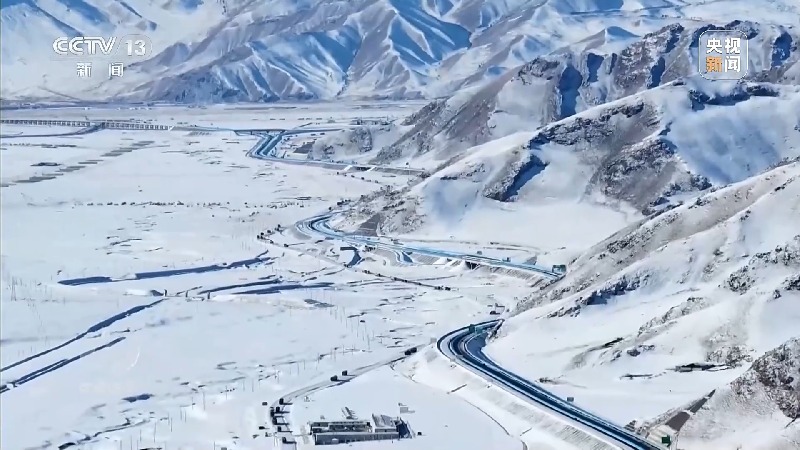
焦点访谈丨乌尉高速通车“满月” 看天山南北如何谱写幸福“疆”来
Yang Shi Xin Wen Ke Hu Duan· 2026-01-26 02:03
Core Viewpoint - The opening of the Urumqi to Yili Expressway significantly reduces travel time between northern and southern Xinjiang, enhancing regional connectivity and economic development [1][9][41]. Infrastructure Development - The Urumqi to Yili Expressway, a 324.7 km long project, was completed with an investment of 46.7 billion yuan and took 5 years and 8 months to construct [1][9]. - Travel time between Urumqi and Korla has been cut from 7 hours to 3.5 hours, reducing the distance by 170 km [9][41]. Economic Impact - The expressway connects rich agricultural resources in southern Xinjiang with industrial capabilities in the north, leading to lower logistics costs and enhanced employment opportunities [11][32]. - The logistics sector has seen significant improvements, with one logistics company reporting a cost saving of 150 yuan per trip and a reduction in round-trip time from 2 days to 1 day [28]. Tourism and Local Economy - The expressway has boosted tourism, with increased visitor numbers to attractions like Bosten Lake, which saw a doubling of tourists during the New Year period [24][26]. - Local agricultural products, such as pears and fish, are now more accessible to national markets, enhancing the economic prospects for farmers [26][36]. Safety and Efficiency - The expressway features advanced traffic management systems, which have proven effective in emergency situations, such as a rapid response to a fire incident in a tunnel [14][16]. - The expressway is designed to handle severe weather conditions, ensuring continuous operation and safety for travelers [18]. Strategic Importance - The Urumqi to Yili Expressway is a key component of Xinjiang's "six horizontal and six vertical" road network, facilitating the transition from a "channel economy" to a "hub economy" [32]. - It serves as a vital link for the Belt and Road Initiative, enhancing Xinjiang's role as a bridge for international trade [32].