
军事装备

Search documents
俄罗斯总统普京:俄罗斯曾向伊朗提供军事装备,此举与当前危机无关,也未违反国际法律。
news flash· 2025-06-18 22:07
俄罗斯总统普京:俄罗斯曾向伊朗提供军事装备,此举与当前危机无关,也未违反国际法律。 ...
俄媒:美国航母关闭应答器可能正驶向波斯湾
news flash· 2025-06-18 12:00
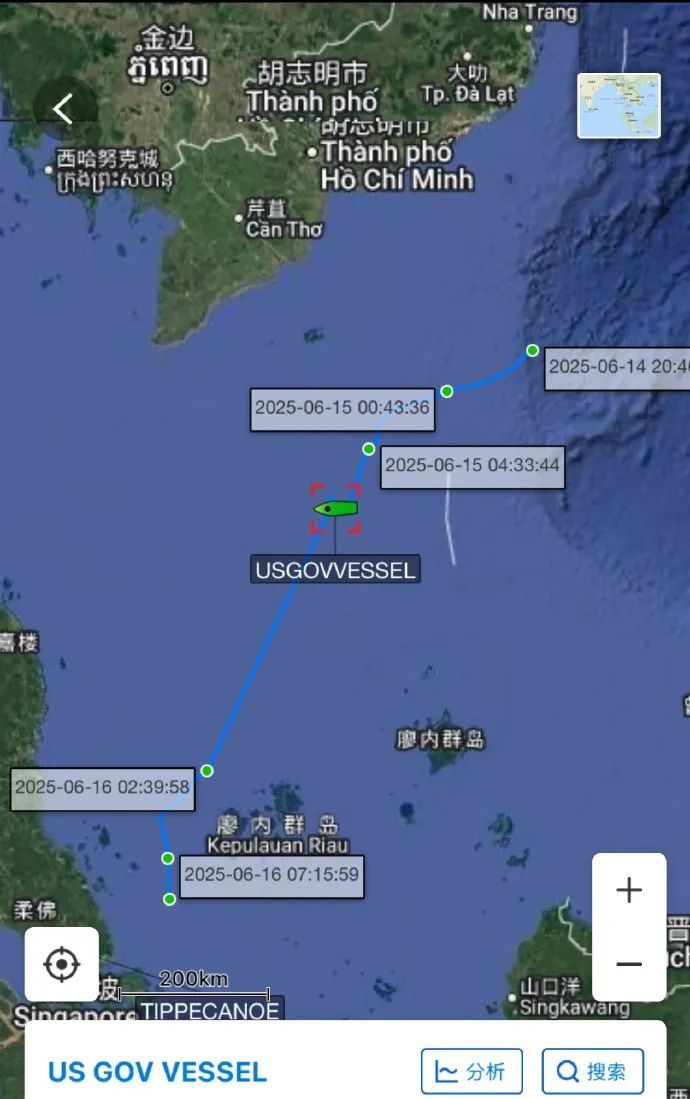
Group 1 - The article reports that the US aircraft carrier "Nimitz" is believed to be heading towards the Middle East while turning off its transponder, ceasing to transmit its location information [1] - According to satellite data, the "Nimitz" is currently located in the waters between Malaysia and Indonesia, traveling at a speed of 19 knots and heading approximately 313 degrees, with the last recorded signal on June 17 at 02:03 GMT [1] - Although the ship tracking system does not explicitly indicate the carrier's destination, its heading suggests that the "Nimitz" strike group may be en route to the Persian Gulf [1]
以军称伊朗已使用近400枚弹道导弹 消息人士称以方防空导弹短缺
news flash· 2025-06-18 06:57
以色列陆军电台当地时间6月18日上午发布消息称,统计显示,在过去几天的袭击当中,伊朗共计使用 了将近400枚弹道导弹。另据《华尔街日报》援引消息人士报道,以色列方面目前正面临着防空导弹短 缺的问题。美国驻以色列使馆同日发布消息称,鉴于目前的"安全局势和军事冲突的风险",该馆将于18 日至20日关闭。(央视新闻) ...
整理:中东局势跟踪(6月18日)
news flash· 2025-06-17 22:08
Group 1: Israel-Iran Conflict - Israel's ambassador to Washington anticipates "surprises" in upcoming attacks on Iran, aiming to destroy its nuclear facilities before negotiations [1] - Israeli officials state that Trump did not pressure Israel to halt military actions against Iran [1] - Israel claims to have weakened the command chain of Iran's armed forces [1] Group 2: U.S. Position - Trump indicates he will not take action to remove Iran's supreme leader for now, seeking more proactive solutions beyond a ceasefire [2] - U.S. officials assert that the U.S. will not proactively join Israel's military actions [4] - U.S. Vice President Pence suggests Trump may take further actions to prevent Iran's nuclear program [4] Group 3: Iranian Response - Iran's military has launched new attacks, targeting strategic locations [4] - Iranian Revolutionary Guard has attacked Israeli military intelligence and Mossad centers [4] - Iran has reportedly launched at least 400 missiles and hundreds of drones towards Israeli territory [4] Group 4: International Reactions - The G7 has reiterated that Iran must not possess nuclear weapons and confirmed Israel's right to self-defense [4] - The EU's foreign policy chief emphasizes that diplomatic solutions are the best long-term approach to Iran's nuclear program [4] - Qatar warns against attacks on Middle Eastern energy and nuclear facilities [4]
伊朗说24小时击落28个敌方目标,以色列说摧毁70余套伊朗防空系统
news flash· 2025-06-17 18:40
Group 1 - Iranian air defense forces intercepted and shot down 28 enemy targets in the past 24 hours using electronic interception, missile, and artillery systems [1] - The Israeli Defense Forces reported that their air force has destroyed over 70 Iranian air defense systems to date [1] - Among the downed enemy targets was a "Shahed" drone attempting to scout sensitive areas in Iran [1]
从反对到默许,特朗普态度为何180度大转变?
Jin Shi Shu Ju· 2025-06-17 08:36
Group 1 - The article discusses President Trump's initial opposition to military action against Iran by Israel, favoring diplomatic solutions, but later shifted to support Israel's actions due to concerns over Iran's nuclear capabilities [1][2] - Israeli officials shared intelligence with the U.S. regarding their plans to strike Iran, leading to discussions about potential U.S. support, including refueling Israeli aircraft and sharing intelligence [2][4] - The U.S. military began preparations for potential support to Israel, including deploying surveillance aircraft and naval assets to the region [2][3] Group 2 - The initial attack by Israel resulted in significant casualties among Iranian military leaders and nuclear scientists, relying heavily on intelligence and resources provided by the U.S. [4] - Despite some support, Trump did not approve all of Israel's requests, particularly regarding a plan to target Iranian Supreme Leader Khamenei, which he opposed [5][6] - Trump's decision-making was influenced by the absence of U.S. casualties in the conflict, leading him to advise against the assassination of Khamenei [6]
伊以冲突解读以及防空系统的重要性
2025-06-16 15:20
Summary of Key Points from the Conference Call Industry or Company Involved - The discussion primarily revolves around the geopolitical dynamics in the Middle East, focusing on the Israel-Iran conflict and its implications for regional security and military strategies. Core Points and Arguments 1. **Iran's Nuclear Capability and International Concerns** Iran's advancements in nuclear capabilities have raised international alarms, with claims of potential rapid nuclear weapon production despite Iran's assertions of peaceful nuclear energy use. The International Atomic Energy Agency (IAEA) and the US view Iran as having the ability to produce nuclear weapons within a short timeframe since mid-2022 [3][4][5] 2. **Impact of US Policy on Middle East Dynamics** The Trump administration's withdrawal from the Iran nuclear deal and its reduction of military support in the region have significantly weakened US influence, leading to increased security challenges for Israel, which traditionally relied on US backing [4][5][6] 3. **Israel's Preemptive Actions Against Iran** Israel has engaged in preemptive strikes against Iranian military capabilities, including targeted assassinations and the destruction of missile bases, which have temporarily weakened Iran's military strength. However, Iran's retaliatory capabilities have shown some resilience [2][3][12][15] 4. **US Support for Israel** The US has provided indirect support to Israel during the conflict, including intelligence and aerial refueling capabilities, while maintaining a stance of non-intervention. Over 30 refueling aircraft have been deployed to enhance Israel's operational capabilities [5][16] 5. **Regional Shifts in Alliances** Following military setbacks, Saudi Arabia and Gulf states have shifted towards reconciliation with Syria and pro-Iran factions, which has intensified regional tensions and set the stage for the Israel-Iran conflict [6][7] 6. **Future of Nuclear Non-Proliferation** A collapse of Iran's nuclear control policies could undermine global non-proliferation efforts, prompting other nations to pursue nuclear weapons directly, which would alter the military balance globally [3][18] 7. **Challenges Faced by Iran** Iran is grappling with insufficient strikes on underground nuclear facilities and missile launchers, although its missile capabilities are recovering. The country possesses a significant stockpile of mid-range ballistic missiles, but must evade Israeli airstrikes [17][18] 8. **Military Strategy and Air Power** The effectiveness of air power in modern warfare is being questioned, as demonstrated by Israel's struggles against Hamas and Hezbollah. Ground forces are deemed necessary to achieve decisive victories, highlighting the limitations of air superiority alone [22][34] 9. **Emerging Threats from Drone Warfare** The rise of drone warfare, particularly suicide drones, poses new challenges for traditional military strategies. The cost-effectiveness of these drones makes them a formidable threat that current defense systems struggle to counter [26][31] 10. **Future Developments in Defense Systems** The evolution of defense systems will need to address a multi-layered threat landscape, including advanced missile systems and drone swarms. Countries are expected to invest in high-end defense capabilities to protect critical assets [30][33] Other Important but Possibly Overlooked Content - The potential for a complete breakdown of the nuclear non-proliferation regime could lead to a significant shift in military strategies worldwide, emphasizing the need for robust air and missile defense systems [18][21] - The discussion highlights the complexities of modern warfare, where traditional military doctrines are being challenged by new technologies and asymmetric warfare tactics [25][27]
刚刚!伊朗,关闭股市
Zhong Guo Ji Jin Bao· 2025-06-16 12:35
Group 1 - Iran has temporarily closed its stock market until the situation stabilizes, aiming to protect public funds [2] - The recent conflict has resulted in significant casualties, with Iran reporting 224 civilian deaths and 17 senior military officials killed due to Israeli airstrikes [5] - Israel claims to have achieved full air control over Tehran and has conducted extensive bombing operations targeting Iranian military infrastructure [3][4] Group 2 - Israel's Defense Forces (IDF) report that they have destroyed approximately one-third of Iran's ballistic missile launch systems [6][7] - Iran has launched 370 ballistic missiles and numerous drones at Israel during the ongoing conflict, resulting in 24 Israeli deaths and 592 injuries [11] - The U.S. Embassy in Tel Aviv sustained minor damage from nearby Iranian missile explosions, but no American personnel were injured [10]
26架军机+航母,美军突然大举增兵中东
Guan Cha Zhe Wang· 2025-06-16 09:38
Core Viewpoint - The United States is significantly increasing its military presence in the Middle East, with the deployment of the USS Nimitz aircraft carrier and numerous refueling aircraft heading towards Europe, indicating potential future involvement in the Israel-Iran conflict [1][3][4]. Military Movements - The USS Nimitz aircraft carrier has diverted from the South China Sea to the Strait of Malacca, with speculation that it will join the USS Carl Vinson in the Arabian Sea to form a dual-carrier strike group [3][7]. - At least 21 refueling aircraft from the U.S. are currently en route to Europe, likely to support military operations in the Middle East [3]. Conflict Escalation - The ongoing conflict between Israel and Iran has seen both sides conducting missile strikes, with Israel targeting multiple Iranian military sites, including missile production facilities [4][5]. - Iran has claimed successful missile strikes against key Israeli targets, indicating a shift in their operational capabilities [5]. Political Statements - President Trump stated that the U.S. is not currently involved in Israel's military actions against Iran but suggested that future involvement is possible [4]. - Trump issued a warning to Iran regarding attacks on U.S. interests in the region, emphasizing the potential for a swift and powerful military response [4].

以色列军方:昨晚海军的导弹舰拦截了来自伊朗的八架无人机。首次使用巴拉克·马根防空系统(Barak Magen)进行了拦截。
news flash· 2025-06-16 06:55
Core Insights - The Israeli military intercepted eight drones from Iran using the Barak Magen defense system for the first time [1]