
军事装备

Search documents
俄罗斯警告日本领导层
券商中国· 2026-03-26 06:15
Group 1 - The core viewpoint of the article is that Japan's increasing military cooperation with Ukraine is likely to diminish the prospects for a peaceful resolution to the Russia-Ukraine conflict [1] - Russian Foreign Ministry spokesperson Zakharova stated that any attempt by Japan to provide lethal weapons and military equipment to Ukraine will be viewed as hostile actions, leading to severe retaliatory measures from Russia [1] - Japan's defense budget for the fiscal year 2026 is set to exceed 9 trillion yen (approximately 389.5 billion RMB), marking a historical high [1] Group 2 - Japan is considering the acquisition of Ukrainian-made drones, which are noted for their superior anti-jamming capabilities and endurance, as part of its military strategy [1] - Analysts suggest that Japan's intent to "learn experience and technology" is a guise for accelerating its military transformation and strategic expansion, aiming to break away from its "self-defense" principle and develop offensive military capabilities [2]


伊朗:击中一架美军隐形战机
第一财经· 2026-03-19 23:16
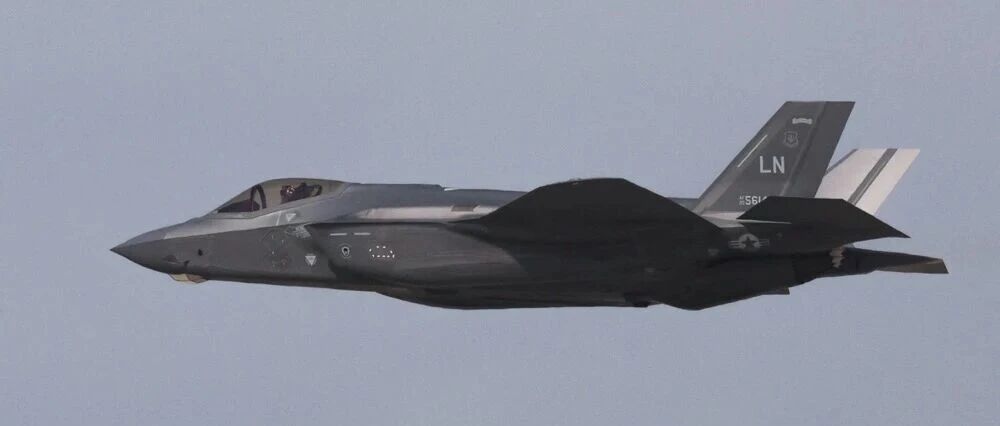
Core Viewpoint - Iran's Islamic Revolutionary Guard Corps (IRGC) claims to have severely damaged a US F-35 stealth fighter jet, indicating that Iran's air defense capabilities remain intact and can counter advanced military equipment [1]. Group 1 - The IRGC reported that the F-35 was hit by a new advanced air defense system during a mission over Iranian airspace [1]. - The US Central Command confirmed that the F-35 was forced to make an emergency landing at a US military base in the Middle East, with the pilot in stable condition [1]. - Iranian media suggested that if Iran's air defense was truly destroyed, the F-35, one of the most advanced and expensive fighter jets, would not have been able to be attacked and forced to retreat [1]. Group 2 - Iran has the capability to significantly increase the costs of any military adventures [2].
伊朗发布战报
中国能源报· 2026-03-16 01:22
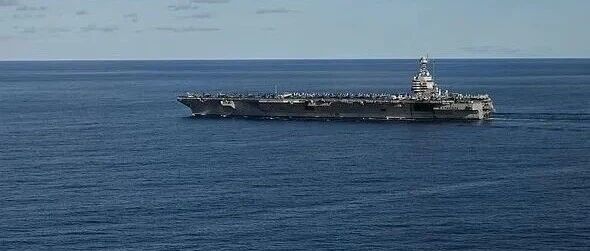
Group 1 - Iran's Islamic Revolutionary Guard Corps (IRGC) claims to have destroyed four U.S. terminal high-altitude area defense systems (THAAD) and has not yet utilized many of its missile stockpiles [1] - Iran has reportedly hit 18 U.S. and Israeli-related vessels and oil tankers, with 200 strategic targets identified for potential strikes, leading to a daily war expenditure of $1.5 billion for the U.S. and Israel [1] - The IRGC spokesperson stated that approximately 700 missiles and 3,600 drones have been launched against U.S. and Israeli targets, with most missiles being produced around ten years ago, and many newer missiles developed after the "12-day war" last June remain unused [1] Group 2 - The IRGC has indicated that facilities providing logistics and services for the U.S. Navy's USS Ford aircraft carrier will be targeted [1] - The USS Ford strike group is currently involved in large-scale military operations against Iran in the Red Sea [1]
以军否认防空弹药不足
证券时报· 2026-03-15 14:31
Group 1 - The Israeli Defense Forces (IDF) denied claims of a severe shortage of air defense interceptors and stated that they had adequately prepared for military actions against Iran months in advance [1] - An anonymous military officer indicated that the IDF is ready for a prolonged conflict with Iran, having used fewer interceptors than anticipated during current operations [1] - Reports indicated that Iran launched approximately 300 ballistic missiles towards Israel in the two weeks following the conflict's outbreak on February 28, which is fewer than the 500 missiles launched during the "12th War" in June 2025 [1] Group 2 - U.S. officials reported that Israel informed them of a near "serious shortage" in its ballistic missile interceptor stockpile, with the air defense system under significant pressure as the conflict with Iran continues [1] - It was noted that Israel's interceptor inventory was already low before the current conflict began [1] - The U.S. official emphasized that the U.S. itself does not face a similar shortage in interceptor stock and maintains sufficient capabilities to protect its bases, personnel, and interests in the Middle East [1]

伊朗革命卫队:摧毁近10部美国先进雷达!驻韩美军部分“萨德”反导系统转往中东
证券时报· 2026-03-10 08:26
Group 1 - Iran's Islamic Revolutionary Guard Corps has reportedly destroyed nearly 10 advanced American radar systems and has shot down numerous expensive drones as part of its defense operations [1] - The U.S. military is preparing to redeploy some of its THAAD missile defense systems from South Korea to the Middle East in response to ongoing military actions against Iran [1] - The South Korean government anticipates that the U.S. may formally request the withdrawal of some military forces stationed in South Korea to the Middle East in the near future [1] Group 2 - An Iranian military commander stated that the U.S. and Israel can no longer initiate or conclude wars at will, emphasizing that they will regret their actions [2] - The commander asserted that the resolve of Iran's leadership, people, and military for revenge against their enemies is stronger than ever, dismissing any attempts by adversaries to undermine Iran's determination through psychological warfare [2]

美军:击中伊朗无人机航母
第一财经· 2026-03-06 04:38
Core Viewpoint - The article discusses recent military actions involving the U.S. and Iran, highlighting significant developments in their military capabilities and engagements in the Middle East. Group 1: U.S. Military Actions - The U.S. military has reportedly sunk or destroyed over 30 Iranian naval vessels and struck an Iranian drone carrier, which is comparable in size to World War II aircraft carriers [3]. - U.S. Central Command claims that Iranian ballistic missile attacks have decreased by 90% and drone attacks by 83% since the onset of U.S. military operations [3]. - The U.S. aims to systematically destroy Iran's future missile production capabilities and has established complete air and sea dominance over Iranian naval forces [3]. Group 2: Iranian Military Developments - Iran's Islamic Revolutionary Guard Corps announced the launch of the "Khoramshahr-4" super-heavy missile, which carries a 1-ton warhead targeting multiple locations in Israel, including Tel Aviv and Ben Gurion Airport [4][5]. - The "Khoramshahr-4" missile is reported to have a length of approximately 13 meters, a diameter of about 1.5 meters, and a weight of around 30 tons, capable of reaching speeds of up to 16 Mach outside the atmosphere and 8 Mach upon re-entry [6]. - This missile has a range of 2,000 kilometers and can be equipped with various warheads, making it a significant threat to regional security [7].

伊军袭击以色列国防部大楼和机场,摧毁7套雷达系统
第一财经· 2026-03-04 23:59
Group 1 - The core viewpoint of the article highlights that Iran's Islamic Revolutionary Guard Corps successfully launched hypersonic missiles and attack drones that breached the U.S. THAAD system, targeting the Israeli Ministry of Defense building and Ben Gurion International Airport [1] - The announcement indicates that over 7 advanced radar systems were destroyed by Iran, leading to a situation where the U.S. and Israel are "blind" in the region [1] - The article mentions that reconnaissance and strikes against aggressors will continue, with an expectation of increased intensity and range of attacks in the coming days [2]

英国金融时报:伊朗新的报复战略
美股IPO· 2026-03-02 03:48
Core Viewpoint - Iran is adopting a new retaliation strategy against Israel, focusing on a more sustainable approach rather than large-scale missile strikes, aiming to deplete Israel's defense systems and disrupt regional stability [3][4]. Group 1: Iran's Military Strategy - Following the previous 12-day conflict with Israel, Iran has shifted its missile strategy to avoid large-scale attacks that were largely intercepted, opting instead for a more measured approach to engage Israel's defense systems [3]. - Iran is utilizing short-range missiles and drones to target U.S. allies in the Gulf region, including civilian infrastructure and military bases, aiming to exhaust lower-value munitions while weakening interception capabilities [3][4]. - Reports indicate that Iran has launched "over 25 waves" of ballistic missiles and drones targeting Israel and other Gulf nations, with a higher frequency of attacks compared to the previous conflict [3][4]. Group 2: Impact and Casualties - The scale of the current attacks is significantly smaller than last year's, but the frequency is higher, leading to a strategy described as a "war of attrition" by Israeli officials [4][19]. - Casualties from the Iranian attacks are rising, with over 200 deaths reported in Iran, while attacks in Israel resulted in 10 deaths and injuries in the UAE and Bahrain [4][11]. - The UAE reported being hit by over 150 ballistic missiles and 500 drones, indicating a broad scope of the attacks across the region [4]. Group 3: Tactical Considerations - Experts suggest that Iran is likely using less advanced missiles initially to deplete U.S. and Israeli interceptors, reserving more advanced missiles for later stages of conflict [5][6]. - The Iranian military is reportedly under pressure to launch missiles before ground launchers are destroyed, indicating a sense of urgency in their operations [9][20]. - The psychological impact of continuous bombardment on Israeli civilians is noted, creating a sense of constant threat and pressure to seek shelter [19]. Group 4: Future Implications - Analysts believe Iran may choose to bide its time, potentially waiting for a more opportune moment to escalate attacks, particularly after U.S. military withdrawal from the region [20]. - The ongoing conflict dynamics suggest that Iran is recalibrating its military tactics to adapt to the evolving geopolitical landscape, which may have long-term implications for regional stability [18][19].

美国重兵集结中东 背后是怎样的盘算
Xin Lang Cai Jing· 2026-02-25 18:57
Military Deployment Overview - The U.S. military has initiated its largest military deployment in the Middle East since the Iraq War in 2003, centered around the aircraft carriers USS Lincoln and USS Ford, which are equipped with nearly 100 F-35 and F-18 fighter jets, along with multiple destroyers [2][3] - The deployment includes 14 surface vessels and is aimed at exerting pressure on Iran ahead of negotiations scheduled for February 26 in Geneva [2][3] Air Force and Ground Forces - In addition to the naval forces, the U.S. Air Force has deployed over 30 F-35 and F-16 jets, more than 20 F-15 jets, 12 A-10 attack aircraft, and various reconnaissance and electronic warfare aircraft in Qatar and Jordan [3][9] - The U.S. has also positioned missile defense systems like Patriot and THAAD in the region, with B-2 bombers on heightened alert [3][9] Strategic Objectives - The military buildup serves two primary objectives: to apply maximum pressure on Iran before negotiations and to prepare for potential military action if necessary [4][5] - President Trump has indicated a willingness to consider limited military strikes against Iran to compel compliance with U.S. demands [4][5] Potential Military Strategies - Analysts have identified three possible military strategies: 1. Limited strikes targeting key Iranian military and security assets to establish deterrence [5] 2. Long-term weakening of Iran's military capabilities through periodic strikes on nuclear facilities and missile systems [6] 3. Regime change through direct attacks on Iranian leadership and command structures, though this faces logistical challenges [6] Concerns and Reactions - There are concerns within the U.S. military and government regarding the potential for prolonged conflict and the risks associated with military action against Iran [7] - Experts warn that military action could lead to significant casualties among U.S. personnel and escalate regional conflicts, potentially impacting global energy markets [8] Current Negotiation Status - Iranian Foreign Minister Zarif is en route to Geneva for indirect negotiations with the U.S., following previous rounds of talks that showed some progress despite ongoing disagreements [10][11]
外媒:美“福特”号航母抵达希腊克里特岛苏达湾
Xin Lang Cai Jing· 2026-02-23 23:46
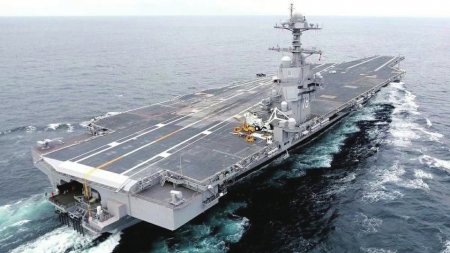
Core Viewpoint - The deployment of the USS Gerald R. Ford aircraft carrier to Souda Bay, Crete, is part of a strategic military maneuver directed by U.S. leadership, indicating an increased military presence in the Middle East region [1] Group 1: Deployment Details - The USS Gerald R. Ford is expected to stay in Souda Bay for several days for refueling and resupply before continuing its mission [1] - This deployment follows a directive from the White House to send a second aircraft carrier to the Middle East [1] Group 2: Strategic Context - The USS Ford and its escort vessels have been dispatched from the Caribbean to join the Abraham Lincoln Carrier Strike Group located in the Persian Gulf [1]