Quantum Computing

Search documents
Why Quantum Computing Stock Is Skyrocketing Today
The Motley Fool· 2025-06-06 17:57
Core Viewpoint - Quantum Computing's stock has experienced a significant increase following a price target upgrade and a mostly positive earnings report, despite concerns about the company's actual revenue and the nascent state of quantum technology [1][2][3][6]. Financial Performance - Quantum Computing reported Q1 earnings with a net gain of $0.11 per share, up from $0.08 in the same period last year, largely due to a $23.6 million noncash gain related to the merger with QPhoton [3]. - The company reported revenue of only $39,000 in the last quarter, highlighting a stark contrast with its market capitalization of nearly $2 billion [6]. Market Reaction - The stock price surged by 13.9% as of 12:59 ET, coinciding with broader market gains in the S&P 500 and Nasdaq Composite [1]. - Analysts at Ascendiant Capital Markets raised the price target for Quantum Computing's stock from $14.00 to $22.00, indicating a significant upside potential [2]. Operational Developments - The company has completed the construction of its quantum photonic chip foundry in Tempe, Arizona, marking a major operational milestone [5]. Industry Context - The quantum computing field is still in its early stages, with real commercialization potentially decades away, which investors should consider when evaluating the company's prospects [6][7].




MicroAlgo Inc. Adopts Quantum Phase Estimation (QPE) Method to Enhance Quantum Neural Network Training
Prnewswire· 2025-06-06 14:20
Core Insights - MicroAlgo Inc. is exploring the potential of quantum technology, particularly in training Quantum Neural Networks (QNNs), which could lead to significant advancements in data processing and pattern recognition [1] Quantum Neural Network Training - Quantum Phase Estimation (QPE) is a crucial technique in quantum computing that enhances the training efficiency of neural networks by optimizing network parameters through precise phase estimation [2][10] - The construction of quantum circuits is essential for mapping the neural network's structure, ensuring accurate representation of parameters [3] - Quantum state initialization involves applying quantum gate operations to set qubits in specific states that correspond to the neural network's initial parameters [4] - Controlled unitary operations are utilized to entangle the neural network's parameters with auxiliary qubits, gradually accumulating phase information [5] - The inverse Quantum Fourier Transform is applied to convert quantum states into classical bit values for parameter optimization [6] Parameter Optimization and Error Correction - Parameter optimization involves adjusting the neural network's parameters based on estimated phase information to improve output accuracy through iterative processes [7] - Advanced quantum error correction techniques are implemented to enhance training stability and precision of phase estimation [8] Applications and Future Prospects - The application of QPE in QNN training has shown to significantly improve image processing capabilities, outperforming traditional methods in speed and accuracy [9] - In natural language processing, optimized network parameters allow for better understanding and generation of text, enhancing efficiency and fluency in various tasks [9] - The scalability of this technology supports the ongoing development of quantum computing and the increasing number of qubits, indicating a promising future for larger-scale QNN training [10][11][12] Company Overview - MicroAlgo Inc. specializes in developing bespoke central processing algorithms, providing comprehensive solutions that integrate these algorithms with software and hardware to enhance customer satisfaction and achieve technical goals [13]


This Quantum Computing Stock Soared Over 30% In May. Is It a Buy Now?
The Motley Fool· 2025-06-04 09:30
Industry Overview - Quantum computing stocks are currently among the hottest on Wall Street, surpassing even AI stocks in interest [1] - The potential for rapid returns exists if quantum computing technology becomes viable and mainstream [1] Company Analysis: Rigetti Computing - Rigetti Computing's stock rose over 30% in May, peaking at over 50% increase during the month, indicating strong market interest [2] - Despite the recent gains, Rigetti's stock is down approximately 40% from its all-time high in early January, reflecting the volatility and hype surrounding quantum computing stocks [4] - The company is developing a full-stack quantum computing solution, competing against both start-ups and major players like Microsoft and Alphabet [4] - Rigetti has achieved about 99% fidelity in its chip architectures, which is competitive within the industry [6] - The company plans to release a four-chip, 36-qubit system by 2025, although widespread adoption of quantum computing is still years away [6] Market Opportunity - Rigetti projects a market opportunity for quantum computing of $1 billion to $2 billion before 2030, with significant growth expected to $15 billion to $30 billion by 2040 [7] - The long-term nature of this market opportunity raises questions about the timing for serious investments in Rigetti [7] Financial Position - Rigetti's current valuation stands at $3.5 billion, despite generating only around $9.2 million in contracts, indicating a high-risk investment profile [7] - The company is unprofitable and has agreed to sell up to $350 million in new shares to bolster its cash reserves for research and development [7][8] - The issuance of new shares dilutes existing shareholders, a recurring issue for Rigetti [8] Investment Considerations - Rigetti Computing is characterized as a high-risk, high-reward stock, with significant success already priced into its valuation [7][10] - Investors may consider smaller position sizes to mitigate potential losses while still allowing for growth if the stock performs well [10] - The uncertainty surrounding Rigetti's future performance suggests a cautious approach to investment in the company at this time [10]

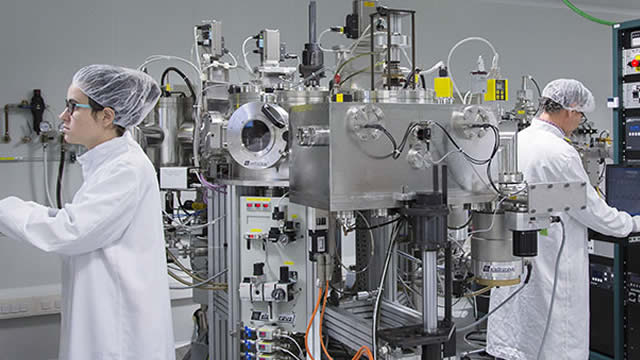
估值432亿的全球龙头,英伟达投了
投中网· 2025-06-04 05:47
Core Viewpoint - Nvidia's recent investment in quantum computing, particularly in PsiQuantum, signifies a strategic move to enhance its position in the rapidly evolving quantum technology landscape, aiming to integrate quantum capabilities with its existing GPU architecture [4][5][11]. Group 1: Nvidia's Quantum Computing Strategy - Nvidia's CEO Jensen Huang initially projected a 20-year timeline for practical quantum computers but later retracted this statement, acknowledging a misjudgment and announcing the establishment of a quantum research center [4][10]. - The company is engaging in late-stage investment negotiations with PsiQuantum, participating in a $750 million funding round led by BlackRock, which would elevate PsiQuantum's post-investment valuation to $6 billion [5][9]. - This investment aligns with Nvidia's strategy of leveraging small investments for high leverage in the potential trillion-dollar quantum market [16]. Group 2: PsiQuantum Overview - Founded in 2016, PsiQuantum has become the highest-valued quantum startup, with a valuation exceeding $3 billion in 2021 and potentially reaching $6 billion with the latest funding [6][9]. - The founding team, primarily from the University of Bristol, has a strong background in quantum research, focusing on scalable, fault-tolerant quantum computing using photonic technology [7][8]. - PsiQuantum's approach aims to transition laboratory technology into mass-produced products, setting it apart from other quantum startups [8][10]. Group 3: Market Dynamics and Competition - The global quantum computing market is currently dominated by superconducting technology, which accounts for 62% of the hardware market, while PsiQuantum's photonic approach represents a unique alternative [18]. - The quantum computing sector is experiencing significant growth, with the Chinese market projected to reach 11.56 billion yuan by 2025, growing at an annual rate exceeding 30% [19][20]. - Major tech companies like IBM, Google, and Microsoft are also heavily investing in quantum computing, indicating a competitive landscape where Nvidia must innovate to maintain its market position [12][13]. Group 4: Government Support and Future Prospects - PsiQuantum has established strong relationships with various governments, securing funding for quantum projects, including a $940 million investment from the Australian government for deploying commercial quantum computers by 2029 [10][15]. - The Chinese government has recognized quantum technology as a core area for development, with multiple provinces outlining support for quantum initiatives in their 2025 work reports [20][21]. - The ongoing competition between photonic and superconducting technologies will be crucial for the future of quantum computing, with companies needing to balance technological breakthroughs with practical applications [21].


Is Now a Good Time to Buy Quantum Computing Stocks? History Suggests What Could Happen Next.
The Motley Fool· 2025-06-04 01:13
Quantum computing stocks such as IonQ, Rigetti Computing, and D-Wave Quantum are crushing the broader market right now. While there have been fleeting moments of euphoria in the stock market in 2025, it's been a pretty tough year overall. One particular area that has managed to outmaneuver this year's volatility, however, is quantum computing. As of the closing bell on May 27, the Defiance Quantum ETF had returned approximately 8% so far t his year -- handily outperforming the returns of the S&P 500, Nasdaq ...



微波技术将量子比特出错率降至千万分之一
news flash· 2025-06-03 22:22
Core Insights - A research team from the University of Oxford has successfully reduced the error rate of quantum bit manipulation to one in ten million using microwave technology, achieving an unprecedented level of precision [1] Group 1: Research and Development - The study published in the latest issue of "Physical Review Letters" highlights a significant advancement in quantum computing technology [1] - This breakthrough paves the way for the development of quantum transistor-like devices, which could enhance the practicality and precision of quantum computers [1]
Johnson Fistel Investigates Quantum Computing: Long-Term Investors Encouraged to Reach Out
GlobeNewswire News Room· 2025-06-03 19:56
Core Viewpoint - Johnson Fistel, PLLP is investigating potential breaches of fiduciary duties by directors and officers of Quantum Computing Inc. (QCI), focusing on their obligations to shareholders [1]. Group 1: Legal Investigation - A class action complaint has been filed against QCI, alleging that the defendants made false and misleading statements regarding the company's quantum computing technologies and relationships with NASA [3]. - The complaint claims that QCI overstated its technological capabilities, the nature of its contracts with NASA, and its progress in developing a TFLN foundry [3]. - It is alleged that QCI's revenues were partially based on undisclosed related party transactions, which could significantly harm the company's business and reputation once revealed [3]. Group 2: Shareholder Rights - Current long-term QCI shareholders may have legal claims that can be brought against the company's directors and officers [2]. - Shareholders interested in discussing their legal rights are encouraged to contact the lead analyst at Johnson Fistel [2].

量子计算仍需加强基础研究
Ke Ji Ri Bao· 2025-06-02 23:30
Core Viewpoint - Current research in quantum computing remains in the realm of basic science, with significant advancements needed in error correction capabilities across various platforms [1][2][3] Group 1: Quantum Computing Platforms - The platforms for quantum computing, including neutral atoms and photons, are now competitive with ion and superconducting platforms [1][2] - Different quantum computers have unique characteristics and standards, making simple comparisons difficult; the number of qubits is just one indicator of performance [2][3] - Recent investments in quantum computing platforms by the US and Europe have reached approximately 500 million euros each over the past two years [3] Group 2: Challenges and Developments - Quantum computers face challenges such as high sensitivity to interference and noise, which affects their reliability [3][4] - Error correction is crucial for the functionality of quantum computers, and significant progress has been made in achieving fault-tolerant quantum information [3][4] - The best quantum computers in Germany are still in university laboratories, with various startups exploring different quantum computing directions [4] Group 3: Integration with Classical Computing - Current quantum computing still requires support from classical computing for data analysis and operational understanding [4] - Successful integration of quantum processors into supercomputers has been demonstrated, highlighting the importance of a robust network for quantum computing development [4]
Why IonQ Stock Soared 47% in May
The Motley Fool· 2025-06-02 20:43
Core Insights - IonQ's shares experienced a significant increase, primarily due to favorable coverage in Barron's and the company's ambition to become "the Nvidia of quantum computing" [1][5] - The stock finished the month up 47%, with a notable surge of 37% on May 22 following the Barron's report, although some gains were lost in the subsequent week [2][5] - IonQ reported first-quarter earnings of $7.6 million in revenue, which is less than 0.1% of Nvidia and Broadcom's reported figures, alongside a GAAP net loss of $32.3 million [6][7] Financial Performance - IonQ's first-quarter revenue was $7.6 million, with a GAAP net loss of $32.3 million and an adjusted EBITDA loss of $35.8 million [6][7] - The company is targeting full-year revenue of $75 million to $95 million following its acquisition of Lightsynq, but justifying a market cap of $10 billion at that revenue level is challenging [9] Strategic Developments - IonQ signed a memorandum of understanding (MOU) with the Korea Institute of Science and Technology (KISTI) to collaborate on advancing quantum computing [8]

Is D-Wave Quantum a Millionaire-Maker Stock?
The Motley Fool· 2025-06-02 10:15
Core Viewpoint - The technology sector, particularly quantum computing, presents significant investment opportunities, exemplified by D-Wave Quantum's remarkable stock performance and growth potential [1][4][12]. Group 1: Industry Overview - The launch of OpenAI's ChatGPT initiated the generative AI industry, and there are indications that quantum computing may be the next transformative technology [2]. - Quantum computing aims to solve complex calculations rapidly using qubits, which can exist in multiple states simultaneously, distinguishing it from generative AI [3]. Group 2: Company Profile - D-Wave Quantum - D-Wave Quantum, founded in 1999, is notable for being the only company selling commercially available quantum computers, utilizing quantum annealing technology [5][6]. - The company has received backing from prominent figures, including Jeff Bezos and In-Q-Tel, enhancing its credibility in the tech space [5]. Group 3: Recent Achievements - D-Wave's Advantage2 computer recently outperformed the Department of Energy's Frontier supercomputer, generating significant interest in its stock [8][9]. - The company reported a 500% year-over-year revenue increase in Q1, reaching $15 million, attributed to the sale of its Advantage quantum annealing system [10]. Group 4: Financial Health - Operating losses decreased from $17.5 million to $11.3 million, indicating potential for sustainable profitability if growth continues [11]. - D-Wave holds $304.3 million in cash and equivalents, providing a strong financial cushion to support ongoing operations [11].