Fertilizers

Search documents
Enlightify Inc. Notifies New York Stock Exchange of Intent to Cure Price Deficiency
Globenewswire· 2025-09-10 21:00
Core Points - Enlightify Inc. intends to address a price deficiency that has caused its stock to fall below the NYSE minimum average share price requirement of $1.00 [1] - The company has a six-month period to regain compliance with NYSE listing standards to avoid delisting [2] - The company's stock remains listed and traded on the NYSE, and the notification does not impact its business operations or SEC reporting obligations [3] Company Overview - Enlightify Inc. produces and distributes humic acid-based compound fertilizers and other agricultural products through its subsidiaries, including Shaanxi TechTeam Jinong Humic Acid Product Co., Ltd. and Beijing Gufeng Chemical Products Co., Ltd. [4] - In 2023, the company began purchasing digital asset mining machines and established Antaeus Tech Inc. to mine bitcoins in Texas [4]
Nutrien's Cash Flow Strength: Can Strategic Moves Fuel More Growth?
ZACKS· 2025-09-10 15:15
Core Insights - Nutrien Ltd. (NTR) reported a significant increase in operating cash flow, which surged 40% year over year to $2,538 million in the second quarter, driven by higher selling prices and sales volumes [1][7] - The company is strategically focusing on its core assets by selling its 50% equity interest in Profertil S.A., which is expected to enhance its quality of earnings and cash flow [3][7] - Nutrien's stock has increased by 26.2% year to date, outperforming the Zacks Fertilizers industry, which rose by 19% [6][7] Financial Performance - NTR's strong cash flows and robust balance sheet enable it to finance growth investments, reduce debt, and enhance shareholder value [2] - The company anticipates maintaining momentum in the second half of the year, supported by higher sales volumes and prices, along with strong retail earnings [2] - The Zacks Consensus Estimate for NTR's earnings in 2025 and 2026 indicates a year-over-year rise of 25.7% and 0.05%, respectively, with EPS estimates trending higher over the past 60 days [9] Valuation Metrics - Nutrien is currently trading at a forward 12-month earnings multiple of 13.13, which is in line with the industry average of 13.12X [8] - The company carries a Value Score of B, indicating a favorable valuation relative to its peers [8]

Top Fertilizer Manufacturers Worldwide — Why Elite Gree Stands Out
Medium· 2025-09-10 08:08
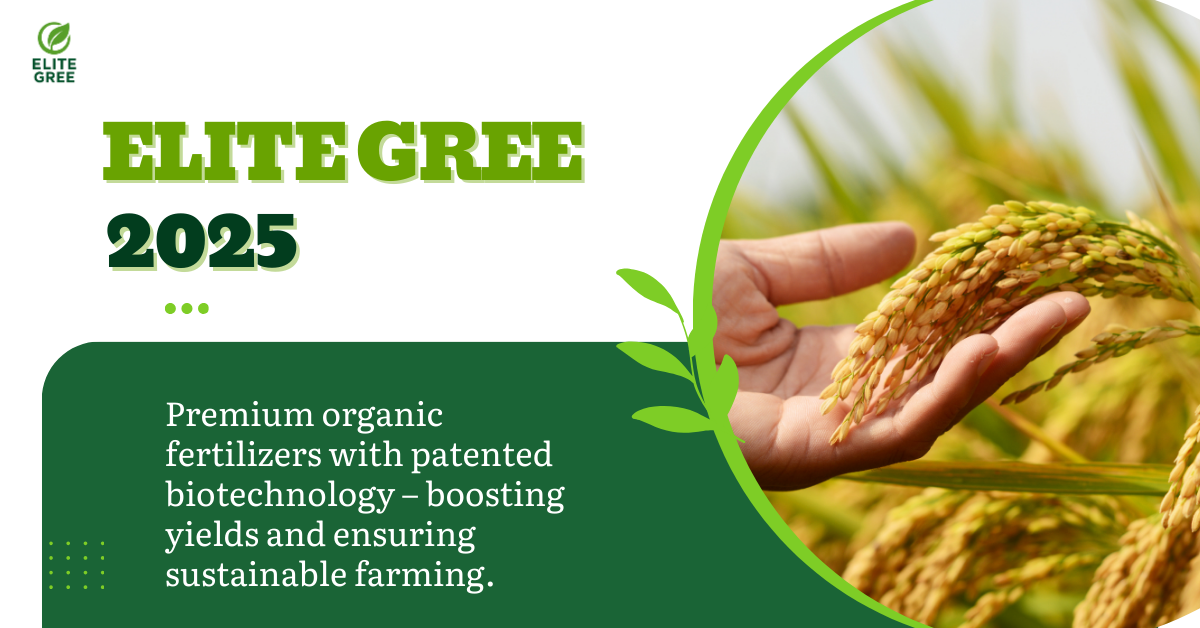
Industry Overview - The global fertilizer industry is crucial for food security, with major players like Nutrien, Yara International, and Mosaic leading the market [1][3] - The industry is transitioning from conventional chemical fertilizers to bio-organic solutions, driven by the need for sustainable agricultural practices [4][21] Company Profile: Elite Gree - Elite Gree is a premium organic fertilizer producer that combines advanced biotechnology with international standards to enhance agricultural productivity [1][22] - The company focuses on patented bio-organic formulas and a commitment to green development, positioning itself as a rising name among top fertilizer manufacturers [2][20] Competitive Advantages - Elite Gree specializes in 100% organic and bio-organic fertilizers, differentiating itself from traditional chemical-based solutions [19] - The company utilizes patented biotechnology and intellectual property rights to offer unique products that are not easily replicated [19][20] - A farmer-centric approach emphasizes real-world benefits such as higher yields, greater profits, and improved soil health [20] Research and Development - Founded by an industry expert with extensive experience in international agricultural corporations, particularly in Israel [16] - Supported by a team of agronomists and biotechnologists, Elite Gree engages in continuous R&D to meet market demands and global quality standards [16] Market Strategy - Elite Gree has established a strong nationwide distribution network in Vietnam and aims for ambitious expansion into international markets [18] - The company is committed to supporting sustainable agriculture and green development, aligning with global trends towards eco-friendly practices [20][22]


Buy 5 Stocks to Stay Safe in Wall Street's Historically Worst Month
ZACKS· 2025-09-04 12:45
Market Overview - Wall Street has continued its bull run in 2025, with the S&P 500 recording 20 all-time highs year to date, including five in August alone [1] - Historically, September is the worst-performing month for U.S. equities, with an average decline of 0.7% since 1950, and a more pronounced average decline of 2% over the last 10 years [2] Investment Recommendations - It is advisable to invest in low-beta, high-yielding stocks with a favorable Zacks Rank, including Assurant Inc. (AIZ), Hasbro Inc. (HAS), The Mosaic Co. (MOS), Virtu Financial Inc. (VIRT), and Houlihan Lokey Inc. (HLI), all of which have a Zacks Rank 1 (Strong Buy) [3][10] Assurant Inc. (AIZ) - Assurant is focused on both inorganic and organic growth strategies, expecting adjusted EBITDA to increase modestly in 2025, driven by improved performance in Global Housing and growth in Global Lifestyle [13] - The company has an expected revenue growth rate of 5.7% and an earnings growth rate of 5.8% for the current year, with a Zacks Consensus Estimate for earnings improving by 7.6% over the last 30 days [15] Hasbro Inc. (HAS) - Hasbro is concentrating on high-margin segments such as Wizards, Licensing, and Digital, which are expected to support bottom-line growth [16] - The company anticipates that digital gaming and licensing partnerships will contribute about 25% of corporate revenues by 2027, with an expected revenue growth rate of 6.6% and an earnings growth rate of 21.5% for the current year [19] The Mosaic Co. (MOS) - The Mosaic is expected to benefit from higher demand for fertilizers, with strong grower economics and crop commodity prices driving global fertilizer demand [20] - The company has an expected revenue growth rate of 16.4% and an earnings growth rate of 60.1% for the current year, with a Zacks Consensus Estimate for earnings improving by 13.2% over the last 30 days [22] Virtu Financial Inc. (VIRT) - Virtu Financial's diversified business model supports sustainable long-term growth, with ongoing cost-control initiatives improving adjusted net margins [24] - The company has an expected revenue growth rate of 18.9% and an earnings growth rate of 33.8% for the current year, with a Zacks Consensus Estimate for earnings improving by 17.9% over the last 60 days [25] Houlihan Lokey Inc. (HLI) - Houlihan Lokey is a global investment bank specializing in mergers and acquisitions, capital solutions, and financial advisory services [26] - The company has an expected revenue growth rate of 13.1% and an earnings growth rate of 21.9% for the current year, with a Zacks Consensus Estimate for earnings improving by 6.7% over the last 60 days [27]





Enlightify Inc. Receives Continued Listing Standards Notice from the New York Stock Exchange
Globenewswire· 2025-09-02 21:00
Core Points - Enlightify Inc. has been notified by the NYSE that its 30-trading-day average closing price per share is below $1.00, which is the minimum required for continued listing [1] - The company must notify the NYSE of its intent to cure the share price deficiency by September 11, 2025, and has six months to regain compliance [2] - The company's stock remains listed on the NYSE, and the notification does not impact its business operations or SEC reporting obligations [3] Company Overview - Enlightify Inc. produces and distributes humic acid-based compound fertilizers and other agricultural products through its subsidiaries, including Shaanxi TechTeam Jinong Humic Acid Product Co., Ltd. and Beijing Gufeng Chemical Products Co., Ltd. [4] - In 2023, the company began purchasing digital asset mining machines and established Antaeus Tech Inc. to mine bitcoins in Texas [4]
Are Basic Materials Stocks Lagging FrancoNevada (FNV) This Year?
ZACKS· 2025-08-25 14:41
Company Performance - Franco-Nevada (FNV) has returned approximately 57.4% since the beginning of the calendar year, significantly outperforming the Basic Materials sector, which has gained an average of 17.7% [4] - The Zacks Consensus Estimate for FNV's full-year earnings has increased by 15.5% over the past quarter, indicating improved analyst sentiment and earnings outlook [3] - Franco-Nevada is currently ranked 2 (Buy) in the Zacks Rank system, which emphasizes earnings estimates and revisions [3] Industry Context - Franco-Nevada operates within the Mining - Gold industry, which consists of 39 individual stocks and is currently ranked 86 in the Zacks Industry Rank [5] - Stocks in the Mining - Gold industry have gained about 78.6% year-to-date, suggesting that while FNV is performing well, it is slightly underperforming its industry peers [5] - In contrast, Intrepid Potash, which belongs to the Fertilizers industry ranked 1, has seen a year-to-date return of 28.4% and a consensus EPS estimate increase of 122.6% over the past three months [5][6]



Invest in Value With These 5 High Earnings Yield Stocks
ZACKS· 2025-08-25 13:11
Market Overview - The current market is characterized by uncertainty, with tech stocks facing pressure due to concerns about an artificial intelligence bubble, alongside global tensions, trade disputes, and rising inflation expectations [1][10] - In this environment, value investing is recommended, focusing on purchasing solid companies at reasonable prices [1][10] Earnings Yield - Earnings yield is a key metric that indicates how much a company earns for every dollar invested in its stock, calculated by dividing annual earnings per share (EPS) by market price [3] - A higher earnings yield typically suggests a stock may be undervalued, while a lower yield could indicate overvaluation, assuming other fundamentals are equal [4] - Investors often compare earnings yield with bond yields, particularly the 10-year U.S. Treasury yield, to assess stock attractiveness [5] Screening Criteria for Value Stocks - A primary screening criterion is an earnings yield greater than 10%, supplemented by additional parameters such as estimated EPS growth, average daily volume, and current price [6][7][8] - The estimated EPS growth for the next 12 months should be greater than or equal to the S&P 500, indicating potential for solid returns [6] Selected Stocks - **Plains GP Holdings (PAGP)**: Involved in crude oil and refined products transportation, with a projected earnings growth of 215.4% and 27% for 2025 and 2026, respectively [9] - **Heritage Insurance (HRTG)**: Provides insurance products, with expected earnings growth of 104% and 1.2% for 2025 and 2026, respectively [11] - **The Mosaic Company (MOS)**: A leading producer in agriculture, with projected earnings growth of 60% for 2025 [12] - **LATAM Airlines Group (LTM)**: Latin America's leading airline, with expected earnings growth of 45% and 19% for 2025 and 2026, respectively [13] - **PHINIA Inc. (PHIN)**: Designs fuel systems, with projected earnings growth of 18% for both 2025 and 2026 [14]


Best Value Stocks to Buy for August 25th
ZACKS· 2025-08-25 09:56
Group 1: Green Dot Corporation (GDOT) - Green Dot Corporation is a financial technology and bank holding company with a Zacks Rank 1 [1] - The Zacks Consensus Estimate for its current year earnings has increased by 10.7% over the last 60 days [1] - The company has a price-to-earnings ratio (P/E) of 9.98, compared to the industry average of 17.40, and possesses a Value Score of A [1] Group 2: CF Industries Holdings, Inc. (CF) - CF Industries is a global leader in nitrogenous fertilizers and other nitrogen products, also carrying a Zacks Rank 1 [2] - The Zacks Consensus Estimate for its current year earnings has increased by 18.1% over the last 60 days [2] - The company has a price-to-earnings ratio (P/E) of 10.68, compared to the industry average of 11.30, and possesses a Value Score of A [2] Group 3: First Financial Bancorp. (FFBC) - First Financial Bancorp. is a bank holding company for First Financial Bank, holding a Zacks Rank 1 [3] - The Zacks Consensus Estimate for its current year earnings has increased by 6.1% over the last 60 days [3] - The company has a price-to-earnings ratio (P/E) of 9.53, compared to the industry average of 11.30, and possesses a Value Score of B [3]


Brazil Potash Executes Definitive Offtake Agreement With Keytrade Fertilizantes Brasil for ~900,000 Tons of Fertilizer
Globenewswire· 2025-08-20 21:30
Core Viewpoint - Brazil Potash Corp. has secured a significant commercial offtake agreement with Keytrade Fertilizantes Brasil, marking a major milestone in the development of its Autazes Potash Project, which aims to enhance Brazil's agricultural sustainability and reduce reliance on potash imports [1][3]. Agreement Details - The binding agreement establishes a 10-year take-or-pay commitment for Keytrade to purchase up to approximately 900,000 tons of potash annually from the Autazes Potash Project [2][8]. - This agreement finalizes a memorandum of understanding announced on January 16, 2025, and complements an existing agreement with Amaggi Exportacão e Importacão Ltda., bringing total binding commitments to approximately 1.45 million tons of the planned 2.4 million tons of annual production [3][7]. Commercial Strategy Progress - With the Keytrade agreement finalized, Brazil Potash has secured binding offtake agreements covering around 60% of its planned production capacity, with ongoing discussions that could increase this to approximately 91% [5]. - The remaining production is reserved for spot sales to support farmers and accommodate maintenance outages [5]. Strategic Importance - The agreement supports Brazil's National Fertilizer Plan by producing a critical mineral that strengthens the domestic agricultural supply chain [7]. - Keytrade's commitment represents a strategic step toward reducing Brazil's reliance on imports and fostering economic growth in the Amazon region [3][10]. Production and Financial Structure - Keytrade will purchase 30% to 37% of Brazil Potash's annual production, with pricing structures that include a marketing fee and profit-sharing provisions [8]. - The agreement aligns with the company's project financing requirements, ensuring long-term revenue visibility and stability [8]. Background Information - Brazil Potash is developing the Autazes Project to supply sustainable fertilizers, aiming to meet approximately 20% of Brazil's current potash demand while mitigating greenhouse gas emissions [10]. - Keytrade AG, established in Switzerland, is a leading global fertilizer company with a strong presence in Brazil, focusing on sustainable agriculture [9].
Is Nutrien (NTR) Stock Undervalued Right Now?
ZACKS· 2025-08-19 14:42
Core Viewpoint - The article emphasizes the importance of value investing and highlights Nutrien (NTR) as a strong value stock based on various financial metrics [2][8]. Company Analysis - Nutrien (NTR) has a Zacks Rank of 1 (Strong Buy) and an A for Value, indicating strong potential for value investors [4]. - The stock has a P/E ratio of 13.27, which is slightly lower than the industry average of 13.42 [4]. - NTR's Forward P/E has fluctuated between 11.54 and 15.98 over the past year, with a median of 13.46 [4]. - The PEG ratio for NTR is 0.92, compared to the industry average of 1.17, suggesting it is undervalued relative to its expected earnings growth [5]. - NTR's P/S ratio stands at 1.06, lower than the industry's average of 1.2, indicating better performance relative to sales [6]. - The P/CF ratio for NTR is 7.46, significantly lower than the industry average of 13.47, which points to a solid cash outlook [7]. - Overall, these metrics suggest that NTR is likely undervalued and presents an impressive value opportunity for investors [8].