
Retail

Search documents
中国:8 月经济数据不及预期,投资表现尤为疲软-China_ August activity data below expectations, with investment especially weak
2025-09-16 02:03
Summary of Key Points from the Conference Call Industry Overview - The report focuses on the **Chinese economy**, particularly its **industrial production**, **fixed asset investment**, **retail sales**, and **property market** performance in August 2023. Core Insights and Arguments 1. **Weak Economic Activity**: China's activity data in August showed broad weakness, missing market expectations, with industrial production growth declining to **5.2% year-on-year** from **5.7%** in July, primarily due to weaker-than-expected exports [1][9]. 2. **Fixed Asset Investment Decline**: Fixed asset investment (FAI) growth fell to **-6.8% year-on-year** in August from **-5.2%** in July, marking a new low since March 2020. This decline was attributed to adverse weather, local construction restrictions, a prolonged property downturn, and a lack of urgency from policymakers [1][12]. 3. **Retail Sales Slowdown**: Retail sales growth moderated to **3.4% year-on-year** in August from **3.7%** in July, mainly due to falling online goods sales, particularly in home appliances and communication equipment [1][13]. 4. **Services Sector Performance**: The services industry output index showed better performance, growing **5.6% year-on-year** in August, only slightly down from **5.8%** in July, indicating resilience in the services sector [1][14]. 5. **Property Market Weakness**: The property market continued to show signs of weakness, with new home starts down **20.3% year-on-year** and property sales declining by **10.3%** in volume terms in August [1][15]. 6. **Labor Market Conditions**: The nationwide unemployment rate increased to **5.3%** in August from **5.2%** in July, indicating ongoing labor market challenges [1][17]. 7. **GDP Growth Forecast**: Despite the sluggish domestic demand, the GDP tracking model suggests a slight upside risk to the Q3 real GDP growth forecast of **4.6% year-on-year**, driven by industrial production and services sector performance [1][18]. Additional Important Insights - **Sector-Specific Performance**: The decline in industrial production was led by slower output growth in ferrous metal smelting, power generation, and general equipment industries, which offset gains in non-ferrous smelting [1][9][25]. - **Investment Growth by Sector**: Year-on-year growth in manufacturing, infrastructure, and property investment dropped significantly in August, indicating broad-based weakness across sectors [1][12]. - **Consumer Behavior Trends**: The decline in online sales growth reflects changing consumer behavior, with expectations of further slowdown due to unfavorable base effects [1][13]. - **Policy Implications**: Incremental and targeted easing measures are deemed necessary in the coming quarters to address the ongoing economic challenges, despite the resilient export performance [1][18]. This summary encapsulates the key points from the conference call, highlighting the current state of the Chinese economy and its various sectors.
中国零售销售-2025 年 8 月增长进一步乏力-ChinaHong Kong Consumer-China Retail Sales – August 2025 Growth Faltered Further
2025-09-16 02:03
Summary of Key Points from the Conference Call Industry Overview - **Industry**: China Retail Sales - **Date**: August 2025 - **Growth Rate**: Retail sales growth decelerated to +3.4% YoY in August, down from +3.7% in July and below the consensus estimate of +3.8%, indicating prolonged lukewarm demand [1][4][6] Core Insights - **Demand Recovery**: No meaningful recovery in demand is expected for September due to deflation and the fading effects of subsidies [1][4] - **Category Performance**: - **Electronics and Appliances**: Growth slowed to 14% YoY, down from nearly 30-50% growth from March to July, attributed to a normalized comparison base due to trade-in subsidies starting in August 2024 [2][4] - **Alcohol & Tobacco**: Growth turned negative in August, likely due to seasonality and weak demand trends [2][4] - **Gold & Jewelry**: Experienced the highest growth acceleration in August at 16.8% YoY [2][5] - **Cosmetics, Soft Drinks, Apparel, and Restaurant & Dining**: These categories saw some growth acceleration compared to July [2][4] Retail Sales Trends - **Overall Retail Sales**: - August 2025: 3.4% YoY growth - July 2025: 3.7% YoY growth - CAGR vs. 2019: Stabilized at 2.7% [5][6] - **Retail Sales Excluding Autos**: - August 2025: 3.7% YoY growth - July 2025: 4.3% YoY growth [5] Stock Implications - **Consumer Sentiment**: Remains lackluster due to deflation, concerns over wage growth, and a softening property market [4][6] - **Investment Focus for 2H25**: - Recovery pace and pricing trends are critical for re-rating [4] - Preferred stocks include: - High growth: Pop Mart (9992.HK), Giant Biogene (2367.HK) - Turnaround plays: Yili (600887.SS) - Resilient earnings: YUMC (YUMC.N), Anta (2020.HK) [4][6] Additional Insights - **Consumer Policies**: Consumption-supportive policies could provide some support to demand sentiment [4] - **Category Divergence**: There is a notable divergence in trends across different retail categories, indicating varied consumer behavior and preferences [3][4] Conclusion The retail landscape in China is currently facing challenges with decelerating growth rates and mixed performance across categories. The outlook for September remains cautious, with expectations of continued weak demand influenced by macroeconomic factors. Investors are advised to focus on specific high-growth and resilient companies as potential opportunities amidst the broader market challenges.
Blue-Chip Stocks Are Flying High: Which Ones Still Deserve Your Money?
The Smart Investor· 2025-09-15 23:30
Core Viewpoint - The Straits Times Index has reached new heights, with Singapore blue-chip stocks experiencing significant gains, raising questions about the sustainability of this rally and potential corrections in the market [1][12]. Group 1: CapitaLand Integrated Commercial Trust (CICT) - CICT is one of Singapore's largest REITs, owning prime office and retail properties, and has shown resilience with a solid occupancy rate of 96.3% as of June 2025 [3][4]. - Retail rents increased by 7.7% and office rents by 4.8%, indicating strong demand for its properties [4]. - The gearing ratio stands at 37.9%, which is manageable, and the interest cover is at 3.1 times, providing room to manage borrowing costs [4]. - CICT's price-to-book ratio is just under 1.1, suggesting it is trading close to its underlying asset value, which may cushion against potential downturns [5]. Group 2: Frasers Centrepoint Trust (FCT) - FCT owns suburban malls that serve as community hubs, achieving a retail occupancy rate of 99.5% as of June 2025, indicating near-full occupancy [6][7]. - Shopper traffic increased by 1% year on year, and tenant sales rose by 3.3%, demonstrating the malls' importance to the community [7]. - FCT's cost of debt has decreased below 4%, providing financial relief, and its gearing is at 38.6%, still below the 50% cap [8]. - The upcoming asset enhancement at Hougang Mall, which is 64% pre-leased, is expected to drive future growth [8]. Group 3: SATS Ltd - SATS has evolved into a global aviation and food solutions provider following its acquisition of Worldwide Flight Services (WFS), with first-quarter revenue for fiscal 2026 rising nearly 10% year on year to S$1.5 billion [9][10]. - Operating margins improved to 8.3%, and revenue from Gateway Services increased by 11.2% year on year [10]. - The integration of WFS is ahead of schedule, and new contracts with major airlines highlight SATS's expanding global presence [10]. - The gross debt-to-equity ratio has eased to 1.5 times, and the fiscal 2025 dividend of S$0.05 reflects management's confidence in cash flow [11]. Group 4: Investment Considerations - The current market rally does not imply that all stocks are overpriced; strong businesses with solid fundamentals can still present investment opportunities [12][13]. - CICT offers exposure to prime commercial real estate with a 5% yield, FCT provides defensive suburban retail exposure, and SATS represents a transformation play with expanding operations [12]. - Investors are advised to focus on quality businesses at reasonable valuations rather than chasing market momentum [13].


X @Bloomberg
Bloomberg· 2025-09-15 23:10
Super Retail Group, owner of the Rebel Sport and Supercheap Auto chains, said it terminated Managing Director and CEO after receiving new information about a relationship he had with an employee https://t.co/mzQ8v7M8Et ...
Universal Music’s Jody Gerson Joins Gap Inc. Board
Yahoo Finance· 2025-09-15 20:15
Core Insights - Gap Inc. has appointed Jody Gerson, CEO of Universal Music Publishing Group, to its board, increasing the board size to 12 members [1] - Gerson is recognized as a significant cultural figure, having signed influential artists and led major acquisitions in the music industry [1][2] - The company aims to enhance its connection between fashion and culture, leveraging Gerson's expertise in "fashion-tainment" to resonate with younger consumers [2] Company Initiatives - Gap Inc. has featured the girl group Katseye in its "Better in Denim" campaign and hired designer Zac Posen as executive vice president and creative director [4] - Posen has dressed various celebrities for red carpet events, including Timothée Chalamet and Anne Hathaway, showcasing Gap's commitment to high-profile fashion [4] Financial Performance - For the second quarter ending August 2, Gap Inc. reported net sales of $3.7 billion, remaining flat compared to the previous year, while comparable sales increased by 1% year-over-year [5]

US companies fire pilots, teachers, health care workers for mocking Charlie Kirk’s assassination
New York Post· 2025-09-15 19:19
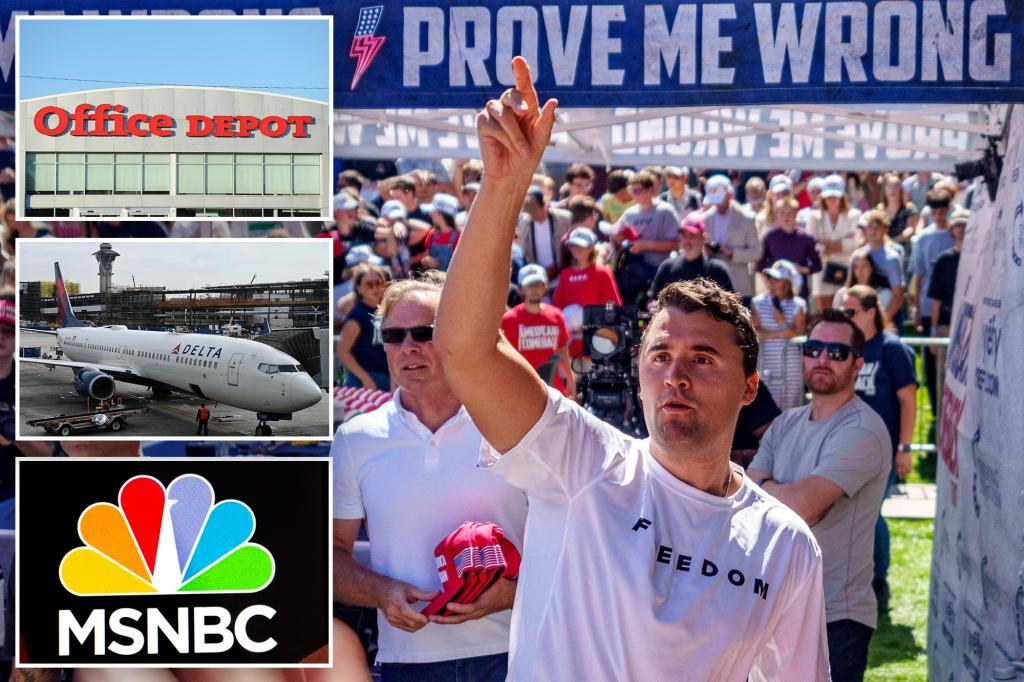
Corporate Responses - American Airlines pilots who celebrated the assassination of Charlie Kirk were immediately grounded and removed from service, with calls for their termination due to glorifying political violence [3] - Delta Air Lines suspended several employees for social media posts that exceeded respectful debate, indicating that violations of their social media policy could lead to termination [3][8] - The University of Miami's health care system fired an employee for making unacceptable public commentary regarding Kirk's death [9] - Children's Healthcare of Atlanta terminated a worker for inappropriate comments about Kirk's killing, emphasizing that such rhetoric violates their social media policy [9] - Office Depot fired an employee for refusing to print flyers about Charlie Kirk, labeling the incident as unacceptable and insensitive [13][15] - Nasdaq terminated an employee for remarks that condoned or celebrated violence related to Kirk [17] Educational Institutions - Middle Tennessee State University fired an employee for making a derogatory comment about Kirk's fate, with the university stating the termination was effective immediately [4] - Idaho's West Ada School District also fired an employee for posting inappropriate content online, expressing shock and sadness over the incident [6] - A middle school science teacher in Oregon was placed on leave and subsequently resigned after stating that Kirk's death "brightened up" his day [6] - Clemson University suspended an employee pending investigation for social media posts related to Kirk's death [7] Media and Public Figures - MSNBC analyst Matthew Dowd was fired for implying that Kirk's "awful words" led to "awful actions," with the network's president calling his remarks inappropriate and insensitive [10][12] - A coordinated effort appears to be behind the firings, with a doxxing site named "Expose Charlie's Murderers" collecting information on individuals who made posts about Kirk [22][23]

全球消费持续疲软,有一家低调的零售巨头却穿越了周期
Sou Hu Cai Jing· 2025-09-15 18:27
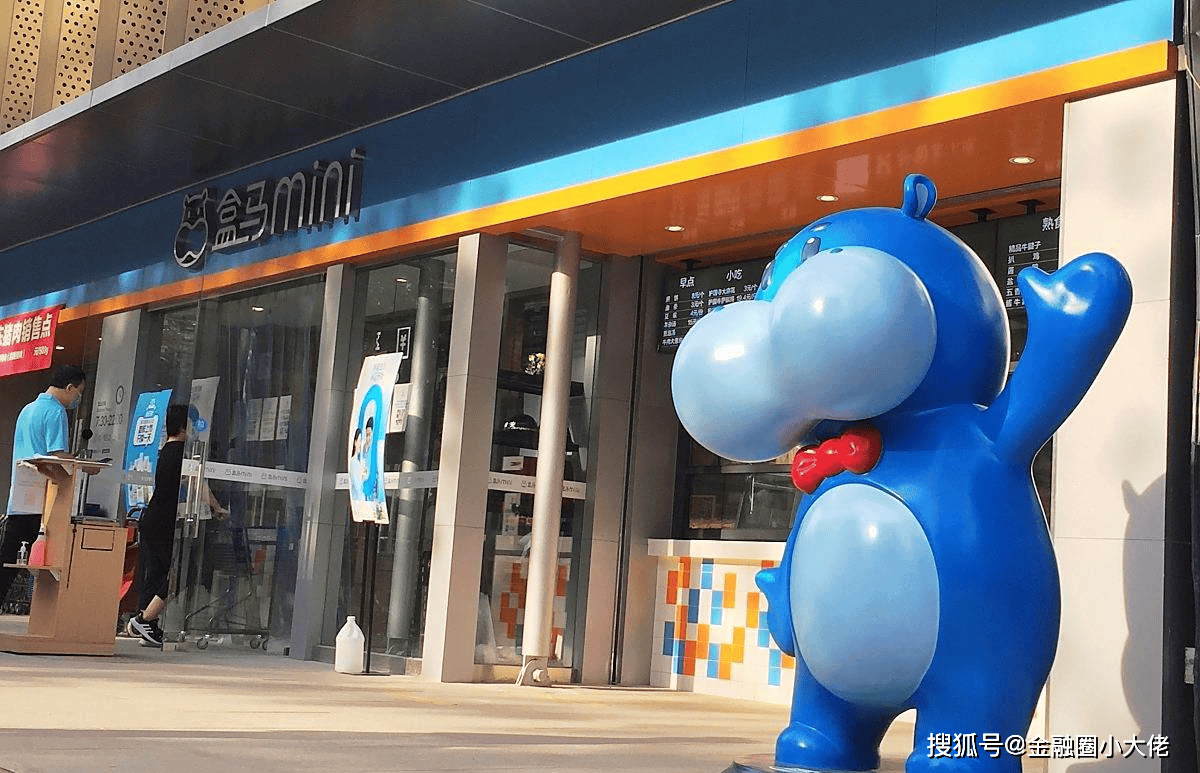
Group 1: Industry Overview - Global consumption has been experiencing persistent weakness, with the retail sector in a downward phase [1] - In China, the total retail sales reached 48.79 trillion yuan last year, showing a year-on-year growth of 3.5%, but the growth rate has declined by 3.7 percentage points compared to 2023 [1] - In the first three quarters of last year, retail sales of 50 major retail enterprises in China fell by 5%, with at least 38 malls closing, 76% of which had been operating for over 10 years [3] Group 2: Costco's Resilience - Costco has maintained a compound annual growth rate of 8.8% in revenue over 20 years, with only one instance of negative growth during the 2008 financial crisis [3] - The company ranks 20th in the Fortune Global 500, with a market value exceeding 450 billion USD and over 890 warehouse stores worldwide [3] Group 3: Business Model Insights - Costco relies on a membership model, generating significant revenue from membership fees rather than solely from product sales [4] - As of 2024, Costco has 76.2 million paying members, with membership fee income reaching 4.828 billion USD, accounting for 65% of the company's net profit [6] - The membership renewal rate is notably high at 92.7% in North America, allowing Costco to offer low-priced products and create a positive feedback loop [6] Group 4: Product Strategy - Costco employs precise product selection and collaborates with well-known brands to ensure high-quality, cost-effective products [7] - The company utilizes data analysis and AI to predict consumer purchasing preferences, enabling customized recommendations [7] - Limited edition and seasonal products are introduced to enhance customer experience and stimulate purchasing impulses [9] Group 5: Operational Efficiency - Unlike typical supermarkets that offer a wide variety of products, Costco limits its SKU count to around 4,000, significantly lower than the typical 30,000 [10] - This strategy enhances operational efficiency, reduces management costs, and improves warehouse and logistics efficiency [10] - Costco provides a customer-friendly return policy, allowing members to return items without conditions, which alleviates customer concerns [10]

Walmart Bets on AI Super Agents: Is Retail Entering a New Era?
ZACKS· 2025-09-15 16:01
Core Insights - The retail landscape is transforming significantly, with Walmart Inc. (WMT) leading the charge by investing heavily in artificial intelligence to enhance customer and employee experiences [1][4]. Group 1: AI Super Agents - Walmart is deploying four AI super agents to improve various aspects of its business, including customer service, employee management, and supplier interactions [8]. - The primary AI assistant, Sparky, is shifting the shopping experience from search-based navigation to AI-driven assistance, focusing on product discovery, reorders, and returns [2][8]. - Additional super agents include an associate agent for consolidating scheduling and sales data, a supplier agent for streamlining onboarding and order management, and a developer agent to enhance product testing and innovation [3][8]. Group 2: Leadership and Innovation - Walmart has established leadership roles dedicated to artificial intelligence to drive innovation and efficiency within its operations [4][8]. - The company is exploring AI-powered digital twins of facilities to predict and prevent issues, aiming to provide accurate delivery windows for 95% of U.S. households by year-end [4]. Group 3: Financial Performance - Walmart's shares have increased by 28.5% over the past year, closely aligning with the retail industry's growth of 28.2%, while competitors like Costco and Target have seen different performance outcomes [5]. - The forward 12-month price-to-earnings ratio for Walmart is 36.98, which is higher than the industry average of 33.81, indicating a premium valuation compared to Target but a discount relative to Costco [6][9]. - The Zacks Consensus Estimate projects Walmart's sales and earnings per share to grow by 4% and 3.6% year-over-year, respectively, for the current financial year [10].

BNED ALERT: Block & Leviton Investigating Barnes & Noble for Potential Securities Law Violations; Investors Should Contact the Firm to Recover Losses
Globenewswire· 2025-09-15 15:59
Core Insights - Block & Leviton LLP is investigating Barnes & Noble Education, Inc. for potential securities law violations following a significant drop in stock price due to accounting errors [1][2][5] Financial Reporting Issues - On July 21, 2025, Barnes & Noble's stock price fell over 20% after the company disclosed delays in filing its annual report, attributed to accounting errors [2] - An internal investigation indicated that the company may have overstated accounts receivable by up to $23 million, raising concerns about the accuracy of its financial reporting [2] - The company expects to identify at least one material weakness in internal controls, suggesting ineffective disclosure procedures for multiple fiscal years [2] Regulatory Filings - On September 12, 2025, Barnes & Noble announced a delay in filing its Form 10-Q for the period ending August 2, 2025, primarily due to the ongoing internal investigation [3] Investor Eligibility - Any investor who purchased Barnes & Noble Education, Inc. common stock and experienced a decline in share value may be eligible to seek recovery of losses [4] Legal Actions - Block & Leviton is actively investigating whether Barnes & Noble committed securities law violations and may file actions to recover losses for affected investors [5] Whistleblower Information - Individuals with non-public information about Barnes & Noble are encouraged to assist in the investigation or report to the SEC under the whistleblower program, potentially receiving rewards of up to 30% of any successful recovery [7]

Want To Earn What Your CEO Makes? 5 Shocking Truths About Your Paycheck Differences
Yahoo Finance· 2025-09-15 14:55
Core Insights - In 2024, Starbucks CEO Brian Niccol received a total compensation of $95.8 million, highlighting a significant disparity between executive pay and average worker wages [1][2] - The average Starbucks barista earns approximately $15 per hour, indicating a stark contrast in earnings between the CEO and frontline employees [1] - The CEO-to-worker pay ratio at Starbucks is in the thousands, reflecting a broader trend across various industries where such gaps are prevalent [3][4] Pay Disparity - The average CEO in the S&P 500 earned $18.9 million in 2024, while the average worker made just over $60,000, resulting in a CEO-to-worker pay ratio of 285:1 [4] - In low-wage sectors like retail and food service, the pay gap can reach into the thousands, with some companies reporting ratios as high as 6,000-to-1 [3][5] Compensation Structure - CEO compensation often includes various components beyond base salary, such as stock options, performance bonuses, and equity awards, which can significantly inflate total earnings [6][7] - In Niccol's case, the majority of his nearly $96 million compensation was derived from stock awards, illustrating how stock performance can heavily influence executive pay [6]
