
光伏玻璃

Search documents

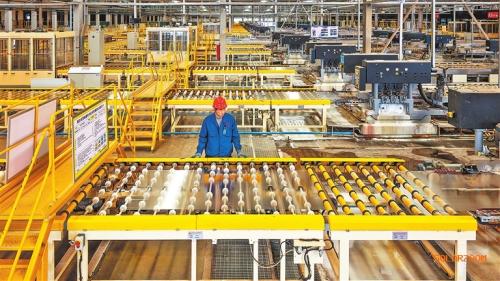
福莱特玻璃股价下跌受市场环境及资金面影响
Xin Lang Cai Jing· 2026-02-21 03:33
经济观察网 根据公开信息,福莱特玻璃(06865.HK)股价在2026年2月20日下跌主要与当日港股市场整 体表现及部分技术性因素相关。 市场环境 来源:经济观察网 以上内容基于公开资料整理,不构成投资建议。 资金面情况 当日福莱特玻璃H股成交额约1775万港元,换手率0.35%,量比仅0.35,显示交投清淡。资金流向方 面,主力净流出94.95万港元,散户资金亦呈净流出状态,反映短期资金参与意愿不足。技术指标上, 股价虽位于5日均线(11.516港元)上方,但低于布林带上轨(12.034港元),且MACD柱状图收窄至 0.035,短期动能有所减弱。 公司基本面 2月20日为港股马年首个交易日,恒生指数当日下跌1.10%,恒生科技指数跌幅达2.91%,市场整体情绪 偏弱。科技股、消费股等板块普遍回调,福莱特玻璃所属的新能源物料板块虽微涨1.15%,但个股受大 盘流动性收紧及南向资金暂停交易影响,资金活跃度较低。 尽管摩根大通于2月12日增持公司H股71.4万股(好仓比例升至14.12%),但这一利好在此前交易日已 部分消化。公司2025年第三季度业绩虽呈现复苏(单季净利润同比增285.47%),但市场对光伏玻 ...

福莱特:赵长海先生辞去公司副总裁职务
Zheng Quan Ri Bao Wang· 2026-02-13 12:46
Core Viewpoint - Fuyate (601865) announced the resignation of Vice President Zhao Changhai due to personal reasons, although he will continue to manage the production of photovoltaic glass at a subsidiary [1] Group 1 - The company’s board received a resignation report from Vice President Zhao Changhai [1] - Zhao Changhai will remain responsible for the production management of the subsidiary focused on photovoltaic glass [1]
中金:维持信义光能中性评级 目标价3.6港元
Zhi Tong Cai Jing· 2026-02-12 02:31
Core Viewpoint - CICC maintains a neutral rating for Xinyi Solar (00968) with a target price of HKD 3.6, indicating a potential upside of 1.4% from the current stock price, which corresponds to P/E ratios of 14.2 and 12.1 for 2026 and 2027 respectively. New revenue forecast for 2027 is set at CNY 21.293 billion, with a profit forecast of CNY 2.355 billion [1] Group 1: Company Status - The reduction in export tax rebates has led to a temporary increase in domestic demand for solar components, resulting in a slight rise in photovoltaic glass prices. The company is experiencing a recovery in sales profits for photovoltaic glass. The first half of the year saw weak demand for components, with inventory clearance being the main focus for photovoltaic glass, expected to continue until mid-February [2] - Year-to-date, the inventory days in the glass industry have decreased from 40.17 days to 34.18 days, a reduction of approximately 6 days. The company aims to control inventory days to alleviate pressure from accumulation during the Spring Festival [2] Group 2: Overseas Shipment and Profitability - The company has increased its overseas shipment ratio, with a new 1200-ton production line in Indonesia launched on January 15. Another line is expected to be operational soon, aiming for full production and sales within the year. Overseas production capacity now accounts for 24.7% of the company's total production capacity [3] - Given the demand for overseas components and the supply of glass, it is estimated that the company will need to export 10-15% of its products domestically. Combined with overseas production shipments, the total overseas shipment ratio is expected to exceed 35%, with long-term profit margins for photovoltaic glass overseas being better than those domestically [3] Group 3: Profit Forecast and Valuation - The company has adjusted its revenue forecast for 2025 upwards by 13.4% to CNY 18.914 billion, considering that photovoltaic glass prices are expected to be higher than anticipated in October-November 2025. The profit forecast for Q4 has been raised by 2% to CNY 1.528 billion due to better-than-expected glass prices [4] - For 2026, with an increase in the export ratio and higher overseas prices compared to domestic ones, the overall sales price of glass is expected to rise, leading to a 10.3% increase in revenue forecast to CNY 20.324 billion. However, due to potential risks from silicon material capacity impairment and declining profit margins from weak domestic component demand, the profit forecast has been adjusted downwards by 1.2% to CNY 2.033 billion [4]
亚玛顿20260209
2026-02-10 03:24
Summary of the Conference Call Company Overview - The conference call involved **Yamaton**, a leading company in the **photovoltaic glass** industry, particularly known for its ultra-thin glass products, specifically 1.6 mm glass [1][2]. Key Points Discussed Financial Performance - For the year 2025, Yamaton is expected to report a loss in the range of **100 million to 120 million RMB**, which is an improvement compared to 2024 [2]. - The traditional main business accounts for **90%** of the company's revenue, which has been affected by low photovoltaic glass prices compared to 2020 [2]. - The company has strategically reduced sales volume and revenue to focus on cash flow, avoiding unprofitable customers and those with accounts receivable risks [2][3]. Business Segments 1. **Traditional Photovoltaic Glass**: - The gross profit margin has declined due to low prices, but the product remains profitable [3]. 2. **Collaboration with Tesla**: - Revenue from Tesla's roof tiles and energy storage glass increased to approximately **200 million RMB** last year, contributing positively to Yamaton's performance [3]. - The partnership with Tesla has been ongoing since 2016, focusing on solar roof tiles and energy storage glass, with significant sales growth noted in 2019 [7][8]. - However, the pandemic impacted the installation of solar roofs, leading to unmet sales expectations [9]. 3. **Electronic Glass**: - Revenue from electronic glass has increased due to government subsidies and the growth of the electronic consumer products sector [3]. - One product has achieved profitability, while another is still in the process of reducing losses [3]. Strategic Adjustments - Yamaton has closed its photovoltaic glass production line in Changzhou due to low efficiency and high operational costs, opting to buy raw materials from other regions [5]. - The company is developing a new production line for **perovskite glass**, collaborating with companies like GCL and Jidian [6]. International Expansion - Yamaton is establishing a production base in the **Middle East**, with plans for a **1 million square meter** capacity, aiming for completion by mid-2027 [11][12]. - The decision to set up in the Middle East is driven by lower energy costs and favorable tariffs [11]. Pricing and Market Conditions - Current overseas prices for photovoltaic glass are around **$2.30 to $2.60 per square meter**, significantly higher than domestic prices, which are around **10 RMB** [13][15]. - The company anticipates that the market will continue to face challenges due to excess supply and insufficient demand, leading to potential natural market corrections [50][52]. Future Outlook - Yamaton expects to see an increase in sales in 2026, driven by traditional photovoltaic glass and additional contributions from energy storage glass [46]. - The company is also optimistic about the potential for its perovskite glass products, although large-scale production may take time [28][55]. Industry Dynamics - The photovoltaic glass industry is experiencing significant competition, with many companies facing financial difficulties due to overcapacity and low prices [50][52]. - Yamaton is focused on maintaining a competitive edge through cost management and strategic partnerships, particularly in the international market [24][52]. Additional Insights - The company is exploring advanced glass technologies for aerospace applications, indicating a potential diversification of its product offerings [41][42]. - Yamaton is committed to innovation and has a strong technical foundation in glass processing, which may position it well for future opportunities in emerging markets [41][42].

未知机构:华泰建筑建材细分行业周度经营数据跟踪260207水泥上周全-20260209
未知机构· 2026-02-09 03:00
Summary of Industry Research Conference Call Industry: Cement and Glass Manufacturing Key Points on Cement Industry - The national cement market price decreased by 1% week-on-week to 347 RMB/ton [1] - Price reductions were primarily observed in regions such as Henan, Hubei, Chongqing, Gansu, and Ningxia, with a decrease of 10-30 RMB/ton [1] - As the Spring Festival approaches, downstream mixing stations and engineering projects are halting operations, leading to a significant contraction in cement market demand [1] - The average shipment rate of cement enterprises in key regions fell by approximately 8 percentage points week-on-week, continuing the downward price trend [1] Key Points on Float Glass Industry - The average price of domestic float glass was 62 RMB per heavy box, reflecting a week-on-week increase of 0.4% [4] - The domestic float glass market is experiencing a rapid decline in demand, with limited adjustment power in prices, leading to overall price stability [4] - As of last Thursday, there were 262 float glass production lines nationwide, with 208 in operation, and a daily melting capacity of 148,935 tons, which decreased by 1,200 tons compared to the previous week [5] - The industry capacity utilization rate stands at 80.80% [5] - Inventory levels in monitored provinces reached 49.49 million heavy boxes, an increase of 220,000 heavy boxes or 0.45% from the previous week [5] - The production volume in monitored provinces was 11.82 million heavy boxes, with a consumption volume of 11.60 million heavy boxes, resulting in a production-sales ratio of 98.14% [5] Key Points on Photovoltaic Glass - The mainstream order price for 2.0mm coated panels is 10.8 RMB/square meter, remaining stable week-on-week; for 3.2mm coated panels, the price is 17.8 RMB/square meter, reflecting a decrease of 0.4% [5] - There are 398 production lines for photovoltaic glass nationwide, with a daily melting capacity of 87,300 tons, remaining stable week-on-week but down 1.68% year-on-year [5] - Sample inventory days are approximately 34.18 days, a decrease of 1.20% week-on-week [5] Key Points on Fiberglass - The domestic alkali-free roving market price is generally stable with slight increases in some mainstream products and individual yarn products [6] - The supply side shows limited changes in production capacity for roving, with inventory growth slowing down [6] - The electronic yarn market has seen significant price increases, with mainstream products rising by approximately 1,000 RMB/ton, and high-end products increasing by 2,000-4,000 RMB/ton [6] Key Points on Other Materials - As of February 7, the national average price for PVC was 4,916 RMB/ton, up 0.2% week-on-week; HDPE was 7,775 RMB/ton, up 0.1%; and PPR was 8,083 RMB/ton, up 0.4% [8] - The average price for light soda ash was 1,218 RMB/ton, stable week-on-week; heavy soda ash was 1,282 RMB/ton, also stable [8] - Soda ash inventory increased by 2.4% to 158,110 tons, with an operating rate of 83.25%, down 1.1 percentage points [8] - Carbon fiber prices remained stable, with T700-12K at 105 RMB/kg and T300-12K at 85 RMB/kg [9] - Carbon fiber inventory reached 13,200 tons, an increase of 2.7% week-on-week [9]
亚玛顿20260204
2026-02-05 02:21
Summary of Yamaton's Conference Call Company Overview - **Company**: Yamaton - **Industry**: Photovoltaic Glass Manufacturing Key Points Financial Performance - In 2025, Yamaton's revenue benefited from the energy storage market, with solar roof tiles and energy storage door glass contributing approximately 192 million RMB. However, the company still incurred a loss of 100 to 120 million RMB, primarily due to low photovoltaic glass prices and rising raw material costs, resulting in a negative gross margin [2][6] - The company's glass sales volume in 2025 was approximately 150 million square meters, with a focus on securing supply for mainstream customers rather than blindly accepting orders to avoid losses and accounts receivable risks [4][18] - Despite a positive gross margin for 1.6 mm photovoltaic glass, the net profit remained negative due to overall market conditions [19] Market Position and Product Offering - Yamaton holds over 50% market share in the 1.6 mm photovoltaic glass segment, but there is no significant premium pricing compared to 2.0 mm products [4][19] - Major clients include Trina, Jinko, and Longi, with applications primarily in overseas residential photovoltaic scenarios [9] - The company is a supplier of traditional technology route photovoltaic glass for Tesla's 3.2 mm single-sided components [10] Strategic Initiatives - To address the demand from Tesla and uncertainties in US-China relations, Yamaton plans to build a 500,000-ton photovoltaic glass production capacity in the UAE, with a total investment of approximately 250 million USD, expected to be operational by mid-2027 [2][5] - The UAE site was chosen for its favorable relations with both China and the US, low energy costs, and a 5% tariff on exports to the US, enhancing product competitiveness [5][12] Technological Capabilities - The UAE facility will have the capability to produce various thickness specifications of photovoltaic glass, ranging from 1.6 mm to 3.2 mm, with no significant technical challenges anticipated [11] - Yamaton has a history of technological innovation, being a pioneer in products such as coated glass and ultra-thin double glass [3] Future Outlook - The profitability outlook for the photovoltaic glass industry in 2026 is uncertain, heavily dependent on price trends. The first half of 2026 may see challenges in profitability due to already low prices [20] - Yamaton is positioned to support Tesla's expansion plans, which aim for a capacity of 100 GW, and is expected to become a preferred supplier [17] Competitive Landscape - The company faces competition from both domestic and international markets, with overseas products priced approximately 2.3 to 2.6 USD per square meter higher than domestic products, providing Yamaton with a pricing advantage [15] - The overall photovoltaic glass market is experiencing overcapacity, which may lead to price pressures in the future [22] Operational Challenges - Yamaton has made provisions for bad debts and asset impairments, primarily due to the closure of its Changzhou production base, which lacked cost advantages [26][27] - The company is also exploring partnerships with other overseas component manufacturers interested in its production capacity [12] Conclusion Yamaton is navigating a challenging market environment with strategic expansions and partnerships, particularly with Tesla, while managing financial losses and operational adjustments. The company's focus on innovation and cost-effective production in the UAE may position it favorably for future growth in the photovoltaic glass sector.
亚玛顿(002623.SZ):公司深耕超薄光伏玻璃及光电玻璃领域,业务暂不涉及太空太阳能领域
Ge Long Hui· 2026-02-04 13:48
Core Viewpoint - The company, Yamaton (002623.SZ), is currently not involved in the application of perovskite products in the space solar energy sector, focusing instead on ultra-thin photovoltaic glass and optoelectronic glass [1] Group 1 - The company is deeply engaged in the fields of ultra-thin photovoltaic glass and optoelectronic glass [1] - The company does not currently involve itself in the aforementioned technology areas related to space solar energy [1] - The company plans to closely monitor the development trends of forward-looking technologies and increase R&D efforts in response to customer needs and market changes [1]

光伏玻璃概念股午后异动拉升,东方日升涨超12%
Xin Lang Cai Jing· 2026-02-04 05:35
Group 1 - The core viewpoint of the article highlights a significant surge in photovoltaic glass concept stocks, with Dongfang Risen rising over 12% [1] - Other companies such as Qibin Group and An Cai Gao Ke also experienced upward movement in their stock prices, indicating a broader positive trend in the sector [1]

关注2025年河南外贸丨豫企手握“纸黄金”闯海外大市场
He Nan Ri Bao· 2026-02-03 07:49
Core Insights - Zhengzhou Customs issued 85,000 certificates of origin under various free trade agreements for over 4,100 enterprises in Henan Province in 2025, facilitating nearly 40 billion yuan in trade value, significantly boosting the international market for "Henan manufacturing" [1] - Certificates of origin serve as essential proof for goods' origin and are crucial for companies to enjoy tariff reductions in importing countries, often referred to as "paper gold" in the industry [1] - The 10-year anniversary of the China-Korea and China-Australia free trade agreements has highlighted the increasing benefits of tariff reductions, with a growing list of products benefiting from these agreements [1] Group 1 - Henan Ankai High-tech Co., Ltd. benefited from the China-Korea certificate of origin, enjoying over 30 million yuan in tariff reductions over the past decade, exemplifying the success of Henan enterprises in penetrating the Korean market [1] - Zhengzhou Customs issued 67,000 certificates of origin to countries along the Belt and Road Initiative last year, with a trade value of 31.33 billion yuan, marking a year-on-year increase of 16% and 15.1% respectively, helping companies gain approximately 1.47 billion yuan in tariff reductions [2] - The most benefited sectors from tariff reductions include machinery, chemicals, food, plastics, clothing, and furniture, indicating a diverse range of industries capitalizing on these agreements [2] Group 2 - In 2025, Henan Province's exports to Belt and Road countries reached 183.16 billion yuan, a year-on-year growth of 4.3%, with the number of exporting enterprises exceeding 11,000, reflecting a 16.9% increase [2] - The certificate of origin is described as a "golden key" to international markets, emphasizing the importance of utilizing these certificates to gain a competitive edge in overseas markets [2] - Zhengzhou Customs plans to enhance the promotion of tariff reduction policies and continue reforms to facilitate the certification process, aiming to support more "Henan manufacturing" enterprises in expanding internationally [2]