基层医疗卫生

Search documents
国家卫生健康委:全国超九成居民可在15分钟内获得就近医疗服务
Mei Ri Jing Ji Xin Wen· 2025-11-27 14:45
Core Viewpoint - The National Health Commission emphasizes the importance of strengthening grassroots medical and health services, highlighting improvements in accessibility, equity, and convenience for the population [1] Group 1: Development of Grassroots Medical Services - Since the beginning of the 14th Five-Year Plan, grassroots medical institutions have maintained over 50% of the national diagnosis volume, with over 90% of residents able to access medical services within 15 minutes [1] - The number of grassroots medical institutions has increased from 970,000 to 1,040,000, including 33,300 health centers, 570,400 village clinics, 10,200 community health service centers, and 27,100 community health service stations [3] Group 2: Capacity Building of Grassroots Medical Institutions - By the end of 2024, there will be 2.078 million licensed physicians and assistant physicians in grassroots medical institutions, an increase of 542,000 since 2020 [4] - Over 90% of township health centers and community health service centers meet basic service capacity standards, with many exceeding recommended standards [4] Group 3: Optimization of Service Models - Family doctor contract services are being promoted as a key method to integrate basic medical and public health services [6] - 95% of community health service centers and township health centers can provide long-term prescriptions for chronic disease patients, reducing the need for frequent visits [6] - Many provinces, including Shanghai and Zhejiang, have initiated family bed services for eligible patients, with costs covered by health insurance to alleviate patient burdens [6]

国家卫生健康委:全国基层医疗卫生机构数量增加到104万个
Xin Hua She· 2025-11-27 10:50
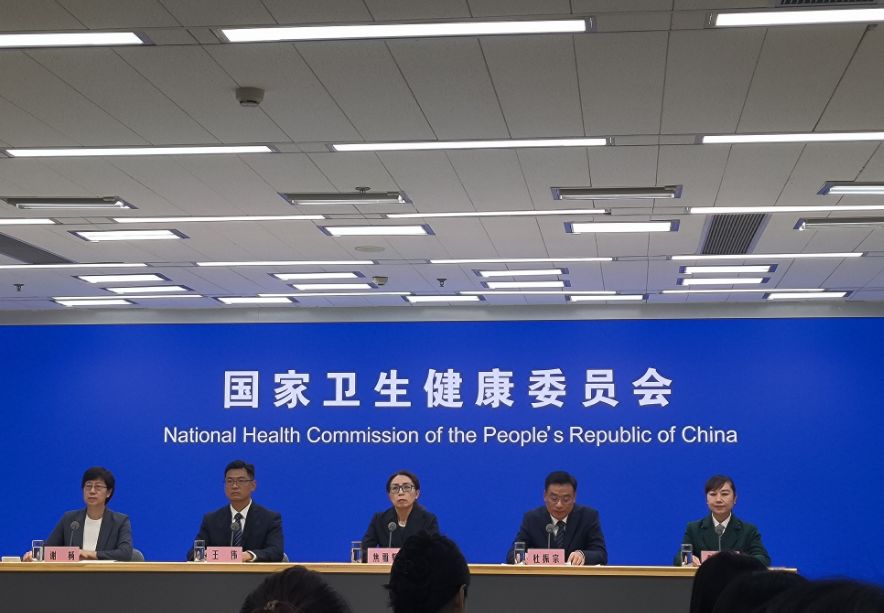
Core Points - The National Health Commission of China held a press conference on November 27 to discuss the development of grassroots medical and health services [2] - The number of grassroots medical and health institutions in China has increased from 970,000 to 1,040,000, indicating a significant expansion [2] - The breakdown of these institutions includes 33,300 health centers, 570,400 village clinics, 10,200 community health service centers, and 27,100 community health service stations, along with over 400,000 outpatient departments and clinics [2]
国家卫健委:全国超90%居民已步入“15分钟医疗圈”
Zhong Guo Xin Wen Wang· 2025-11-27 10:04
Core Viewpoint - The National Health Commission reports that over 90% of residents in China now have access to medical services within a 15-minute radius, highlighting significant improvements in the grassroots healthcare system [1] Group 1: Healthcare System Development - The National Health Commission has focused on strengthening the grassroots healthcare service system, with the number of grassroots medical institutions increasing from 970,000 to 1,040,000 during the 14th Five-Year Plan [1] - The proportion of medical consultations provided by grassroots healthcare institutions has consistently remained above 50% of the national total [1] Group 2: Service Accessibility and Coverage - A "fixed + mobile" approach has been adopted to address service gaps, ensuring that every town has a health center and every village has a health room, with urban areas also receiving similar coverage [2] - Remote medical services and mobile clinics have been implemented to reach remote and underserved areas [2] Group 3: Capacity Building - By the end of 2024, there will be 2.078 million licensed physicians in grassroots healthcare institutions, an increase of 542,000 since 2020 [3] - Over 90% of township health centers and community health service centers have met basic service capacity standards [3] Group 4: Pediatric and Mental Health Services - The National Health Commission has launched a three-year initiative to enhance pediatric and mental health services, with 93% of grassroots healthcare institutions currently able to provide pediatric services [4] Group 5: Service Model Optimization - Family doctor contract services are being promoted to integrate basic medical and public health services, with 95% of community health service centers offering long-term prescriptions for chronic disease patients [5] - Weekend vaccination services and family bed services have been introduced to meet the evolving needs of the population [5] Group 6: Future Plans - The National Health Commission aims to continue strengthening the grassroots healthcare service system and improve the overall health service management capabilities during the 15th Five-Year Plan [6]
2024年县域内基层医疗卫生机构诊疗人次占比63.4%
Zhong Guo Xin Wen Wang· 2025-11-27 09:57
Core Insights - The proportion of outpatient visits at grassroots medical institutions in counties reached 63.4% in 2024, an increase of 0.5 percentage points from the previous year, indicating a growing preference among rural residents for local healthcare services [1] - The National Health Commission (NHC) emphasizes the importance of building county-level medical communities to enhance the tiered diagnosis and treatment system, which aims to improve healthcare accessibility and resource sharing [1] Group 1: Policy and Implementation - The NHC adheres to the policy of "strengthening counties and grassroots," continuously enhancing the service capacity of county medical communities to better meet the demand for convenient healthcare [2] - Key measures include strengthening the capabilities of leading hospitals, with over 10,000 clinical key specialties established in city and county hospitals, significantly improving previously weak specialties such as oncology and psychiatry [2] - The NHC has implemented a tiered support system, with urban hospitals sending approximately 180,000 personnel to support 1,750 county hospitals in 2024, and over 70,000 personnel have been stationed in grassroots facilities for more than six months [2] Group 2: Technological and Resource Development - The NHC promotes the integration of "artificial intelligence" in grassroots healthcare, with 80% of counties having established resource-sharing centers for imaging, ECG, and laboratory tests, leading to over 68 million remote medical imaging diagnoses this year [3] - The establishment of unified drug lists and collaborative medication use across county, township, and village levels has improved access to medications, with nearly half of the counties having set up central pharmacies that stock 800 to 1,200 types of drugs [3] - Over 97% of administrative villages with health stations are now covered by medical insurance, facilitating easier access to medications and reimbursements for rural residents [3]
事关高血压防治 基层医疗卫生机构这样做
Xin Hua She· 2025-10-01 04:25
Core Points - The National Health Commission has issued standards for hypertension management in primary healthcare institutions, detailing equipment, medication, management processes, and technical guidelines [1][2]. Equipment Configuration - All primary healthcare institutions must be equipped with upper-arm electronic sphygmomanometers, height and weight scales, and measuring tapes, with regular calibration of blood pressure monitors [1]. - Community health service centers and township hospitals should also have blood routine analyzers, urine routine analyzers, biochemical analyzers, and electrocardiograms [1]. Medication Assurance - Primary healthcare institutions are required to stock at least five categories of antihypertensive medications: ACE inhibitors, angiotensin II receptor blockers, dihydropyridine calcium channel blockers, thiazide diuretics, and beta-blockers [1]. Screening and Prevention - The standards specify screening for hypertension through routine consultations, health check-ups, and community screenings, with blood pressure measurements for adults aged 18 and above during their first outpatient visit each year [1]. - For diagnosed hypertension patients, personalized lifestyle guidance is recommended, including dietary adjustments (reducing sodium and increasing potassium), weight control, regular exercise, smoking cessation, alcohol moderation, stress reduction, and maintaining healthy sleep [1]. Lifestyle Intervention - Based on individual patient conditions, antihypertensive medications should be selected and adjusted to achieve stable blood pressure control within three months [2]. - Patients with other modifiable cardiovascular risk factors, such as high blood sugar and dyslipidemia, should also receive active treatment [2]. Implementation Timeline - The standards will be applicable to township hospitals, community health service centers, and village clinics for managing adult hypertension patients starting from March 1, 2026 [2].
第七届“基医会”在南京盛大举办!超2000人齐聚,共探基层医疗创新发展
Yang Zi Wan Bao Wang· 2025-09-15 02:23
Core Insights - The seventh grassroots health innovation development conference was held in Nanjing, Jiangsu, attracting over 2,000 representatives from more than 20 provinces, emphasizing the importance of grassroots healthcare [1][2] - The State Council approved the "Implementation Plan for Strengthening Basic Medical and Health Services," focusing on improving basic service conditions and transitioning from a disease-centered approach to a health-centered one [1][2] - The conference served as a platform for sharing experiences and promoting the implementation of the "Strong Foundation Project," which is crucial for China's modernization strategy [2][3] Group 1 - The conference highlighted Jiangsu's commitment to grassroots healthcare, with over 350,000 grassroots health workers by the end of 2024, accounting for 37.47% of the province's total health workforce [3] - Jiangsu's grassroots medical institutions achieved a service capacity standard compliance rate of 989 institutions, with grassroots diagnosis and treatment volume increasing to 57.41% [3] - The province has fully implemented the construction of tightly-knit county medical communities in 69 counties, establishing 136 medical communities and promoting bundled payment reforms in 21 counties [3] Group 2 - Since 2019, the conference has collected over 200 typical cases, engaging more than 3 million participants, becoming a significant platform for showcasing grassroots healthcare reform achievements [4] - The conference presented over 80 representative and innovative grassroots cases, providing valuable references for future healthcare reform and development [3][4]
国家卫健委:我国基层医疗卫生机构数量达104万个
Yang Shi Xin Wen· 2025-09-11 02:42
Core Insights - The press conference highlighted the achievements in health and wellness during the "14th Five-Year Plan" period, specifically from 2020 to 2024 [1] Group 1: Healthcare Infrastructure - The number of grassroots medical and health institutions increased from 970,000 to 1,040,000 [1] - The number of healthcare personnel rose from 4.34 million to 5.26 million [1] Group 2: Healthcare Services - The volume of medical consultations grew from 4.1 billion to 5.3 billion [1]
国家卫健委解读《医疗卫生强基工程实施方案》
Ren Min Wang· 2025-09-11 02:03
Core Viewpoint - The State Council has approved the "Implementation Plan for Strengthening Basic Medical and Health Services," which aims to enhance the capacity of grassroots medical and health services and promote the construction of a Healthy China [1][2]. Group 1: Overall Requirements - The plan emphasizes a grassroots-focused approach, aiming to improve basic service conditions and shift from a disease-centered model to a health-centered model [2]. - Key objectives include enhancing the grassroots medical and health service system, developing talent, improving facilities and digitalization, and achieving equalization of basic public health services [2]. Group 2: Main Tasks - The plan outlines 12 key tasks, including optimizing the layout of grassroots medical institutions, enhancing public health services, and promoting the use of traditional Chinese medicine [3]. - Specific tasks include improving disease prevention systems, upgrading medical facilities, and strengthening the healthcare workforce [3]. - The plan also proposes reforms in medical service pricing, insurance payment methods, and compensation distribution to incentivize grassroots development [3]. Group 3: Safeguard Measures - The plan includes measures for organizational implementation, planning guidance, investment policies, and monitoring [4]. - It stresses the importance of integrating the plan into the "14th Five-Year Plan" and related special plans, ensuring clear responsibilities and task divisions [4]. - Regular monitoring and adjustments will be made to ensure the successful implementation of the plan [4].
国务院批复同意《医疗卫生强基工程实施方案》
Zheng Quan Shi Bao Wang· 2025-09-10 09:17
Core Viewpoint - The State Council has approved the "Implementation Plan for Strengthening Basic Medical and Health Services," aiming to enhance the accessibility and quality of healthcare services in China by 2030 [1] Group 1: Goals and Objectives - By 2027, the layout of grassroots medical and health institutions will be more reasonable, with improved facilities and enhanced basic public health service capabilities [1] - The plan aims for residents to have access to the nearest medical service point within 15 minutes [1] - By 2030, the grassroots medical and health service system will be further improved, with a growing talent pool and significant advancements in facility conditions and digitalization [1] Group 2: Service Quality and Accessibility - The plan emphasizes the equalization of basic public health services and the homogenization of basic medical services [1] - The proportion of service volume from medical and health institutions at the county level and below will continue to increase [1] - The coordination between traditional Chinese medicine and Western medicine will reach a higher level [1] Group 3: System Development - Significant achievements are expected in the construction of a hierarchical diagnosis and treatment system [1] - The public will enjoy high-quality and efficient health services conveniently and nearby [1]
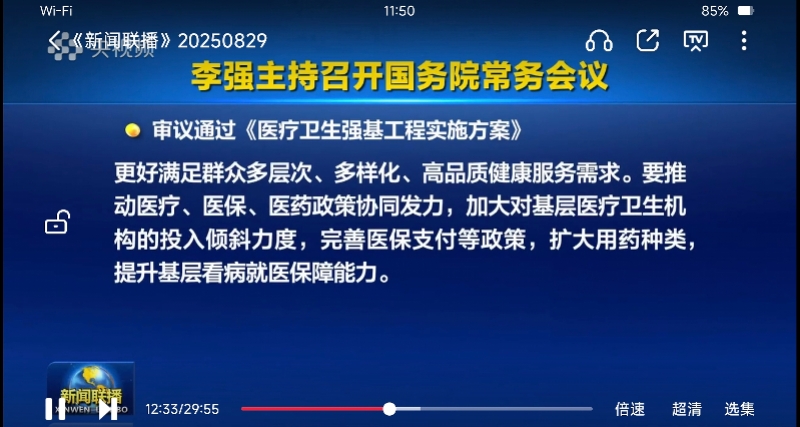
加大对基层医疗机构投入 国务院将发“卫生强基”新文件
Nan Fang Du Shi Bao· 2025-08-30 05:36
Core Points - The State Council of China has approved the "Implementation Plan for Strengthening Basic Medical and Health Services," aimed at enhancing grassroots medical capabilities and increasing investment in primary healthcare institutions [1][4]. Group 1: Policy Objectives - The plan emphasizes the importance of strengthening grassroots healthcare services to improve public health and meet diverse healthcare needs [3]. - It aims to optimize service content, enhance chronic disease prevention, rehabilitation care, and improve the diagnosis and treatment of common diseases at the grassroots level [3]. Group 2: Current Challenges - There is a significant concentration of quality medical resources in first-tier cities, leading to increased burdens for patients seeking care elsewhere [3]. - Grassroots healthcare faces challenges such as insufficient resources and limited medication options, necessitating visits to higher-level hospitals for many patients [3]. Group 3: Support Measures - The meeting outlined specific support measures, including coordinated efforts in medical, insurance, and pharmaceutical policies, increased investment in primary healthcare, and expanded medication options [4]. - The National Health Commission will collaborate with relevant departments to implement the plan, making strengthening grassroots healthcare a key focus of the 14th Five-Year Plan [4].