家居用品制造

Search documents
为衣做架,“挂”出来的80亿元“衣架产业”
Xin Hua Wang· 2025-06-17 01:18
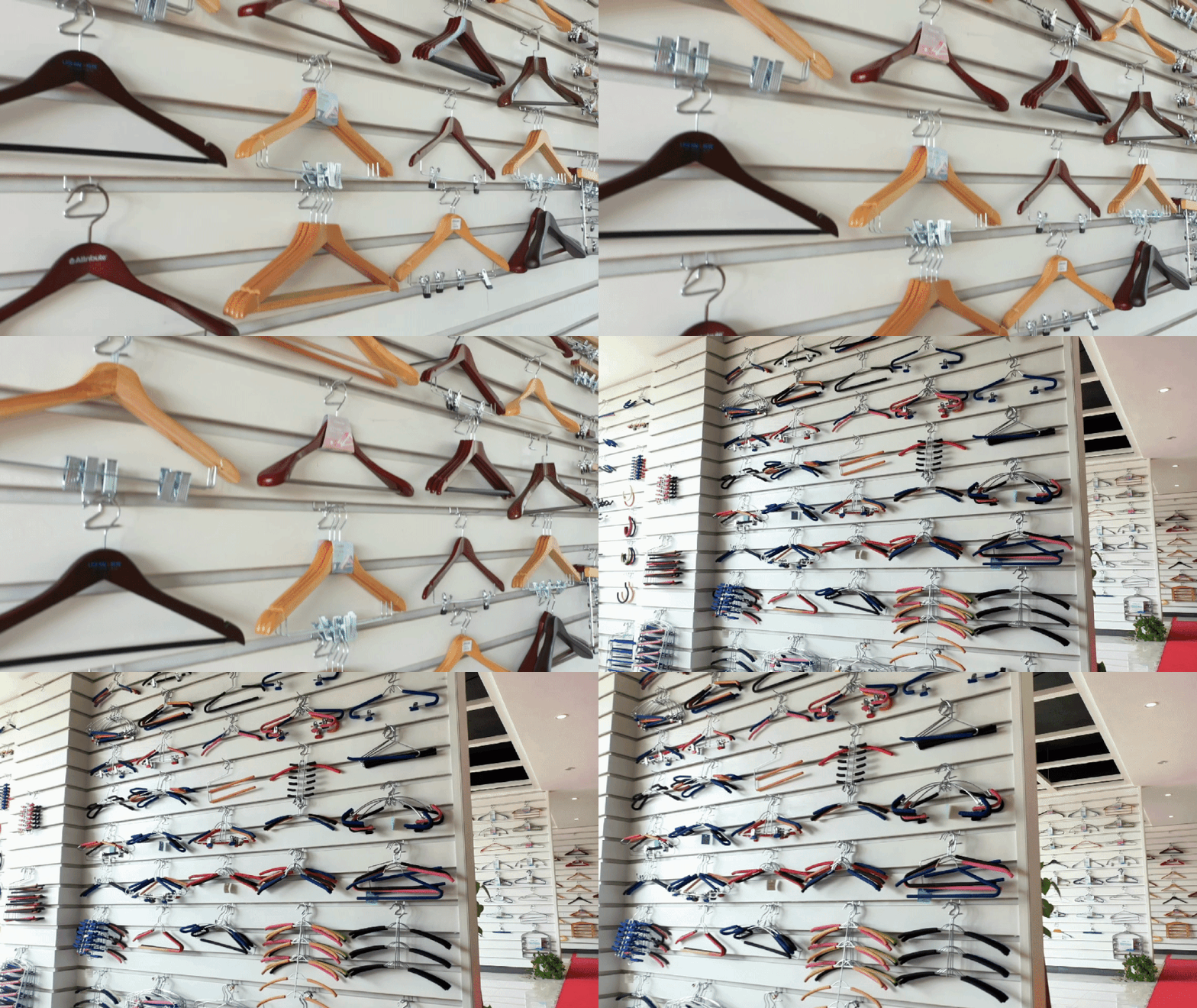
Core Viewpoint - The article highlights the development of the hanger industry in Qingshan Town, Lipu City, Guangxi, which has become a global hub for hanger production, with a significant market share and export capacity [1][3][11]. Industry Overview - Qingshan Town produces 70% of the hangers in China, evolving from small family workshops to a major industry over 30 years [1][3]. - The hanger industry in Lipu City has developed into a pillar industry, with over 3,000 varieties across eight major series, including wooden, bamboo, and aluminum hangers [1][5]. Production Capacity and Market Reach - By 2025, Lipu City is expected to have over 300 hanger enterprises, producing more than 4 billion hangers annually, with an industry output value exceeding 8 billion yuan [1][5]. - Over 80% of the products are exported to Europe, America, and Southeast Asia, accounting for over 70% of the national market in both production and export [1][5]. Historical Development - The industry began in the early 1990s when local craftsmen started producing hangers at home, leading to the establishment of the Lipu Hanger Industrial Park in 1995 [3][5]. - The shift from handmade to more formal production methods occurred after initial export successes, attracting many external companies to the region [3][5]. Technological Advancements - Local manufacturers have adopted new materials and upgraded production processes, enhancing the durability and aesthetic appeal of hangers [7][9]. - The industry has transitioned towards automation and smart manufacturing, improving efficiency and product quality significantly [9][11]. Standardization and Innovation - Since 2008, local companies have participated in establishing national standards for various types of hangers, moving from reliance on traditional methods to standardized production [7][9]. - Companies are focusing on innovation across the entire supply chain, from raw material sourcing to automated production lines, increasing international recognition and competitiveness [9][11].

“快稳密”:长三角通关“三字经”—— 解码5.29万亿外贸背后的流通密码
Xin Hua Ri Bao· 2025-06-06 23:25
Core Insights - The Yangtze River Delta region (Shanghai, Jiangsu, Zhejiang, and Anhui) has shown strong resilience and vitality with an import and export value of 5.29 trillion yuan from January to April, reflecting a year-on-year growth of 5.1% [1] Group 1: Logistics Innovations - The "front-loading cargo station" in Suzhou, which is the first of its kind in the country, has enabled goods to be transported directly from local areas to global destinations, saving 12-24 hours in logistics time and reducing ground logistics costs by 10%-30% [1] - The "linked unloading" regulatory model allows for efficient cargo transfer between Taicang Port and Shanghai Yangshan Port, streamlining the customs process to "one declaration, one inspection, one release," significantly reducing logistics time and costs for participating companies [2] Group 2: High-tech Product Handling - The Yangtze River Delta has established a collaborative mechanism for the import inspection of high-tech goods, allowing for preliminary visual inspections that minimize damage risks to sensitive items like integrated circuits, thus enhancing customs efficiency [3][4] - From January to May, the collaborative inspection mechanism has facilitated 20 cases of vacuum-packed imports valued at over 4.8 million yuan, benefiting 70 companies in Jiangsu [4] Group 3: Regional Service Enhancements - The establishment of the electronic port data center in Suzhou has improved service efficiency for foreign trade enterprises, reducing costs and processing times significantly, with 5,799 electronic port cards issued to date [6]
“从未因为成本增加30%而如此高兴”!美企开启新90天“囤货期”,运输需求推高海运费
Hua Er Jie Jian Wen· 2025-05-13 00:24
Core Viewpoint - The recent 90-day tariff reduction agreement between the US and China has prompted American companies to quickly restart their supply chains with Chinese manufacturers, potentially leading to increased shipping congestion and rising costs [1]. Group 1: Impact on Shipping and Supply Chains - American companies are attempting to stockpile products during the 90-day window to prepare for potential tariff increases afterward [2]. - The previous tariffs had significantly reduced shipping demand, with reports indicating a decrease in shipping frequency from once a week to twice a month for certain routes [2]. - There is an expectation of increased shipping activity as companies rush to ship products that were previously held up in Chinese warehouses [2][3]. Group 2: Company Responses - Health product manufacturer Therabody has resumed production in China and is accelerating output, with its CEO expressing satisfaction despite a 30% increase in costs [2]. - Bogg Bag has reversed its earlier price increase decision and is resuming production, while also planning to cut its product line by 45 items to avoid rushed production [3]. - Net Health Shops LLC is considering shipping previously paused containers from China, anticipating that the tariff reduction will help alleviate supply shortages [3].
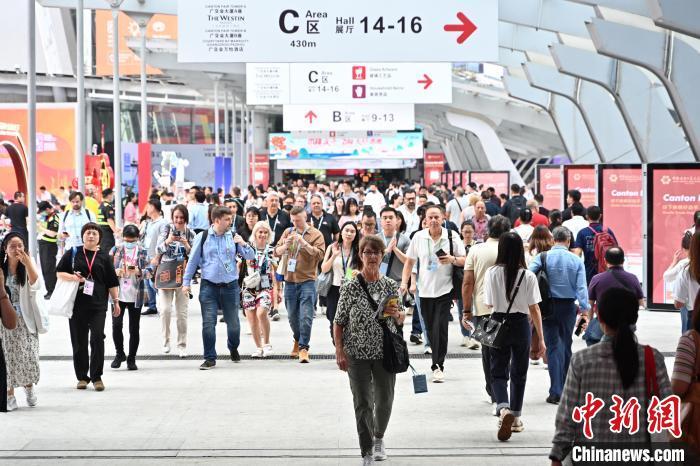
第137届广交会第二期开幕 品质家居吸引采购商选购
Zhong Guo Xin Wen Wang· 2025-04-23 08:02
Core Points - The 137th Canton Fair's second phase opened in Guangzhou on April 23, focusing on "Quality Home Furnishings" with a total exhibition area of 515,000 square meters, featuring 24,735 booths and 10,313 participating companies [1][3] Group 1: Exhibition Highlights - The fair emphasizes the "big home" concept, introducing a new integrated housing section showcasing products like modular and expandable homes [3] - Various categories are represented, including innovative kitchenware, daily ceramics, unique home decorations, and holiday items, attracting buyers [3] - The fair features over 1,000 new products from Fujian's Dehua Zhenan Ceramics Co., including art ceramics and resin crafts, primarily targeting the European and American markets [4] Group 2: International Participation - The second phase of the fair includes 262 companies from 29 countries and regions, with 179 from Belt and Road Initiative countries, accounting for approximately 68% of the total [4] - Exhibitors from countries such as Turkey, South Korea, India, Malaysia, Thailand, Egypt, Japan, Vietnam, and Taiwan are showcasing kitchenware, home goods, gifts, and building materials [4]