晶圆制造

Search documents
十大券商一周策略:历次“降温”后反而大概率创新高,围绕业绩博弈情绪升温,长牛慢牛基础进一步夯实
Sou Hu Cai Jing· 2026-01-19 00:00
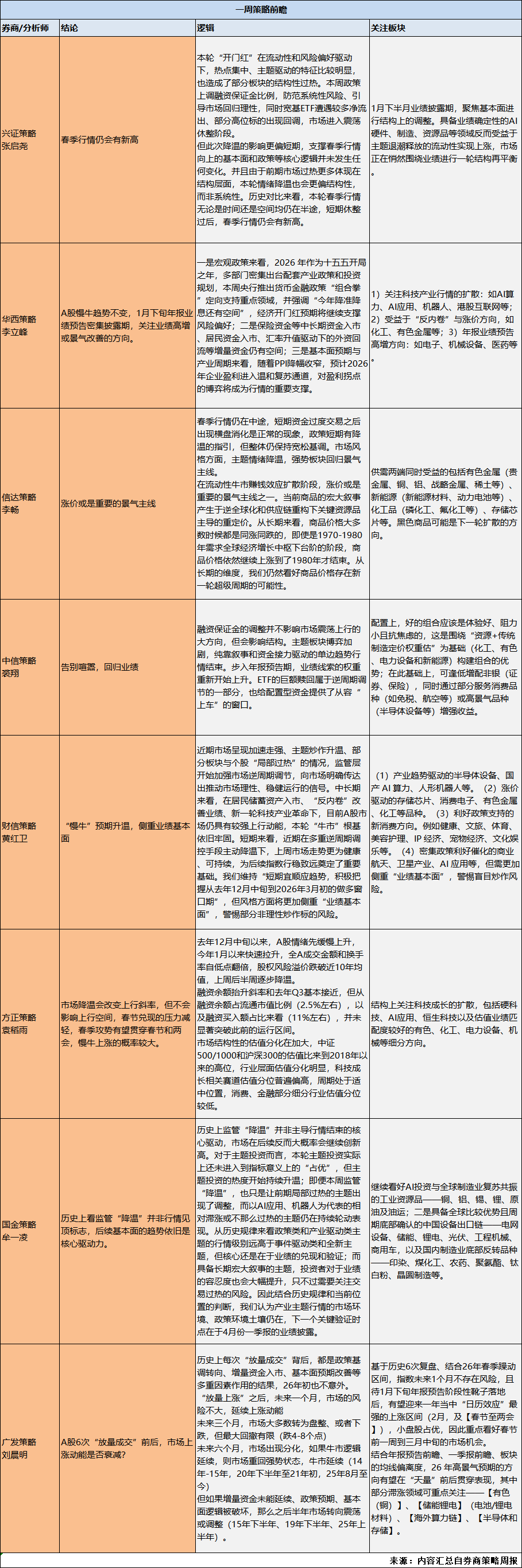
Group 1 - The A-share market is transitioning from an "emotion-driven" phase to one anchored by performance, indicating a shift towards a more stable upward trend [1][2] - As the annual report preview period approaches, the focus of investment logic is shifting from narrative-driven speculation to performance verification [1][2] - A robust investment strategy should combine high-growth sectors like AI computing with cyclical sectors such as resources and manufacturing to create a balanced portfolio [1][2] Group 2 - The adjustment of financing margins does not alter the overall upward trend of the market but will impact its structure, leading to increased competition among thematic sectors [2][4] - The current market environment suggests that the next key verification point will be the performance disclosures in April, with a focus on sectors like AI applications and robotics [3][4] - The market is expected to experience short-term fluctuations, with a focus on sectors benefiting from supply-demand improvements, such as new energy and consumer goods [4][5] Group 3 - The policy environment remains supportive, with indications of potential interest rate cuts, which could bolster market confidence and support a long-term bullish trend [6][7] - The current market structure is likely to see a rotation towards sectors with strong fundamentals, such as industrial resources and consumer recovery channels [3][7] - The investment focus should remain on sectors with high growth potential, including AI, semiconductor equipment, and traditional manufacturing [3][5][10] Group 4 - The "spring rally" is facing short-term pressures due to complex macroeconomic conditions and regulatory measures aimed at stabilizing the market [8][9] - Despite recent market corrections, the underlying logic for AI applications remains intact, suggesting continued investment opportunities in this area [8][12] - The overall market sentiment is expected to stabilize, with a focus on sectors like electronics, power equipment, and non-bank financials as potential investment areas [9][10]
A股分析师前瞻:后市指数行情依旧值得期待,结构上更关注业绩线
Xuan Gu Bao· 2026-01-18 14:42
Core Viewpoint - The current market sentiment is driven by liquidity and risk appetite, leading to a concentration of hot sectors and thematic investments, which has resulted in structural overheating in some areas [1][2] Group 1: Market Trends - The recent "opening red" market rally is characterized by significant liquidity and heightened risk preferences, with a clear focus on thematic investments [1][2] - The adjustment of financing margin ratios aims to prevent systemic risks and guide the market back to rationality, while broad-based ETFs have experienced significant net outflows, indicating a market entering a phase of consolidation [1][2] - Historical comparisons suggest that the current spring market rally is still in its early stages, with potential for new highs following a short-term correction [1][2] Group 2: Sector Focus - Analysts emphasize that the upcoming earnings reporting period will shift focus back to performance indicators, particularly in sectors expected to show high growth or improved conditions, such as electronics, machinery, and pharmaceuticals [1][2] - The adjustment in financing margins is not expected to impact the overall upward trend of the market but will affect sector dynamics, with increased competition among thematic sectors [2][3] - The focus on sectors benefiting from the "anti-involution" trend and price increases includes chemicals and non-ferrous metals, with a particular emphasis on high-growth areas in the upcoming earnings forecasts [2][3] Group 3: Investment Strategies - The market is expected to maintain a "slow bull" trend, with a focus on performance fundamentals as the primary driver of investment decisions, while cautioning against irrational speculative activities [2][3] - The anticipated earnings reports in late January are expected to catalyze significant market movements, particularly in sectors with strong performance indicators [2][3] - The overall market sentiment remains positive, with expectations of continued upward momentum despite short-term fluctuations, driven by fundamental improvements and policy support [2][3]

东方证券:AI带动功率IC等需求成长 有望持续推动成熟制程需求提升
智通财经网· 2026-01-16 01:54
Core Viewpoint - The report from Dongfang Securities highlights that while investors are focused on AI computing power chips driving advanced process foundry demand, there is insufficient attention on the demand for mature process foundries driven by AI. The firm believes that AI will continue to boost the demand for power-related ICs, thereby enhancing the demand for mature process foundries [1]. Group 1: Demand Insights - AI is expected to drive growth in power IC demand, which will continue to enhance the demand for mature processes. The demand increase is attributed to AI server power ICs and the localization trend in mainland China, leading to higher demand for local foundries' BCD/PMIC [3]. - The utilization rate of eight-inch capacity at some foundries has significantly increased since mid-2025, driven by the demand from AI applications [3]. Group 2: Supply Dynamics - TSMC is gradually reducing its eight-inch capacity starting in 2025, with plans for some facilities to cease operations by 2027. Samsung is also initiating eight-inch production cuts in 2025 [4]. - TrendForce forecasts a 0.3% year-on-year reduction in global eight-inch capacity in 2025, with the reduction expected to expand to 2.4% in 2026. This reduction, coupled with rising demand, is projected to increase the average utilization rate of eight-inch capacity to 85-90% in 2026, up from 75-80% in 2025 [4]. Group 3: Domestic Foundry Benefits - The trend of localization in IC manufacturing in mainland China is ongoing, with companies like SMIC reporting growth in market share for various products during the domestic replacement process. This trend is expected to provide continued order growth for domestic foundries [5]. Group 4: Investment Recommendations - The report suggests that the price increase in mature processes and the demand growth driven by AI present investment opportunities. Recommended investment targets include wafer manufacturing companies such as SMIC, Hua Hong Semiconductor, and others, as well as semiconductor equipment companies [6].


台积电这份最新财报,让我们对AI的2026有数了
3 6 Ke· 2026-01-16 00:22
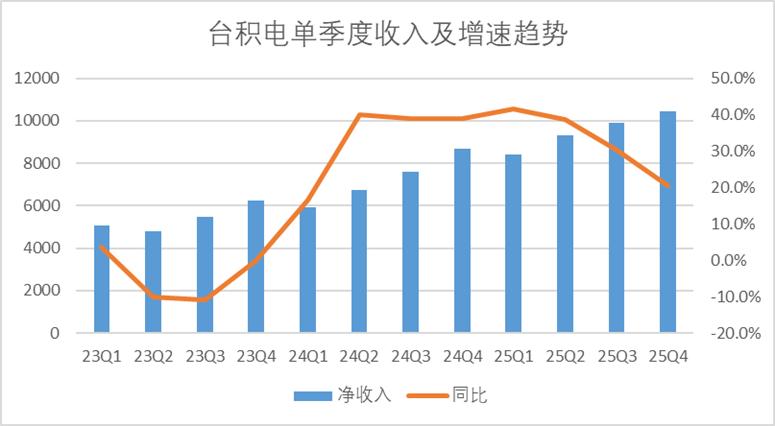
Core Viewpoint - TSMC's Q4 2025 financial report shows strong performance with revenue of NT$1.05 trillion, exceeding analyst expectations, and a gross margin of 62.3%, significantly higher than forecasts [1][5]. Financial Performance - Total revenue for Q4 2025 reached NT$1.05 trillion, surpassing the expected NT$1.02 trillion [1]. - Gross margin was reported at 62.3%, exceeding the forecast of 60.6% [1]. - Net profit attributable to shareholders was NT$505.7 billion, also above the predicted NT$475.2 billion [1]. Revenue and Profit Trends - TSMC's revenue for Q4 2025 is part of a broader trend, with a strong Q1 2026 revenue guidance projected between US$34.6 billion and US$35.8 billion, and a gross margin forecast of 63-65% [5]. - The average selling price of 12-inch equivalent wafers reached a record high of NT$264,100, with a year-on-year increase of 20% expected [13][15]. Product and Market Insights - The demand for 3nm products remains robust, contributing significantly to revenue, with 3nm products accounting for 28% of revenue in Q4 2025 [13]. - Smartphone revenue grew by 11% in Q4, while high-performance computing (HPC) saw a lower growth rate of 4% [16][18]. - TSMC's capital expenditure for 2026 is projected to be between US$52 billion and US$56 billion, with 70-80% allocated to advanced process capacity to support AI demand [20][22]. Cost Structure and Efficiency - TSMC's cost structure shows a decreasing trend in depreciation rates, with a projected 10% increase in depreciation expenses for 2026, which is lower than revenue growth expectations [25][27]. - The company has achieved a low period expense ratio of 8.4%, the lowest in five years, indicating improved operational efficiency [25]. Future Outlook - TSMC is optimistic about AI-driven demand, with expectations that 2026 could mark a peak period for the company [8][27]. - The company is focusing on maintaining its competitive edge in advanced processes, particularly with the upcoming 2nm products expected to enter the market [4][12].
沪指暴力16连阳!机构:热度有望延续,中信看好资源和传统制造
Xin Lang Cai Jing· 2026-01-11 23:37
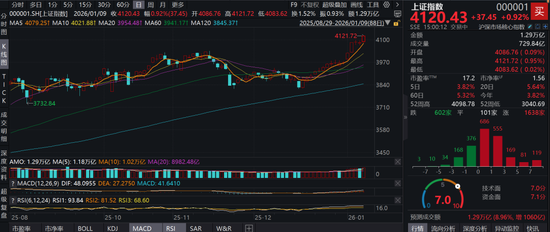
Core Viewpoint - The A-share market is experiencing a significant upward trend, with the Shanghai Composite Index breaking through 4100 points and achieving a historical 16 consecutive days of gains, driven by sectors such as commercial aerospace, controllable nuclear fusion, brain-computer interfaces, humanoid robots, and resource stocks [1][11]. Group 1: Market Trends - The current market rally is attributed to concentrated inflows from previously cautious funds, with a notable focus on thematic stocks and small-cap stocks rather than traditional allocation strategies [3][13]. - Short-term market sentiment remains high, with no signs of weakening emotional indicators, suggesting that the upward trend in thematic and small-cap stocks may continue until after the Two Sessions [3][13]. - The market is currently characterized by a high level of trading activity, with a significant increase in transaction volume, indicating strong investor confidence [16]. Group 2: Sector Recommendations - Analysts recommend focusing on sectors with high cost-performance ratios, particularly those benefiting from external demand recovery, such as gaming, duty-free, batteries, engineering machinery, and agricultural chemicals [4][14]. - The commercial aerospace sector is highlighted as a key area for investment, with expectations of continued upward momentum despite potential short-term profit-taking pressures [19]. - The resource sector, particularly traditional manufacturing, is advised for increased allocation, with a focus on enhancing pricing power [3][13]. Group 3: Future Outlook - February is anticipated to be a favorable period for the market, with historical data suggesting that significant trading volumes often lead to sustained upward trends [16]. - The market is expected to enter a phase of basic performance evaluation after the annual report disclosures in January, which may provide opportunities for investors to capitalize on growth potential [17]. - The overall sentiment indicates that the upward potential in the market outweighs the risks, with a focus on sectors that align with long-term growth trends, such as AI and semiconductor industries [20].
趋势仍在,结构再平衡
Ge Long Hui· 2026-01-11 22:55
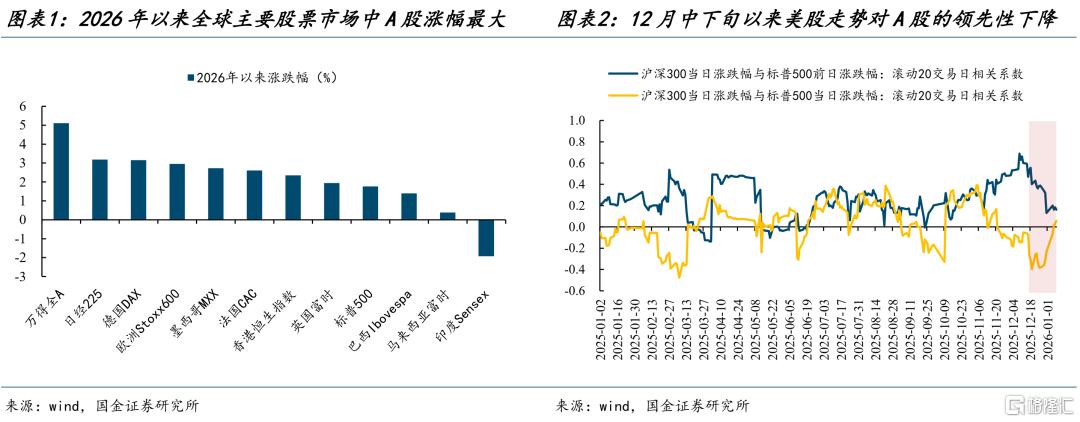
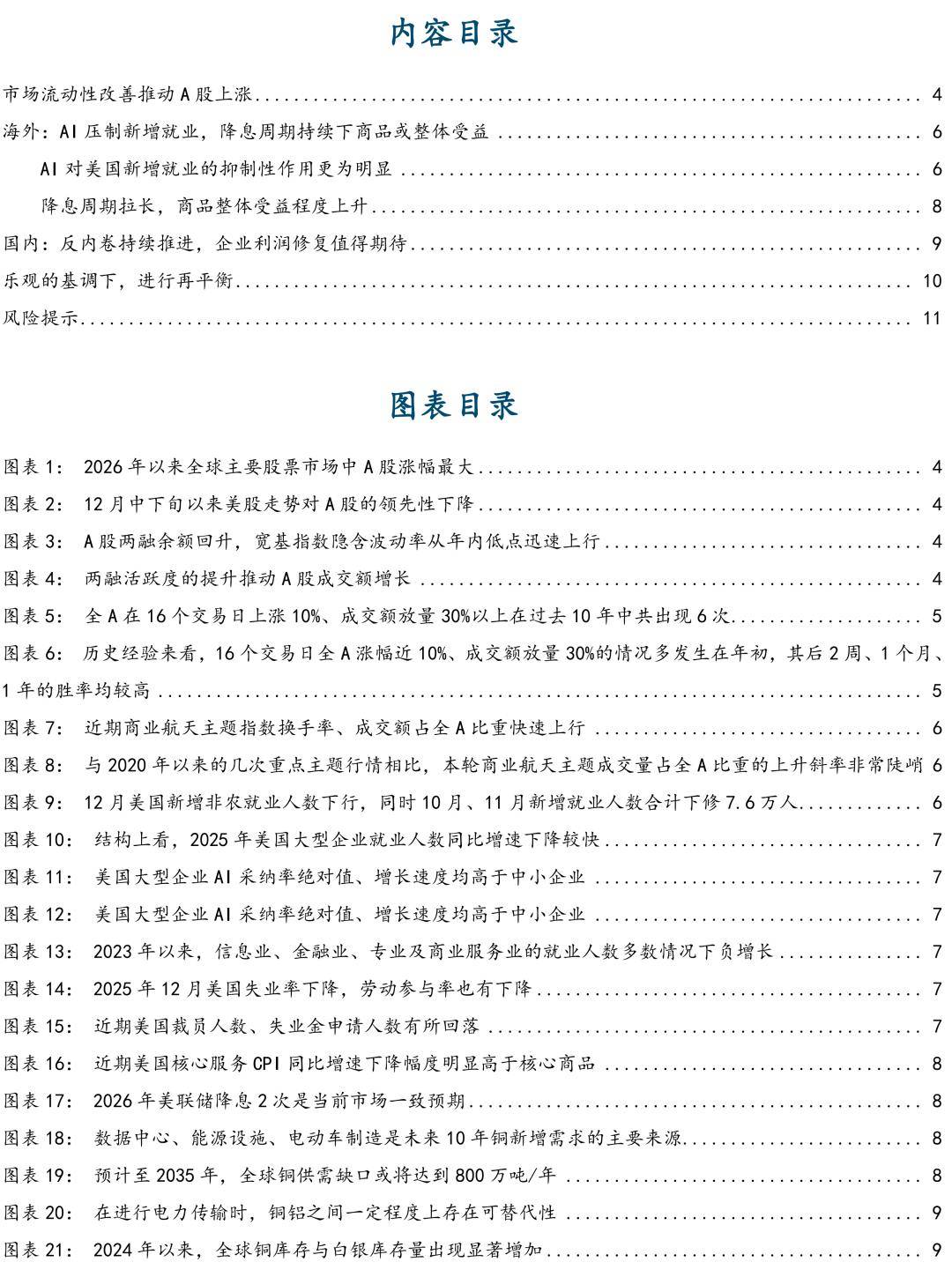
Group 1 - The recent improvement in market liquidity has driven the A-share market's rise, with a notable increase in margin trading balance by over 125 billion yuan in just half a month, leading to a more than 35% increase in trading volume [2][8] - Historical data indicates that similar market conditions have occurred six times in the past decade, with a high probability of continued strength in the A-share market over the next 10, 20, and 250 trading days following such volume increases [9][12] - However, there are signs of structural overheating, particularly in the commercial aerospace index, which has seen a significant increase in turnover rate and trading volume share, indicating a need for fundamental support for such rapid trading concentration [2][9] Group 2 - The negative impact of AI on the U.S. employment market is becoming evident, with December's non-farm payrolls falling short of expectations and a cumulative reduction of 340,000 jobs in sectors heavily affected by AI [3][15] - The ongoing concerns about a prolonged interest rate cut cycle by the Federal Reserve are alleviating fears of a second inflation wave, benefiting commodity prices as the demand-supply gap becomes more pronounced [3][23] - The geopolitical tensions are altering inventory behaviors among market participants, leading to increased stockpiling and a significant rise in copper and silver inventories since 2025 [24][27] Group 3 - Domestic policies aimed at reducing "involution" are being implemented, with industrial PPI showing a positive trend, indicating a shift from price drag to support for corporate revenues [4][35] - The recent regulatory focus on the photovoltaic industry has raised concerns about the commitment to anti-involution policies, but the overall direction remains focused on improving corporate profitability through reasonable policy guidance [4][40] - The market is expected to see improvements in corporate earnings as the anti-involution policies take effect, with a focus on preventing monopolistic practices while fostering innovation [4][42] Group 4 - The report maintains an optimistic outlook for the A-share market, suggesting that the ongoing liquidity improvements and fundamental changes will drive future performance [5][43] - Recommendations include focusing on industrial resource products that resonate with AI investments and global manufacturing recovery, as well as sectors benefiting from domestic consumption recovery [5][43]
A股策略周报20260111:趋势仍在,结构再平衡-20260111
SINOLINK SECURITIES· 2026-01-11 13:41
Group 1: Market Liquidity and A-Share Performance - The improvement in market liquidity has been a direct catalyst for the recent rise in A-shares, with margin trading balances increasing by over 125 billion yuan in just half a month, leading to a more than 35% increase in trading volume across the A-share market [3][13][22] - Historical data shows that similar situations, where the A-share market rose by nearly 10% over 16 trading days with trading volume expanding by over 30%, have occurred six times in the past decade, predominantly at the beginning of the year [3][18][22] - The recent surge in the commercial aerospace index has led to a significant increase in turnover rates and trading volume proportions, indicating a potential structural overheating in the market [3][22] Group 2: AI Impact on Employment and Economic Policy - The U.S. job market continues to face pressure, with December's non-farm payrolls adding only 50,000 jobs, below expectations, and a downward revision of 76,000 jobs for October and November [4][26][33] - The adoption of AI by large U.S. companies has significantly suppressed employment growth, particularly in the information, finance, and professional services sectors, which have collectively lost 344,000 jobs over the past three years [4][26][33] - The Federal Reserve's extended rate-cutting cycle is expected to benefit commodity markets, as inflation concerns related to AI investments are easing [4][40][41] Group 3: Domestic Economic Recovery and Policy Optimization - The Producer Price Index (PPI) for industrial enterprises in December showed a year-on-year increase, indicating a shift from price drag to price support for corporate revenues [5][56] - The Consumer Price Index (CPI) has also risen, with the core CPI maintaining its highest level in five years, reflecting a smoother transmission of prices from enterprises to consumers [5][56] - The ongoing anti-involution policies are expected to enhance corporate profitability, with regulatory measures aimed at preventing monopolistic practices and promoting fair competition [5][62] Group 4: Rebalancing and Investment Recommendations - The report suggests a positive outlook for A-shares, driven by improved liquidity and favorable domestic and international economic conditions [6][63] - Recommended investment areas include industrial resource products like copper, aluminum, and lithium, as well as sectors benefiting from the recovery of domestic manufacturing and consumer spending [6][63] - The report emphasizes the importance of capturing opportunities in sectors such as aviation, duty-free, and food and beverage, which are expected to benefit from increased consumer income and tourism recovery [6][63]
国金策略:趋势仍在,结构再平衡
Sou Hu Cai Jing· 2026-01-11 10:59
Group 1 - The recent improvement in market liquidity has driven the A-share market's rise, with historical patterns suggesting a strong performance in the upcoming period [1][5] - The A-share market has seen a significant increase in trading volume, with a 35% growth in total trading volume and a 10% rise in the overall A-share index over the past 16 trading days [2][14] - There is a notable structural overheating in the market, particularly in the commercial aerospace index, which has seen a sharp increase in turnover and trading volume [2][14] Group 2 - AI's negative impact on the U.S. employment market is becoming evident, with December's non-farm payrolls falling short of expectations and a downward revision of previous months' data [3][20] - The prolonged interest rate cut cycle by the Federal Reserve is expected to benefit commodity markets, as the demand for resources related to AI and new energy industries is increasing [3][33] - Geopolitical tensions are altering inventory behaviors among market participants, leading to increased stockpiling and a rise in copper and silver inventories [3][35] Group 3 - Domestic policies aimed at reducing "involution" are being implemented, with industrial prices showing signs of recovery, leading to improved corporate profitability [4][43] - The recent regulatory focus on the photovoltaic industry has raised concerns about the commitment to anti-involution policies, but the overall direction remains focused on improving corporate fundamentals [4][49] - The government is actively working on regulatory frameworks to support innovation while preventing monopolistic practices, which is expected to enhance corporate profitability in the long run [4][51] Group 4 - The report maintains an optimistic outlook for the A-share market, suggesting that the combination of improved liquidity, AI investments, and domestic policy support will lead to a favorable investment environment [5][52] - Recommended sectors include industrial resource products like copper, aluminum, and lithium, as well as equipment exports and consumer sectors benefiting from recovery trends [5][52]
国金证券:新的主线正在浮出水面 把握当下切换窗口期
Di Yi Cai Jing· 2025-12-30 00:25
Core Viewpoint - The new investment themes for 2026 are emerging in the commodity market, real industry chain, and foreign exchange market, driven by a scenario where investment exceeds consumption, leading to increased physical consumption across various manufacturing sectors [1] Group 1: Investment Opportunities - Focus on AI investments and the recovery of global manufacturing, particularly in industrial resource products such as copper, aluminum, tin, lithium, crude oil, and oil transportation [1] - Attention to China's equipment export chain, which has global comparative advantages and is confirmed at the bottom of the cycle, including power grid equipment, energy storage, lithium batteries, photovoltaics, engineering machinery, and commercial vehicles [1] - Identify domestic manufacturing sectors that are showing signs of bottom reversal, such as chemicals (dyeing, coal chemicals, pesticides, polyurethane, titanium dioxide) and wafer manufacturing [1] Group 2: Consumer Recovery - Capture the recovery in consumption driven by inbound tourism and rising household income, focusing on sectors like aviation, hotels, duty-free shops, and food and beverages [1] Group 3: Non-Banking Financial Sector - Benefit from the expansion of the capital market and the bottoming out of long-term asset returns, particularly in non-bank financial sectors such as insurance and brokerage [1]

A股跨年行情已经启动,新的主线浮出水面
Zheng Quan Shi Bao Wang· 2025-12-29 03:07
Group 1 - The article highlights that 39 out of 360 industry/theme ETFs reached new highs in December, with established sectors like telecommunications and non-ferrous metals reflecting North American AI infrastructure and resource logic, while new sectors like commercial aerospace ETFs are gaining attention during market fluctuations [2] - The focus on sectors such as chemicals and engineering machinery indicates a shift in China's manufacturing competitiveness towards pricing power, while sectors related to anti-involution, like new energy and steel, are also showing signs of recovery [2] - The investment strategy suggests a preference for sectors with low heat and concentration but potential for long-term ROE improvement, such as chemicals, engineering machinery, and new energy, alongside a keen observation of the trend of RMB appreciation [3] Group 2 - The article discusses the favorable conditions for the spring market rally, emphasizing liquidity-driven characteristics in the A-share market, with expectations for a surge in the CSI A500 ETF towards year-end [3] - It notes that the spring market is supported by loose liquidity, with private equity making concentrated purchases and the RMB's appreciation benefiting market liquidity [3] - The potential for a spring rally is further supported by upcoming events like the Spring Festival and the Two Sessions, which may enhance risk appetite [3] Group 3 - The article indicates that the RMB's appreciation post "breaking 7" is expected to have a positive impact on both the currency and capital markets, with a potential for a spring rally [4][5] - It outlines four key logic points regarding the impact of RMB appreciation on industry allocation, including benefits for industries with high import reliance, those with significant foreign currency liabilities, and domestic demand-driven sectors [5] - The article suggests that the current market conditions do not show clear signs of a bull market peak, with internal policies remaining supportive and external risks easing [6] Group 4 - The article identifies new investment themes emerging in the commodity market and real industry chains, highlighting the increasing consumption of physical goods in manufacturing sectors and the strengthening of China's manufacturing advantages [7] - It recommends focusing on industrial resource products that resonate with AI investment and global manufacturing recovery, as well as sectors like equipment exports and domestic manufacturing recovery [7] - The article emphasizes the importance of capital market expansion and the potential for non-bank financial sectors to benefit from improving asset returns [7] Group 5 - The article states that the A-share market's cross-year rally has begun, driven by positive signals from the Shanghai Composite Index and optimistic institutional investor expectations [8] - It highlights the importance of sectors like non-ferrous metals and AI computing, with commercial aerospace being a primary market focus [8] - The article suggests that the spring market may see a structural and rapid rotation of sectors, with a recommendation for investors to adopt a low-buying strategy [12]