
粮食收储

Search documents
人民财评:超1亿吨秋粮入仓,守住“种粮卖得出”底线
Ren Min Wang· 2025-11-14 08:30
Core Insights - The National Food and Material Reserve Administration reported that as of now, over 100 million tons of autumn grain have been purchased nationwide, indicating a rapid acquisition pace, active market transactions, and a trend of higher quality and prices [1] Group 1: Autumn Grain Acquisition - Autumn grain accounts for three-quarters of China's total annual grain production, making its acquisition crucial for ensuring national food security, stabilizing market supply, and increasing farmers' income [1] - Local authorities are overcoming various challenges and innovating methods to enhance the quality and efficiency of autumn grain acquisition, aiming to achieve the annual grain production targets [1] Group 2: Policy and Support Measures - Relevant departments have initiated minimum purchase price execution plans for medium and late rice in provinces like Henan, Hunan, and Heilongjiang, with storage capacity for minimum purchase prices exceeding 10 million tons [1] - The China Grain Reserves Group is actively purchasing grain while deploying mobile testing vehicles and rapid monitoring equipment to facilitate quick sales for farmers [1] Group 3: Technological Innovations - In Heilongjiang, intelligent sampling devices and efficient unloading processes have reduced the time for grain acquisition to just half an hour [2] - In Anhui, smart drying equipment has become essential for reducing losses during continuous rainy weather, achieving national storage standards within 12 hours [2] - The application of smart technology and new agricultural machinery is enhancing the efficiency of grain circulation from fields to storage, thereby strengthening the resilience of the grain storage chain [2] Group 4: Market Dynamics and Future Outlook - Continuous monitoring of market dynamics and optimizing service guarantees are necessary to ensure that the grain collected translates into tangible benefits for farmers, thereby concluding the year’s grain harvest successfully [2]
科学储粮 颗粒归仓
Xin Lang Cai Jing· 2025-11-13 12:44
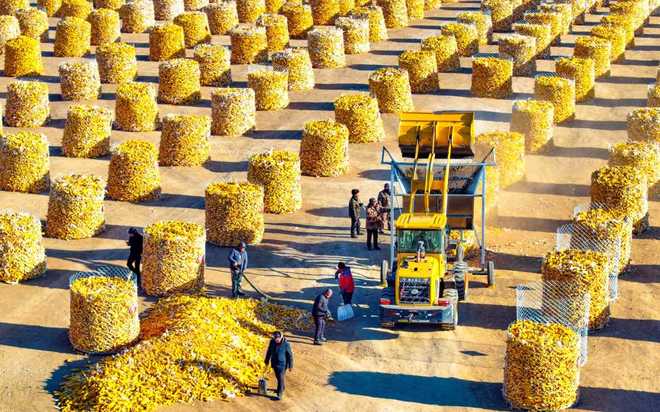
Core Insights - The article highlights the innovative grain storage methods adopted in Eergutu Town, Inner Mongolia, aimed at reducing corn loss during the autumn harvest [3]. Group 1: Grain Storage Innovations - The local farmers are implementing new storage models such as three-dimensional storage, centralized storage, and grain agency storage [3]. - These methods are tailored to local conditions, enhancing the efficiency of grain storage processes [3].

视频丨科技赋能+多项为农服务 助秋粮收购入库跑出“加速度”
Yang Shi Xin Wen Ke Hu Duan· 2025-11-13 06:53
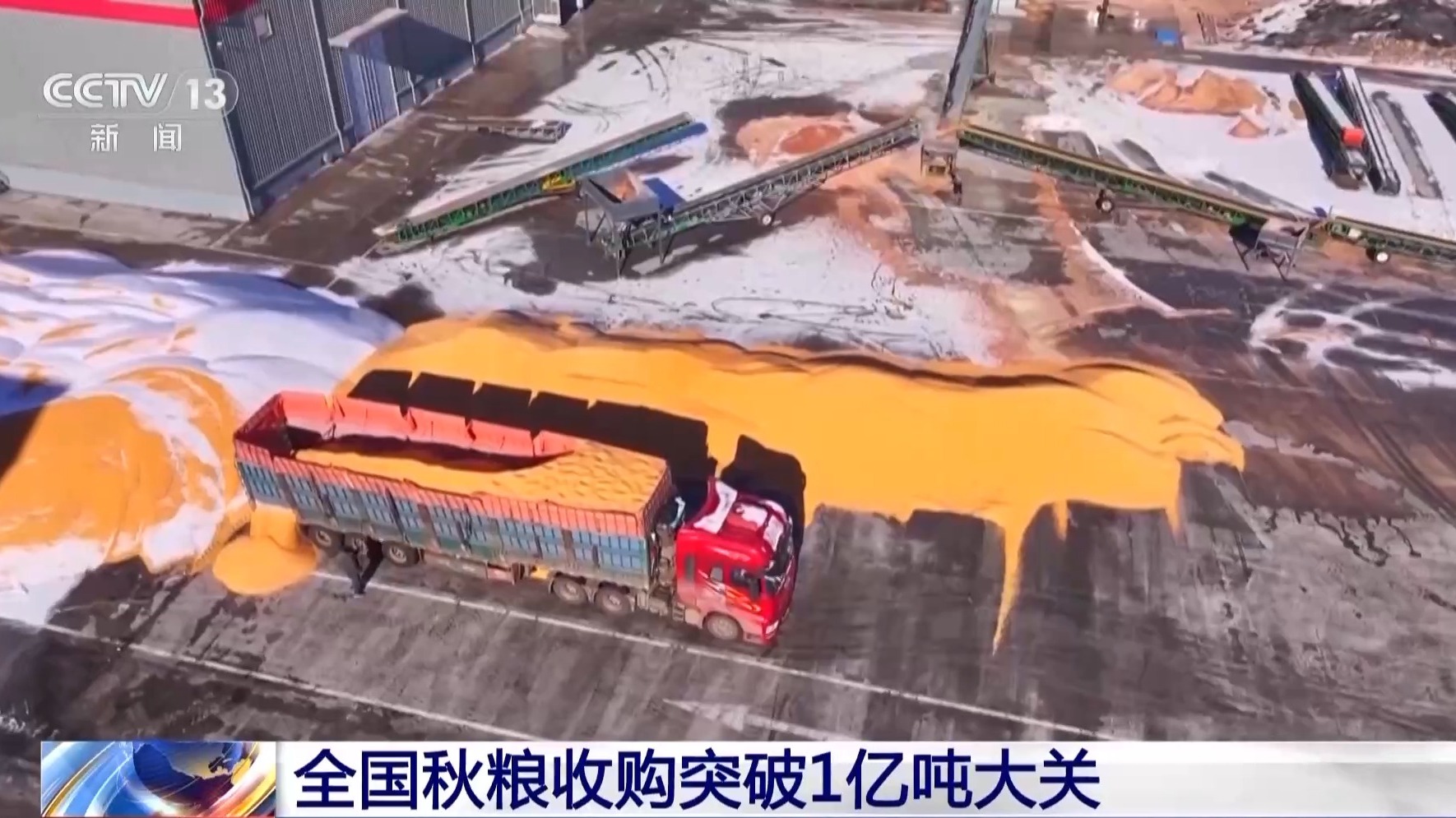
Core Insights - The national grain and material reserve bureau reports that the autumn grain purchase volume has exceeded 100 million tons, highlighting a fast acquisition pace, active market transactions, and a strong demand for high-quality products [1][28] Group 1: Market Trends - The northeastern region has seen an earlier corn harvest compared to last year, with overall good quality [3] - High-protein soybean demand is robust, with prices significantly higher than ordinary varieties [3] - Rice supply is ample, with a clear trend of higher prices for quality products [3] Group 2: Regional Highlights - In Nenjiang, Heilongjiang Province, the area for high-quality corn varieties has surpassed 1 million acres, leading to strong demand from grain enterprises [5] - The local grain storage point has reported that farmers are enthusiastic about selling their grain due to higher prices, benefiting from a "premium recovery" model [5] - In Sichuan's Yanting, high-quality corn is being used exclusively for egg-laying hens, with significant processing capacity in the area [9] Group 3: Processing and Demand - National corn deep processing capacity stands at 125 million tons, with some companies expanding production or extending their industrial chains [9] - The feed production has increased this year, driving up corn demand, while deep processing enterprises have improved their operating rates [11] - The operating rate of starch processing enterprises reached approximately 66% in early November, a 6 percentage point increase month-on-month [11] Group 4: Government Policies - The government continues to implement minimum purchase price policies in major rice-producing areas, with specific prices set for different rice types [12][13] - The minimum purchase price for medium and late indica rice is set at 2,580 yuan per ton, and for japonica rice at 2,620 yuan per ton [13] Group 5: Technological Innovations - Advanced technologies such as AI monitoring systems and automated grain handling robots are being utilized to enhance grain storage and quality control [15][17] - The use of IoT systems for real-time monitoring during the drying process has significantly reduced losses in grain storage [22][24] Group 6: Financial Support and Services - Financial institutions are providing tailored services to farmers, including loans and financial management support, to facilitate grain sales and storage [26] - The establishment of a "service list" for agricultural timing has enabled local banks to match funding needs for over 300 farmers [26] Group 7: Overall Market Monitoring - The bureau emphasizes the importance of monitoring grain market trends, prices, and supply-demand dynamics to protect farmers' interests [28]
中经评论:把粮食收储服务搬到田埂上
Jing Ji Ri Bao· 2025-11-13 00:14
Core Insights - The article highlights the transformative impact of mobile drying machines and quality inspection vehicles on grain storage services, enhancing efficiency and reducing post-harvest losses [1][2][3] Group 1: Mobile Equipment Benefits - Mobile drying machines and quality inspection vehicles provide timely services directly at the fields, improving post-harvest service models and enhancing the grain storage system [1] - These mobile devices address the challenges of agricultural production's dispersion, seasonality, and emergency situations, acting as "mobile service stations" that extend service coverage [2] - The shift from fixed to mobile services reduces the logistical burden on farmers, lowering costs and improving efficiency in grain sales [3] Group 2: System Integration - The integration of mobile equipment with traditional fixed facilities marks a transition to a more resilient grain storage system, combining static and dynamic elements for better risk management [4] - Modern grain storage facilities, while essential, have limitations that mobile devices effectively address, such as coverage of remote areas and rapid deployment in response to fluctuations in grain production [4] - The ongoing technological advancements are expected to lead to the development of more innovative mobile solutions, reinforcing the commitment to support agricultural needs at the grassroots level [4]
把粮食收储服务搬到田埂上
Jing Ji Ri Bao· 2025-11-12 22:19
Core Viewpoint - The integration of mobile devices such as mobile dryers and quality inspection vehicles with fixed facilities is creating a modern grain storage system that enhances food security and supports rural development [1][5]. Group 1: Mobile Equipment Advantages - Mobile dryers and quality inspection vehicles provide timely services directly in the fields, improving post-harvest efficiency and reducing losses [1][2]. - These mobile solutions disrupt traditional storage methods by offering flexibility and efficiency, allowing for immediate response to grain drying and quality testing needs [2][3]. Group 2: Addressing Agricultural Challenges - Mobile equipment effectively addresses the challenges of agricultural production's dispersion, seasonality, and emergency situations [3]. - The ability to deploy mobile facilities directly to rural areas enhances service coverage and responsiveness during peak harvest seasons [3][4]. Group 3: Service Model Transformation - The shift from fixed to mobile services represents a significant change in the grain post-harvest service model, reducing costs and improving convenience for farmers [4][5]. - This transformation reflects a commitment to serving rural communities and enhancing the overall efficiency of the grain storage system [4][5]. Group 4: Future Outlook - The ongoing development of mobile technology is expected to lead to more innovative solutions in grain storage and handling [5]. - The core principle remains to meet grassroots needs in a flexible and precise manner, reinforcing the commitment to national food security [5].
山东省农信联社:助力打好“三秋”农业生产“硬仗”
Qi Lu Wan Bao· 2025-10-15 08:31
Core Viewpoint - Continuous heavy rainfall in Shandong since September has adversely affected the autumn grain harvest, necessitating urgent agricultural disaster relief efforts and financial support for farmers [1] Financial Support Initiatives - Shandong Rural Credit Union has activated an emergency response mechanism to support autumn grain harvesting, guiding local banks to deploy resources and open green channels for loans [1][9] - Dongping Rural Commercial Bank provided a quick loan of 300,000 RMB to a farmer for purchasing a specialized corn harvester, enabling timely harvesting before the next rainfall [2] - Linyi Rural Commercial Bank issued a loan of 750,000 RMB to a cooperative, facilitating the use of modern harvesting machinery that can operate in wet conditions [3] Loan Performance and Impact - As of October 12, the loan balance for the grain industry reached 17.311 billion RMB, an increase of 720 million RMB from the end of September, with a year-on-year growth of 15.69% in loans issued [4] - Guo Rao County's grain logistics company utilized a 10 million RMB loan to enhance its drying capacity, ensuring timely service for local farmers [5][6] Equipment and Technology Adoption - The introduction of advanced agricultural machinery, such as tracked harvesters and grain drying towers, has significantly improved operational efficiency in adverse weather conditions [3][7] - A new grain drying tower with a processing capacity of 300 tons per day was installed, reducing moisture content from 30% to below 0.5% and minimizing spoilage risks [6][7] Urgency of Financial Solutions - Farmers are facing increased costs and cash flow challenges due to prolonged rainfall, prompting banks to expedite loan approvals and provide tailored financial solutions [8][9] - The rapid response from banks has enabled farmers to maintain operations and secure their harvests, demonstrating the critical role of financial institutions in agricultural resilience [8][9]
农行山东省分行:“抢”字当头 金融助力稳粮仓
Qi Lu Wan Bao· 2025-10-13 08:56
Group 1 - The drying towers are operating continuously, drying 200 to 300 tons of corn daily, ensuring local farmers can sell wet grain and receive cash immediately [1] - Continuous rainy weather in Shandong has caused difficulties in harvesting and drying corn, impacting the autumn harvest and planting [1] - The local agricultural bank has provided a loan of 1 million yuan to support grain purchase and drying equipment, facilitating the collection and drying of grain [3] Group 2 - The agricultural bank's support is crucial for farmers to combat adverse weather conditions, enabling timely drying and maintaining grain quality [4] - The agricultural bank has opened a green channel for loan approvals, ensuring timely financial support for grain collection and drying operations [5] - The total drying capacity of the local agricultural technology company has reached 2,000 tons per day, effectively meeting the drying and sales needs of local farmers [5]
各地多举措战阴雨抢秋收:“粮食银行”护粮减损 烘干链闭环助农“收好粮卖好价”
Yang Shi Wang· 2025-10-11 03:37
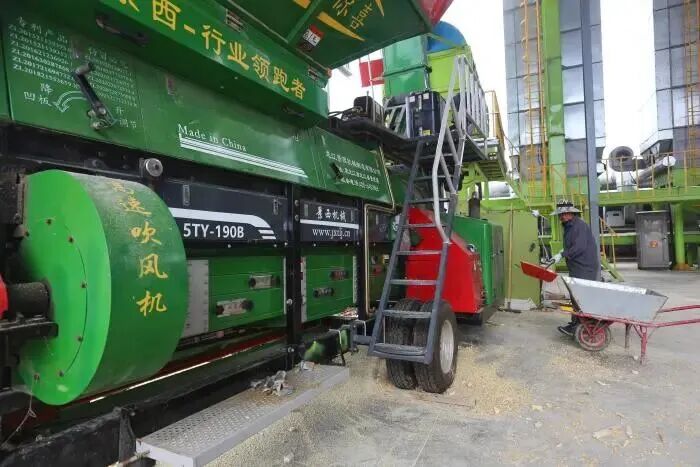
Group 1 - The core issue in Shandong's Yuncheng County is the impact of continuous rainy weather on the autumn harvest, leading to difficulties in drying and storing grain [1] - Yuncheng County is exploring a "grain bank" model to enhance social services related to grain and oil, aiming to increase farmers' income [1][5] - The grain bank has a designed storage capacity of approximately 20,000 tons, with 8,000 tons already stored, helping farmers maximize their profits by waiting for better prices to sell [5] Group 2 - In Anhui Province, local departments have activated emergency plans to address the challenges posed by rainy weather during the harvest of corn and rice, ensuring grain is collected effectively [7] - The implementation of a "harvest + drying" closed-loop system in Huaiyuan County, with 18 grain drying centers operating 24/7, is aimed at safeguarding farmers' harvests [7] - In Suzhou's Daxiang County, a mechanism has been established to connect farmers with drying points and purchasing enterprises, facilitating the entire grain drying, storage, and sales process [7]
中国建设银行高质量做好县域乡村金融服务
Jin Rong Shi Bao· 2025-09-23 05:41
Core Viewpoint - The article emphasizes the critical role of financial services in supporting rural revitalization and agricultural modernization in China, highlighting the initiatives taken by China Construction Bank to enhance its rural financial service capabilities and support national food security [1][2]. Financial Services for National Food Security - China Construction Bank has prioritized food security as a key focus for its rural revitalization financial services in 2024, implementing the "善建粮安" financial service plan to support various agricultural financing needs [2][3]. - The bank has introduced a series of financial products such as "种业贷" (Seed Industry Loan), "粮食收储贷" (Grain Storage Loan), and "高标准农田贷款" (High-Standard Farmland Loan) to enhance support for the agricultural sector [2][3]. Support for County-Level Prosperity Industries - The bank has developed tailored financial products to support the honey pomelo industry in Fujian, which is a significant agricultural sector in the region, facilitating a comprehensive financial service approach [4][5]. - As of the second quarter, the bank's "裕农产业" platform has engaged with 66 core enterprises and over 500 chain enterprises, serving more than 70,000 farmers [5]. Agricultural Ecosystem Service Model - China Construction Bank has adopted a "圈链群" (Circle-Chain-Group) service model to enhance agricultural service levels, focusing on various agricultural clusters and supply chains [6][7]. - The bank has established digital platforms to connect agricultural production and supply chain participants, exemplified by its collaboration with Dunhuang Seed Industry in Gansu [7]. Financial Performance Metrics - As of the second quarter, the bank's agricultural loan balance reached 36,153.25 billion yuan, with an increase of 2,722.67 billion yuan year-to-date, reflecting an 8.14% growth [1]. - The bank's rural household operating loan balance was 5,543.87 billion yuan, with a year-to-date increase of 506.39 billion yuan, marking a growth rate of 10.05% [5].


收储上新 卖粮安心——一碗粮里看“四向”
He Nan Ri Bao· 2025-07-31 23:18
Core Insights - The article highlights the critical role of Henan province in China's grain production, particularly during the summer grain procurement season, which is seen as a test of reforms in grain purchasing and storage management systems [1] - The implementation of technology and market-oriented strategies has improved efficiency and ensured farmers' income stability [1] Group 1: Storage Capacity Challenges - Henan province faces significant storage capacity challenges due to increased grain procurement demands, with policy-driven grain warehouses operating at full capacity [2] - A comprehensive survey of available storage facilities was initiated, utilizing both state-owned and private grain storage options to alleviate pressure [2] - A smart scheduling system has been implemented to optimize grain distribution, allowing farmers to sell grain more conveniently [2] Group 2: Technological Advancements - The introduction of a digital platform has transformed the grain selling process, enabling farmers to schedule appointments for grain unloading via a mobile app [3] - The use of automated sampling and testing equipment has significantly increased the speed and accuracy of grain quality assessments [4] - The appointment rate for grain sales has risen from 35% to 92%, with average waiting times reduced to under 12 hours [4] Group 3: Collaborative Support - Cross-provincial support teams have been deployed to assist local grain storage facilities, providing training and equipment to enhance operational efficiency [5] - Additional resources, such as mobile unloading machines and on-site calibration services, have been coordinated to address equipment shortages [5] Group 4: Community Engagement - Grain procurement points have been transformed into community service stations, offering amenities such as refreshments and rest areas for farmers [6] Group 5: Smart Monitoring Systems - A smart monitoring system has been established to enhance grain safety, utilizing real-time data to identify and address potential issues proactively [7] - The accuracy of grain condition monitoring has reached 99.8%, marking a significant advancement in grain storage management [7] Group 6: Procurement Achievements - As of July 29, the China Grain Reserves Corporation's Henan branch has procured over 4.29 million tons of wheat at the minimum purchase price, accounting for 74% of the national total [8]