酒行业

Search documents
2025年第39周:酒行业周度市场观察
艾瑞咨询· 2025-09-29 00:05
Industry Environment - The white liquor industry is shifting its endorsement strategy from middle-aged male celebrities to younger, diverse stars like G.E.M. and Zhang Yixing, reflecting a trend towards a more youthful and lifestyle-oriented brand image [2][3] - The light bottle liquor market is experiencing a bifurcation, with traditional brands like Niulanshan facing significant revenue declines due to price competition, while high-quality products like Fenjiu's Guofen are in high demand, indicating a shift towards quality and brand strength in the market [4][5] - The upcoming 2025 China Open tennis tournament will feature enhanced spectator experiences and cultural integration, with Luzhou Laojiao as the exclusive partner, promoting Chinese liquor culture [5] - The high-end beer market is undergoing significant changes, with CR Beer surpassing Budweiser APAC in revenue, indicating the rise of local brands in the premium segment despite overall market contraction [6] - The banquet market is emerging as a new battleground for liquor companies, with several firms reporting double-digit growth in this segment as they adapt to changing consumer preferences [7] - Eight listed liquor companies reported direct sales revenue exceeding 640 billion yuan in the first half of the year, with Moutai and Wuliangye leading the market [8] - The past decade has seen significant changes in the regional liquor market, with notable growth among regional leaders while others struggle due to strategic missteps [9] Key Trends - The trend towards lower alcohol content in liquor is gaining traction, with companies like Wuliangye and Luzhou Laojiao launching lower-alcohol products to attract younger consumers, and the low-alcohol market expected to grow significantly [11] - Regional liquor companies are leveraging local sports events for marketing, enhancing brand connection with consumers, although the effectiveness of such strategies remains to be seen [12] - The first China Liquor Market Prosperity Index was released, indicating a favorable outlook for online sales and low-alcohol products driving consumption [10] Company Dynamics - Songhe Liquor is upgrading its quality strategy with a commitment to long-term aging processes, aiming to enhance its market position [13] - The launch of "Dazhen·Zhenjiu" has seen strong initial sales, indicating a successful entry into the high-end liquor market through strategic partnerships and pricing control [14] - Gujing Gongjiu is integrating cultural elements into consumer experiences, showcasing the importance of cultural heritage in modern marketing strategies [15] - The "Jiuxiao Er" brand is focusing on immediate retail and digital transformation to enhance consumer engagement and market presence [14][19] - Yanghe's summer marketing campaign successfully connected the brand with consumer experiences through sports and cultural events, emphasizing the importance of experiential marketing [20] Emerging Opportunities - The introduction of herbal yellow wine "Bencao Bang" targets health-conscious consumers, indicating a trend towards health-oriented products in the liquor market [21] - A strategic partnership between Huajun Media and Bojiangfang aims to reshape the market for sauce-flavored liquor through quality certification and consumer engagement [22] - The launch of UMEET blueberry distilled liquor exemplifies the industry's shift towards catering to younger, health-conscious consumers with innovative products [24]






周度市场观察:酒行业-20250927
Ai Rui Zi Xun· 2025-09-27 08:46
Investment Rating - The report does not explicitly provide an investment rating for the industry Core Insights - The white liquor industry is undergoing a significant transformation with a shift towards younger and more diverse brand ambassadors, moving from traditional middle-aged male figures to younger celebrities to connect with new generations of consumers [2] - The high-end beer market is experiencing a competitive shift, with local brands like China Resources and Qingdao Beer gaining ground against international players like Budweiser [4] - The banquet market is emerging as a new battleground for revenue growth, with several liquor companies reporting double-digit growth in this segment [5] - The direct sales revenue of eight listed liquor companies exceeded 640 billion yuan in the first half of the year, with Moutai and Wuliangye leading the market [6] - The low-alcohol product segment is rapidly growing, with expectations to surpass 742 billion yuan by 2025, driven by changing consumer preferences [8] Summary by Sections Industry Trends - The white liquor industry is shifting towards younger brand ambassadors, reflecting a broader trend of appealing to younger consumers through lifestyle marketing [2] - The light bottle liquor market is experiencing a split, with traditional brands struggling while high-quality products like Guojiao are in high demand [2] - The high-end beer market is seeing local brands outperform international ones, with China Resources surpassing Budweiser in revenue [4] - The banquet market is becoming a key area for growth as companies adapt to changing consumer behaviors [5] - The direct sales model is gaining traction, with significant revenue growth reported by leading companies [6] - The low-alcohol segment is expected to grow rapidly, indicating a shift in consumer preferences towards lighter beverages [8] Top Brand News - Songhe Liquor is enhancing its quality strategy and aims for long-term growth through a focus on aged products [10] - The launch of "Dazhen·Zhenjiu" marks a significant entry into the high-end liquor market, leveraging a strong sales strategy [11] - Gujing Gongjiu is integrating cultural elements into consumer experiences to enhance brand engagement [13] - The "UMEET" blueberry distilled liquor targets younger consumers by combining health and quality [20] - The collaboration between Huajun Media and Bojiangfang aims to reshape the market for sauce-flavored liquor through strategic marketing [19]
2025年第37周:酒行业周度市场观察
艾瑞咨询· 2025-09-18 00:06
Industry Overview - The liquor industry is undergoing a deep adjustment period, with the white liquor sector facing high channel inventory and price inversion, while leading companies like Moutai and Wuliangye continue to grow [6][11] - The beer industry is performing well, with major players like China Resources, Tsingtao, and Yanjing showing revenue and profit growth, driven by high-end products [5][6] - The overall liquor market structure remains largely unchanged, with leading companies gaining more advantages while different liquor categories face unique challenges and opportunities [6][10] Key Insights on Liquor Segments - The second and third-tier sauce liquor brands are struggling with inventory buildup and price inversion, necessitating a shift from scale competition to value competition, focusing on brand positioning and quality upgrades [3][4] - The beer industry is experiencing a transformation with a focus on high-end products, craft beers, and innovative distribution channels, which are becoming key profit growth points [5][6] - The low-alcohol liquor market is projected to reach 74 billion yuan by 2025, with a compound annual growth rate of 25%, as younger consumers drive the trend towards "light drinking" and social consumption [13][14] Brand Dynamics - Wuliangye reported a revenue of 52.771 billion yuan in the first half of 2025, reflecting a year-on-year growth of 4.19%, showcasing the resilience of industry leaders [16] - Luzhou Laojiao achieved a revenue of 16.454 billion yuan and a net profit of 7.663 billion yuan, focusing on market penetration and product innovation to adapt to changing consumer demands [20] - Moutai is launching new products to enhance market reach, emphasizing consumer needs and personalized offerings during the adjustment period [7][8] Consumer Trends - The industry is witnessing a shift towards lower alcohol content and personalized products, with companies like Wuliangye and Luzhou Laojiao introducing low-alcohol options to cater to younger consumers [13][29] - The focus on emotional value and social attributes in consumption is becoming increasingly important, as brands adapt to the preferences of younger demographics [9][21] - The online sales of aged liquor are growing, with the market expected to exceed 130 billion yuan by 2024, driven by younger consumers and the demand for unique experiences [14][19] Strategic Initiatives - Companies are increasingly adopting cross-industry strategies to attract younger consumers, with brands like Moutai and Luzhou Laojiao exploring collaborations with non-alcoholic sectors [11][12] - The emphasis on cultural experiences and community engagement is becoming a key strategy for brands to build loyalty and enhance consumer connections [25][26] - The introduction of innovative products and marketing strategies is essential for brands to navigate the competitive landscape and meet evolving consumer expectations [22][30]

投资者提问:建议公司对龟龄集酒进行全面升级:提高工艺水平,口感评级,包装,...
Xin Lang Cai Jing· 2025-08-29 09:27
Group 1 - The company is actively working on the "Guilingji Wine Restructuring" project, focusing on improving the quality of the base liquor, taste, packaging design, and standardizing product technology [2] - The company has developed a diverse product matrix, including flavored Guilingji medicinal wine, Yuanzipai Guilingji health wine, Guiling liquor, and white liquor [2] - The company is committed to long-term research on any matters that benefit its development and product improvement, aiming to establish a solid foundation for enhancing operational quality [2]

酒行业周度市场观察:行业环境头部品牌动态投资运营产品技术营销活动-20250805
Ai Rui Zi Xun· 2025-08-05 07:22
Investment Rating - The report does not explicitly provide an investment rating for the industry Core Insights - The Chinese liquor industry is undergoing significant adjustments characterized by declining volume and price, policy impacts, and a focus on high-quality development [2] - The competition for the younger market is intensifying among major liquor brands, with a shift towards lower-alcohol products to cater to the preferences of younger consumers [5] - The market for light bottle liquor is rapidly growing, with major brands entering this segment to capture new consumer demographics [17] Industry Environment - The first half of 2025 will see the liquor industry facing deep adjustments, marked by seven key characteristics: consumption recovery, channel inventory, pricing systems, high-quality development, simultaneous decline in volume and price, significant policy impacts, and product innovation [2] - The trend towards smaller capacity and larger bottle sizes is emerging, with small bottles (50ml-250ml) gaining traction among younger consumers, while larger bottles (1L and above) are being used for special occasions [2] - The low-alcohol liquor segment is gaining popularity, with major brands launching products aimed at younger consumers, reflecting a strategic shift towards youth-oriented marketing [5] Top Brand News - Tibet Development Co. plans to acquire a 50% stake in Lhasa Beer from Carlsberg, aiming to enhance its asset integrity and operational capabilities [8] - Yanghe's collaboration with the Scottish Premier League has led to the launch of a football-themed product, enhancing brand engagement through cultural innovation [8] - Water Well's sales volume increased by 14.54% in the first half of 2025, driven by a focus on mid-to-high-end products despite the overall industry downturn [12] - The introduction of the "窖藏里的三餐四季" IP by Xijiu aims to connect with consumers on an emotional level, promoting a lifestyle approach to liquor consumption [13] - The light bottle liquor market has surpassed 150 billion yuan, with major brands competing aggressively in the 50-100 yuan price range [17]



2025年第31周:酒行业周度市场观察
艾瑞咨询· 2025-08-04 00:04
Industry Environment - The Chinese liquor industry is undergoing significant adjustments in the first half of 2025, characterized by declining volume and price, significant policy impacts, and a trend towards lower-quality products [3][4] - The market is seeing a rise in light bottle products, reflecting a trend of consumption downgrade, while the price inversion phenomenon is prevalent, indicating severe supply-demand imbalance [3][4] - The industry is focusing on high-quality development, with an emphasis on product innovation and sustainable practices as it seeks breakthroughs amid challenges [3][4] Market Trends - Small capacity (50ml-250ml) and large bottle (1L and above) products are gaining traction in the liquor market, with small bottles appealing to younger consumers through innovative marketing [5] - Major liquor brands are competing for the young market by launching low-alcohol products, with a significant potential consumer base of 490 million aged 18-30 contributing over 400 billion yuan in market size [6] Performance Insights - The white liquor industry is experiencing a downturn, with several listed companies issuing profit warnings, while the beer sector is witnessing growth due to consumption recovery and cost reductions [7] - The domestic whiskey market is facing a selling frenzy, with prices dropping significantly below market value due to weakened consumer demand and increased channel pressure [8] Brand Dynamics - Tibet Development Co. plans to acquire a 50% stake in Lhasa Beer from Carlsberg, which could enhance its asset integrity and operational capabilities [9] - Yanghe's collaboration with the Scottish Premier League has led to the launch of a football-themed product, enhancing brand engagement through cultural integration [10][11] - Water Well's sales volume increased by 14.54% in the first half of 2025, attributed to its focus on mid-to-high-end products and effective inventory management strategies [17] Strategic Developments - Moutai is establishing a technology research institute to enhance innovation in the liquor industry, focusing on biochemistry and fermentation optimization [20] - The introduction of a 1L bottle of Moutai through the "i Moutai" platform reflects a strategic shift towards consumer-centric approaches and packaging upgrades [21][22] - The rise of light bottle products in the market, with brands like Yanghe leading the charge, indicates a shift in consumer preferences towards high-quality, affordable options [23] Consumer Engagement - The collaboration between Baidonglai and Jiu Gui Jiu aims to connect with younger consumers through cultural narratives and quality experiences [24] - The launch of new wedding-themed products by Congtai Distillery targets the high-end wedding market, leveraging cultural elements to enhance brand positioning [25] - The success of Red Label Jin Jiu, which saw a 50% growth in sales, highlights the effectiveness of innovative marketing strategies in attracting new consumer segments [26]

2025年第27周:酒行业周度市场观察
艾瑞咨询· 2025-07-06 03:49
Group 1: Industry Environment - The white liquor industry is undergoing a significant adjustment, with companies accelerating the development of younger and lower-alcohol products to cater to the preferences of younger consumers, particularly those born in the 1990s and 2000s [1][2] - The market for low-alcohol liquor is expected to reach 740 billion yuan by 2025, indicating a shift in consumer habits towards more complex flavors and healthier drinking experiences [1] - The industry is facing high inventory levels and the impact of alcohol bans, leading to a focus on new consumption scenarios such as home gatherings and casual drinking [2][3] Group 2: Market Trends - The white liquor market is entering a phase of stock competition, with younger consumers driving demand for lower-alcohol and fruit-flavored beverages [2][3] - Instant retail has emerged as a crucial sales channel, particularly during events like the 618 shopping festival, where white liquor sales saw significant growth [6] - The overall market is experiencing a decline in volume and price, with a shift towards family and celebration consumption scenarios, while online sales are increasing but overall activity remains subdued [4] Group 3: Policy and Regulation - Recent adjustments to the "ban on alcohol" policy have clarified the distinction between normal dining and violations, which is expected to restore confidence in the market and improve consumption levels [5] - The white liquor industry is adapting to a "shrinkage era," where the focus is shifting from government and business consumption to consumer-driven demand [7][8] Group 4: Company Dynamics - Major companies like Wuliangye are focusing on quality and brand building, with a commitment to maintaining a cash dividend ratio of no less than 70% over the next three years [20][21] - Luzhou Laojiao is leading the standardization and digitalization of the aged liquor market, enhancing market transparency and quality [13] - The industry is witnessing a trend towards internationalization, with companies like Shede Liquor leveraging cultural events to promote Chinese liquor abroad [12] Group 5: Competitive Landscape - The competition in the white liquor market is intensifying, with companies needing to optimize product structures and embrace digitalization to adapt to new consumer trends [8][9] - The rise of e-commerce and instant retail is disrupting traditional pricing structures, prompting companies to rethink their channel strategies and brand value [9][10] - The market is seeing a shift towards health-oriented and lower-alcohol products, with companies like Kuaijishan adapting their strategies to capture this emerging demand [27]

市场规模剑指2000亿 酒企抢滩“健康+微醺”新蓝海
Sou Hu Cai Jing· 2025-06-25 14:40
Core Insights - The traditional liquor market is experiencing slow growth, while "health + mild intoxication" positioned liquor is emerging as a new competitive arena for liquor companies [1] - The liquor market is expected to exceed 200 billion yuan by 2030, with over 5,000 companies currently involved in the sector [1][5] - The rise of health consciousness and consumption upgrades are driving explosive growth in the liquor segment, appealing to both younger consumers and the elderly [1][6] Industry Trends - The concept of "light health" and "micro-health" is becoming mainstream, leading liquor companies to invest in the liquor segment [3] - Major brands like Wuliangye and Luzhou Laojiao are launching new liquor products, indicating a shift from niche to mainstream [3][4] - The liquor market is projected to grow at an annual rate of 22%, with sales revenue expected to reach 65 billion yuan by 2025 [5] Market Potential - The unique brewing process and health attributes of liquor are making it a new favorite in the beverage industry [5] - The young consumer market for alcoholic beverages is valued at 400 billion yuan, with a potential audience of 490 million [5] - The liquor segment is expected to see a 30% growth rate, establishing itself as the "third major liquor type" after traditional liquor and beer [4] Consumer Insights - Young consumers are increasingly seeking low-alcohol, health-oriented drinking options, which liquor can provide [6][8] - There is a lack of consumer awareness and understanding of what liquor is, indicating a need for better education and marketing [8][9] - Social media platforms are seeing a rise in discussions about liquor, with users sharing mixing recipes and experiences [6] Development Challenges - Despite the growth potential, the liquor industry faces challenges such as unclear category definitions and low consumer recognition [8] - A comprehensive standard system is needed to clarify the liquor category and enhance consumer understanding [9]
2025年第25周:酒行业周度市场观察
艾瑞咨询· 2025-06-23 08:54
Core Insights - The Chinese wine industry lacks strong brand recognition despite high production levels, necessitating a shift towards brand building and market integration [2] - The rise of live-streaming e-commerce is reshaping the alcohol sales landscape, with a focus on top-tier influencers and a shift towards offline channels for smaller players [3][4] - The popularity of local sports events, such as the "Su Super" league, is driving alcohol consumption and marketing opportunities for brands [5] - Instant retail is transforming the white wine market, with significant sales growth during promotional events like 618 [6] - The white wine industry is targeting younger consumers, adapting products and marketing strategies to appeal to the Z generation [7] - The online and offline sales channels are increasingly integrated, with brands needing to adapt to changing consumer behaviors [9] - The focus on business consumption is growing, with leading brands targeting young professionals and customizing products to meet their needs [10] - The second-tier sauce liquor brands are facing challenges due to market adjustments and increased competition [11] - The banquet market is highly competitive, with brands employing aggressive promotional strategies to capture market share [12] - The trend of fan engagement through events is becoming crucial for brands to connect with younger consumers [14] - The low-alcohol beverage market is expanding, with domestic brands like Jingyu gaining significant traction [23] - High-end liquor brands are leveraging cultural and lifestyle marketing to enhance brand recognition and consumer engagement [24]


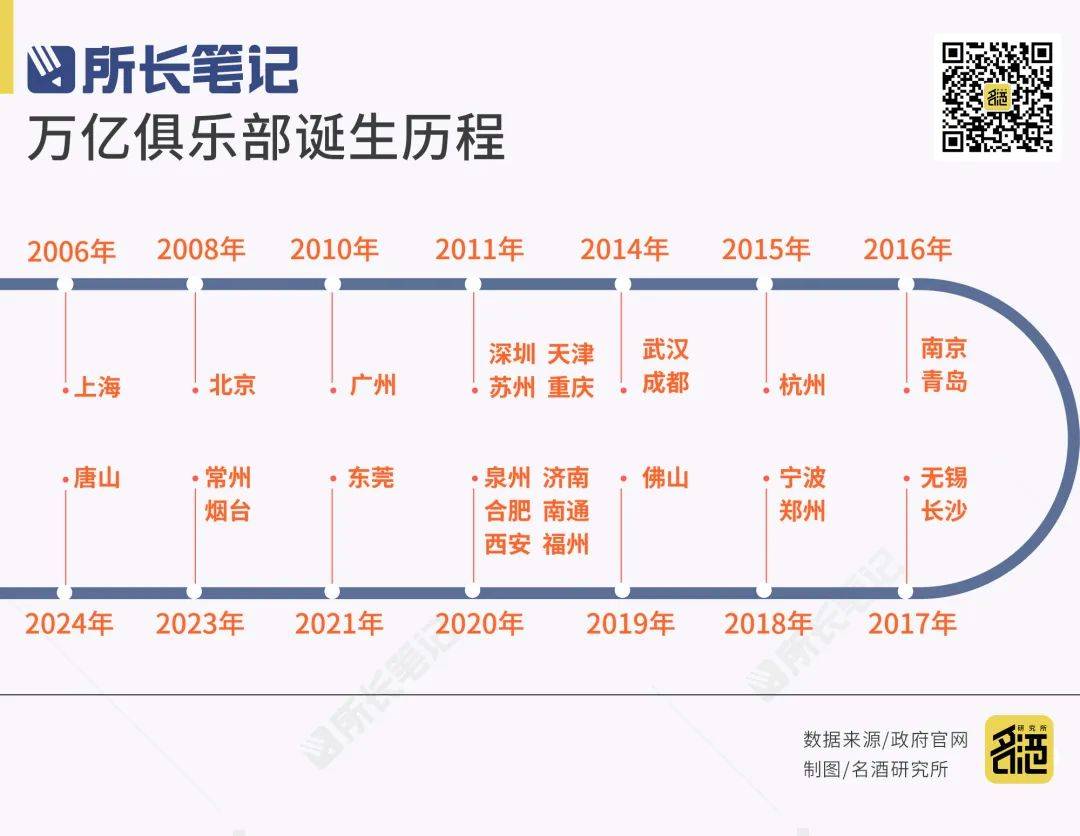
27城万亿GDP图谱,藏着中国酒业增长未来
Hu Xiu· 2025-05-12 11:28
Core Insights - In 2024, the number of cities in China with a GDP exceeding 1 trillion yuan has expanded to 27, contributing over 40% of the national economic output while occupying less than 3% of the country's land area [2][7][11] - The emergence of these trillion-yuan cities is reshaping regional economic dynamics and providing new growth opportunities for industries such as the liquor sector, which must adapt to a competitive landscape focused on high growth, high-value consumers, and demographic advantages [4][25][38] Economic Growth and Structure - All 27 trillion-yuan cities achieved positive GDP growth, with 19 cities outpacing the national growth rate of 5%, and 7 cities exceeding 6% growth, led by Quanzhou at 6.5% [11][21] - The top five cities—Shanghai, Beijing, Shenzhen, Chongqing, and Guangzhou—each surpassed 3 trillion yuan in GDP, with Shenzhen being the first to exceed 5 trillion yuan [12][15] - The competition among mid-tier cities remains intense, with cities like Hangzhou and Wuhan, as well as Ningbo and Tianjin, closely vying for position [13][15] Population and Consumption Trends - The liquor industry is encouraged to focus on high-growth regions, as all 27 cities are located east of the Hu Huanyong Line, with a significant concentration in the Yangtze River Delta and Pearl River Delta [25] - In terms of disposable income, 26 of the 27 cities have surpassed the national average of 41,314 yuan, with Shanghai, Beijing, Guangzhou, and Shenzhen exceeding 80,000 yuan [25][28] - Population dynamics reveal that Chongqing leads with over 31 million residents, while cities like Shanghai, Beijing, and Chengdu also boast populations exceeding 20 million, indicating substantial market potential [28][30] Industry Opportunities - The liquor industry can capitalize on the economic vitality, consumer spending power, and demographic advantages presented by these trillion-yuan cities [25][38] - The focus should be on linking traditional business practices with emerging demands in new industries, as many cities are prioritizing the development of strategic emerging industries such as AI, biomedicine, and new materials [38][39] - The need for the liquor industry to evolve its market strategies is emphasized, as traditional business functions are diminishing in importance within these new economic contexts [39]