
太阳能

Search documents
晶科能源:与晶泰科技签署AI高通量叠层太阳能电池项目合作协议
Xin Lang Cai Jing· 2026-01-07 12:20
Core Viewpoint - JinkoSolar has signed a strategic cooperation agreement with Jinko Technology to establish a joint venture focused on the research and development of AI-based high-throughput perovskite tandem solar cells, aiming for large-scale production in approximately three years [1] Group 1 - JinkoSolar and Jinko Technology will collaborate to advance the development of perovskite tandem solar cells [1] - The partnership is expected to leverage both companies' technological foundations and cooperation plans [1] - Large-scale production of perovskite tandem cells is anticipated within the next three years [1]

摩洛哥-瑞士启动“屋顶太阳能500兆瓦”项目
Shang Wu Bu Wang Zhan· 2026-01-07 10:27
Core Viewpoint - Morocco and Switzerland will implement a "500 MW Rooftop Solar" project in Morocco starting January 2026, marking a significant collaboration under the Paris Agreement's Article 6.2 [1] Group 1: Project Overview - The project was officially launched on December 12, 2025, and is currently awaiting final technical arrangements between the project management and local banks responsible for financing [1] - The initiative aims to deploy 500 MW of rooftop photovoltaic systems in Morocco's commercial and industrial sectors by 2030, with individual project capacities not exceeding 3 MW [1] Group 2: Financial and Technical Aspects - The total funding for the project amounts to $500 million, provided by the Swiss Climate Foundation and disbursed through local Moroccan banks [1] - Participating companies must own solar systems, cannot receive other financial subsidies, and must agree to transfer the generated emission reductions [1] - All projects must comply with strict technical, monitoring, reporting, and verification requirements [1] Group 3: Economic and Employment Impact - The project is expected to create approximately 15,000 direct or indirect jobs [1] - It is projected to reduce electricity costs for participating companies by 25% to 40%, thereby lowering operational costs and enhancing productivity and profitability [1]

小摩:预计2026年反内卷政策推动的储能行业整合 对协鑫科技(03800)等予“增持”评级
智通财经网· 2026-01-07 07:39
Group 1 - Morgan Stanley reports a significant increase in solar wafer and battery prices by December 2025, primarily due to rising costs of key materials such as polysilicon and silver paste, along with some influence from anti-involution policies [1] - The establishment of a polysilicon industry consolidation platform is expected in early December 2025, with policy-driven industry consolidation anticipated to occur in 2026 [1] - The firm has given "overweight" ratings to GCL-Poly Energy (03800) and Daqo New Energy (DQ.US) [1] Group 2 - Goldwind Technology (02208) H-shares and A-shares saw price increases of 17% and 18% respectively from December 31, 2025, to January 6, 2026, while the Hang Seng China Enterprises Index rose by 4% and the Shenzhen Component Index by 3% [1] - The price surge is attributed to market expectations regarding the value release of Goldwind's 4.14% stake in Blue Arrow Aerospace, which has IPO plans [1] - Since December 31, 2025, Goldwind's market capitalization has increased by approximately 14 billion RMB, with an estimated valuation multiple for Blue Arrow Aerospace reaching 88 times the 2024 fiscal year price-to-book ratio [1] Group 3 - Siyuan Electric (002028.SZ) has signed a three-year memorandum of understanding for energy storage cooperation with CATL (03750), with a total scale of 50GWh [2] - This collaboration demonstrates Siyuan Electric's ambition to develop its energy storage system business, which could support annual revenues of approximately 20 billion RMB once fully operational [2] - Preliminary estimates suggest that this 50GWh partnership may provide over 10% upside to Siyuan Electric's market consensus earnings forecast for the fiscal years 2027 to 2028 [2]



投早投小投硬科技,三家股份行AIC业务相继落地
Guan Cha Zhe Wang· 2026-01-07 03:42
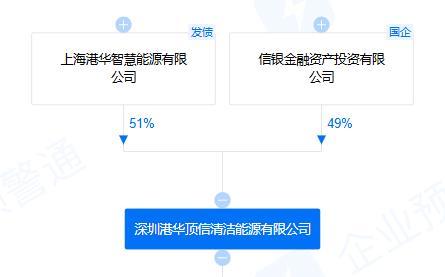
Core Viewpoint - The establishment and operation of financial asset investment companies (AICs) by major banks in China, particularly by joint-stock banks, is accelerating, with significant investments in emerging industries such as semiconductors, lithium mining, and solar energy [1][6]. Group 1: Investment Activities - Xingyin Investment has invested over 6 billion yuan within 45 days of its operation, focusing on traditional industries and emerging sectors [1]. - Zhaoyin Investment participated in a capital increase for Deep Blue Automotive, investing 500 million yuan to acquire a 2.4187% stake [2]. - Xinyin Jintou invested 64.42 million yuan in Shenzhen Ganghua Dingshin Clean Energy, holding a 49% stake, focusing on solar power technology services [2][4]. Group 2: Strategic Focus - Joint-stock banks' AICs are prioritizing investments in technology and emerging industries, contrasting with large banks that focus on traditional and heavy asset sectors [5]. - The investment strategy of joint-stock banks is characterized by "early and small" investments, indicating a differentiated approach from larger banks [5]. Group 3: Market Trends - As of now, there are 9 approved AICs in China, including those from major state-owned banks and joint-stock banks, indicating a shift towards a more diversified financing structure in the financial system [6]. - The expansion of AICs is expected to enhance market vitality and provide resilient financial support for the transformation and upgrading of the real economy [6].

美联储,降息重磅!美股、黄金,突发!
Sou Hu Cai Jing· 2026-01-06 23:57
昨夜(1月6日),美联储官员密集发声,强化加息预期。 消息面上,美联储官员密集发声,强化了降息预期。 美联储理事米兰,预计数据将支持进一步降息,美联储今年应降息逾100个基点,核心通胀率接近美联 储的目标,米兰还表示,并未主动争取美联储主席职位。 美联储官员巴尔金称,必须平衡通胀治理进展与就业稳定两大目标,鉴于当前失业率与通胀目标面临的 双重风险,未来的利率决策需进行"精细调整";通胀已下降,但仍高于目标,失业率仍处于低位,但不 希望就业市场进一步大幅恶化。 据CME"美联储观察",美联储1月降息25个基点的概率为18.3%,维持利率不变的概率为81.7%。到3月 累计降息25个基点的概率为40.7%,维持利率不变的概率为52.8%,累计降息50个基点的概率为6.5%。 责编:彭勃 美国三大股指全线收涨,道指涨0.99%报49462.08点,标普500指数涨0.62%报6944.82点,纳指涨0.65% 报23547.17点。 其中,道指、标普500指数均创历史收盘新高。 中概股方面,纳斯达克中国金龙指数跌0.78%。热门中概股方面,阿特斯太阳能跌超6%,BOSS直聘跌 逾6%,老虎证券跌超6%。 此外,今早 ...
白云新年第一会,传递了什么信号?
Nan Fang Du Shi Bao· 2026-01-06 23:08
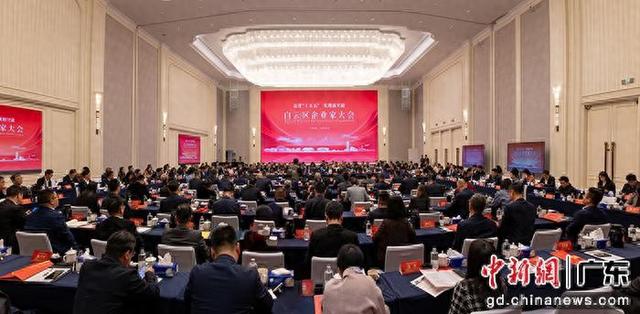
白云区企业家大会在华为广州研发中心召开。谭札烽 摄 1月4日,广州市白云区企业家大会在华为广州研发中心召开。大会以"奋进'十五五'实现新突破"为主 题,推动企业发展战略与白云区"十五五"规划深度融合,努力构建"双赢、多赢、共赢"发展格局。超过 160位各行业领域企业家参加大会。 在这当中,既有龙头企业、上市公司,也汇聚了一批高新技术企业、"专精特新"小巨人企业为代表的创 新力量。企业家代表们一致认为,白云区区位优势明显、产业基础扎实、政策支持有力,特别是 在"6+6+X"现代产业集群培育和营商环境优化方面的持续发力,为企业成长提供了广阔的舞台。 作为深耕白云的央企龙头,南方航空正全力发挥航空主业优势,为白云区的现代化产业体系,装上强劲 的"航空引擎"。中国南方航空股份有限公司战略规划投资部副总经理黄翔表示,展望"十五五",南方航 空将与白云区携手共进,推动航空价值链拓展提升、供应链深度融合,助力白云谱写高质量发展新篇 章。 广东省机场管理集团有限公司副总经理邓勇刚也表示,期待和白云区一起,将独特的"临空优势"转化为 实实在在的产业优势和经济增长极,共同打造"港产城"融合发展的新生态。 作为扎根白云区18载的新 ...

太阳能(000591.SZ):累计回购1093.01万股公司股份
Ge Long Hui A P P· 2026-01-05 10:08
格隆汇1月5日丨太阳能(000591.SZ)公布,截至2025年12月31日,公司通过股份回购专用证券账户以集 中竞价方式累计回购公司股份1093.01万股,占公司2025年9月底总股本的0.28%,最高成交价4.81元/ 股,最低成交价4.44元/股,成交总金额4986.29万元(不含交易费用)。 ...
广州白云区“新年第一会”绘出政企同心圆
Zhong Guo Xin Wen Wang· 2026-01-05 01:56
Group 1 - The Guangzhou Baiyun District Entrepreneur Conference aims to integrate enterprise development strategies with the district's "14th Five-Year Plan" to create a win-win development pattern [1][6] - Over 160 entrepreneurs from various industries attended the conference, including leading companies, listed firms, and innovative high-tech enterprises [1][2] - Entrepreneurs expressed confidence in Baiyun District's advantages, including its location, solid industrial foundation, and strong policy support, particularly in cultivating modern industrial clusters and optimizing the business environment [1][2] Group 2 - China Southern Airlines is leveraging its aviation industry strengths to support Baiyun District's modernization and economic growth [2] - Guangdong Airport Management Group aims to transform Baiyun District's unique "aerotropolis advantage" into tangible industrial benefits and economic growth [2] - Guangdong Guangwu Holdings Group views Baiyun District as a prime investment area and seeks strategic cooperation with local enterprises in hydrogen energy and other fields [2] Group 3 - The conference highlighted the success of local enterprises like Philips Solar Technology, which aims to achieve an annual target of 8 billion yuan by 2026 [5] - Chenghe Technology, a national champion in manufacturing, plans to collaborate with Baiyun District to contribute to a 10 billion yuan new materials industry [5] - Jinbo Commercial is investing over 4 billion yuan in new projects to enhance Baiyun's commercial landscape and attract international brands [5] Group 4 - Baiyun District's Secretary, Hong Qian, emphasized the area's strong development potential, including its robust infrastructure, population growth, and quality of life [6] - The district aims to enhance its industrial space and promote the integration of production, living, and ecological advantages [6] - The government encourages enterprises to focus on R&D, talent development, and brand building to enhance competitiveness and sustainability [6][7]
全国总工会慰问团来川送温暖
Si Chuan Ri Bao· 2026-01-04 07:05
Group 1 - The All-China Federation of Trade Unions, represented by Vice Chairman Cai Zhenhua, conducted a warmth-delivery activity in Sichuan to convey the care of the central government and the federation to local enterprises and workers [1] - The delegation visited various locations including the Chengdu Federation of Trade Unions' employee assistance center and several companies, emphasizing the importance of addressing workers' needs and contributing to local economic development [1] - The delegation encouraged trade unions and enterprises to prioritize the welfare of workers and to act as a bridge to unite and lead workers in contributing to economic growth [1] Group 2 - The delegation visited a SF Express service point in Chengdu, delivering warm gift packages to 40 couriers and advising them on safety and health during the busy year-end period [2] - The delegation also visited struggling workers, inquiring about their living conditions and encouraging them to remain resilient and confident in overcoming difficulties [2] - Praise was given to national model worker Liu Shiyong for his exceptional skills in aircraft assembly, with encouragement to train more skilled talents to better serve national and societal needs [2]
1.5°C Talk|从6万亿到60万亿美元,如何把握全球绿债市场扩容先机?
Xin Lang Cai Jing· 2026-01-04 06:24
Group 1: Climate Financing and Cooperation - COP30 provides a roadmap for global climate action and financing, emphasizing the need for regional connectivity and "coalitions of the willing" to foster bilateral and multilateral cooperation [1][5] - China is promoting a green trade agreement with ASEAN, while the EU and Brazil are collaborating on sustainable agriculture, and India is exploring resource cooperation with Congo, showcasing practical examples within the COP framework [1][5] - The COP framework includes mechanisms for immediate implementation, such as Article 6 of the Paris Agreement, which allows countries with established carbon markets to transfer emission reductions with countries rich in forest resources [1][5] Group 2: Transition and Resilience - Transition financing for high-carbon industries is becoming a consensus among Japan, Singapore, China, and other Asian nations, with Chinese enterprises and financial institutions developing systematic transition plans [2][6] - A clear transition framework is crucial for achieving decarbonization in hard-to-abate sectors like steel and cement, with China's Hebei steel industry transition directory serving as a representative example [2][6] - Climate resilience is equally important, as the frequency of extreme weather events is increasing, necessitating enhanced resilience in social, community, and economic systems to mitigate risks and protect long-term investments [2][6] Group 3: Capital Market's Role - Capital markets play a critical role in driving global climate action, with a need to mobilize private capital alongside public funding to address climate challenges [3][7] - The annual funding requirement for climate mitigation, transition, and resilience is estimated at $10 to $15 trillion, necessitating the mobilization of approximately $150 trillion in long-term savings [3][7] - Development finance institutions and the private sector are proposing various solutions to bridge the climate funding gap, indicating a shift towards systematic design and multi-stakeholder collaboration in climate finance [3][7] Group 4: China's Experience and Global Implications - Over the past decade, China has made significant progress in enhancing its financial policy framework, innovating financial products, and exploring mixed financing mechanisms, providing valuable lessons for global green transition [4][8] - The significant reduction in solar power costs in Africa and the rapid penetration of electric vehicles globally can be attributed to China's large-scale investments over the past 10 to 20 years [4][8] - Currently, the global stock of green, climate, and sustainable bonds is approximately $6 trillion, with a long-term goal of increasing this to around $60 trillion, highlighting the need for collaborative efforts to achieve large-scale global green transition [4][8]