
保险经纪

Search documents
金诚互诺保险总经理潘星任职资格获批 美团旗下公司人事变动
Xi Niu Cai Jing· 2026-03-10 06:48
Group 1 - The Chongqing Financial Regulatory Bureau approved the appointment of Pan Xing as the executive director and general manager of Chongqing Jincheng Huno Insurance Brokerage Co., Ltd. [2] - Jincheng Huno Insurance was established in September 2016, with Beijing QianDai Network Information Technology Co., Ltd. holding 51% and Tianjin SanKuai Technology Co., Ltd. holding 49%, ultimately controlled by Wang Xing, the founder of Meituan [4] - Pan Xing also serves as the executive director and manager of Beijing QianDai Network Technology Co., Ltd., which was formerly known as Beijing QianDai Network Insurance Agency Co., Ltd. [4] Group 2 - In July 2025, Beijing QianDai Network Insurance Agency Co., Ltd. removed all insurance-related activities from its business scope and officially changed its name to Beijing QianDai Network Technology Co., Ltd. [4] - In September 2025, the Beijing Financial Regulatory Bureau announced the cancellation of QianDai Network's insurance intermediary license [4]



创联控股(02371.HK)中期收入3.36亿元 同比增加约12%
Ge Long Hui· 2026-02-26 11:04
Group 1 - The core viewpoint of the article is that Chuanglian Holdings (02371.HK) reported a revenue of approximately RMB 336 million for the six months ending December 31, 2025, representing a year-on-year increase of about 12% [1] - The company recorded a loss attributable to shareholders of approximately RMB 1.533 million, a significant improvement compared to a loss of approximately RMB 25.291 million in the same period last year [1] - The basic loss per share for the reporting period was approximately RMB 0.23, compared to approximately RMB 3.75 (restated) in the same period last year [1] Group 2 - The company has actively expanded its financial services business, particularly in the insurance brokerage sector in China [1] - Increased resources have been allocated to expand market share and regional coverage in the insurance brokerage business, offering life insurance, property insurance, and reinsurance solutions [1] - The insurance brokerage business has entered a stable growth trajectory during the reporting period, and management expects sustainable growth in the company's financial services business in the future [1]
全网疯传的报告血洗美股,33岁创始人震惊:早知道不免费给了
凤凰网财经· 2026-02-26 06:28
Core Viewpoint - The report titled "The Global AI Crisis of 2028" by James van Geelen from Citrini Research depicts a dystopian future with massive unemployment, rising unemployment rates above 10%, deflationary spirals, and stock market crashes, which triggered significant market sell-offs on Wall Street [1] Group 1: Market Reaction - The report quickly became a focal point for market discussions, leading to a drop of over 1% in the S&P 500 index, marking one of the worst single-day performances in months, with financial stocks experiencing their most severe decline since April [1] - Companies directly mentioned in the report, such as ServiceNow, DoorDash, and American Express, saw their stock prices plummet [1] - The market's reaction was exacerbated by existing anxieties regarding AI's potential disruptive impact on businesses, alongside other pressures like tariff uncertainties and geopolitical news [4] Group 2: Clarification of Intent - Van Geelen clarified that the report was intended to simulate a scenario rather than make a prediction, emphasizing that it aimed to prepare readers for potential left-tail risks associated with AI [3] - The report repeatedly stated that the content was a scenario and not a forecast, with a final note asserting that some of the scenarios presented were unlikely to occur [3] Group 3: Market Sentiment and AI Perception - The intense market reaction indicates that investors are highly sensitive to any signals suggesting disruptive risks from AI, reflecting a shift from enthusiasm for growth to deep unease about potential upheaval [6] - Despite the panic, Citrini Research itself holds several AI-related positions, including stocks in Nvidia, Alphabet, and others, and has historically been viewed as overly bullish on AI [5]

“AI鬼故事”引发美股地震,始作俑者:我也没想到……
3 6 Ke· 2026-02-25 07:35
Core Viewpoint - The report titled "2028 Global Intelligence Crisis" by Citrini Research founder James van Geelen predicts a dystopian future driven by AI advancements, leading to massive layoffs, deflation, and a spike in unemployment rates in the U.S. to over 10% [1][5]. Group 1: Market Reaction - Following the report's release, the U.S. stock market experienced a significant sell-off, with the S&P 500 index dropping over 1% and major software stock ETFs declining by more than 4% [3]. - Specific companies mentioned in the report, such as ServiceNow, DoorDash, and American Express, saw their stock prices fall, despite Citrini not shorting these companies [3][4]. - The market's reaction indicates a shift in sentiment regarding AI, moving from enthusiasm for growth to concerns about potential disruptions [3][4]. Group 2: Report Content and Implications - The report outlines a scenario where rapid AI advancements lead to increased productivity but also render many jobs obsolete, resulting in a consumer spending collapse and a "race to the bottom" in white-collar jobs [5][6]. - The report has sparked significant debate, with critics labeling it as "science fiction" and questioning its economic logic [5][6]. - Van Geelen emphasizes that the report aims to initiate dialogue to prevent the described scenarios from occurring, acknowledging the uncertainty surrounding the potential outcomes of AI advancements [6][7]. Group 3: Company Background - Citrini Research, founded by van Geelen, focuses on thematic investment research and has a subscriber base of over 119,000, covering various topics from modern warfare to macro trends [7]. - The company has gained attention in the financial sector, particularly after van Geelen's previous research on shorting Silicon Valley Bank prior to its collapse [6][7].

微软寻觅伦敦新总部 伊丽莎白沿线成目标
Ge Long Hui A P P· 2026-02-25 05:58
Core Viewpoint - Microsoft is actively seeking a new headquarters location in London, highlighting a shortage of quality office space in the capital [1] Group 1: Microsoft - Microsoft is focusing its search for a new office location along the Elizabeth Line, from Paddington in the west to Canary Wharf in the east [1] - The company is looking for office space ranging from 200,000 to 250,000 square feet and has engaged with multiple developers and real estate firms in recent months [1] - Microsoft emphasizes its commitment to growth in the UK, stating that it regularly evaluates its real estate portfolio to meet employee and long-term business needs [1] Group 2: Industry Context - The search for new office spaces by Microsoft, along with Lockton and JaneStreet, underscores the demand for premium office space in London's financial district [1] - CBRE is providing consulting services to Microsoft in this endeavor [1]

“这个动作,真正的变盘信号!”美银Hartnett最新警告
Hua Er Jie Jian Wen· 2026-02-17 10:50
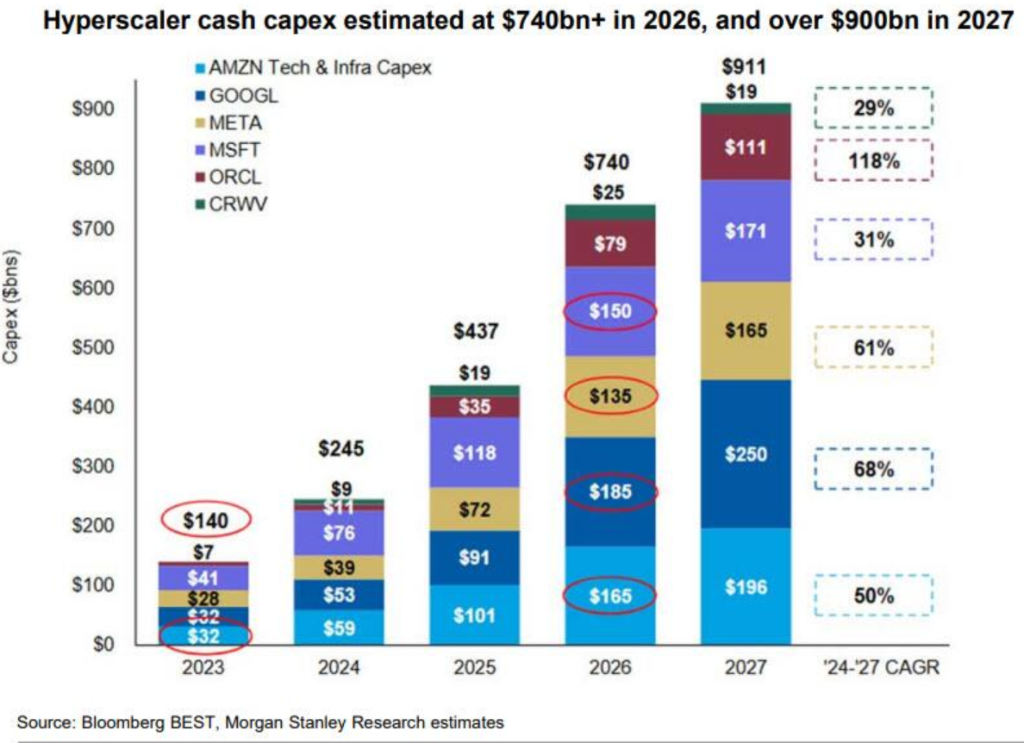
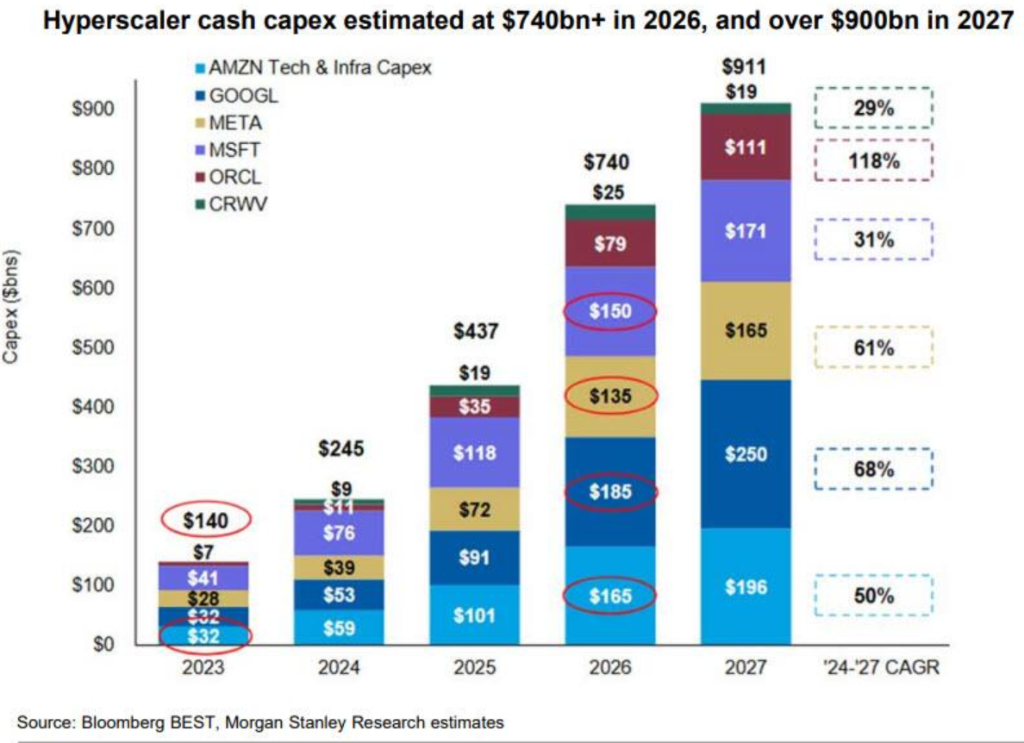
Group 1 - The core message of the report indicates a significant shift in AI capital expenditure from a "money printing machine" to a "money shredding machine," suggesting potential liquidity and asset pricing upheaval [1] - The expected capital expenditure for hyperscalers has surged to $740 billion by 2026, up from a previous estimate of $670 billion, highlighting the alarming financial implications of such spending [2][3] - This excessive investment could push the free cash flow of the "Magnificent 7" tech companies towards zero or even negative values, indicating severe financial strain [3] Group 2 - To sustain this level of capital expenditure, tech giants may be compelled to engage in large-scale bond issuance, indicating a shift from previously strong balance sheets to a more credit-dependent model [5] - The narrative in the market is shifting from "awe of AI" to "being impoverished by AI," reflecting growing concerns over the financial sustainability of such investments [6] - A clear catalyst for reversing this trend would be an announcement from a major AI hyperscaler regarding a reduction in capital expenditure, which could trigger a significant rotation of assets from tech giants to Main Street [7] Group 3 - The disruptive effects of AI are rapidly spreading beyond the tech sector into traditional service industries, with significant impacts observed in sectors such as insurance, wealth management, real estate services, and logistics [8][9] - The first sector to be disrupted by AI, Indian tech stocks, has not seen any buying support since being labeled as "AI victims," indicating a prolonged period of price recovery challenges [10] Group 4 - Political factors are intensifying the asset rotation, with upcoming events such as the State of the Union address on February 24 being highlighted as critical moments for market sentiment [14][15] - The report suggests that if there is no significant boost from political figures, the government may adopt more aggressive affordability policies to address public concerns over inflation, which could favor small-cap stocks over large tech companies [16] Group 5 - The report notes a historical shift in the correlation between the Japanese yen and the Nikkei index, indicating a potential long-term bullish signal for Japanese equities [18][19] - Despite recent inflows into global equities, the Bull & Bear Indicator remains in the "sell" zone, suggesting that the adjustment in risk assets is not yet complete [23][24] - The analysis of the past 50 years of asset leadership transitions indicates that significant political and financial events often redefine market leaders, with emerging markets and small-cap stocks poised to be the next leaders [26][29]
美银Hartnett:“AI颠覆交易”加速扩散,一旦有科技巨头削减开支,将引发美股“轮动海啸”
Hua Er Jie Jian Wen· 2026-02-16 07:02
Group 1 - The core message of the report indicates a significant shift in AI capital expenditure from a "money printing machine" to a "money shredding machine," suggesting potential liquidity and asset pricing turmoil [1] - The expected capital expenditure for hyperscalers has surged to $740 billion by 2026, up from a previous estimate of $670 billion, raising concerns about extreme financial consequences for major tech companies [2] - The narrative in the market is shifting from "awe of AI" to "being impoverished by AI," with a clear signal for investors being the announcement of capital expenditure cuts by a major AI player [4] Group 2 - The report highlights a rapid spread of AI disruption effects into traditional service sectors, described as "wildfire AI disruption," impacting various industries sequentially [5][6] - The first sector affected by AI disruption was Indian tech stocks, which have not seen any buying support since being labeled as "AI victims," indicating a prolonged recovery period for such stocks [6] Group 3 - Political factors are intensifying the asset rotation, with a notable divergence in support for Trump between Wall Street and Main Street, leading to potential aggressive affordability policies ahead of the midterm elections [10][11] - The report suggests a strategy of "long Main Street, short Wall Street" is becoming effective, with significant asset performance divergence since the interest rate cut on October 29 [11] Group 4 - A historical shift in the correlation between the Japanese yen and the Nikkei index has been noted, indicating a potential long-term bull market for Japan, although a strong yen could negatively impact exporters [12][13] - Despite a $463 billion inflow into global equities, the Bull & Bear Indicator remains in the "sell" zone, suggesting that the adjustment in risk assets is not yet over [16] Group 5 - The report outlines a "great rotation" in asset leadership over the past 50 years, with significant political and financial events altering the flow of investments, indicating a potential shift towards emerging markets and small-cap stocks as the next structural leaders [17][20] - Emerging markets and small-cap stocks are expected to benefit from a transition in service-oriented to manufacturing-oriented investments, alongside rising costs in the AI arms race [20]
自担风险成潮!金价暴涨,金库运营商放弃全额投保
Jin Shi Shu Ju· 2026-02-16 06:06
Core Insights - The surge in gold prices is prompting some vault operators to forgo insuring higher-value gold bars due to nearing insurance limits [1][2] - Many operators are adopting "self-insurance" strategies, believing their existing security measures are sufficient to protect high-value assets [1][2] - The insurance market for gold is evolving, with some institutions facing rising premiums while others are establishing specialized teams to underwrite precious metals [3][4] Group 1 - Vault operators are shifting gold reserves between locations to meet insurance requirements, as single-location coverage limits are being reached [1][3] - The definition of "location" is crucial for insurance purposes, allowing for strategic distribution of gold across multiple warehouses [3] - The risk of theft is heightened during transportation, making it a significant concern for operators [3] Group 2 - Retail demand for gold in markets like India and the U.S. is driving business expansion, leading to an increase in the overall circulation of gold [4] - Some mid-sized custodians are now retaining part of the risk on their balance sheets, a shift from previously insuring every dollar of gold exposure [2] - Research commissioned by custodians is assessing potential losses from theft, indicating the high security needed to protect large quantities of gold [2]


AON怡安智库:2026年全球医疗趋势报告
Sou Hu Cai Jing· 2026-02-14 02:43
Core Insights - The AON Global Healthcare Trend Report 2026 predicts a global average healthcare inflation rate of 9.8%, returning to single digits but still driven by factors such as increased healthcare service usage, technological advancements, rising private healthcare demand, and an aging population [10][11][12]. Global Overview - North America and Asia-Pacific are the only regions expected to see an increase in healthcare inflation rates, projected at 9.3% and 11.3% respectively, while other regions like Europe, Latin America, and the Middle East and Africa are experiencing a decline [13][15]. - The Middle East and Africa region has the highest inflation rate at 15.3%, despite a slight decrease from the previous year [15][16]. - The report emphasizes the importance of regional trends and the internal conditions driving inflation rate changes, as well as the strategies companies are adopting to mitigate rising costs [11][12]. Disease-Driven Costs - Cardiovascular diseases, cancer, and hypertension are identified as the top three drivers of healthcare costs, with musculoskeletal diseases entering the top five for the first time [19][20]. - GLP-1 medications, widely approved for diabetes treatment and weight loss, contribute approximately 10% to the healthcare trend growth rate, with some markets seeing contributions as high as 25% [24][25]. Corporate Strategies - Over 70% of multinational companies prioritize cost control in their benefits plans, employing strategies such as renegotiating with suppliers, initiating tenders, and implementing health promotion programs [17][33]. - Health benefits plans are the most common cost control measure, adopted by 86% of countries, while flexible benefits plans are gaining popularity due to their cost management and talent attraction advantages [35][36]. China-Specific Trends - China's healthcare inflation rate is projected at 7.8% for 2026, influenced by post-pandemic demand, aging population, and chronic disease prevalence [38][57]. - The report highlights the impact of healthcare reforms, including centralized procurement and DRG/DIP policies, on stabilizing costs in the long term [39][45]. - The increasing prevalence of chronic diseases and the aging population are expected to drive healthcare costs upward, despite short-term stabilization efforts [57][64]. Future Outlook - The report anticipates that healthcare costs will return to a normal upward trajectory due to factors such as chronic disease management pressures and the application of innovative drugs [56][57]. - The introduction of new drug categories in the national insurance and commercial health insurance systems is expected to enhance access to high-value treatments, although it may not significantly reduce costs [66].

环平保险经纪温馨提示:团聚时记得守护父母钱袋子
Xin Lang Cai Jing· 2026-02-13 22:46
Group 1 - The article emphasizes the importance of helping elderly parents manage their digital financial tools during the Spring Festival, suggesting it as a meaningful gesture beyond traditional practices [1] - It highlights the need to disable unnecessary "quick payment" options that may lead to accidental charges or unauthorized deductions [2][3] - The company encourages users to conduct a "policy check" for their parents to ensure that insurance products are suitable and not redundant, as many elderly individuals may have multiple overlapping policies [6][7] Group 2 - The article provides specific steps for users to help their parents manage digital payments, including checking payment settings in WeChat and Alipay, and reviewing bank app authorizations [3][4] - It advises users to identify and cancel any unnecessary automatic payment agreements or subscriptions that may have been forgotten [5] - The company believes that through careful management and collaboration, digital payment services can better meet the needs of the public, enhancing the quality of life [8]