Autonomous Driving

Search documents
Cathie Wood Loads Up On Bullish Inc, Pony AI And Robinhood — Dumps Kratos Defense Amid Taiwan Drone Buzz - ARK Autonomous Technology & Robotics ETF (BATS:ARKQ), ARK Innovation ETF (BATS:ARKK)
Benzinga· 2025-09-18 01:48
Group 1: Ark Invest Trades - Ark Invest executed significant trades involving Bullish, Kratos Defense, Pony AI, and Robinhood [1] - Ark Invest added 36,328 shares of Bullish, valued at nearly $1.97 million, with the stock closing at $54.35, up 5.82% after positive Q2 earnings [2] - Ark Invest sold 131,177 shares of Kratos Defense, valued at nearly $9.9 million, with the stock closing at $75.74, down 0.8% [3] - Ark Invest purchased 88,335 shares of Pony AI, valued at $1.5 million, with the stock closing at $17.47, up 1.98% [4] - Ark Invest acquired 33,783 shares of Robinhood, valued at approximately $4 million, with the stock closing at $118.64, up 1.07% [6] Group 2: Company Highlights - Kratos Defense is collaborating with Taiwan's NCSIST to unveil the Mighty Hornet IV Attack UAV, enhancing Taiwan's military capabilities [4] - Pony AI is making rapid progress in its robotaxi business, with Goldman Sachs projecting a target price of $24.50, indicating over 50% upside potential [5] - UBS estimates that China's robotaxi market could reach $183 billion by the late 2030s, with global opportunities adding nearly $400 billion [5] - Robinhood recently released positive operating data for August and announced a new fund aimed at democratizing private market access [6]



Waymo bringing robotaxis to Nashville through first commercial deal with Lyft
CNBC· 2025-09-17 13:00
Group 1 - Waymo has partnered with Lyft to launch its robotaxi service in Nashville, marking the first commercial deal between the two companies [1][2] - Riders in Nashville will be able to hail Waymo robotaxis through the Waymo One app, while Lyft will integrate Waymo's robotaxis into its platform over time [2] - Waymo has established a significant presence in the U.S. robotaxi market, surpassing 10 million paid trips and planning to expand operations to several new cities including Miami and Washington, D.C. [3] Group 2 - In international markets, Waymo faces competition from Baidu's Apollo Go service, which has announced partnerships to deploy driverless taxis in Europe and other regions [4] - Lyft has previously collaborated with Waymo on a pilot program in Phoenix and is currently testing with May Mobility in Atlanta [5] - Lyft is under pressure to compete with Uber, which has a market cap exceeding $200 billion, significantly overshadowing Lyft's valuation [5]




French Ambassador to China Visits WeRide and Experiences Autonomous Driving Solutions
Globenewswire· 2025-09-17 10:22
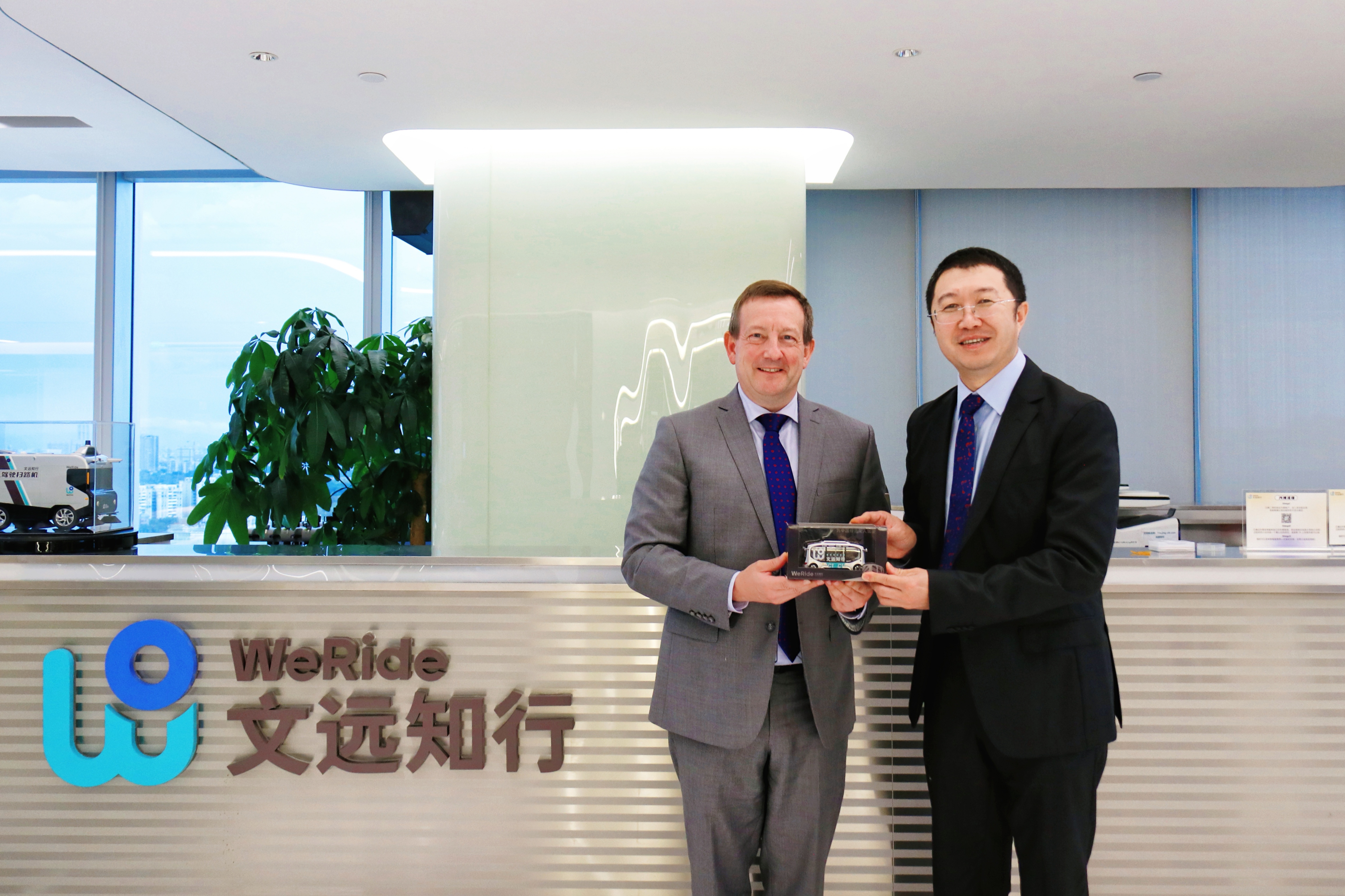
Core Insights - The French delegation, led by Ambassador Bertrand Lortholary, visited WeRide to explore the company's operations and future plans in France [1][3] - WeRide showcased its autonomous Robotaxi and Robobus, highlighting their performance and safety in adverse weather conditions [4] - WeRide is collaborating with Renault Group to launch a mass-produced autonomous Robobus by 2030, addressing the demand for green public transport in Europe [4][5] Company Overview - WeRide is recognized as a global leader in the autonomous driving industry and is the first publicly traded Robotaxi company [6] - The company has tested or operated its autonomous vehicles in over 30 cities across 11 countries and holds autonomous driving permits in six markets, including China, Singapore, France, Saudi Arabia, the UAE, and the US [6] - WeRide's product offerings range from Level 2 to Level 4 autonomous driving solutions, catering to various sectors such as mobility, logistics, and sanitation [6] Recent Milestones - WeRide received France's Level 4 driverless public road testing and operating permit for its Robobus on March 27, 2025 [8] - The company launched Europe's first fully driverless commercial deployment of its Robobus in Drôme, France, in partnership with beti, Renault Group, and Macif on February 27, 2025 [8] - WeRide will provide an exclusive Level 4 autonomous Robobus shuttle service at Roland Garros, Paris, for two consecutive years starting in 2024 [8]

3D/4D World Model(WM)近期发展的总结和思考
自动驾驶之心· 2025-09-16 23:33
Core Viewpoint - The article discusses the current state of embodied intelligence, focusing on data collection and utilization, and emphasizes the importance of 3D/4D world models in enhancing spatial understanding and interaction capabilities in autonomous driving and related fields [3][4]. Group 1: 3D/4D World Models - The development of 3D/4D world models has diverged into two main approaches: implicit and explicit models, each with its own limitations [4][7]. - Implicit models enhance spatial understanding by extracting 3D/4D content, while explicit models require detailed structural information to ensure system stability and usability [7][8]. - Current research primarily focuses on static 3D scenes, with methods for constructing and enriching environments being well-established and ready for practical application [8]. Group 2: Challenges and Solutions - Existing challenges in 3D geometry modeling include the rough optimization of physical surfaces and the visual gap between generated meshes and real-world applications [9][10]. - The integration of mesh supervision and structured processing is being explored to improve surface quality in 3D reconstruction [10]. - The need for cross-physics simulator platform deployment is highlighted, as existing solutions often rely on specific physics parameters from platforms like Mujoco [10]. Group 3: Video Generation and Motion Understanding - The emergence of large-scale data cleaning and annotation has improved motion prediction capabilities in 3D models, with advancements in 3DGS/4DGS and world model integration [11]. - Current video generation techniques struggle with understanding physical interactions and changes in the environment, indicating a gap in the ability to simulate realistic motion [15]. - Future developments may focus on combining simulation and video generation to enhance the understanding of physical properties and interactions [15]. Group 4: Future Directions - The article predicts that future work will increasingly incorporate physical knowledge into 3D/4D models, aiming for better direct physical understanding and visual reasoning capabilities [16]. - The evolution of world models is expected to become modular within embodied intelligence frameworks, depending on ongoing research and simplification of world model definitions [16].
BEVTraj:一个端到端的无地图轨迹预测新框架
自动驾驶之心· 2025-09-16 07:22
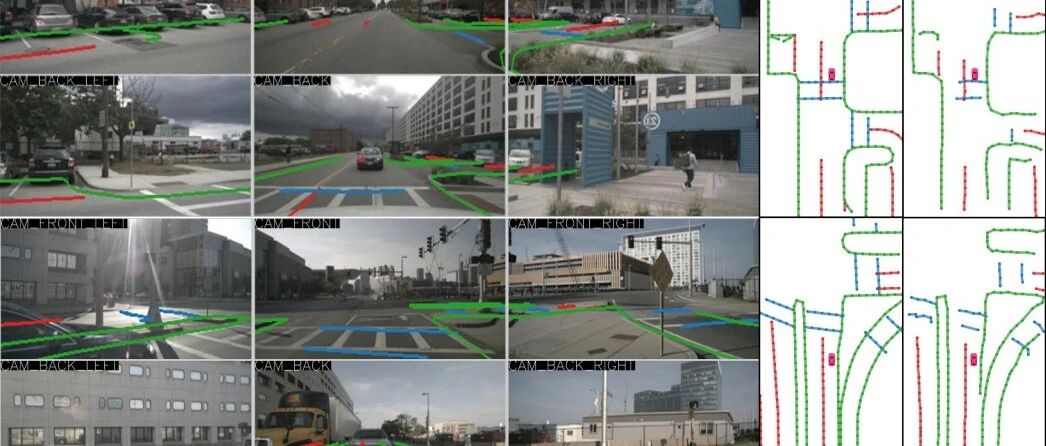
Core Viewpoint - The article discusses the limitations of high-definition maps in autonomous driving and introduces BEVTraj, a new trajectory prediction framework that operates without relying on maps, achieving performance comparable to state-of-the-art (SOTA) models based on high-definition maps [1][3][26]. Group 1: Background and Challenges - High-definition maps provide structured information that enhances prediction accuracy but have significant drawbacks, including high costs, limited coverage, and inability to adapt to dynamic changes like road construction or accidents [3]. - The reliance on high-definition maps is a major bottleneck for the large-scale deployment of autonomous driving technology [3]. Group 2: Proposed Solutions - Two main approaches are explored to address the limitations of high-definition maps: online mapping and map-free methods. BEVTraj represents the latter, leveraging raw sensor data to support accurate trajectory predictions [4][6]. Group 3: BEVTraj Framework - BEVTraj operates in a unified bird's-eye view (BEV) space, consisting of a scene context encoder and an iterative deformable decoder [7]. - The scene context encoder extracts rich scene features from multi-modal sensor data and vehicle historical trajectories, generating a dense BEV feature map [11]. - The introduction of deformable attention allows the model to focus on key sampling points within the BEV feature map, enhancing computational efficiency [11]. Group 4: Iterative Refinement and Prediction - The iterative deformable decoder generates final multi-modal trajectory predictions, utilizing a sparse goal candidate proposal module that predicts a limited number of high-quality candidate points, improving efficiency [13][14]. - The iterative refinement process adjusts the predicted trajectories based on the surrounding environment, ensuring they align with real road structures [14]. Group 5: Experimental Results - BEVTraj demonstrates performance that rivals SOTA models based on high-definition maps, with metrics such as minADE and minFDE showing competitive results [18][20]. - Even in complex scenarios like sharp turns and intersections, BEVTraj generates reasonable and lane-aligned trajectories, indicating its ability to learn geometric constraints from raw sensor data [20]. Group 6: Summary and Value - The introduction of BEVTraj marks a milestone in the field of autonomous driving trajectory prediction, validating the feasibility of map-free approaches [26]. - It enhances system flexibility and scalability by eliminating dependence on high-definition maps, facilitating broader deployment [26]. - The efficient end-to-end architecture, utilizing deformable attention and sparse goal proposals, provides a valuable design paradigm for the industry [26]. - The open-source code will significantly promote research in map-free perception and prediction [26].
Nvidia Has $4.3 Billion Invested in These 6 Artificial Intelligence (AI) Stocks. Here's the Best of the Bunch.
Yahoo Finance· 2025-09-15 08:44
Core Insights - Monitoring the portfolios of large, successful companies can provide valuable investment ideas, similar to tracking famous investors [2] - Nvidia has invested $4.3 billion in six AI stocks, with CoreWeave being the largest investment [2][6] Nvidia's AI Investments - Nvidia owned over 7.7 million shares of Applied Digital valued at $77.7 million, focusing on blockchain and high-performance computing [4] - Nvidia's 1.1 million shares of Arm Holdings were valued at $178.1 million, a leading semiconductor developer [5] - CoreWeave, Nvidia's largest investment, consists of nearly 24.3 million shares worth approximately $3.96 billion, centered on generative AI applications [6] - Nvidia's stake in Nebius Group, valued at $65.9 million, has increased significantly following a multibillion-dollar deal with Microsoft [7] - Recursion Pharmaceuticals, valued at almost $39 million, utilizes AI for drug discovery, with Nvidia holding 7.7 million shares [8] - Nvidia's smallest investment is in WeRide, valued at around $13.7 million, which uses Nvidia's technology for autonomous vehicles [9] Performance and Outlook - Most of the AI stocks in Nvidia's portfolio remain unprofitable, but one stock stands out due to its valuation and growth prospects [10]


自动驾驶黄埔军校,4000人死磕技术的地方~
自动驾驶之心· 2025-09-07 03:08
Core Viewpoint - The article emphasizes the importance of creating an engaging learning environment in the field of autonomous driving and AI, aiming to bridge the gap between academia and industry while providing valuable resources for students and professionals [1]. Group 1: Community and Resources - The community has established a comprehensive platform for knowledge exchange in autonomous driving, covering academic, industrial, and job-seeking aspects [1][14]. - The platform offers access to cutting-edge academic content, industry roundtables, open-source code solutions, and timely job information, significantly reducing the time needed for research [2][12]. - Members can engage with industry leaders and experts, facilitating discussions and inquiries related to their fields [2][20]. Group 2: Learning Pathways - The community has organized over 40 technical routes for various applications in autonomous driving, catering to both beginners and advanced practitioners [2][8]. - Detailed learning pathways include topics such as perception, simulation, and planning control, allowing members to quickly grasp essential concepts and technologies [14][15]. - The platform provides a well-structured entry-level technical stack and roadmap for newcomers, as well as valuable industry frameworks and project proposals for those already engaged in research [10][12]. Group 3: Collaboration and Networking - The community comprises members from renowned universities and leading companies in the autonomous driving sector, fostering a collaborative environment for knowledge sharing [14]. - Regular live sessions and discussions with industry experts are held, allowing members to stay updated on the latest advancements and job opportunities in the field [20][80]. - The platform encourages networking among peers, enhancing professional connections and collaboration opportunities within the autonomous driving ecosystem [12][81].
PONY AI Inc. and Mowasalat Deploy Robotaxi on Public Roads in Doha, Qatar
Globenewswire· 2025-09-05 09:25
Core Insights - Pony.ai has announced a partnership with Mowasalat, Qatar's largest transportation service provider, to deploy autonomous vehicles in Qatar, marking a significant step in the company's vision of "autonomous mobility everywhere" [1][4] - The initial phase of this partnership involves testing Pony.ai's Robotaxis on public roads in Doha, focusing on adapting the technology to Qatar's unique driving conditions [2][4] - Mowasalat, fully owned by the Qatar Investment Authority, operates the largest ground transportation fleet in Qatar, making it an ideal partner for Pony.ai in achieving sustainable development goals outlined in Qatar National Vision 2030 [3][4] Company Overview - Pony.ai is a global leader in the commercialization of autonomous mobility, utilizing its vehicle-agnostic Virtual Driver technology to develop a sustainable business model for mass production and deployment of autonomous vehicles [5] - Founded in 2016, Pony.ai has expanded its operations across various regions, including China, Europe, East Asia, and the Middle East, ensuring widespread accessibility to its advanced technology [5]

36氪出海·行业|财报增长背后:Robotaxi 全球提速
3 6 Ke· 2025-09-05 03:08
Group 1 - Chinese autonomous driving companies are accelerating their global expansion, with significant partnerships being formed with international ride-hailing platforms like Lyft and Grab [2][3] - Baidu's Apollo Go plans to launch in the UK and Germany by 2026, while WeRide is set to receive a multi-million dollar investment from Grab to deploy L4 Robotaxis in Southeast Asia [2][3] - The collaboration between Chinese technology and overseas platforms is creating a viable path for international expansion in the autonomous driving sector [2][3] Group 2 - Robotaxi services are a key application of L4 autonomous driving, with companies like WeRide and Pony.ai reporting substantial revenue growth in their Robotaxi operations [3][4] - WeRide's revenue for Q2 2024 reached 127 million yuan, a 60.8% increase year-on-year, with Robotaxi revenue soaring by 836.7% [3] - Baidu's Robotaxi service completed over 2.2 million fully autonomous orders in Q2, marking a 148% increase compared to the previous year [3] Group 3 - International partnerships with platforms like Uber, Lyft, and Grab are essential for Chinese autonomous driving companies to access large user bases and established operational networks [4][6] - The collaboration allows these companies to reduce customer acquisition and operational costs while gathering valuable data for technology optimization [6] - The strategic partnerships are expected to enhance the global commercialization of Robotaxi services, with various companies planning to expand into multiple international markets [4][5] Group 4 - The Middle East is emerging as a significant market for Chinese autonomous driving companies due to favorable road conditions and regulatory environments [7][9] - WeRide has obtained the first national license for autonomous vehicles in the UAE and is expanding its Robotaxi fleet in Abu Dhabi [9] - Pony.ai and Baidu are also establishing partnerships in the region, with plans for extensive testing and deployment of Robotaxi services [9]


招聘几位大佬,打算共创平台(模型部署/VLA/端到端)
自动驾驶之心· 2025-09-04 08:42
Group 1 - The article announces the recruitment of 10 partners for the autonomous driving sector, focusing on course development, research guidance, and hardware development [2][5] - The main areas of expertise sought include large models, multimodal models, diffusion models, SLAM, 3D object detection, and closed-loop simulation [3] - Candidates from QS200 universities with a master's degree or higher are preferred, especially those with significant conference contributions [4] Group 2 - The benefits for partners include resource sharing for job seeking, PhD recommendations, and overseas study opportunities, along with substantial cash incentives [5] - There are opportunities for collaboration on entrepreneurial projects [5] - Interested parties are encouraged to contact via WeChat for further inquiries [6]