商业地产租赁

Search documents
百大集团: 百大集团股份有限公司2025年第二次临时股东大会资料
Zheng Quan Zhi Xing· 2025-07-23 09:07
Core Viewpoint - The company has entered into a long-term lease agreement with Hang Lung Business Operation (HK) Limited for the management and operation of the Hangzhou Department Store, which is expected to enhance the property value and provide stable rental income for the company [1][4]. Group 1: Transaction Overview - The company has entrusted the management of the Hangzhou Department Store to Zhejiang Intime Department Store Co., Ltd. until February 29, 2028, after which the property will be leased to Hang Lung Business Operation (HK) Limited for commercial services [1]. - The lease agreement covers a total area of approximately 42,000 square meters, with a lease term of 20 years starting from the delivery date, which is tentatively set for April 1, 2028 [2][3]. - The rental fee is set at RMB 37.5 million per quarter, with a 4.5% increase every three years, and the landlord will waive three months of rent in the first two years [3]. Group 2: Financial Impact - Hang Lung Properties, the parent company of the lessee, reported total revenue of HKD 11.242 billion and a net profit attributable to shareholders of HKD 2.153 billion for the year ending December 31, 2024 [1]. - The transaction is expected to positively impact the company's future revenue and profit, aligning with the interests of all shareholders [3]. Group 3: Contractual Details - The lease agreement includes a guarantee from Hang Lung Properties for the lessee's payment obligations, with a maximum guarantee amount of RMB 763.5 million [3]. - The contract will take effect upon approval by the company's shareholders and will not constitute a related party transaction or a major asset restructuring [4].



潘志明:下半年香港整体工商铺买卖价格和租金将维持窄幅波动 整体下调幅度在5%以内
智通财经网· 2025-07-21 06:01
Core Viewpoint - The Hong Kong street shop market has entered a "low valley period" due to multiple factors including the overall economic environment, insufficient tourism recovery, and weak consumer confidence, with expectations of a price and rent decline of less than 5% in the second half of the year, and a potential 10% drop in rents for industrial buildings and core commercial areas [1] Group 1: Market Conditions - The rental prices for street shops have decreased by 50%-80% from their peak, leading to a significant adjustment in tenant structure [2] - The vacancy rate for street shops across various regions is between 5%-10%, indicating a slow overall recovery [2] - The market is shifting from "landlord-dominated" to "tenant-dominated," with landlords needing to lower rents or offer incentives to attract tenants [2] Group 2: Consumer Behavior - Hong Kong residents, particularly families, are increasingly choosing to shop in mainland China due to lower prices and better service experiences, which has become an irreversible trend [1] - Tourists are now more inclined towards "check-in style" deep travel rather than high-consumption shopping, which has negatively impacted the retail and hotel industries [1] Group 3: Business Strategies - Landlords must recognize the reality that the rental income is determined by what tenants can afford, with many landlords willing to reduce rents to avoid vacancies [2] - Tenants face heavy costs beyond rent, such as labor and inventory, leading many to consider closing stores if revenues do not meet expectations [3] - The overall recovery of the street shop market is contingent on the revival of the economy, as past consumer spending and tourist influx are essential for business viability [3] Group 4: Investment Trends - Current investors are primarily focused on "liquidating" their assets due to banks requiring a reduction in mortgage ratios for commercial properties, leading to a greater willingness to sell than to buy [3] - The speed of asset liquidation has slowed as the more desirable properties have already been sold, leaving less attractive assets on the market [3]
高力:香港写字楼租户趋于审慎 31%受访者对未来1年业务前景持负面看法
Zhi Tong Cai Jing· 2025-07-16 08:29
Core Insights - The report indicates that 31% of respondents have a negative outlook on their business prospects for the next year, surpassing the 28% with a positive outlook, reflecting a cautious sentiment among office tenants in Hong Kong [1] - Despite the cautious approach, 41% of respondents maintain a neutral stance, indicating overall market stability [1] Tenant Behavior - 55% of tenants plan to maintain their current office space, while 27% intend to downsize and 18% are considering expansion [1] - Among those looking to downsize, 81% cite cost optimization as the primary reason, followed by reduced business demand at 60% [1] - Expansion intentions are driven by business growth in Hong Kong (68%) and insufficient existing space (51%) [1] Industry Trends - The Technology, Media, and Telecommunications (TMT) sector and the insurance industry show the strongest intentions to expand office space, with 35% and 36% of respondents respectively planning to do so [1] - The banking and finance sector remains stable, while the shipping, logistics, and procurement sectors exhibit a stronger tendency to downsize, reflecting varied strategies across industries in response to market uncertainties [1] Cost Considerations - Rent remains the primary factor for 92% of tenants when choosing office space, followed by building quality (72%) and floor area size (37%) [2] - Environmental, Social, and Governance (ESG) factors are increasingly important, with 12% of respondents considering ESG certification in their decision-making, rising to 41% among flagship tenants [2] Location Preferences - Tenants in Central/Admiralty (91%) and Kowloon East (83%) show high loyalty to their locations, while tenants in Sheung Wan (57%) and Hong Kong Island East (73%) are more inclined to relocate [2] - Companies are seeking to move to core areas to enhance their corporate image or to emerging locations for better cost-effectiveness [2] Lease Expectations - Approximately 64% of tenants plan to renew their current office space, with 44% not intending to change their leased area [3] - Rent remains a decisive factor, with 88% of respondents expecting rent-free periods, 49% seeking capital expenditure subsidies, and 46% desiring management fee discounts, a significant increase from 25% in 2024 [3] - The Kowloon area is noted for its competitive rental rates and quality space, catering to tenants' increasing expectations for lease flexibility and favorable terms [3]
百大集团: 百大集团股份有限公司关于签署重大租赁合同的公告
Zheng Quan Zhi Xing· 2025-07-10 09:15
Transaction Overview - The company has signed a significant lease agreement with Hang Lung Business Operation (HK) Limited for the property located at 546 Yan'an Road, Hangzhou, intended for commercial service use, with a lease term of 20 years starting from April 1, 2028 [1][3][4] - The lease agreement was approved unanimously by the board of directors on July 10, 2025, and is subject to shareholder approval [1][3] Counterparty Information - Hang Lung Business Operation (HK) Limited is a wholly-owned subsidiary of Hang Lung Properties Limited, which is listed on the Hong Kong Stock Exchange [2] - As of December 31, 2024, Hang Lung Properties reported total revenue of HKD 11.242 billion, operating profit of HKD 6.455 billion, and net profit attributable to shareholders of HKD 2.153 billion [2] Lease Details - The leased area is approximately 42,000 square meters, with a quarterly rent set at RMB 37.5 million, increasing every three years [3][4] - The lease includes a guarantee from Hang Lung Properties for the rental obligations, with a maximum guarantee amount of RMB 763.5 million [4] Impact on the Company - The transaction is expected to enhance the property value and provide long-term stable rental income, positively impacting the company's future revenue and profit [4]
晴海、胜哄地区太偏!商办租赁与都心呈两极分化|日本房产
Sou Hu Cai Jing· 2025-06-25 09:51
Core Insights - The article discusses the shifting dynamics of office space demand in Tokyo, particularly in areas like Harumi and Kachidoki, where there is a notable disparity between supply and demand for commercial office spaces [1][3]. Group 1: Market Trends - As life returns to normal, corporate activities are increasingly concentrating in city center areas, leading to a mismatch in supply and demand for office spaces in different regions [1]. - The office vacancy rate in the 23 wards of Tokyo is projected to be 2.88% by January 2025, while Harumi and Kachidoki have a significantly higher vacancy rate of 14.13%, indicating a supply surplus in these areas [3]. Group 2: Location Preferences - The geographical location of office buildings is a critical factor for both companies and employees, with 68.4% of job seekers prioritizing convenient transportation and city center locations [5]. - The limited transportation options and distance from the city center in Harumi and Kachidoki contribute to increased commuting stress for employees, prompting some companies to consider relocating [5]. Group 3: Strategies for Attracting Tenants - Property management companies are adapting by redesigning office spaces to cater to small and medium-sized enterprises, including converting spaces into furnished or shared offices [8]. - Enhancing the functionality of common areas and providing additional value is essential for these properties to compete effectively with other commercial locations [8]. Group 4: Investment Opportunities - The article suggests that early investors in the real estate market can benefit from rising property prices and rental income, especially as the yen's exchange rate fluctuates [8].

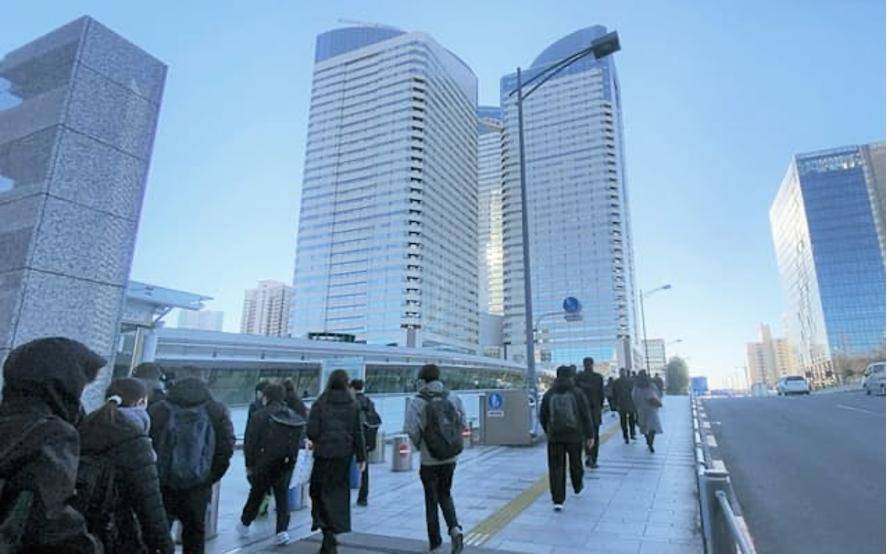
美联:第一季香港四大核心购物区街铺空置率升至约12.1% 创近4年半新高
智通财经网· 2025-06-24 03:41
Group 1 - The vacancy rate of street shops in Hong Kong's four core shopping areas (Central, Tsim Sha Tsui, Mong Kok, and Causeway Bay) rose to approximately 12.1% in Q1 2025, marking a nearly 4.5-year high [1] - In the first five months, the shop market experienced an increase in the number of registrations (395, up about 6.5% year-on-year) but a decrease in registered amounts (approximately HKD 6.467 billion, down about 26.7% year-on-year) [1] - Short-term rentals are becoming increasingly popular as landlords prefer to lease vacant properties in this manner to maintain property value and foot traffic, leading to a rise in businesses like toy shops and miscellaneous goods stores [1] Group 2 - The traditional retail sector continues to shrink, particularly in the food, hardware, and clothing industries, significantly impacted by high interest rates and consumer spending trends [2] - From Q3 2024 to Q1 2025, 847 shop units became vacant or had new tenants, with a closure rate of 11.4%, the highest since the pandemic recovery [2] - Despite the closures, 786 businesses opened during the same period, resulting in an opening rate of 10.6%, indicating an improvement in market turnover and a quick filling of vacancies in the shop rental market [2]
如何让租赁系统提升招商转化率?
Sou Hu Cai Jing· 2025-06-03 07:31
Core Viewpoint - The integration of digital systems in commercial real estate leasing processes significantly enhances efficiency, reduces errors, and improves tenant engagement, leading to faster leasing cycles and higher conversion rates [2][4][6]. Group 1: Digital Transformation in Leasing - Traditional leasing processes are burdened by repetitive tasks, but digital systems streamline operations by moving key functions online, reducing the average leasing cycle from 45 days to 22 days and decreasing contract error rates by 76% [2]. - The implementation of intelligent leasing systems allows for real-time updates and automated matching of properties to tenants based on over 20 parameters, improving matching accuracy to over 89% compared to 65% in traditional methods [6][8]. - The use of electronic contracts and automated reminders for lease renewals has reduced contract processing time by 70%, facilitating quicker decision-making and reducing the risk of vacancies [9][10]. Group 2: Enhanced Tenant Engagement - Intelligent systems create detailed tenant profiles based on various data points, enabling customized property recommendations with an 85% match rate, thus improving tenant satisfaction and engagement [7][8]. - The ability to analyze tenant behavior and preferences allows for targeted marketing strategies, increasing follow-up communication effectiveness and reducing conversion cycles from 45 days to 22 days [7][12]. - The introduction of a comprehensive CRM system helps in maintaining tenant relationships, with a reported increase in renewal rates from 68% to 82% due to proactive engagement strategies [7]. Group 3: Data-Driven Decision Making - Real-time data analytics provide insights into rental trends and tenant preferences, allowing operators to adjust marketing strategies dynamically, resulting in a 22% increase in small unit leasing rates [11]. - The system's capability to monitor vacancy durations and tenant turnover enables operators to implement timely interventions, reducing vacancy periods by over 40% [11]. - By leveraging data to identify high-demand property features, operators can optimize their marketing efforts, ensuring that resources are allocated effectively to maximize occupancy rates [11][12].