康复医疗

Search documents
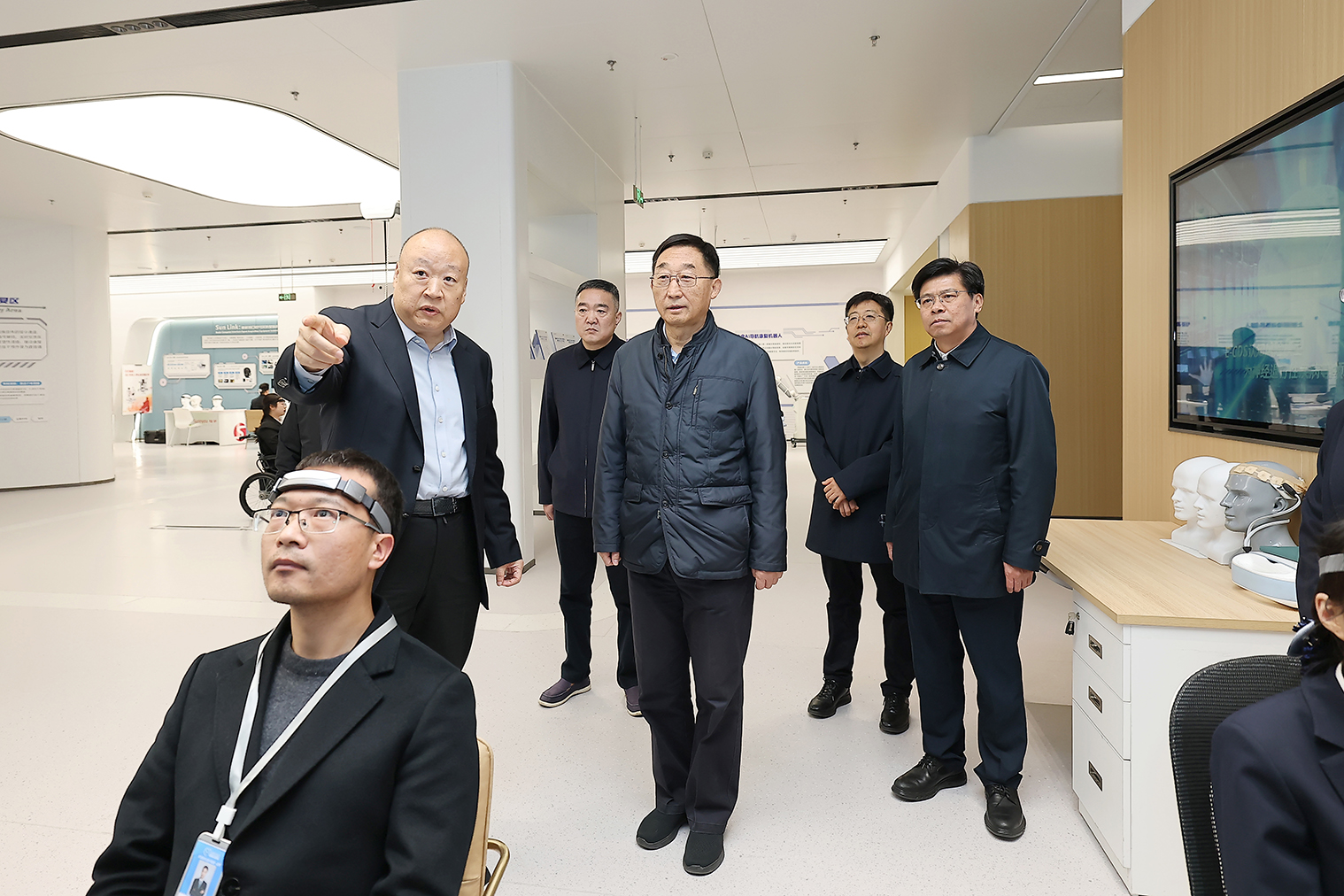
刘宁到安阳龙安区文峰区内黄县检查指导工作时强调:强化科技创新推动产业转型升级 打造精品旅游线路知名文化地标
He Nan Ri Bao· 2025-12-24 12:58
Group 1: Industry Development - The city of Anyang is accelerating industrial transformation and upgrading to inject new momentum into regional economic development [3] - Liu Ning emphasized the need for increased R&D investment in the smart connected new energy commercial vehicle industry, promoting energy-saving and carbon-reducing processes [3] - Liu Ning praised the efforts of Anyang Steel's subsidiary in transforming the steel industry and encouraged further technological innovation and development of high-end products [3] Group 2: Agricultural Development - Liu Ning highlighted the importance of advanced agricultural machinery and the need to cultivate more advanced agricultural equipment enterprises to enhance agricultural social services [3] - The focus is on integrating agricultural machinery with farmland and agronomy to improve efficiency [3] - Liu Ning stressed the importance of ensuring food security and implementing precise measures for winter wheat management [4] Group 3: Cultural and Tourism Development - Liu Ning called for the full utilization of cultural resources in Anyang to develop high-quality tourism routes and cultural landmarks [4] - The aim is to promote traditional Chinese culture and develop the cultural tourism industry into a pillar industry [4]

海南自贸港投资吸引力强劲 多项目接连落地三亚
Zhong Guo Xin Wen Wang· 2025-12-20 01:18
Group 1 - Hainan Free Trade Port has officially launched its full island closure, attracting significant investment opportunities in various sectors such as digital culture, rehabilitation medical services, and financing leasing [1] - Star Competition Group, known as "China's first listed esports company," has established a presence in Sanya, planning to create a "Blue Power Sports and Leisure Resort" project with an expected annual output value exceeding 1.1 billion yuan [1] - The establishment of Sanya Pengruili Rehabilitation Hospital fills a gap in high-end rehabilitation medical services in Sanya and represents a key development in enhancing the quality and capacity of medical resources in Hainan Free Trade Port [1] Group 2 - The Sanya Investment Promotion Bureau is implementing strategies to effectively leverage the policy benefits of the Hainan Free Trade Port, including signing strategic cooperation agreements with 17 institutions to boost financial service scale in the province by over 10 billion yuan [2] - During the launch of the 2025 Hainan Free Trade Port International Boutique Week, Sanya's investment promotion efforts included forming specialized teams for one-on-one engagements with international brands and foreign enterprises [2] - Future initiatives will focus on expanding consumer openness and enhancing a comprehensive, professional, and international investment service system to attract high-quality global enterprises and foreign projects to Sanya [2]
三星医疗:在国内老龄化趋势下,公司持续深耕康复领域
Cai Jing Wang· 2025-12-19 04:21
Core Viewpoint - Samsung Medical is committed to advancing its digital transformation strategy to enhance patient experience and medical quality amid the aging population in China [1] Group 1: Financial Performance - For the period from January to September, Samsung Medical achieved a revenue of 11.08 billion yuan, representing a year-on-year growth of 6.19% [1] - The company reported a net profit attributable to shareholders of 1.528 billion yuan, which reflects a year-on-year decline of 15.85% [1] Group 2: Strategic Focus - The company is focusing on chain operations, discipline construction, and medical quality to deepen its engagement in the rehabilitation sector [1] - Continuous improvement in management and operational levels is a priority for the company [1]

三星医疗:公司坚定不移地推进数字化转型战略
Zheng Quan Ri Bao Wang· 2025-12-18 13:12
证券日报网讯 12月18日,三星医疗(601567)在互动平台回答投资者提问时表示,公司坚定不移地推 进数字化转型战略,提升患者体验和医疗质量。在国内老龄化趋势下,公司重点围绕连锁经营、学科建 设、医疗质量等方面,持续深耕康复领域,不断提高管理运营水平。 ...
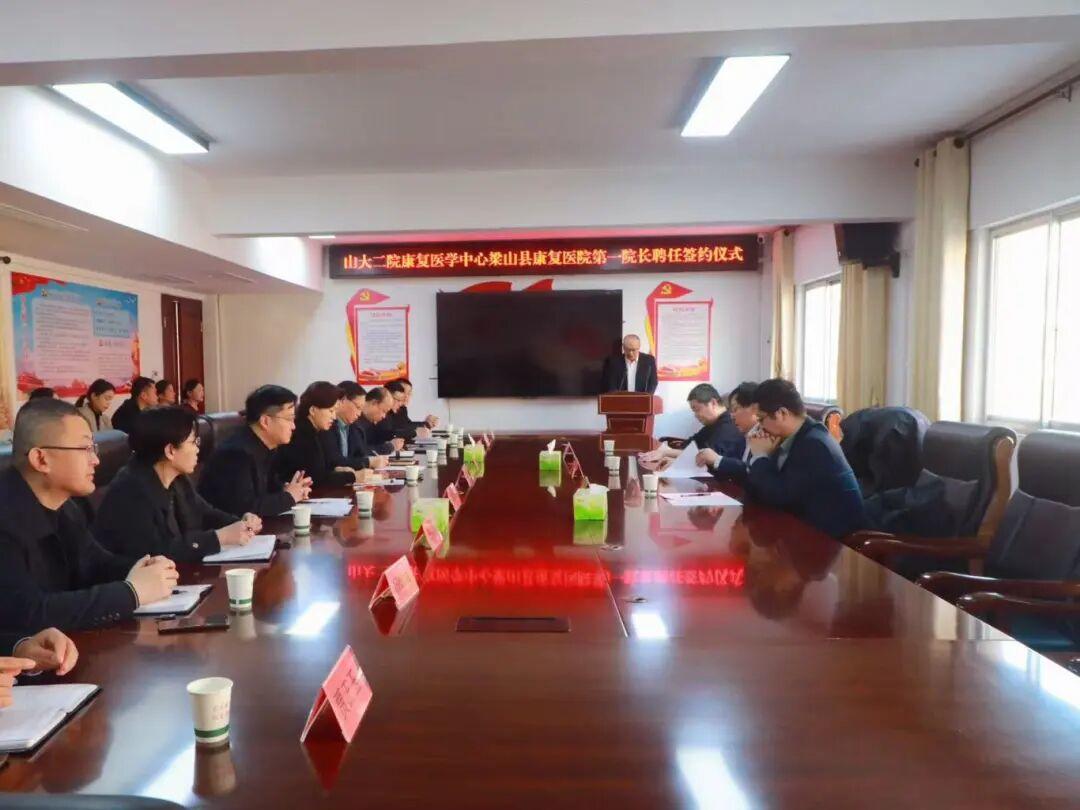
齐鲁二院与梁山县人民医院专科联盟签约暨院长聘任仪式举行
Qi Lu Wan Bao· 2025-12-12 03:07
Core Viewpoint - The signing of the specialized alliance between Qilu Second Hospital's Rehabilitation Medicine Center and Liangshan People's Hospital marks a significant step in enhancing local access to high-quality rehabilitation medical services through an innovative model of "specialized alliance + expert residency" [1][4]. Group 1: Partnership and Leadership - The partnership aims to establish a comprehensive specialized alliance system covering key areas such as discipline construction, talent training, technical support, and two-way referrals [4]. - The appointment of a "First Director + Executive Director" dual leadership mechanism is designed to upgrade cooperation from "resource sinking" to "deep integration," allowing national-level treatment concepts and management models to be implemented directly at the county level [4][6]. Group 2: Impact on Local Healthcare - The collaboration is expected to transform the rehabilitation medical landscape in Liangshan, addressing the challenges posed by an aging population and improving the quality of life for residents [6]. - Liangshan People's Hospital has already seen significant development in its rehabilitation department, achieving recognition as a key specialty in Jining City by 2025, with patient satisfaction continuously increasing [6][7]. Group 3: Commitment to Quality and Accessibility - The expert team from Qilu Second Hospital, recognized as a leading force in rehabilitation medicine, will share their experience and core technologies to enhance the local healthcare capabilities [6][7]. - The new model aims to eliminate barriers to high-quality medical resources, allowing patients to receive equivalent rehabilitation services to those offered by provincial hospitals, thus addressing the common issues of accessibility and affordability in healthcare [7].
“3+1+N”模式,梁山残疾儿童康复服务迈向专业化精准化
Qi Lu Wan Bao· 2025-12-10 06:20
多重功能区域设置 打造幼儿康复园地 "晨晨小朋友,这次买了什么呀?黄的梨子、红的苹果、紫的是什么?"晨晨看了看手上的蔬菜,看了看 老师,小声回答,"茄子"。"对啦,我们晨晨真棒,我来帮你结账好不好?" 记者 陈丹 通讯员 马扶坤 残疾儿童康复救助是残疾人事业发展的基础性工作,是残疾儿童有别于其他弱势群体最特别、最迫切、 最需要解决的问题。目前,梁山县5家儿童定点康复机构覆盖县域城乡,空间布局合理,织密织牢"家门 口"康复服务网。 2025年以来,全县共有596名残疾和孤独症儿童在定点康复机构接受免费康复训练救助服务。 近日,走进梁山县妇幼保健计划生育服务中心儿童康复科,在情境课堂上,几位老师正带领小朋友们进 行超市购物的情景模拟课。在蔬菜、水果、零食等区域,小朋友开心地选购着心仪商品,随后到收银台 模拟付费,并在其中认识物品和钱币。 除情景课堂外,泥塑体验课、手工课堂,也颇受孩子们的喜爱。"陶艺和剪纸课程,通过'玩中学,做中 练'的方式,不仅锻炼孩子的手部精细动作,增强对肌肉的控制,还能激发他们的创造力和想象力,提 升孩子的专注力,也可以在课程设置当中渗透传统文化的基本知识等,满足在训儿童多方面发展的需 求, ...
山东大学附属威海市立医院康复医学中心正式成立
Qi Lu Wan Bao· 2025-12-09 08:06
Core Viewpoint - The establishment of the Rehabilitation Medicine Center at Weihai Municipal Hospital represents a significant strategic move for optimizing the hospital's discipline layout and integrating regional rehabilitation medical resources, aiming to provide high-quality, personalized rehabilitation services for both adult and pediatric patients through AI technology [1][3]. Group 1: Background and Demand - The center addresses the increasing rehabilitation needs due to an aging population and rising cases of conditions such as stroke and orthopedic surgeries, as well as special rehabilitation needs in children [2]. - There is a growing demand for standardized, efficient, and intelligent rehabilitation services, as existing resources are insufficient and fragmented [2][3]. Group 2: Center Establishment and Goals - The center is a response to national guidelines for clinical specialty capacity building and aims to support the development of a rehabilitation tourism demonstration area in Weihai [3]. - It aims to fill the gap in high-end rehabilitation resources and children's specialized rehabilitation services in the region, leveraging technological innovation and talent cultivation [3]. Group 3: Operational Structure - The center adopts a "1+NE-LC model" for its organizational structure, integrating various disciplines such as traditional Chinese medicine, pediatrics, and rehabilitation medicine to create a collaborative treatment management system [4]. - This model allows for efficient resource collaboration while maintaining the unique characteristics of each discipline, providing comprehensive rehabilitation services from acute treatment to recovery [4][5]. Group 4: Facility and Equipment - The center has expanded its capacity to 140 beds, with dedicated areas for pediatric rehabilitation and advanced rehabilitation equipment, including AI-assisted systems [5][6]. - Facilities include specialized assessment rooms and treatment areas designed to enhance patient comfort and treatment efficacy [5][6]. Group 5: Service Features - The center combines Western rehabilitation techniques with traditional Chinese medicine and AI technology, offering tailored rehabilitation plans for various conditions, including neurological and orthopedic issues [7][8]. - A specialized pediatric rehabilitation team addresses conditions such as ADHD and autism, utilizing innovative treatment methods to improve children's rehabilitation outcomes [9]. Group 6: Future Development - The center aims to become a leading rehabilitation medical hub in the region, focusing on enhancing service quality and academic standards while fostering interdisciplinary collaboration [12]. - Plans include expanding community and home rehabilitation services, as well as integrating rehabilitation with tourism to better meet public health needs [12][13].
山东省康复医学会第三次高压氧康复学术会议在临沂市人民医院举办
Qi Lu Wan Bao· 2025-12-05 04:34
Core Insights - The conference on hyperbaric oxygen rehabilitation held in Linyi, Shandong Province, showcased the latest advancements and clinical experiences in the field, injecting new momentum into the development of hyperbaric oxygen rehabilitation in the province [1][3] Group 1: Conference Overview - The event was organized by the Shandong Rehabilitation Medicine Association and co-hosted by Linyi People's Hospital, featuring renowned experts from both within and outside the province [1] - The opening ceremony included speeches from key figures, emphasizing the unique value and development prospects of hyperbaric oxygen in rehabilitation medicine [1][3] Group 2: Academic Contributions - The academic sessions featured high-level reports from leading experts, covering topics such as the training pathways for hyperbaric oxygen specialists and research methodologies [2] - Notable presentations included authoritative interpretations of expert consensus on hyperbaric oxygen for altitude sickness and practical strategies for treating neurological emergencies [2] Group 3: Practical Applications and Future Directions - The conference facilitated a visit to the hyperbaric medicine department at Linyi People's Hospital, highlighting advanced equipment and standardized treatment processes [3] - The successful organization of the conference is expected to enhance the influence of hospitals in the hyperbaric oxygen field and promote standardized development across the province [3]
亿嘉和与麦澜德签署战略合作协议
Bei Jing Shang Bao· 2025-12-01 12:58
Core Viewpoint - The company Yijiahe has signed a strategic cooperation agreement with the rehabilitation enterprise Mairande to explore the integration of "brain-computer interface + embodied intelligent robots" technology in the smart health and care sector [1] Group 1: Strategic Cooperation - Yijiahe and Mairande will focus on the health and care assistance field to create a new user experience [1] - The collaboration aims to integrate Yijiahe's subsidiary Lindong Technology's health care robot platform with Mairande's multimodal brain-computer interface technology [1] Group 2: Technological Innovations - The partnership will lead to innovative technological upgrades for robots, including real-time emotional monitoring for more effective emotional companionship [1] - The brain-computer interface will enable robotic motion control, allowing disabled elderly individuals or patients to regain mobility [1] - A more comprehensive health monitoring system will be developed as part of this collaboration [1]


临床科研结硕果!南京明州康复医院SCI论文在康复医学领域获重要进展
Yang Zi Wan Bao Wang· 2025-12-01 06:26
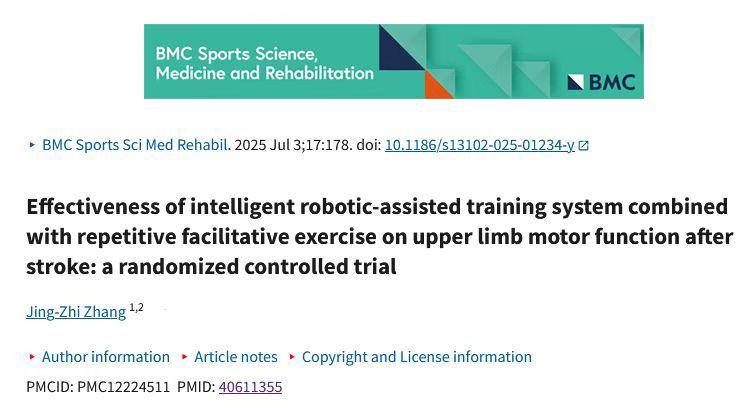
南京明州康复医院在科研领域再传捷报!康复治疗科青年骨干张敬之康复治疗师作为第一作者的研究论文,成功发表于SCI期刊《BMC Sports Science,Medicine and Rehabilitation》,标志着医院在康复医学领域的科研积累取得新进展,临床研究成果获国际学术界认可。 Zhang et al. BMC Sports Science, Medicine and Rehabilitation (2025) 17:178 https://doi.org/10.1186/s13102-025-01234-y BMC Sports Science, Medicine and Rehabilitation RESEARCH Open Acces Conclusion IRAT combined with RFE was more effective in improving the upper limb motor function than RFE or CT after stroke. Trial registration This study was registered at https:// ...